New Manager? Use the Johari Window Model to Master Communication

The Johari Window model reveals 4 zones of self-awareness: Open, Blind Spot, Hidden, and Unknown. New managers who use this model with their teams reduce communication friction by 40% and build trust significantly faster. The Thought Bulb uses Johari Window workshops in manager development programs across India.

New Manager? Use the Johari Window Model to Master Communication

The Johari Window was the first framework that made me genuinely better at my job. Not because it's complicated — it isn't — but because it gave me language for something I'd been experiencing without being able to name: that being new in a leadership role means navigating four very different kinds of 'not knowing.' This guide is for anyone in that transition.

Nishit Lal, Leadership Facilitator · The Thought Bulb

So, you’ve been promoted.

Maybe you were a top performer. Or the go-to person for solving last-minute chaos. Now, the title on your email signature says "Manager."

Exciting milestone? Definitely. But here’s the twist — being a good individual contributor doesn’t automatically make you a good communicator.

Suddenly, you're expected to lead conversations, handle team dynamics, offer feedback, and build trust — all without skipping a beat on performance.

The transition from “doer” to “leader” often hits managers like a surprise plot twist. And the root of most struggles? Communication — or the lack of it.

Let’s fix that. Not with motivational quotes, but with a tool that transforms teams: The Johari Window.

The Johari Window: A Manager’s Secret Communication Map

Created by psychologists Joseph Luft and Harrington Ingham, the Johari Window is a 2x2 matrix that helps individuals and teams understand what they know (and don’t know) about themselves and others.

Here's how it breaks down:
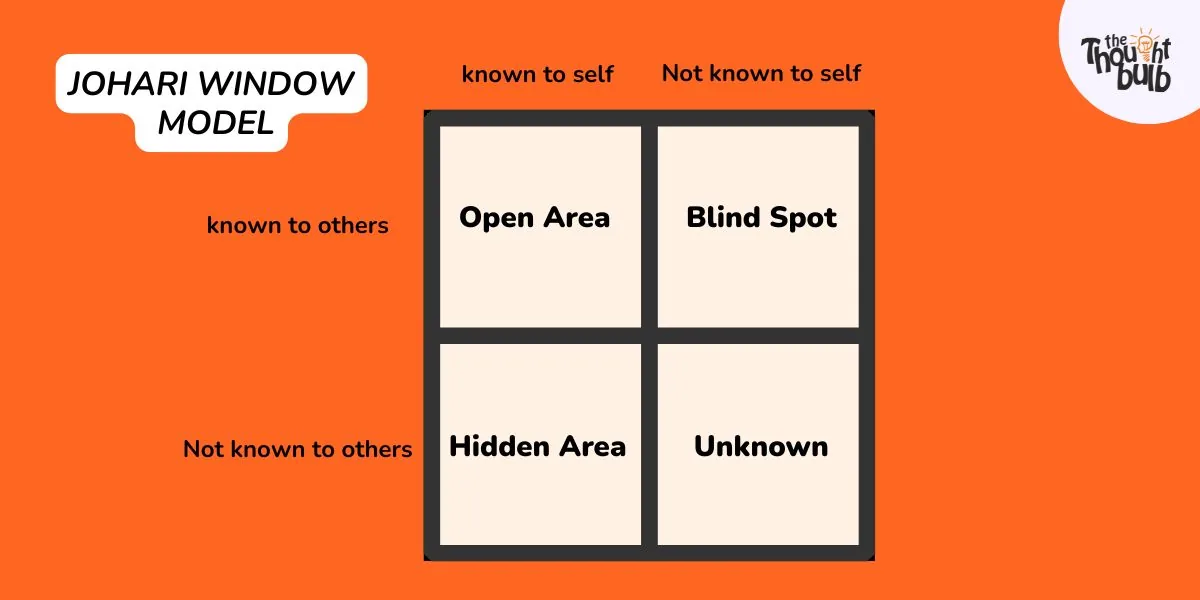
Johari Window Model
Johari Window Model

Quadrant

What it means

Manager Relevance

Open Area

Known to self and others

Builds trust and clear communication

Blind Spot

Unknown to self, known to others

Affects how others perceive you

Hidden Area

Known to self, unknown to others

Creates misunderstandings or guardedness

Unknown Area

Unknown to both

Holds untapped potential or unresolved issues

As a first-time manager, your goal should be to expand the Open Area for yourself and your team.

Let’s Turn Theory into Practice

Let’s take the Johari Window from concept to conference room. Below are everyday moments most managers face — and how to apply each quadrant practically.

JOHARI WINDOW MODEL: Let’s Turn Theory into Practice

1. The “Blind Spot” Dilemma

Real-life Scenario: Your team rarely speaks up during meetings. You believe you're approachable, but they perceive you as defensive when challenged.

Johari Insight: Your Blind Spot is in play. They see something you don’t.

What You Can Do: Start with anonymous feedback tools. Or ask directly in 1:1s:

“What’s something I do that might be unintentionally shutting down conversations?”

Outcome: By surfacing your blind spots, you show humility and encourage psychological safety.

2. The “Hidden Area” Barrier

Real-life Scenario: You struggle with presentations but never admit it. You pretend confidence, and your team assumes you're fine.

Johari Insight: You’re keeping key vulnerabilities hidden, which makes others hesitant to open up too.

What You Can Do: Share personal stories that show growth. Example:

“In my first team review, I froze. I’ve worked on it since, and I know it takes practice.”

Outcome: You model transparency. Your team starts sharing fears, too, and asking for help.

3. The “Unknown” Opportunity

Real-life Scenario: During a crisis, a quiet team member proposes a solution no one saw coming. Turns out, she has prior experience handling similar issues, which no one knew.

Johari Insight: The Unknown Area — both for her and the team — just became known.

What You Can Do: Host “Skill Spotlights” where each team member shares one hidden skill or project. Or do collaborative problem-solving challenges that stretch comfort zones.

Outcome: You uncover hidden talents. People feel seen. Innovation starts to flourish.

What This Looks Like in an Experiential Learning Environment?

Johari Window Model In An Experiential Learning Environment

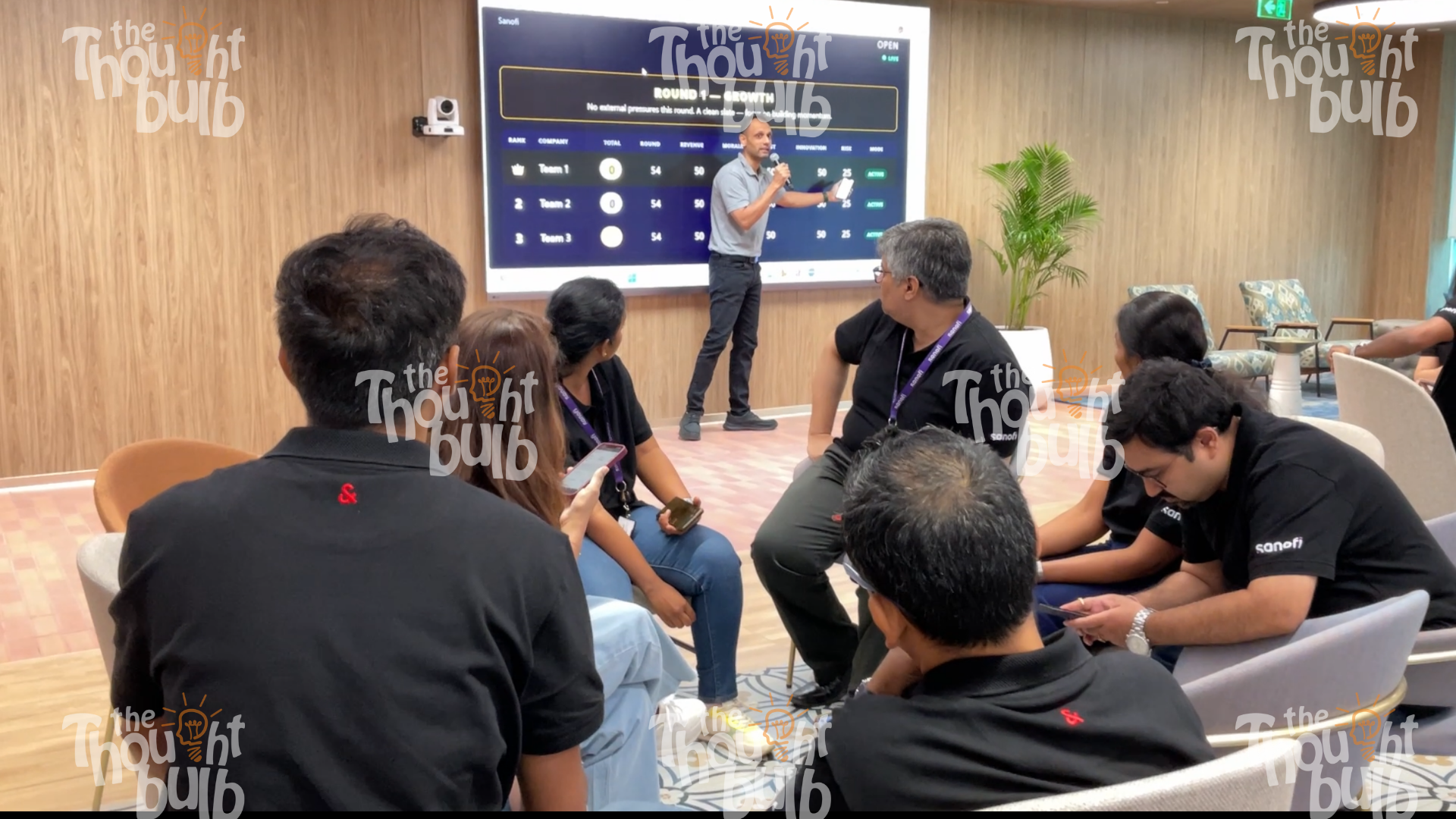
Understanding a model is one thing—applying it is another. That’s where experiential learning bridges the gap between theory and real-world leadership.

At The Thought Bulb, we bring communication models like the Johari to life using interactive experiences that mimic the workplace, but in a playful, no-risk environment.

Here’s how it unfolds in real time:

1. The “Silent Connections” Challenge

Teams solve a task without using words. Misunderstandings surface quickly. So do assumptions. During the debrief, they discover their blind spots and hidden assumptions.

Takeaway: You don't need 10 Zoom calls. You need a better understanding.

2. “Blind Feedback” Circle

Each person writes one blind spot they suspect they have, and others add insights anonymously.

Takeaway: Feedback isn’t scary when it’s normalized.

3. “Reveal & Relate”

Participants draw cards with vulnerability prompts: “Share a moment you failed forward.” “Describe a childhood strength you forgot about.” Trust builds fast.

Takeaway: Your vulnerability permits others to be real.

Why This Matters for New Managers?

Stepping into leadership isn’t just about delegating—it’s about understanding yourself and your team. Tools like the Johari Window help new managers build trust, improve communication, and lead with emotional intelligence from day one.

By using the Johari Window:

  • You increase self-awareness

  • You improve team alignment

  • You foster psychological safety

  • You lead with empathy, not ego

Final Thoughts:

You need to be a curious one.

The Johari Window doesn’t ask you to speak more — it asks you to listen better. And as you grow your Open Area, you’ll be surprised how your team grows with you.

Ready to Help Your Team Communicate Better?

At The Thought Bulb, we use real-life business simulations and hands-on experiences to unlock the kind of communication breakthroughs that PowerPoint presentations never could.

Let’s co-create a workshop your managers will remember Plan your next offsite or team session with us

Because growth starts with better conversations.
Topics

#Communication#Indoor#Innovation#Leadership#Outdoor#Productivity#Sustainability#Team Building#Virtual

Share this article

Frequently Asked Questions

What is the Johari Window model and how does it help new managers in India?+

The Johari Window divides self-awareness into 4 quadrants: Open (known to self and others), Blind Spot (unknown to self, known to others), Hidden (known to self, unknown to others), and Unknown (unknown to all). New Indian managers who use this model with their teams build trust faster and communicate more authentically.

How can new Indian managers use the Johari Window with their teams?+

Apply the Johari Window by: sharing personal working style preferences (Open zone expansion), seeking specific feedback on blind spots, selectively sharing relevant personal context (reducing Hidden zone), and creating psychological safety for team members to do the same. The Thought Bulb facilitates Johari Window workshops for new Indian managers across 12 cities.

Which Johari Window quadrant causes the most problems for Indian managers?+

The Blind Spot quadrant is most problematic for Indian managers — particularly in hierarchical cultures where feedback flows upward only in filtered form. The Thought Bulb's manager development programs use structured 360-degree feedback exercises to help Indian managers identify and close their most impactful blind spots.

How does the Johari Window improve team communication in Indian corporate teams?+

Johari Window workshops improve team communication by: creating shared vocabulary for feedback, normalizing vulnerability among peers, reducing assumptions through disclosure, and building psychological safety for honest dialogue. The Thought Bulb's Johari Window team sessions consistently generate the highest debrief quality of any model-based workshop.

When should Indian companies run Johari Window workshops with their teams?+

Run Johari Window workshops during: new manager onboarding, team formation stages, post-conflict resolution, and leadership development programs. The Thought Bulb recommends Johari Window sessions as the opening activity for any new manager's first 90-day team engagement program across Indian corporate organizations.

You might also like

Building Psychological Safety in Indian Teams: A 2026 Playbook
Employee Engagement

Building Psychological Safety in Indian Teams: A 2026 Playbook

9 Jun 2026 · 8 min
How to Measure the ROI of Team Building in India (2026 Guide)
Team Building

How to Measure the ROI of Team Building in India (2026 Guide)

4 Jun 2026 · 8 min
India Employee Engagement & Attrition in 2026: What HR Leaders Need to Know
Employee Engagement

India Employee Engagement & Attrition in 2026: What HR Leaders Need to Know

27 May 2026 · 9 min

Activities to try with your team

View all 150+ activities →
Zen Quest VR Challenge
outdoor

Zen Quest VR Challenge

Discover the power of mindfulness and cultural wellness in Zen Quest VR Challenge, an immersive virtual reality experience that transports you across the globe. From practicing yoga in India to mastering kintsugi in Japan, this journey allows you to explore and engage in traditional wellness practices—all from one place. Step into a world of relaxation, self-discovery, and global connection.

Explore activity →
Ripple Effect
indoor

Ripple Effect

Ripple Effect is an immersive business simulation where teams navigate 10 quarters of real-world business challenges — making strategic decisions under pressure, managing cross-functional departments, and seeing exactly how every choice ripples across the organisation.

Explore activity →
AI Movie Making Challenge
indoor

AI Movie Making Challenge

Elevate your team's creativity and tech-savvy prowess as they harness the power of AI and iPads to produce captivating short films on diverse topics. The competition is on for the coveted title of cinematic champions! Get ready to embark on a thrilling filmmaking journey that combines innovation and storytelling in this unforgettable team-building challenge.

Explore activity →

Looking for team building activities?

Browse our full catalogue of in-person, virtual and CSR experiences across India.

Explore Activities →