Almost every mid-sized and large Indian company now has something it calls a wellbeing programme. A tie-up with a meditation app. An annual health check camp. A counselling helpline printed on the back of the ID card. And yet, walk into the same offices in August 2026 and you will hear managers quietly saying the same thing: people are tired, teams are short-fused, and the good ones are updating their profiles.
That gap is the whole story. The problem in India is not the absence of wellbeing programmes. It is that most of them sit outside the actual working day, ask employees to fix themselves in their own time, and never touch the team dynamics that create the strain in the first place. This guide looks at what the current data says about wellbeing in Indian workplaces, and which activities and formats are actually shifting the needle for HR teams here.
The wellbeing gap in Indian workplaces: what the data shows
Before choosing activities, it helps to be honest about the scale of what HR teams are dealing with. The numbers from the last two years are not comfortable reading.
A 2025 Indeed India survey found that 72 percent of Indian employees reported feeling burned out at some point in their current role, up from 58 percent in 2022. That is a 14 point rise in three years, the steepest recorded in any major economy over the same window.
Gallup 2025 data found that only 14 percent of Indian employees feel they are thriving at work, against a global average of 34 percent. Roughly 30 percent report experiencing stress on a daily basis.
The Cigna 360 Well-Being Survey India reported 89 percent of Indian respondents feeling stressed, compared to a global average of 84 percent.
Gallup estimates that workplace disengagement costs India roughly 351 billion dollars a year in lost productivity, close to 9 percent of GDP.
Meanwhile, 87 percent of organisations worldwide report having some formal wellness initiative, yet most employees still say they feel unsupported.
That last point is the one worth sitting with. Coverage is not the problem. Design is. A benefit that requires an exhausted employee to opt in, download something, and practise it alone at 10 pm is a benefit that will be used by the people who least need it.
Why most Indian wellbeing programmes underperform
They are individual when the cause is collective
Burnout in Indian teams is rarely a personal resilience failure. MHFA India research on working hours found that output consistently declines beyond roughly 49 hours a week, with every 10 percent increase in overtime reducing productivity by 2 to 4 percent. In IT and BPO settings, where 60 to 70 hour weeks and night shifts aligned to Western time zones are still common, burnout prevalence has been reported as high as 75 percent. No amount of individual breathing practice offsets a structurally overloaded week.
They are seasonal, not rhythmic
A wellness week in October followed by eleven months of silence teaches employees that wellbeing is a campaign, not a commitment. The programmes that hold up are the ones with a small, predictable rhythm: a monthly team ritual, a quarterly reset, an annual deep dive.
They ignore the manager layer
Most of an employee workday experience is mediated by their immediate manager. If managers have not been given language for checking in, redistributing load, or spotting early warning signs, the wellbeing budget is largely decorative.
They are never measured
Attendance is not an outcome. If you are not tracking a before-and-after on stress, connection, or intent to stay, you have no case to renew the budget next year. We have written separately on how to measure the ROI of team building and engagement programmes, and the same discipline applies here.
What actually works: five design principles
Put it inside work hours. Anything scheduled after 7 pm signals that wellbeing is the employee personal problem. Protect a calendar slot the way you would protect a client review.
Make it shared, not solitary. Wellbeing improves fastest when it is experienced with the team, because the team is where psychological safety is either built or eroded.
Design for mixed locations. With most Indian companies now running hybrid, a programme that only works in the office excludes a large slice of the workforce by default.
Give people something to make or do, not something to sit through. Experiential formats produce recovery. Lecture formats produce another meeting.
Close the loop with a debrief. Ten minutes of structured reflection converts a pleasant afternoon into a lasting shift in how a team operates.
In-person: activities that create genuine recovery
The strongest in-person wellbeing formats share one trait. They pull people fully out of task mode, engage the hands and the senses, and require light collaboration rather than competition.
Mindscape Challenge
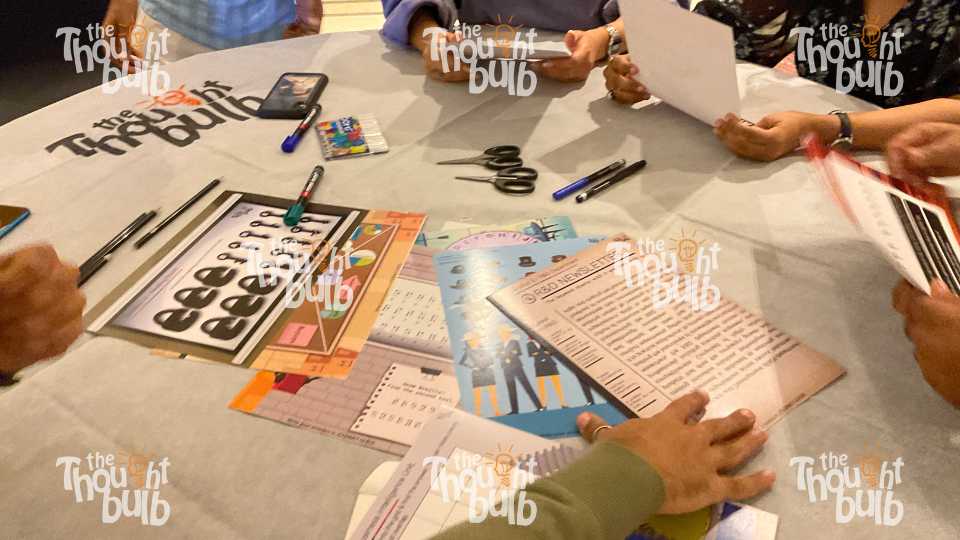
Mindscape Challenge is built around attention, focus, and the quality of thinking a team brings to a problem when it is not under time pressure. It works particularly well for teams that have come off a heavy delivery cycle and need to slow down before they can plan again. Because it is designed for indoor or outdoor delivery, it fits easily into an offsite day or a half-day at the office.
Terrarium Challenge
For teams that respond better to making something with their hands, Terrarium Challenge has become one of the most requested wellbeing-adjacent formats we run. Each team builds a living miniature garden. It is quiet, tactile, and calming in a way that competitive activities are not, and every participant leaves with something they keep on their desk. That physical reminder is doing more work than most posters about self-care.
Both sit within our wider set of team building activities, which HR teams typically mix across a year rather than running in isolation.
Virtual and hybrid: keeping distributed teams connected
Roughly half of the wellbeing risk in Indian companies now sits with people who are not in the office most days. Isolation compounds stress quietly, and it shows up late, usually as a resignation rather than a complaint.
Team Happiness Challenge
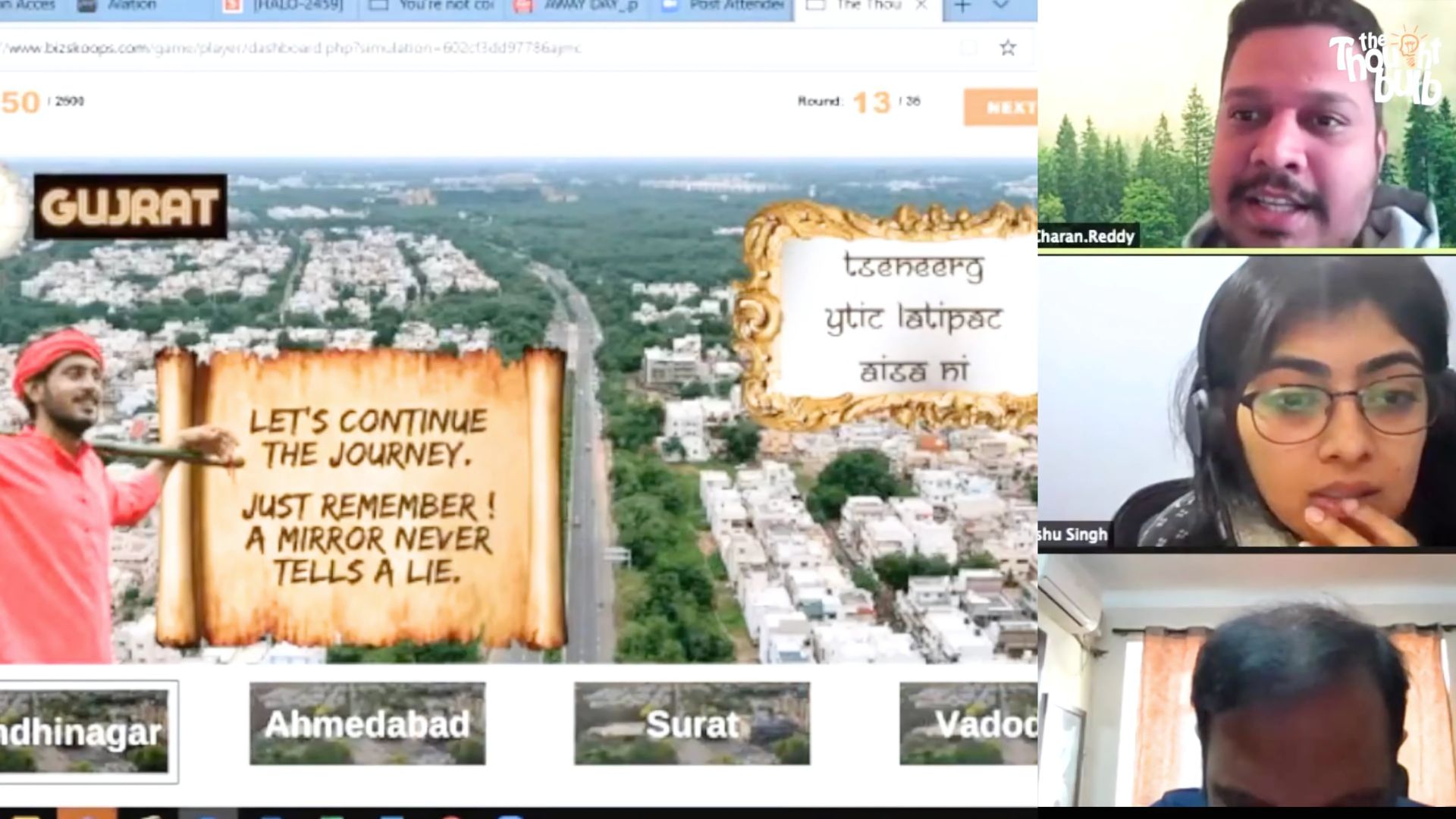
Team Happiness Challenge is a facilitated virtual session built specifically around positive psychology practices that a distributed team can actually sustain: gratitude exchange, strengths spotting, and structured appreciation. It runs in about 90 minutes and works well as a quarterly ritual for remote-heavy teams, or as a reset after a difficult stretch.
If your team is largely distributed, it is worth reviewing the full range of virtual team building formats before committing to a single annual event.
A case in point: the happiness programme at AXA
AXA approached us wanting something more substantial than a wellness talk. The result was an experiential programme on happiness, built around what actually drives sustained wellbeing at work rather than around generic stress-management content. Participants worked through structured experiences that surfaced how their own habits, relationships, and sense of contribution shaped their day-to-day experience of work.
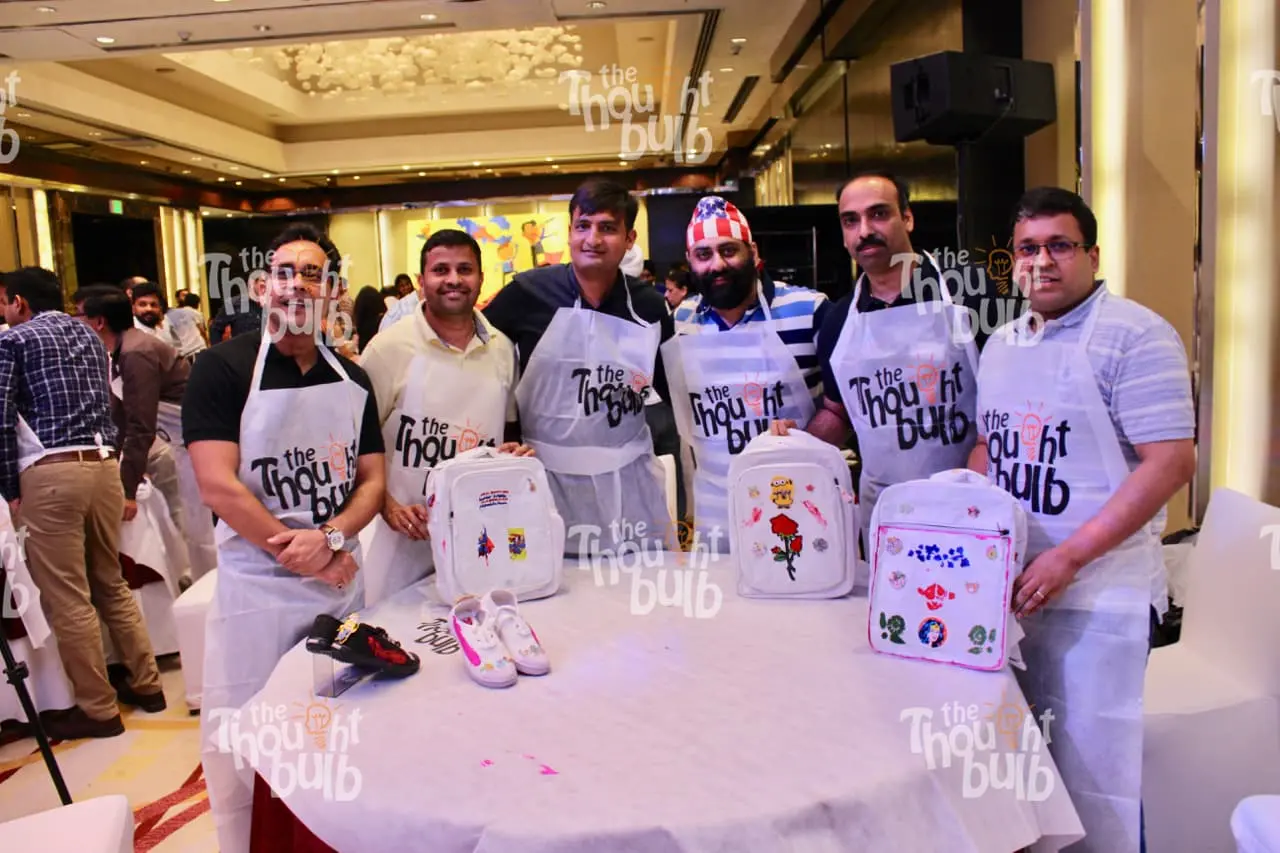
What made it land was the format. People were not lectured at about wellbeing, they experienced it together and then discussed what they wanted to carry back into their teams. More examples of programmes we have designed for Indian and global organisations are in our case studies.
Building a twelve month wellbeing rhythm
The single biggest change most Indian HR teams can make is to stop thinking in events and start thinking in rhythm. A workable structure looks like this.
Weekly: a five minute check-in at the start of one team meeting. Not a status update. A genuine read of how people are doing.
Monthly: one protected no-meeting block, and one low-effort shared ritual such as a team lunch or a short virtual social.
Quarterly: one facilitated experience such as a happiness or mindfulness-based session, timed after each delivery peak rather than before it.
Half-yearly: a manager capability session on spotting overload and having the difficult conversation early.
Annually: an offsite that includes at least one non-competitive, restorative element rather than a full day of high-energy games.
For teams building this into a formal plan, our employee engagement calendar is a useful starting frame for mapping the year.
Measuring whether any of it is working
Keep the measurement light enough that you will actually do it. Three or four questions asked consistently beat a forty question survey run once.
A two-question pulse before and four weeks after each programme: perceived stress this month, and confidence that a teammate would help if you were overloaded.
Voluntary attrition in the six months following, compared against teams that did not run the programme.
Unplanned leave and sick leave patterns, watched quarterly rather than monthly to avoid noise.
Manager-reported observations, collected in a single line at the end of each quarterly review.
Eighty-three percent of HR leaders say wellness programmes improve the engagement of their top talent. That belief is easy to hold and hard to defend at budget time unless you have your own numbers.
Where to start if you are starting from nothing
If your wellbeing offering today is a helpline number and an annual health camp, do not attempt the full calendar in one go. Pick one thing. Run a single facilitated session for the team that has had the hardest quarter, measure it properly, and use that result to build the case internally. Momentum in this area comes from one visible success far more reliably than from a comprehensive policy document.
If you would like help designing a wellbeing rhythm that fits your team size, locations, and delivery cycles, we are happy to talk it through. We have run these programmes for teams of twelve and for conferences of two thousand, in offices, on offsites, and entirely online.