Walk through any plant, warehouse, retail floor or branch network in India and you will meet the people who actually deliver your product: machine operators, delivery partners, store associates, relationship officers, service technicians. They rarely have a laptop, an office desk or a seat at the offsite. Yet most engagement programmes are designed for the people who do. In 2026, with engagement across Indian workplaces sliding to a four-year low, that gap has become expensive. This guide shows HR and operations leaders how to engage frontline teams in India with practical, shift-friendly steps that do not need a big budget.
Why frontline engagement is the real problem in 2026
Frontline employees make up the largest share of the Indian workforce, and they are the ones who meet your customer, handle your inventory and keep your lines running. When they disengage, the damage shows up quickly: missed targets, rework, safety incidents, absenteeism and attrition. Unlike a corporate team, a frontline team cannot simply log off and recover; their work is physical, time-bound and often repetitive.
The standard HR toolkit also fits them poorly. Town halls scheduled at 4 PM clash with shift changes. Email-based recognition never reaches someone without a work inbox. Annual surveys in English miss the real concerns of a team whose first language is Hindi, Tamil, Marathi or Bengali. The result is a quiet message: this programme was not built for you.
What the data says about engagement in India
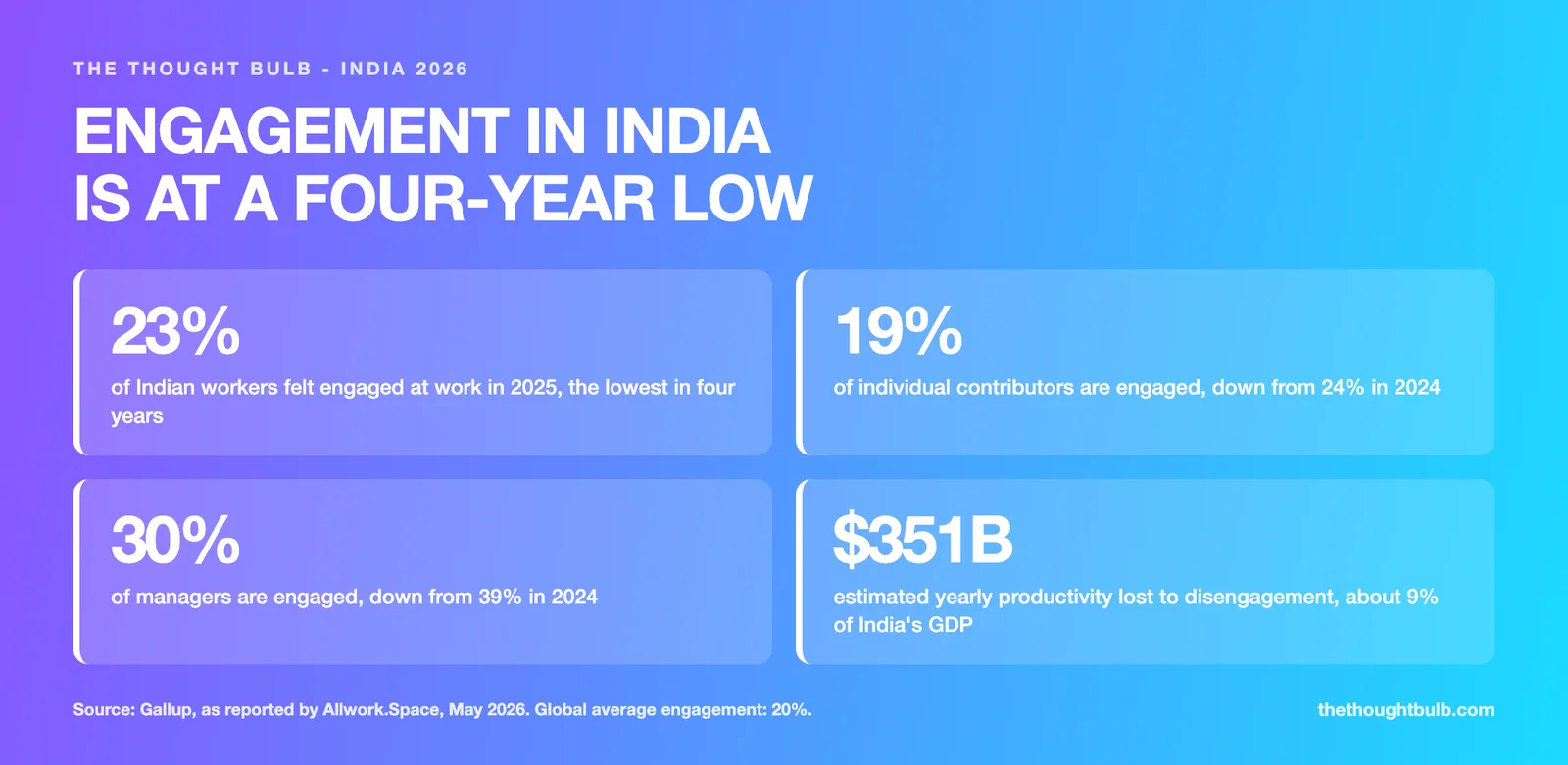
Gallup data reported in May 2026 shows that only 23% of Indian workers felt engaged at work in 2025, the lowest level in four years. India is still slightly above the global average of 20%, but the direction of travel is the worry. The same reporting puts the cost of disengagement at roughly 351 billion US dollars a year in lost productivity, about 9% of GDP.
The numbers behind the slide
Overall engagement among Indian workers: 23% in 2025, a four-year low.
Individual contributors: engagement fell from 24% in 2024 to 19% in 2025.
Managers: engagement fell from 39% in 2024 to 30% in 2025, a steeper drop than for individual contributors.
Estimated cost of disengagement: around 351 billion US dollars a year, roughly 9% of GDP.
Two points matter for frontline leaders. First, individual contributors are the least engaged group, and most frontline staff sit in that group. Second, the managers who are meant to engage them are themselves struggling. A supervisor who is stretched and disengaged cannot light up a team of forty operators. Any plan has to support supervisors too.
Five reasons standard engagement programmes miss the frontline
1. Timing and access
Frontline staff work fixed shifts, often in three rotations. An activity that needs everyone in a room at one time excludes a third of the team. Programmes have to move to the shift, not the other way round.
2. Language and literacy
Surveys, posters and apps that assume fluent English or smartphone comfort leave people out. Use local languages, voice, visuals and face-to-face conversation.
3. Recognition that is invisible
A monthly award announced by email never reaches the floor. Frontline recognition needs to be public, immediate and specific, for example a thank-you at the start of the shift or a name on the board near the canteen.
4. Supervisors without tools
The first-line supervisor is the single biggest driver of how a frontline employee feels. Most are promoted for technical skill, not for coaching, and receive little help with the people side of the job.
5. One-off events instead of a rhythm
A single annual celebration does not change daily experience. Frontline engagement is built through small, regular moments, with the occasional bigger experience to reset energy.
Notice that none of these five problems is about motivation or attitude. They are design problems. When you redesign the programme around the shift, the language and the supervisor, the same people who looked disengaged tend to show up, join in and speak up. That is encouraging, because design problems can be fixed one site at a time.
Practical ways to engage frontline teams in India
Start with the shift huddle
The five-minute huddle at the start of a shift is the most underused engagement tool in Indian operations. Use it to share one customer story, recognise one person by name and ask one question. Rotate the person who leads it so that ownership spreads beyond the supervisor.
Make recognition peer-led and visible
Give teams a simple way to thank each other, such as a wall of appreciation cards or a weekly shout-out. Peer recognition costs almost nothing and travels further than a certificate from head office.
Build real experiences, not just events
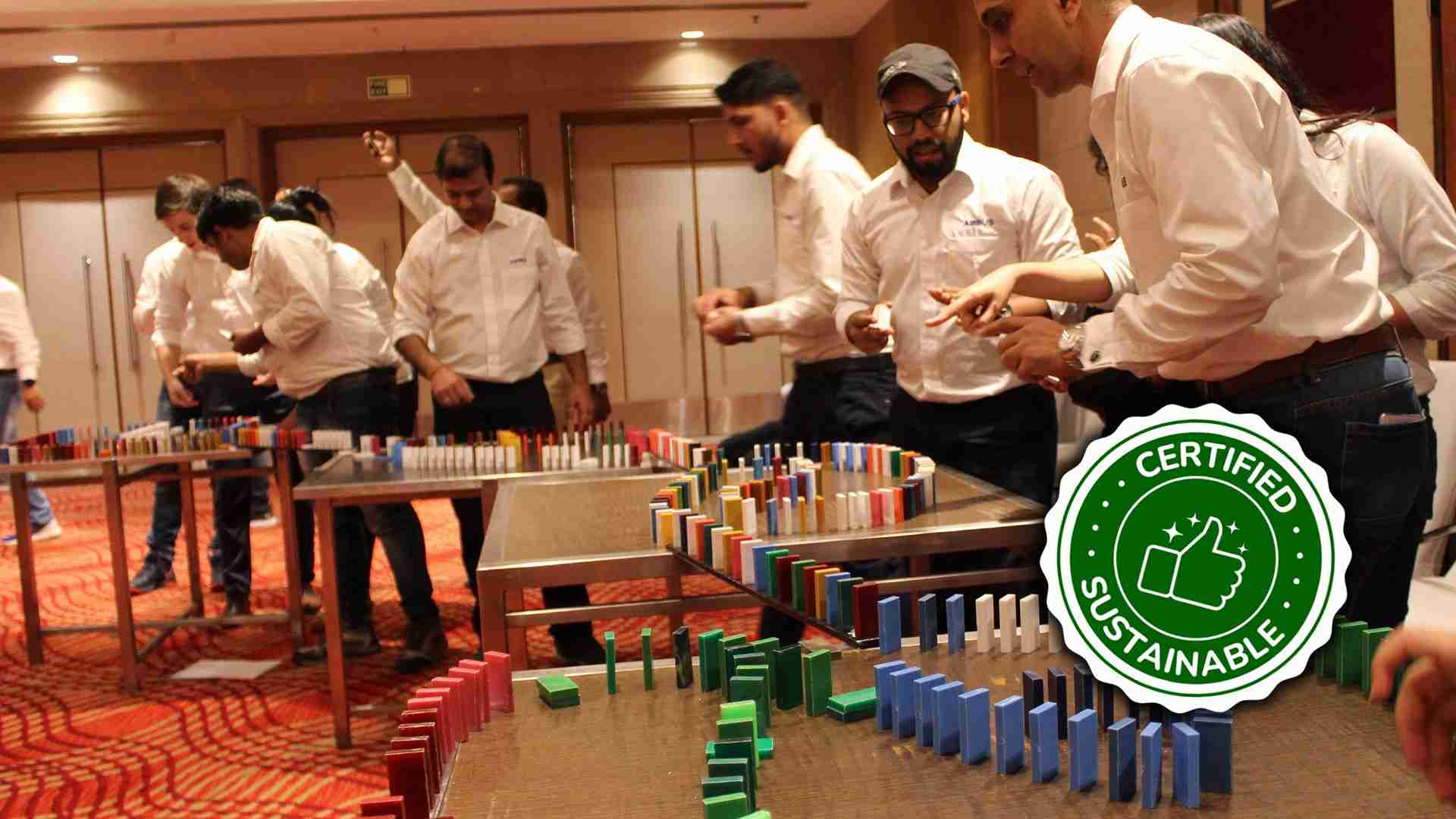
Shared experiences are where frontline teams learn to trust each other beyond the task. Browse our team building activities to see formats that run on a factory lawn, a warehouse floor or a branch car park, with no tech or special equipment.
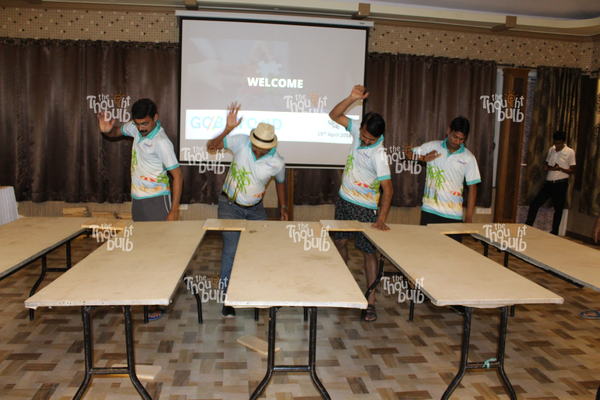
Two formats work especially well for mixed-skill, mixed-language groups because the rules are simple and everyone can contribute. Indoor Olympics turns familiar games into a team competition with points, cheering and a lot of laughter, and it can be run in a canteen or hall in under two hours. Minute To Win It uses short, silly, high-energy challenges that anyone can attempt, which makes it popular with operations teams who want energy without long instructions.
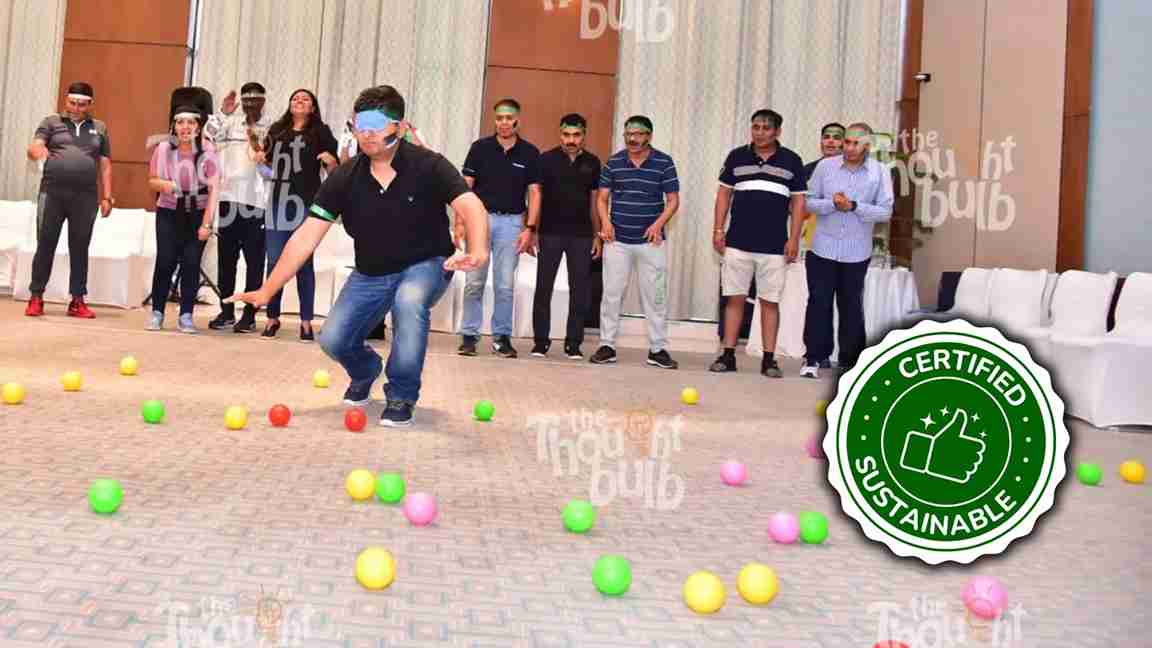
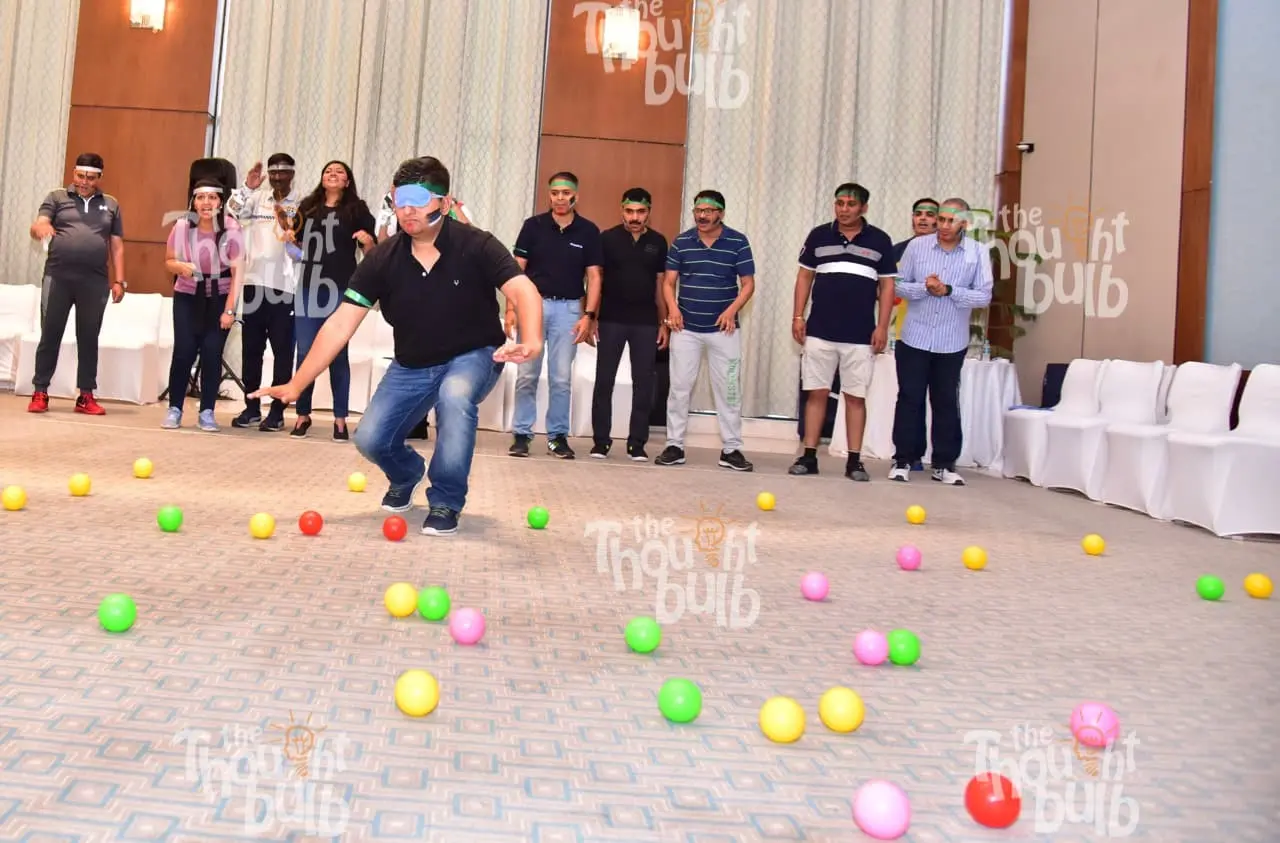
If your frontline is spread across sites or cities, a virtual format can bring them together without travel. The Virtual Minute To Win Challenge runs the same quick-fire energy over video, so a branch in Pune and a plant in Chennai can compete in the same session.

For distributed teams, our guide to virtual team building explains how to run sessions that work across sites and shift patterns.
A real example: ITC Olympics in Noida
One of our case studies is the ITC Olympics, run with ITC in Noida. The team came together for an Olympics-style programme of team games, built so that people from different functions and levels competed side by side rather than as departments. The format worked because it gave colleagues who rarely meet a shared, low-stakes reason to cooperate and cheer for each other.
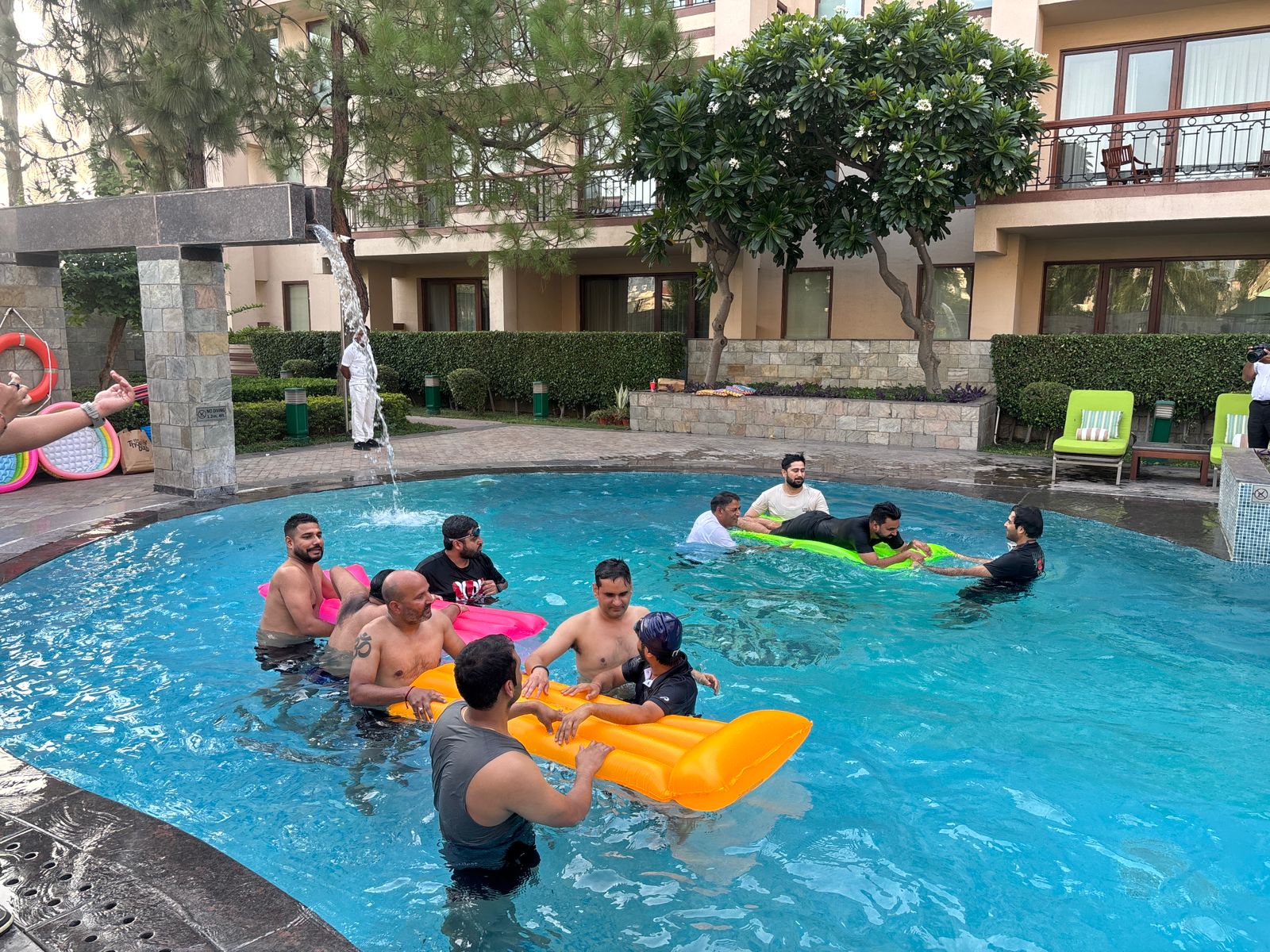
Read the full story and others like it in our case studies.
A 90-day plan to re-engage frontline teams
You do not need a large budget to start. You need sequence and consistency. This three-stage plan fits most plants, retail networks and branch operations.
Days 1 to 30, Listen: run short conversations during shift huddles and a five-question pulse in local languages. Ask what makes the shift harder than it should be, who deserves more credit, and what one change would help.
Days 31 to 60, Equip: train supervisors in daily recognition and basic coaching conversations, and fix the top two friction points your teams named, such as a broken break-room fan or a confusing shift roster.
Days 61 to 90, Celebrate: run a shift-friendly team experience, repeat the pulse, and share what changed and what you did about the feedback.
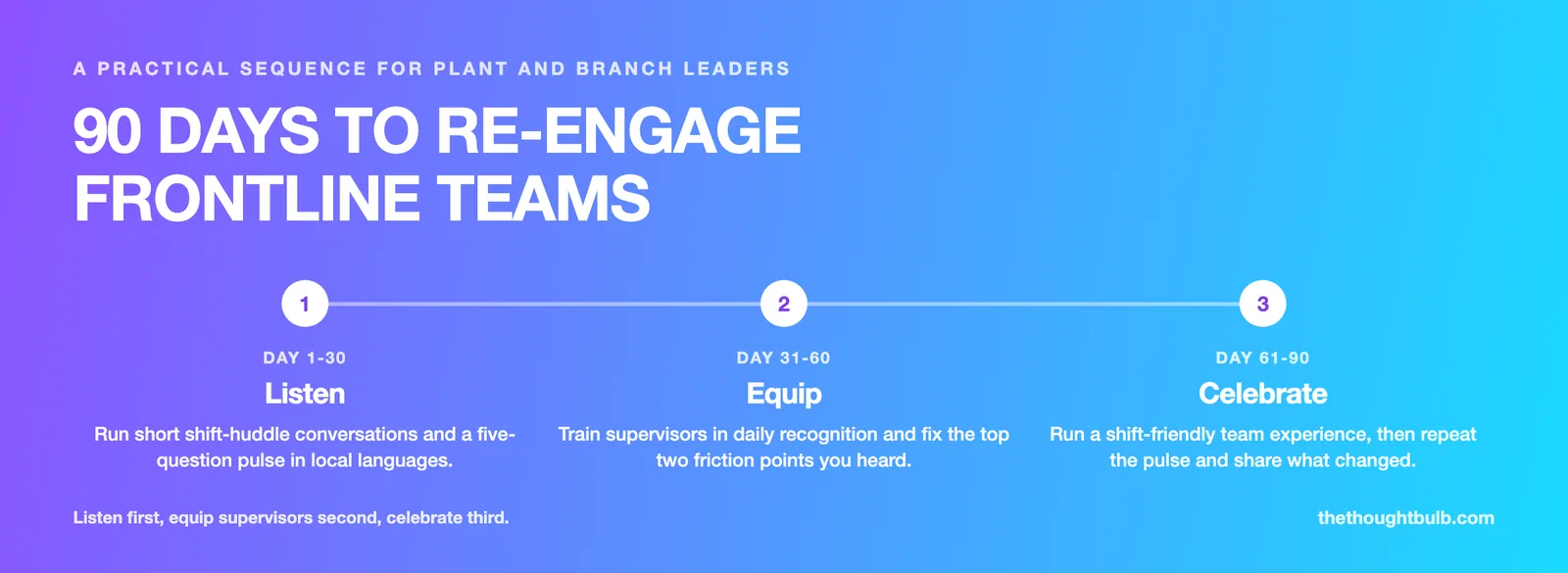
The order matters. Celebrating before listening feels hollow, and listening without acting damages trust. Closing the loop, showing people that their feedback led to a visible change, is what turns a pulse survey into engagement.
How to measure whether it is working
Frontline measurement should be simple and quick. Track a small set of indicators monthly: shift attendance, voluntary exits in the first 90 days, safety near-miss reporting, supervisor-led huddle completion and a short pulse score. Compare sites and shifts, and look for trends instead of single readings.
For a calendar of touchpoints you can plan around, use our employee engagement calendar to map festivals, awareness days and recognition moments across the year, including regional festivals your frontline teams already celebrate.
Common mistakes to avoid
Designing for head office and hoping it reaches the floor.
Running one big event and calling the year done.
Asking for feedback and not telling people what changed.
Leaving supervisors out of the plan, even though they shape daily experience.
Using English-only communication with multilingual teams.
Conclusion: start where the work happens
Engagement across Indian workplaces is falling, and the people closest to your customer and your product are often the least reached. The fix is not complicated: meet frontline teams in their shifts, equip their supervisors, recognise people in public and give them shared experiences that make coming to work feel less like a grind. Start with one site and one 90-day cycle, then scale what works.
If you would like help designing a shift-friendly team experience for your plant, stores or branches, the Thought Bulb team is happy to talk it through and suggest a format that fits your people, your budget and your calendar.