Every October, Indian offices change mood. Appraisal forms open, managers disappear into calibration meetings, and the whole team starts quietly doing the maths on what next year will look like. For HR leaders this is one of the most delicate stretches of the year. A badly handled review cycle can undo months of goodwill in a single conversation, while a well handled one can lift trust and retention well into 2027.
This guide looks at why appraisal season puts team morale at risk in India right now, what the latest data says, and how to protect culture through the cycle. It covers the process fixes that matter most and the team experiences that rebuild connection once the conversations are over.
Why appraisal season is a morale risk in India right now
The pay squeeze is real
Employees are watching the numbers closely. According to the OMAM salary survey reported by People Matters in November 2025, India Inc is planning an average salary hike of 8.9 percent for 2026, slightly below the 9.1 percent of the previous cycle. IT is expected to give around 7 percent. When expectations are shaped by years of double digit hikes, a single digit figure can feel like a step backwards, even when it is competitive.
Engagement is already thin
The mood going into the cycle is not strong either. Gallup reports that only 23 percent of Indian employees were engaged at work in 2025, the lowest level in four years, and that manager engagement dropped from 39 percent to 30 percent. Managers are the people who deliver appraisal messages, so when they are stretched and disengaged, the quality of those conversations suffers.
Attrition follows the cycle
The same OMAM survey expects average voluntary attrition of 13.6 percent in 2026, with banking, financial services, retail and e-commerce heading towards 17 to 18 percent. Resignations tend to cluster after hikes are announced, so the weeks after appraisal letters go out are when you find out whether your process built trust or eroded it.
What the data says about reviews and morale
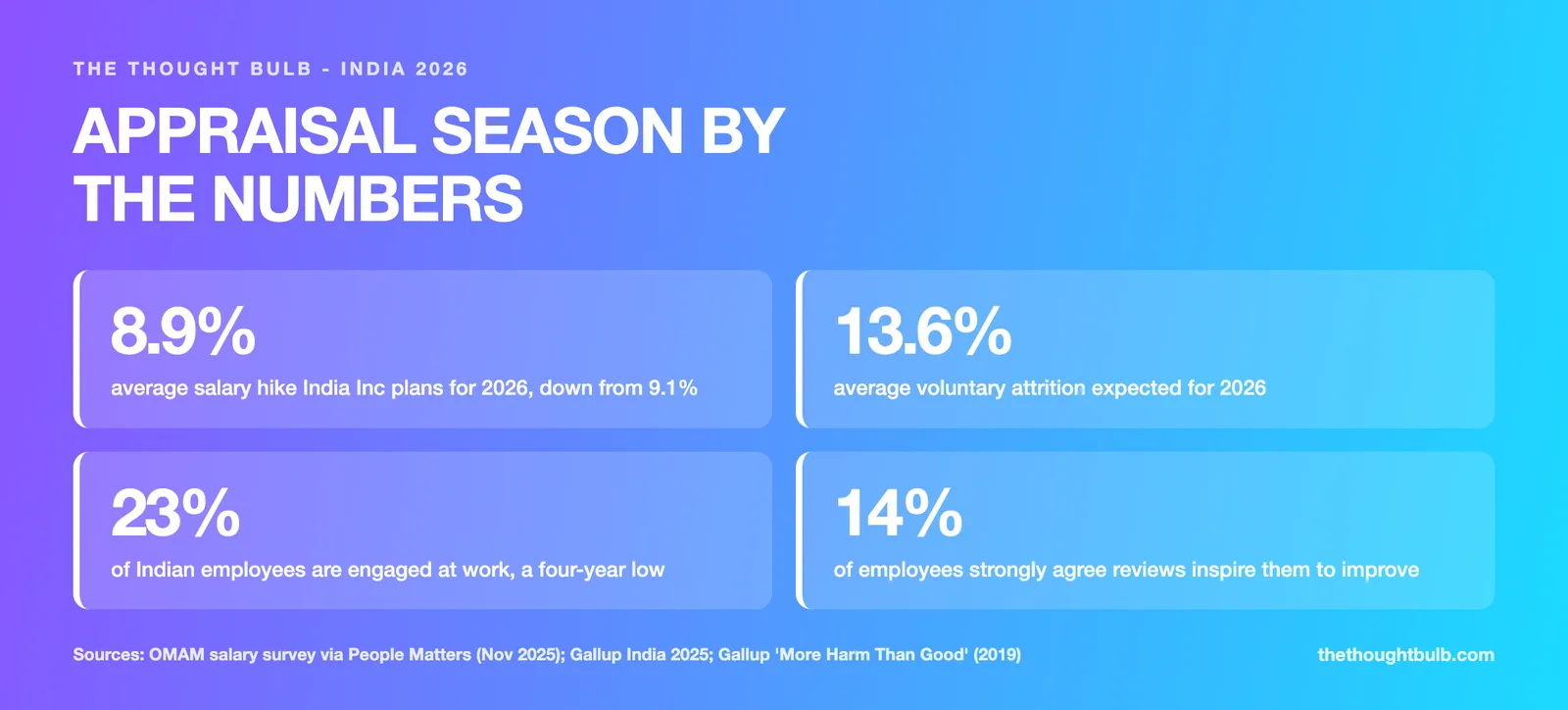
Numbers make the case better than opinion, so here is the picture in one place. Together they show a cycle where money is tight, engagement is low and the review format itself often fails to motivate people.
India Inc plans an average salary hike of 8.9 percent for 2026, down from 9.1 percent (OMAM survey via People Matters, November 2025).
Average voluntary attrition is expected at 13.6 percent, with some sectors near 17 to 18 percent (same survey).
Only 23 percent of Indian employees are engaged at work, a four-year low, and Gallup estimates disengagement costs India about 351 billion US dollars a year.
Just 14 percent of employees strongly agree their performance reviews inspire them to improve (Gallup, More Harm Than Good, 2019).
Around 20 percent of employees say they receive feedback weekly, compared with roughly 50 percent of managers who say they deliver it weekly (Gallup, 2023).
That last gap matters most. Managers believe they are giving regular feedback, employees do not feel it, and the annual review becomes the first honest conversation of the year. That is a recipe for surprise, and surprise is what damages morale.
Where appraisal season goes wrong
Feedback arrives once a year
When the review is the only feedback moment, every comment feels like a verdict. Teams that run monthly or fortnightly check-ins find the annual conversation becomes a summary rather than a shock.
Pay and performance are discussed together
The moment a rating is tied to a number, most people stop listening to development advice. Separating the growth conversation from the compensation conversation, even by a week, helps people absorb both.
Managers are untrained and overloaded
Many Indian managers run reviews with no structured guidance and a full workload. Without a simple framework and calibration support, ratings drift and employees compare notes, which is where perceived unfairness takes root.
Nobody plans for the days after
Letters go out, disappointment lands, and the team is expected to carry on as normal. This is the moment where a deliberate team experience can reset the tone, and where most companies do nothing at all.
Fix the process before you plan the party
Team events cannot repair a process people see as unfair. Start with the basics: publish the criteria early, brief every manager on how to run the conversation, and hold a calibration session so ratings are consistent across teams.
Share the rating framework and timeline at least a month before reviews start.
Train managers on one simple conversation structure covering wins, gaps and next steps.
Keep growth conversations and pay conversations in separate meetings.
Give every employee a clear development action, not only a number.
Collect a short pulse survey two weeks after outcomes are shared.
Once the process is sound, the experience layer becomes far more effective. Our leadership and team experiences library includes formats built for exactly this moment, when teams need to reconnect and rebuild trust.
Team experiences that rebuild trust after reviews
The goal after appraisal season is not forced celebration. It is giving people a low-pressure setting where they work together on something unrelated to their rating, laugh, and remember why they enjoy their team. Two formats work especially well, one in person and one virtual.
In person: Bridge The Gap
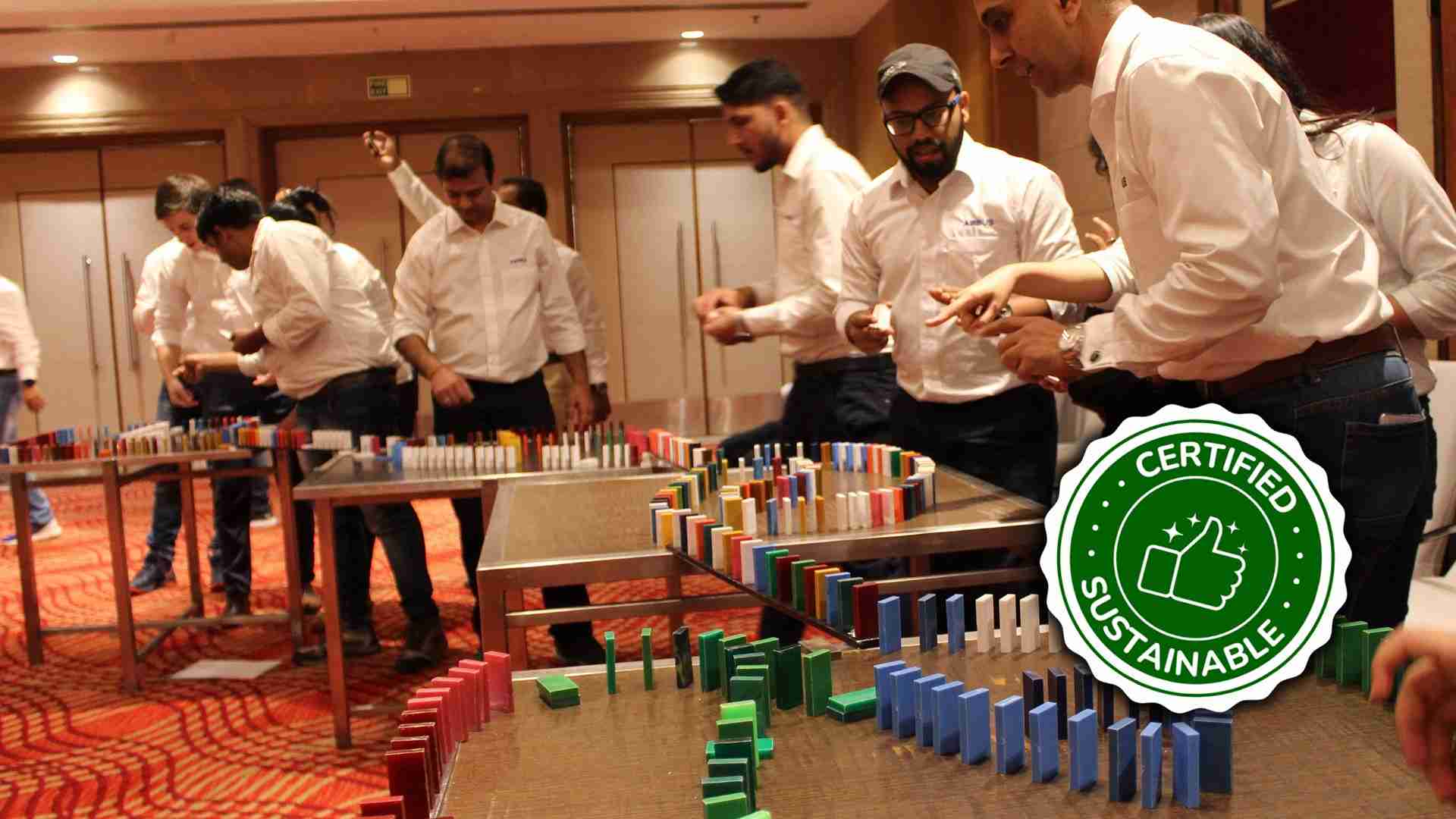
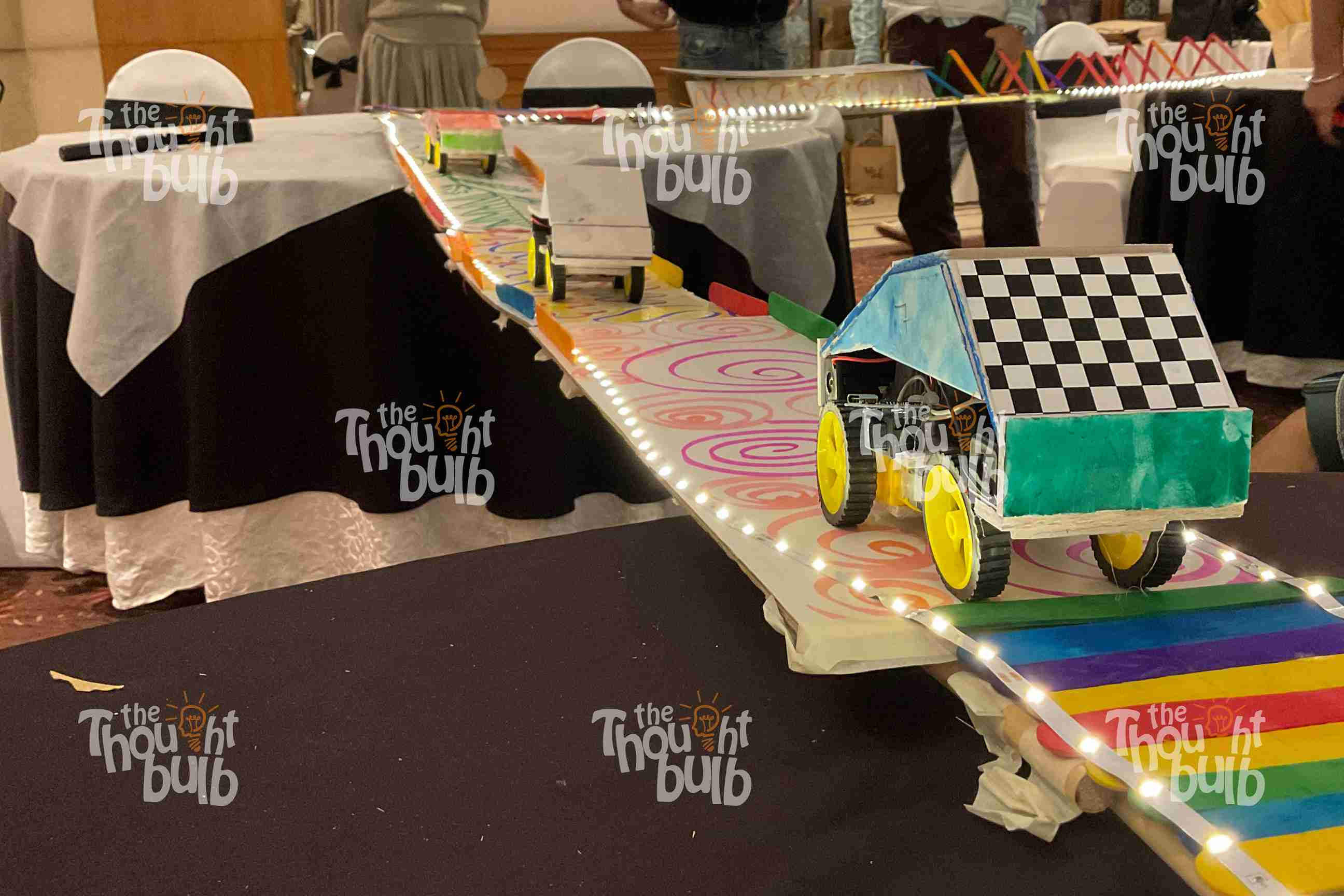
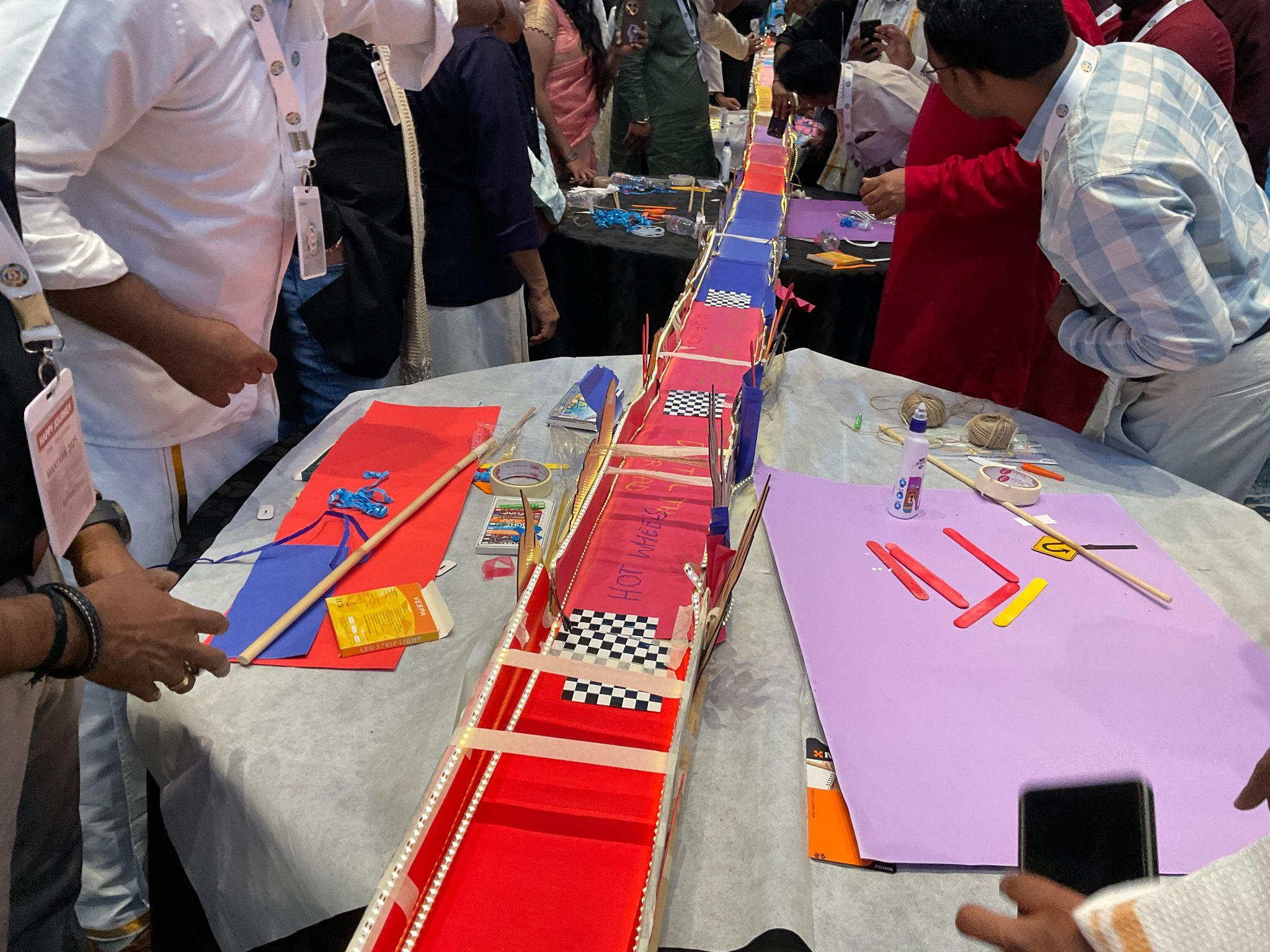
Bridge The Gap puts teams in a scenario where communication, strategic thinking and trust are the only tools that get them across. It works well at scale, because many teams can compete at once while each stays focused on its own challenge. A structured debrief then connects the fun to everyday workplace behaviours such as clear communication and asking for help, which are exactly the habits strained by a tough review cycle.
Virtual: Team Happiness Challenge
Distributed and hybrid teams often feel appraisal stress more sharply, because there is no corridor conversation to soften a hard message. The Team Happiness Challenge is a virtual wellness-focused experience that gives remote colleagues a shared, positive activity and a reason to talk about something other than ratings.

If your teams are spread across cities, browse our virtual team building options and pick a format that fits your time zones and group size.
Case study: Bridge The Gap with Siemens in Mumbai
Siemens, a long-standing partner of The Thought Bulb, returned for a Bridge The Gap programme in Mumbai with 400 participants split into 40 teams. The brief was simple: have fun and collaborate. Because this was a repeat group, expectations were already high.
The programme followed a deliberate flow of energisers, the main Bridge The Gap activity and a structured debrief linking the experience to real workplace behaviour. A returning facilitator brought immediate rapport. The result was spontaneous collaboration across mixed teams and a high-energy day that deepened an existing relationship. The lesson for appraisal season is that a well designed shared experience can create goodwill at scale when people are ready to reconnect.
You can read more outcomes from similar programmes in our case studies section.
A 90-day plan for a healthier appraisal season
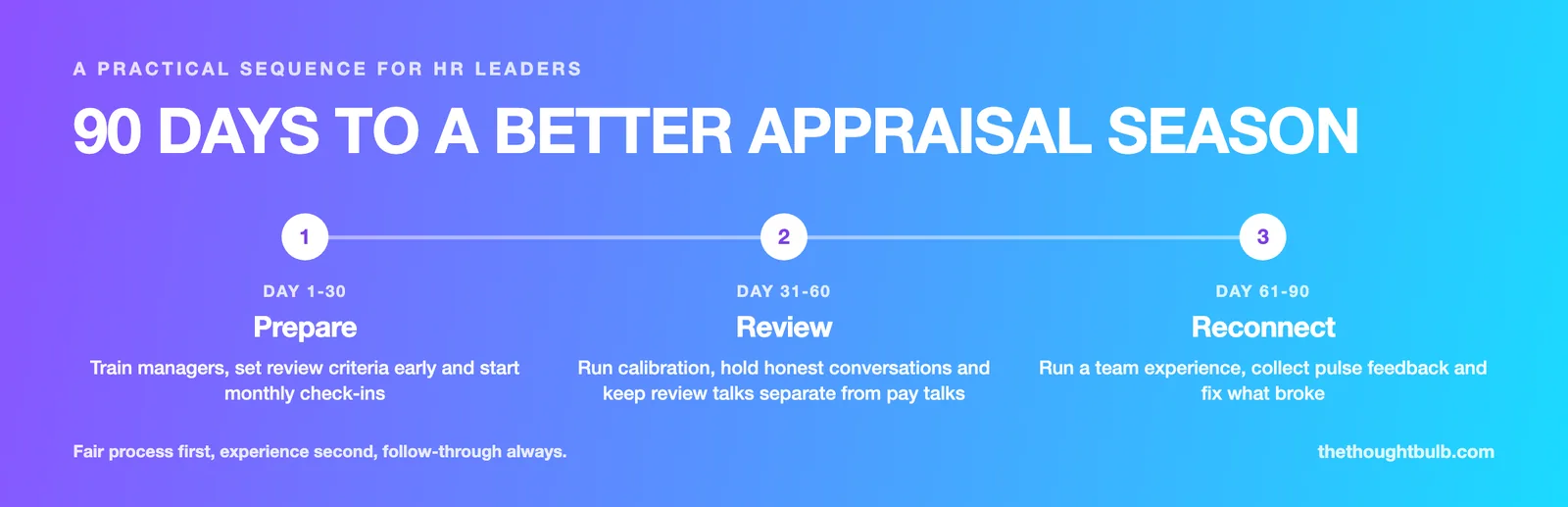
Morale protection works best as a sequence, not a one-off event. Here is a simple structure HR teams can adapt, starting from the day appraisal communication begins.
Days 1 to 30: Prepare
Brief managers and publish review criteria early.
Start monthly check-ins so no feedback arrives as a surprise.
Plan the post-review team experience now, so it is on the calendar before outcomes land.
Days 31 to 60: Review
Run calibration so ratings are consistent across teams.
Hold honest, structured conversations and keep pay talks separate from growth talks.
Give managers a short script for disappointing outcomes.
Days 61 to 90: Reconnect
Run a team experience, in person or virtual, within two weeks of outcomes being shared.
Collect pulse feedback on fairness and clarity.
Act visibly on at least one thing employees raise.
Common mistakes to avoid
Three patterns show up again and again. The first is announcing a team celebration on the same day as disappointing ratings, which feels tone-deaf. The second is making attendance feel mandatory, which turns a reset into another obligation. The third is skipping the debrief, so the event is fun but changes nothing. Keep the experience voluntary in spirit, well timed and tied to a clear conversation about how the team will work together next quarter.
Closing thoughts
Appraisal season will always carry some tension, and that is normal. What separates strong cultures is how deliberately they handle the weeks around it. Fair process, regular feedback and a thoughtful moment of connection afterwards can protect engagement even in a year of modest hikes. If you want help designing that moment for your teams, our team is happy to talk through formats that match your size, locations and budget.