The last quarter of the year is when Indian offices quietly decide whether their people will stay or start updating their resumes. Appraisal conversations are looming, targets are being chased, festival leave has scattered the team, and December is full of deadlines. A thoughtful year-end celebration is one of the few moments when a company can pause, say thank you properly, and reset the mood before January. Done badly, it is a mandatory dinner where everyone checks their phone. Done well, it becomes the story people tell about their team for the next twelve months.
This guide is written for HR leaders, people managers and founders planning year-end team celebrations in India in 2026. It covers what the data says about engagement right now, five principles that separate good celebrations from forgettable ones, specific in-person and virtual experiences you can run, a real case study, and a simple October to December plan you can adapt to your own calendar.
Why Year-End Matters More Than You Think
The engagement gap is real
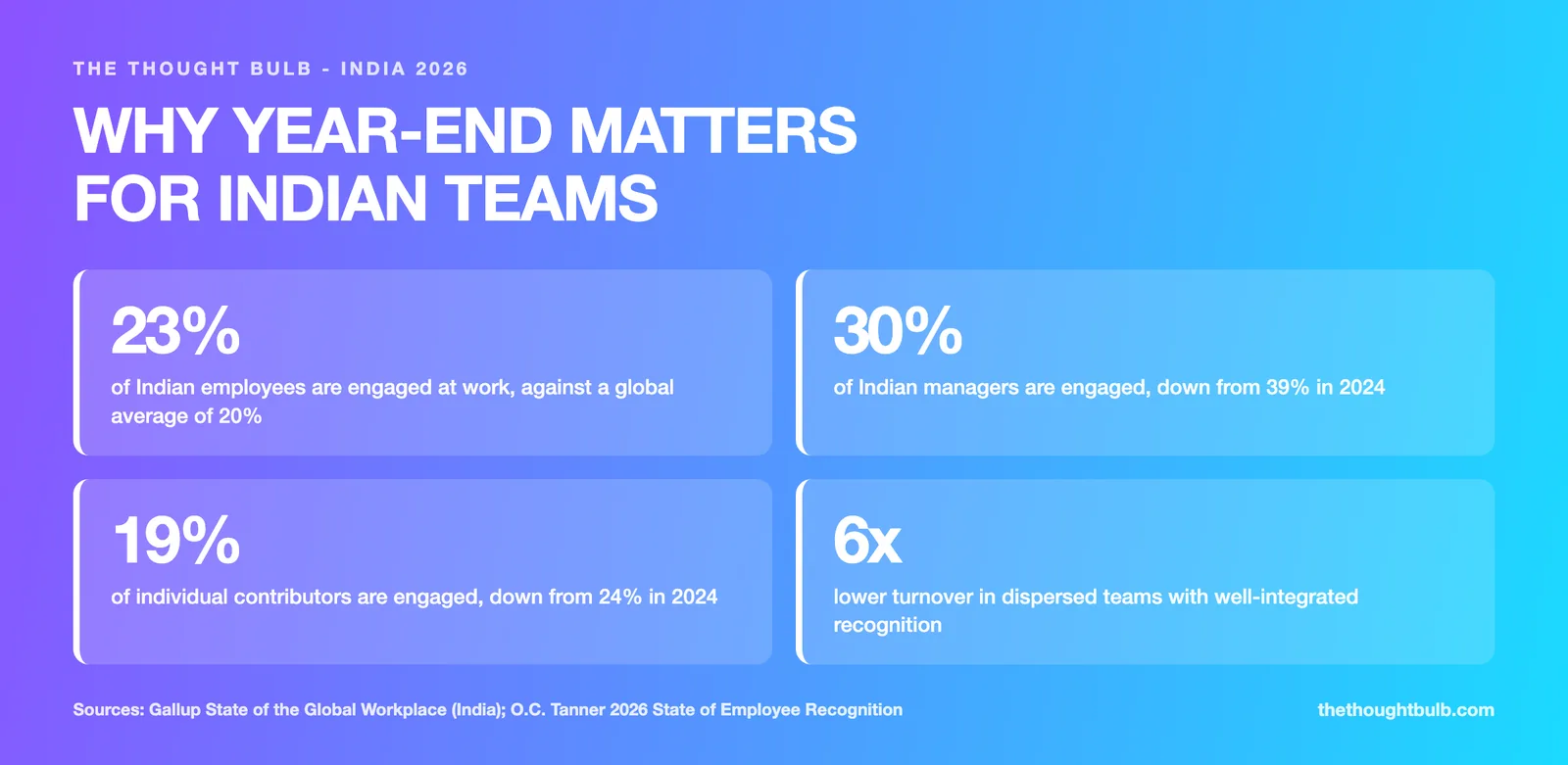
Gallup reports that only 23 percent of Indian employees are engaged at work, which is above the global average of 20 percent but well below what most leadership teams assume. That means roughly three in four people in your office are showing up without feeling emotionally connected to their work or workplace. A year-end event will not fix that on its own, but it is a rare, visible chance to show the other seventy-seven percent that the company notices them.
Managers are feeling it too
The same Gallup data shows engagement among Indian managers fell to 30 percent from 39 percent in 2024, while individual contributors slipped to 19 percent from 24 percent. Managers are the people who usually organise the team dinner, carry the targets and absorb the stress. If they are running on empty, a celebration that adds work to their plate will backfire. The best year-end plans take load off managers rather than adding to it.
Why timing helps
People remember how a period ended far more clearly than how it began. A strong finish in December can soften a difficult third quarter, reframe missed targets as shared effort, and give teams a shared reference point going into the new financial planning cycle. It also lands close to appraisal season, when employees are already asking whether their contribution is seen.
What the Data Says About Recognition and Retention
Recognition research gives a clear direction. The O.C. Tanner Institute 2026 State of Employee Recognition report, based on more than 4,200 employees across 10 countries, found that recognition woven into everyday work is linked with strong outcomes:
Employees with integrated recognition report 26 times higher odds of planning to stay another year.
They also report 25 times higher odds of doing great work and 43 times higher odds of trusting the organisation.
For dispersed teams, integrated recognition is associated with 6 times lower turnover, 51 times higher odds of strong collaboration and 47 times higher odds of good communication.
In-person recognition has grown, with 60 percent of employees now experiencing it, up from 42 percent.
The lesson for year-end planning is that a single event works best when it is part of a wider habit of recognition, and when it lets people be seen in person, by peers as well as managers. For Indian companies with multiple offices, remote hires and hybrid schedules, the dispersed-team finding matters most: if your celebration only serves the head office, you are ignoring the people who are most likely to leave.
Five Principles for a Year-End Celebration That Works
1. Ask before you plan
Run a five-question pulse survey in early October. Ask what people enjoyed last year, what they would skip, and what would make them feel appreciated. You will often discover that the loudest assumptions, such as a big party with a DJ, are not what the quiet majority wants. Teams with many introverts, working parents or long commutes usually prefer a daytime experience over a late-night event.
2. Make everyone a participant, not an audience
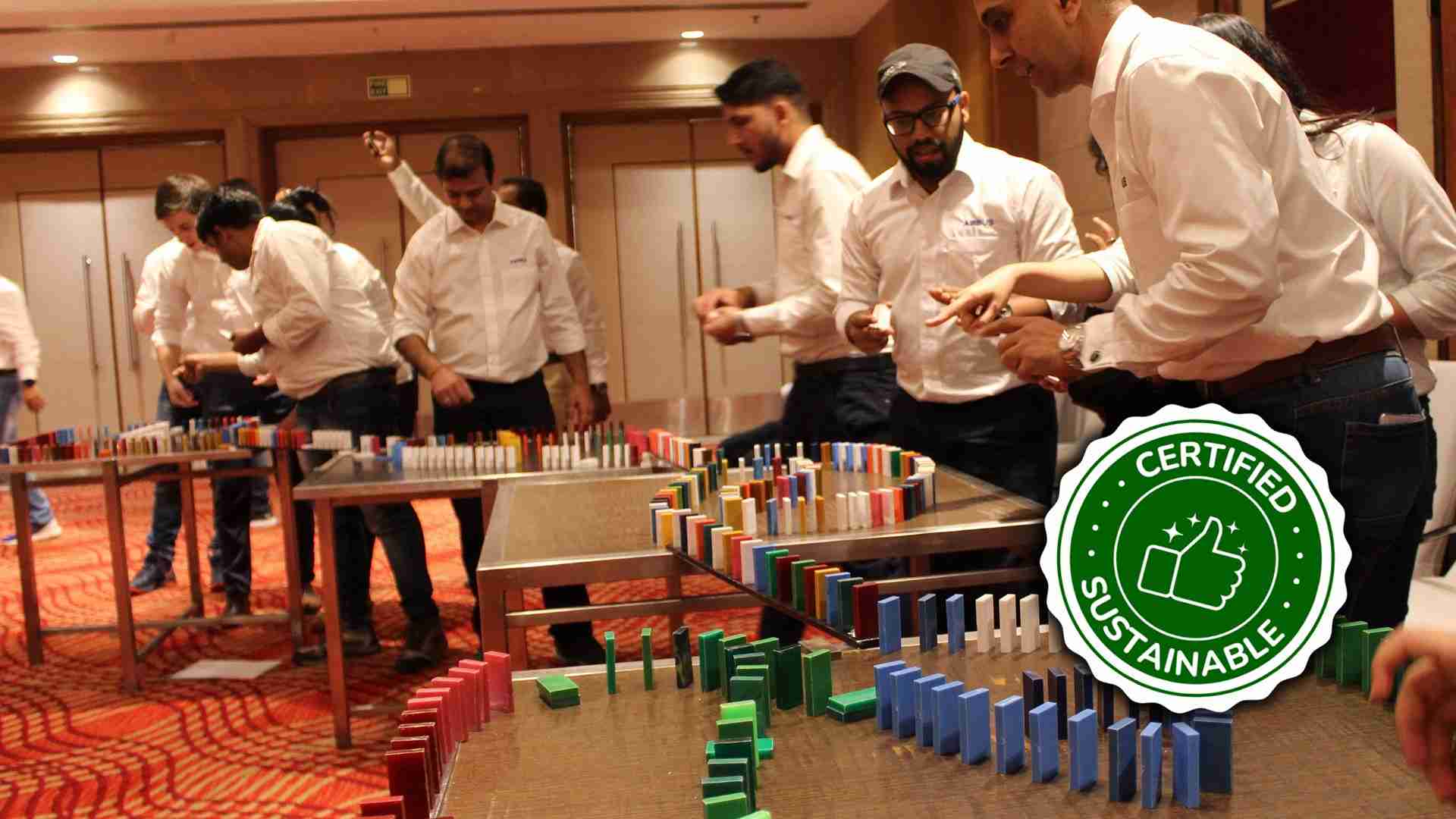
The most common failure is a stage, a speech and a buffet. People clap politely and leave. Experiences where small teams solve something, build something or create something together generate conversation across departments, which is exactly what year-end should do.
3. Recognise specifically
Generic awards feel hollow. Ask managers to collect two or three concrete examples of what each person did this year and share them aloud. A sentence such as "you rebuilt the onboarding process after three people left" lands far better than "thanks for your hard work".
4. Include every location and every shift
If your company has a Gurugram head office, a Pune delivery centre and remote staff in smaller cities, plan a format that reaches all of them. A hybrid celebration with a shared virtual segment and local in-person experiences is far better than a single flagship event that most people watch on a screen.
5. Close with reflection
End with a short moment where teams name one thing they are proud of and one thing they want to change next year. This turns the celebration into input for planning rather than a one-off party.
Experiences Worth Considering
The right format depends on team size, budget and how much of the workforce is on site. Below are two experiences from our catalogue that suit year-end well, one in person and one virtual.
In person: Vision Board
Vision Board is an indoor or outdoor experience where teams create a shared visual of what they want the next year to look like, using prompts on goals, culture and personal growth. It works well in December because it turns reflection into something tangible people can pin on a wall. You can explore the format and related options on our activities page.

Virtual: Team Karaoke and Musical Challenge
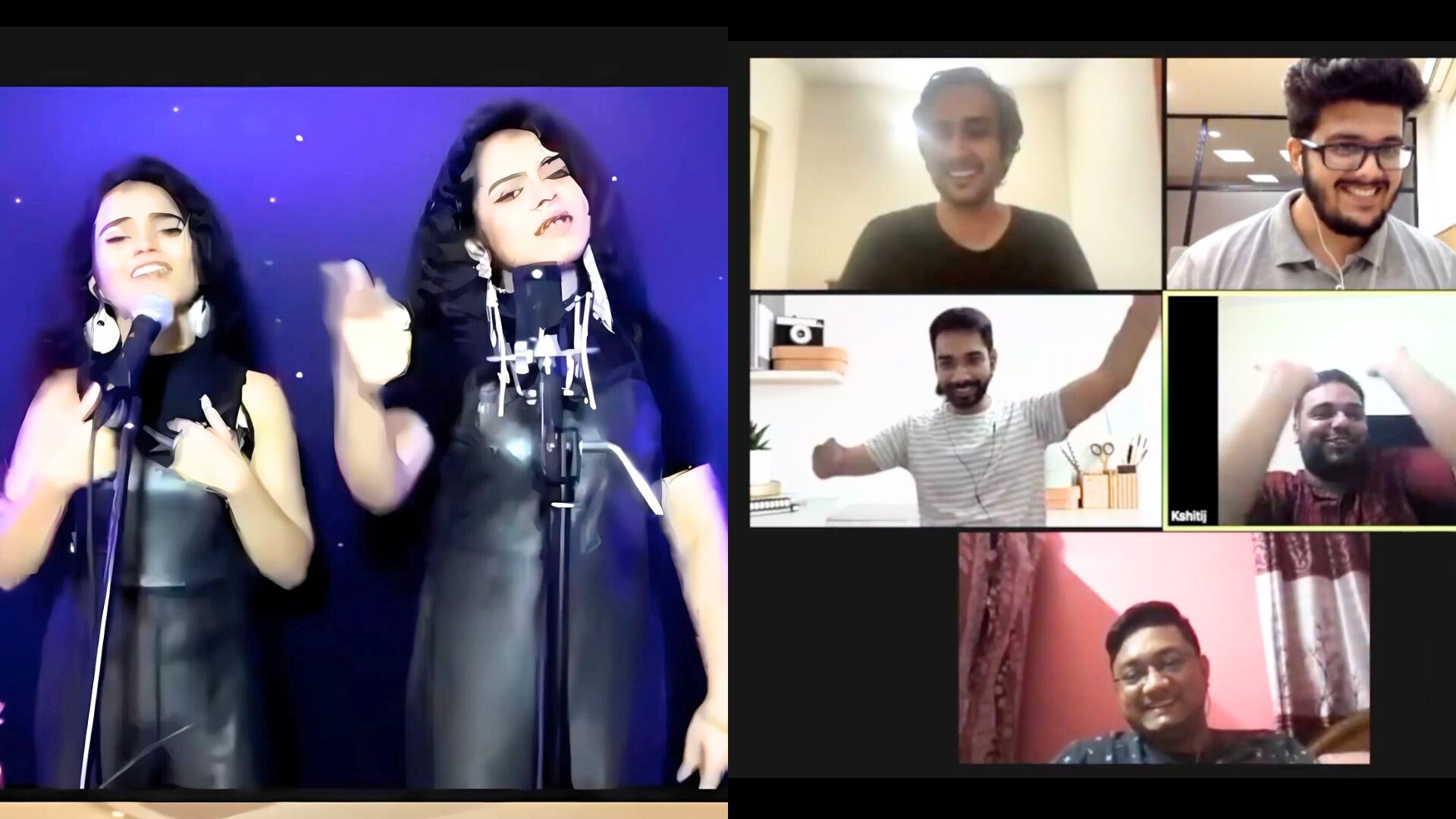
For distributed teams, the Team Karaoke and Musical Challenge brings people together on screen for music, humour and friendly competition, with no travel needed. It is especially useful when a large share of your workforce is remote or spread across cities, and it pairs well with the ideas in our guide to virtual team building. If you want something shorter, Raise a Virtual Toast is a lighter option that fits into a 45 minute year-end call.
Case Study: Giving Back at Year-End with BCG
Not every year-end celebration has to be about the team alone. In Mumbai, BCG teams took part in the Thanksgiving Elves experience, a purpose-driven format that channels team energy into giving to others. The structure is simple: teams work together on a shared task, and the outcome benefits people outside the company. This links teamwork to something beyond targets, which is why giving-based formats suit the end of the year so well.
If your organisation is looking for a similar approach, see our CSR activities for ideas that combine team bonding with community impact.
Browse more client stories in our case studies library.
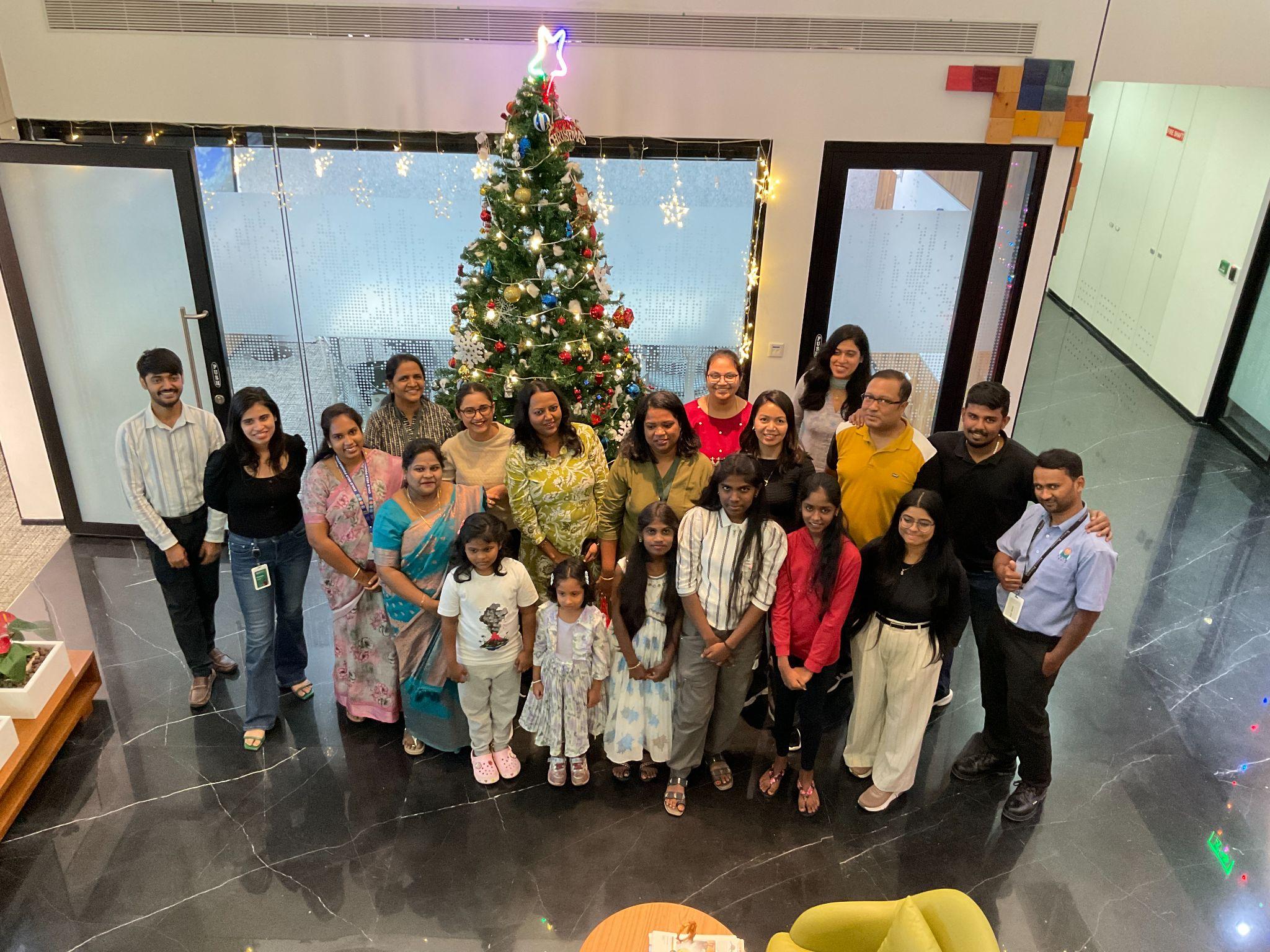
The wider point is that year-end celebrations built around purpose often carry more weight than those built purely around entertainment, especially with younger employees who want their employer to stand for something.
A Simple October to December Plan
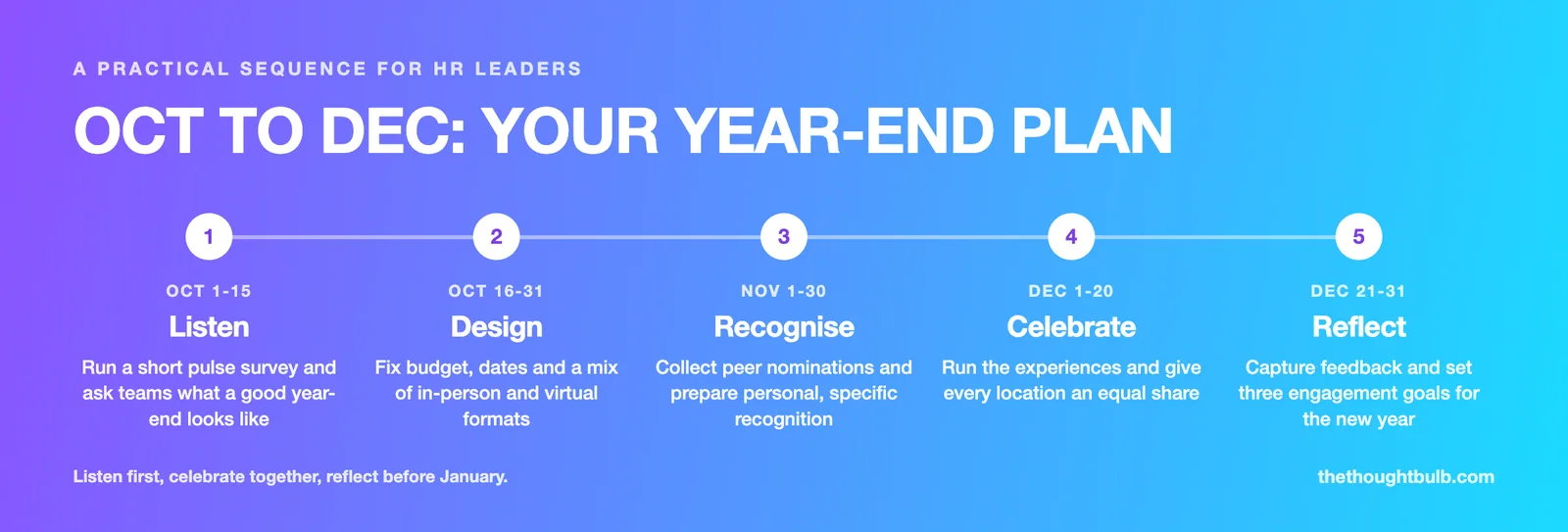
Most year-end events fail because planning starts in late November. Working backwards from December gives you room to listen, design and recognise properly. The sequence below fits a typical Indian financial calendar and can be compressed for smaller teams.
October 1 to 15, Listen: run a short pulse survey and ask teams what a good year-end looks like.
October 16 to 31, Design: fix budget, dates and a mix of in-person and virtual formats.
November 1 to 30, Recognise: collect peer nominations and prepare personal, specific recognition.
December 1 to 20, Celebrate: run the experiences and give every location an equal share.
December 21 to 31, Reflect: capture feedback and set three engagement goals for the new year.
If you are building a wider programme, our employee engagement calendar helps you place the year-end event alongside festivals, wellness days and quarterly check-ins so the year feels connected rather than bunched around December.
Common Mistakes to Avoid
Making attendance compulsory outside working hours. It signals control, not appreciation, and it excludes caregivers.
Running the event only at headquarters and ignoring remote or branch teams.
Letting senior leaders dominate the stage while junior contributors are thanked in a single slide.
Spending the whole budget on food and decor with no shared activity.
Skipping follow-up. If feedback is never acted on, people stop giving it.
Budget guidance
A meaningful year-end does not need a lavish budget. A half-day experience with a shared meal, specific recognition and a short reflection often outperforms an expensive party. Spend on the activity and the recognition, and keep venue and decor simple.
Bringing It Together
Year-end is one of the best opportunities an Indian company has to rebuild energy, show appreciation and set the tone for the year ahead. Start early, ask your people what they want, make everyone a participant and finish with reflection. If you would like help designing a celebration that fits your team size, locations and budget, the Thought Bulb team is happy to talk it through.