Every year, Indian teams hit the same wall between October and December. Diwali pulls half the office out of focus, appraisal letters land (or do not), year-end targets squeeze everyone, and the best people quietly start updating their resumes. If you lead HR or run a team, the last quarter is not a countdown to the holidays. It is the quarter that decides who is still on your team next April. This guide lays out a practical Q4 employee engagement plan for Indian companies, backed by current data and built around four simple stages you can start this week.
Why Q4 is the make-or-break quarter for engagement in India
Q4 stacks three pressures on top of each other. First, business pressure: closing the year, hitting numbers, finishing projects that slipped earlier. Second, calendar pressure: festive leave, school holidays, and the long tail of Diwali travel that fragments teams for weeks. Third, people pressure: appraisal conversations that shape how valued someone feels going into the new year.
When these collide without a plan, managers default to one lever, which is more pressure. That is exactly the wrong move when engagement is already fragile. A deliberate Q4 plan protects energy, makes recognition visible, and gives people a reason to stay that has nothing to do with the size of the increment.
The cost of drift
Disengagement does not announce itself. It shows up as quieter meetings, slower replies, fewer ideas, and then a resignation that surprises everyone except the team. By the time exit interviews happen, the real decision was made weeks earlier.
What the 2026 data says about Indian workplaces
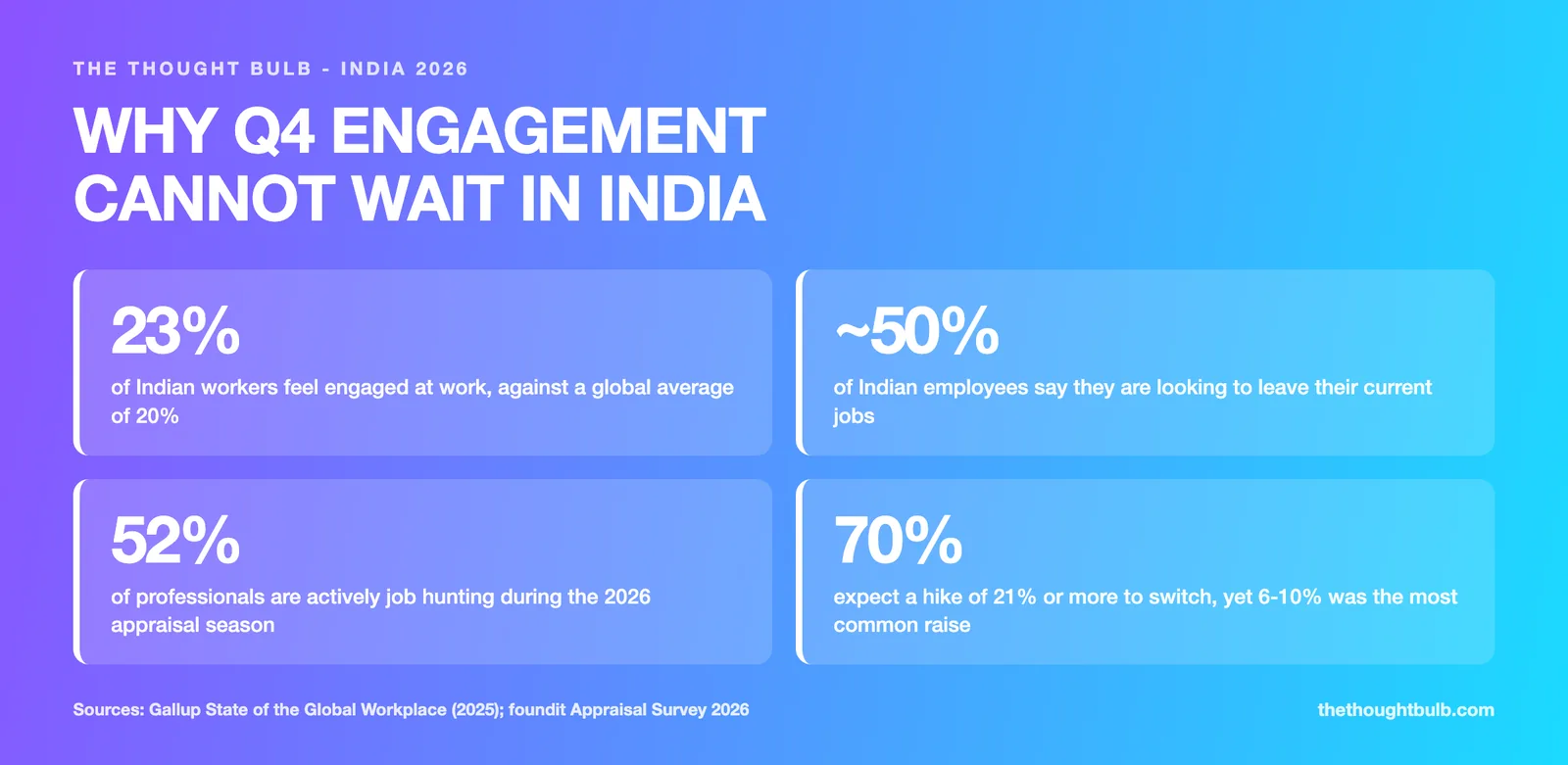
The numbers explain why this quarter deserves a plan. Gallup reports that only 23 percent of Indian workers feel engaged at work, compared with a global average of 20 percent, and the pressure is felt unevenly: manager engagement fell from 39 percent to 30 percent, while individual contributor engagement fell from 24 percent to 19 percent. Gallup estimates the productivity loss from disengagement at about 351 billion US dollars a year, roughly 9 percent of India GDP.
Gallup State of the Global Workplace 2025 found that nearly half of Indian employees say they are looking to leave their current jobs, and about 30 percent report facing daily stress at work.
The foundit Appraisal Survey 2026 found that 52 percent of professionals are actively looking for a new job right now, and 96 percent are open to switching.
In the same survey, 70 percent expect a hike of 21 percent or more to change jobs, yet the most common increment actually received was only 6 to 10 percent, and 27.9 percent had still not been appraised by June 2026.
Read together, these figures say something uncomfortable: a large share of your team is already mentally open to leaving, the money gap is real, and the budget alone will not close it. What you can control is the experience of work, the quality of manager conversations, and whether people feel seen. That is what engagement spending in Q4 is really for.
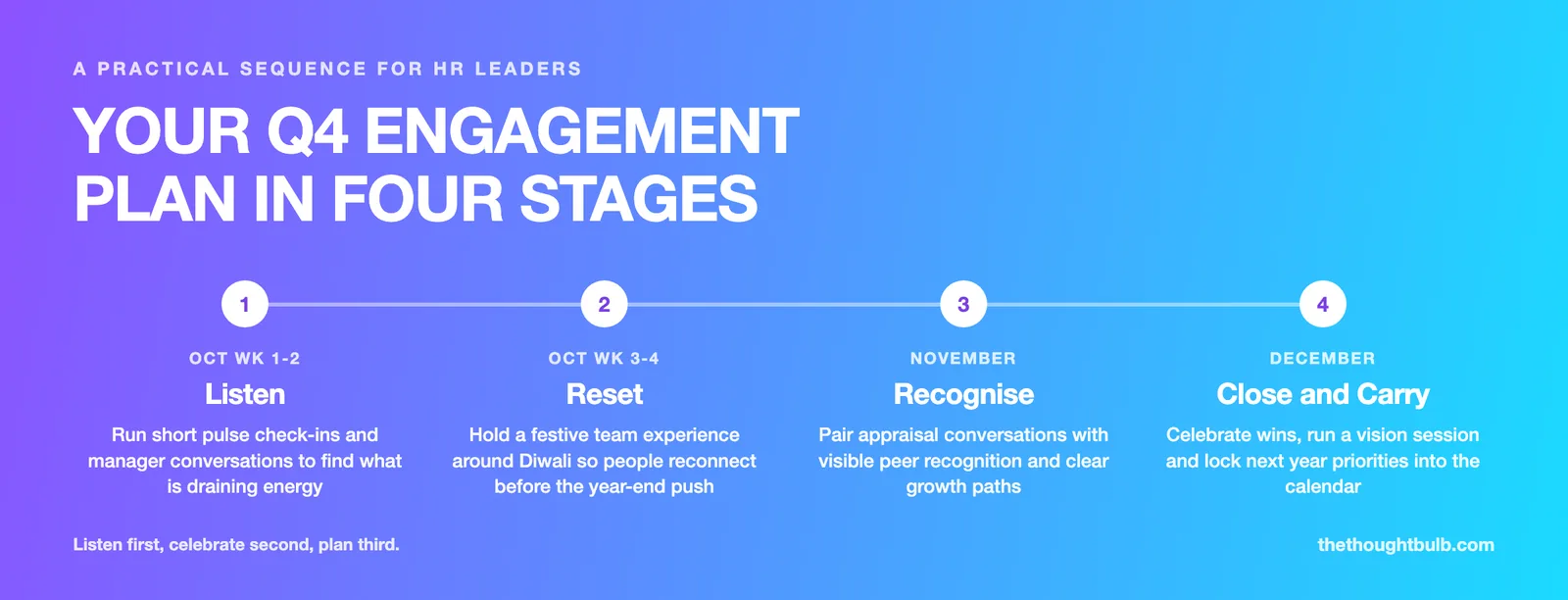
Stage 1 (October, weeks 1-2): Listen before you plan
Do not start with a calendar of events. Start with a short listening sprint. Ask managers to hold ten-minute conversations with each direct report that cover three questions: what is giving you energy, what is draining it, and what would make the next ten weeks easier.
Run a five-question pulse survey that takes under three minutes and closes within a week.
Ask managers to log themes, not names, so people feel safe being honest.
Look for patterns by team and city before you design anything. A Gurugram sales team and a Bengaluru engineering team rarely need the same thing.
This stage also tells you where your flight risks sit. Teams reporting high stress and low recognition deserve your first events and your best facilitators.
Stage 2 (October, weeks 3-4): Reset around the festive season
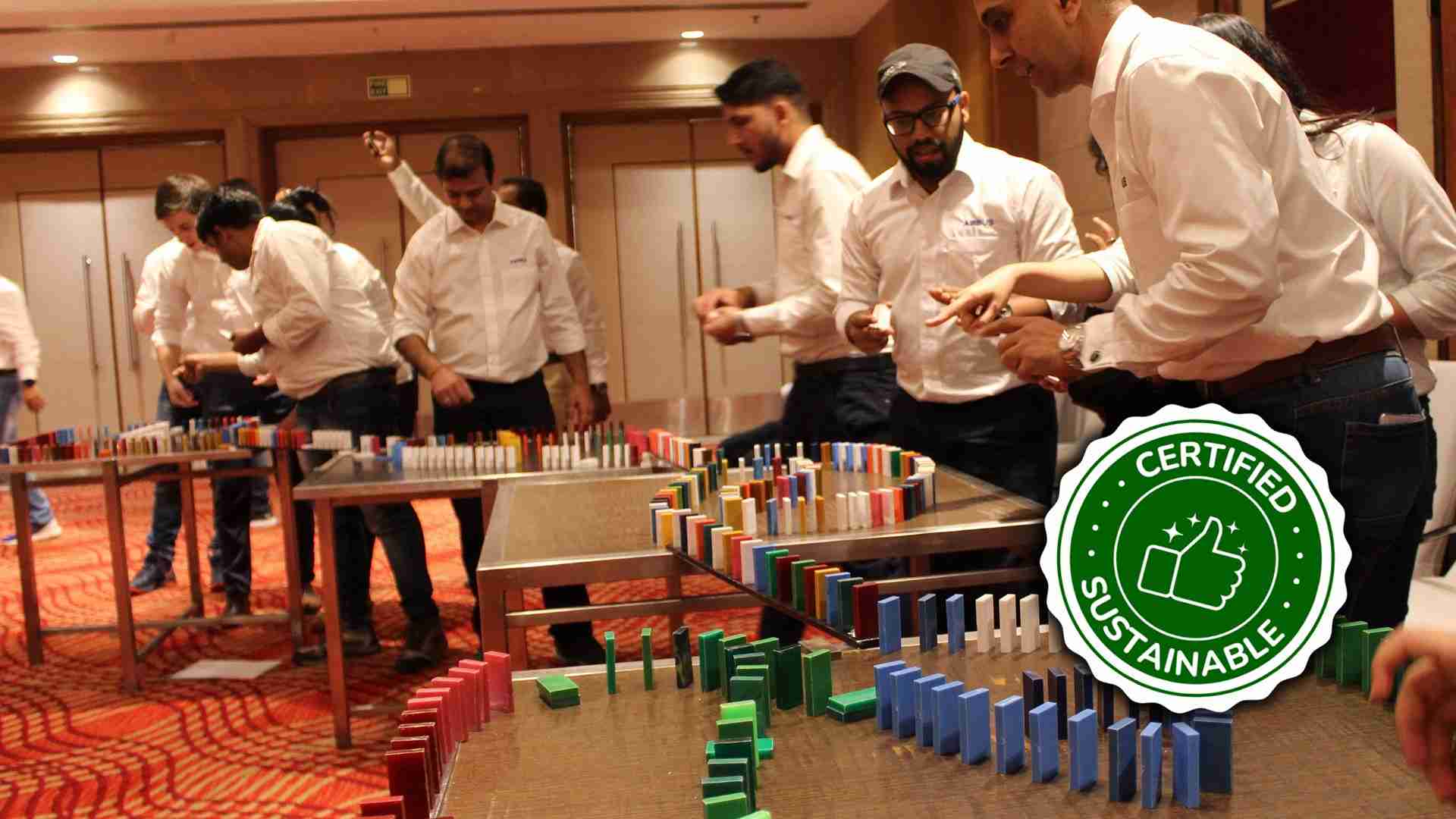
Diwali is the natural moment to reconnect. People are already in a celebratory mood, and the shared ritual gives teams permission to be playful. The trap is making it a lunch and a gift hamper. A hamper is appreciated, but it does not rebuild trust between colleagues who have spent months on video calls.
Instead, build one shared experience per team before the holiday break. Browse our full activities library for in-person and virtual formats that work for a single floor or a distributed group across cities.
An in-person option: Indoor Olympics
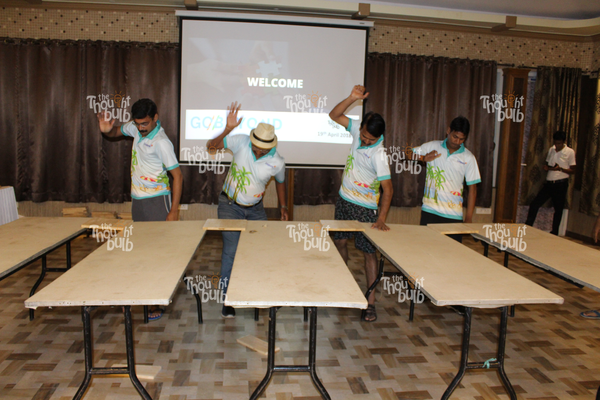
The Indoor Olympics turns a conference room, basketball court or banquet hall into a mini games arena. Teams rotate through short indoor sports and challenges, points are tracked live, and the energy comes from friendly competition rather than forced bonding. It suits mixed seniority groups well because nobody needs to be an athlete to contribute a point.

A virtual option: Team Happiness Challenge
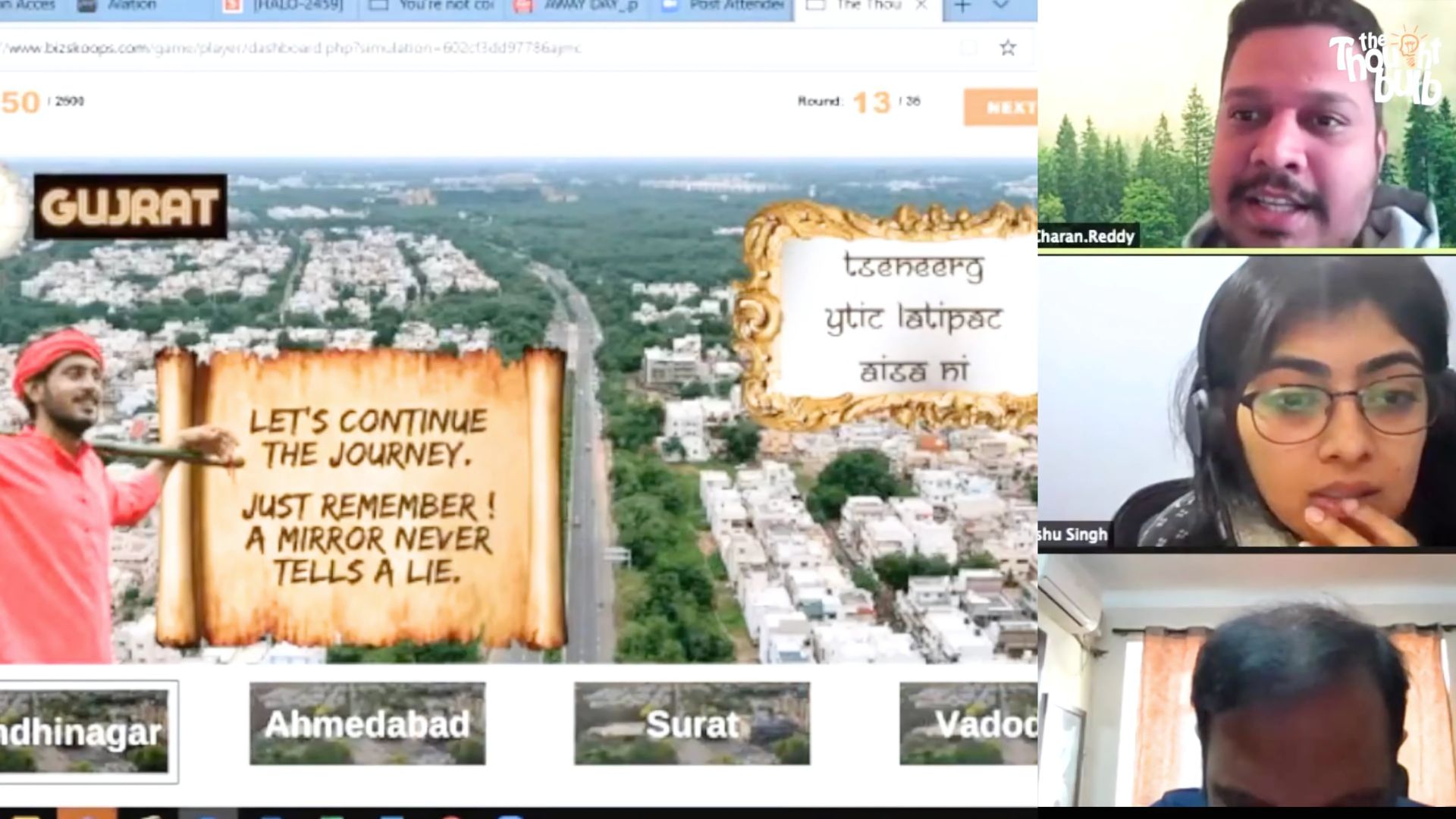
For hybrid or multi-city teams, the Team Happiness Challenge is a virtual experience built around wellness and positive connection. It works well in the middle of a heavy quarter because it asks for an hour, not a day, and it leaves people lighter rather than more tired.
If part of your workforce is remote, our guide to virtual team building explains how to keep online sessions interactive instead of passive.
What a full-day festive reset looks like in practice
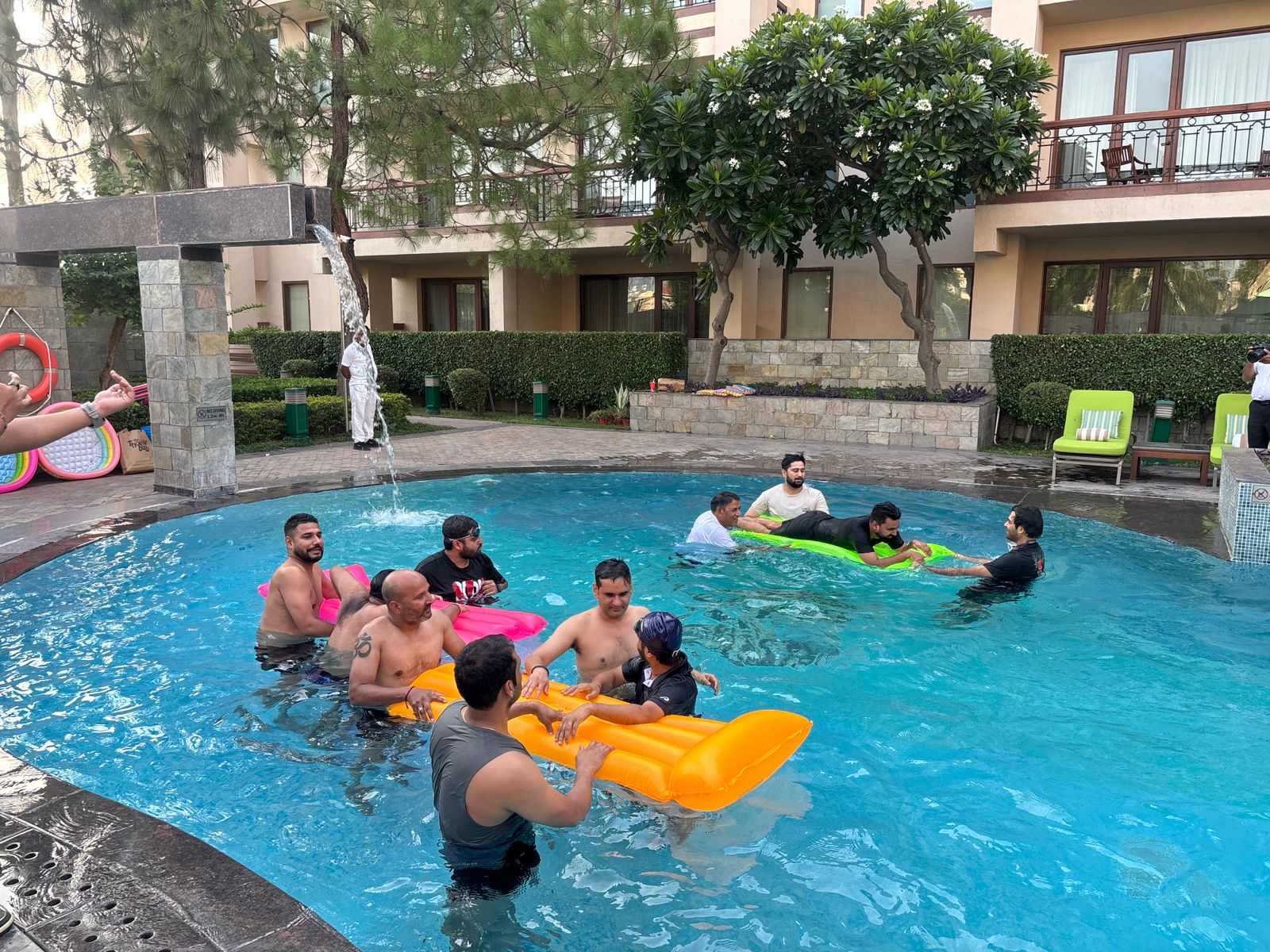
Consider how The Thought Bulb ran an ITC Olympics in Noida for ITC. The brief from the sales team was refreshingly direct: make it scream fun. With a separate team-building event already on the calendar, this day was purely for play, covering junior to senior levels across 8 internal units and roughly 180 to 200 participants.
The day ran in two phases. From 10 AM to 4 PM, teams competed in indoor sports on a basketball court with live commentary, a dedicated scorekeeping system and trophies for winners. From 4 PM to 6 PM, pool-side Minute to Win It games shifted the mood to spontaneous laughter. A team of seven to eight facilitators managed commentary, scoring and energy across both venues. The debrief confirmed the experience delivered exactly what the brief asked for. For a sales team that lives by targets, a day designed only around joy was the reset they needed.
You can read more stories like this in our case studies, including formats that scale from 30 people to several hundred.
Stage 3 (November): Recognise, and make appraisal talks count
November is when appraisal conversations tend to cluster. Given that most Indian professionals expect a bigger raise than they usually receive, the conversation itself carries more weight than ever. A manager who explains the decision clearly, names specific contributions and describes a growth path can soften a modest increment. A manager who goes vague makes it worse.
Pair the money talk with visible recognition
Hold short peer recognition rounds at the end of team meetings, where each person names one colleague who helped them this quarter.
Publish a monthly wins note that credits specific people and specific outcomes, not generic thanks.
Train managers on a simple structure for appraisal talks: what you did well, where you can grow, and what comes next.
Remember the people who have not been appraised yet
Close to 28 percent of professionals in the foundit survey had still not been appraised by June. If your cycle runs late, communicate the timeline openly. Silence is read as indifference.
To spread recognition moments across the year instead of cramming them into one quarter, use our employee engagement calendar to plan 2027 touchpoints now.
Stage 4 (December): Close the year and carry momentum into January
The final stage is about meaning. Celebrate what the team actually delivered, then point everyone at what comes next. A vision session is a good format for this. Teams reflect on the year, name what they want more of, and turn ideas into a visible board for January. Activities such as the Vision Board experience give that reflection a creative, shared outcome instead of another slide deck.
Do not skip the practical close. Lock next year priorities into the calendar before people leave for year-end leave, so the first week of January starts with clarity rather than catch-up.
If purpose is a gap in your team, a giving-back session can help. Our CSR team activities pair teamwork with community impact, which many employees say they want more of from their employer.
A simple checklist to start this week
Send a three-minute pulse survey to every team by Friday.
Book one shared team experience per team before the festive break, in-person or virtual.
Brief managers on how to run appraisal conversations and recognition rounds.
Block a December vision session in every team calendar now.
Agree two or three engagement measures to review in January: participation, pulse scores and regretted attrition.
Keep the plan light. Four stages and a few well-run experiences will do more than a packed calendar nobody has energy for. The goal is not to entertain people for ten weeks. It is to make sure that when the new year starts, your best people have a reason to be excited about staying.
Conclusion: finish the year with people, not just numbers
Indian teams will keep facing Q4 pressure, and engagement scores show how thin the margin is. The companies that retain talent are the ones that listen early, create real moments of connection around Diwali, make recognition visible during appraisal season, and close the year with purpose. If you want help designing a Q4 experience for your teams, our facilitators can tailor a format to your headcount, cities and budget. Reach out to The Thought Bulb and we will help you build a plan that fits.