Every HR leader who has ever signed off on an offsite has eventually faced the same question from finance: what did we actually get for that spend? In 2026, with budgets under tighter scrutiny than ever, that question has teeth. Team building in India is no longer treated as a feel-good line item. It is expected to show up in retention numbers, in engagement scores, and in how quickly teams recover after a hard quarter. The good news is that the return is real and measurable. The harder truth is that most companies never bother to measure it, which is exactly why their programmes get cut first when costs are reviewed.
This guide walks through how to think about the return on investment of team building, which numbers actually matter, and how to build a simple measurement framework that survives a conversation with your CFO. We will also look at what the latest engagement data says, and how a few well-designed experiences translate directly into business outcomes.
Why ROI Matters More in 2026 Than Ever Before
The backdrop is sobering. Employee engagement in India has slipped to a four-year low, and that decline carries a price tag that is impossible to ignore once you see it written down.
The cost of doing nothing
Only 23 percent of Indian employees say they feel engaged at work in 2026, down sharply from 30 percent a year earlier.
Workplace disengagement now costs India roughly 351 billion dollars a year in lost productivity, equal to about 9 percent of national GDP.
Manager engagement fell from 39 percent to 30 percent in a single year, a steeper drop than among individual contributors.
When engagement falls, the costs do not announce themselves on a single invoice. They leak out slowly through higher attrition, slower projects, more sick days, and quieter meetings where nobody volunteers an idea. Team building is one of the few levers that pushes directly against all of those at once, which is precisely why measuring its return is worth the effort.
What the Data Says About the Return
Decades of workplace research point in the same direction: teams that are genuinely connected and engaged outperform teams that are not, and the gap is large enough to show up on a balance sheet.
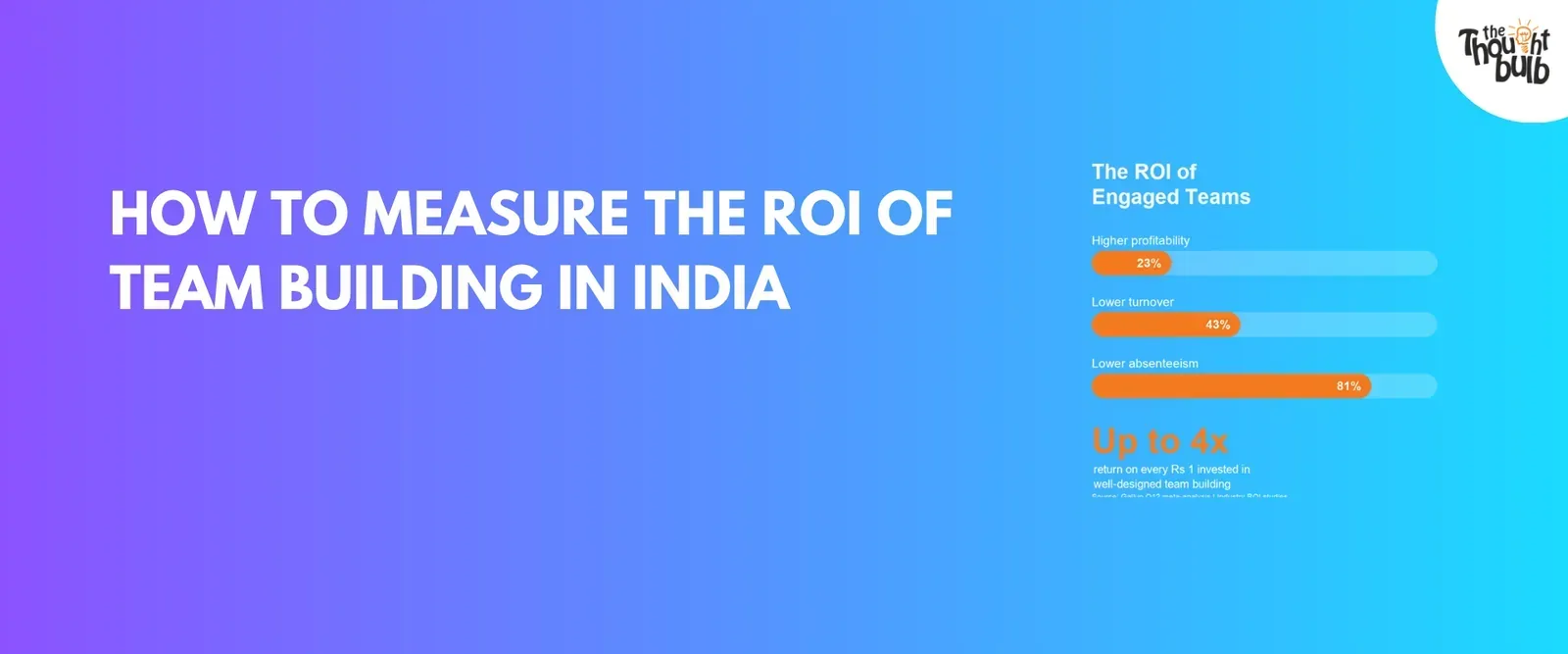
Business units in the top quartile of engagement deliver 23 percent higher profitability than those in the bottom quartile.
Highly engaged teams show up to 81 percent lower absenteeism and substantially lower turnover, with the gap running anywhere from 18 to 43 percent depending on the industry.
When tracked properly, structured team building can return up to four times the amount invested, and some studies report figures higher still for programmes tied to clear objectives.
The illustration at the top of this article sums up the pattern. None of these numbers are magic. They are the predictable result of people who trust each other, communicate openly, and want to stay. The job of measurement is simply to make that value visible to the people holding the budget.
A Simple Framework for Measuring Team Building ROI
You do not need a data science team to measure return. You need a baseline, a defined outcome, and the discipline to compare the two. Here is a framework that works for most Indian organisations, from a 40-person startup to a 4,000-person enterprise.
Step one: define the outcome before the event
Decide what this particular programme is meant to move. A leadership offsite and a frontline engagement day have very different goals. Pick one or two primary metrics: attrition in a specific team, internal engagement survey scores, project cycle time, or cross-team collaboration ratings. Vague goals produce vague returns.
Step two: capture a baseline
Record where those metrics stand before the programme. This is the step almost everyone skips, and without it any claim of impact is just a story. A short pulse survey, your HRMS attrition report, and a manager rating are usually enough.
Step three: measure the same metrics 60 to 90 days later
Re-run the same pulse survey questions so the comparison is fair.
Pull attrition and absenteeism for the participating teams and compare against a non-participating control group if you have one.
Ask managers to rate observable behaviour change, not just whether people enjoyed the day.
The ROI calculation itself is straightforward: estimate the rupee value of the improvement, such as the cost of one avoided resignation, and divide by the programme cost. Replacing a single mid-level employee in India typically costs between half and one full year of their salary, so even a modest dip in attrition usually pays for the entire programme several times over.
Activities That Translate Into Measurable Outcomes
Not every activity is built to move a number. The ones that do tend to share a feature: they create a real behavioural rehearsal that people carry back to their desks. Two from our catalogue consistently show up in measurable post-programme improvements.
Everyday Leadership is a half-day experience that puts participants into realistic decision-making scenarios where they practise delegation, feedback, and prioritisation under mild pressure. Because it targets observable leadership behaviours, it pairs neatly with a before-and-after manager-effectiveness survey, which makes its impact easy to quantify in the weeks that follow.

Design Thinking Made Easy works differently but is equally measurable. Teams tackle a genuine customer problem using a structured innovation process, and the ideas they generate are often piloted afterward. When you track how many of those ideas reach implementation, you get a clean line from a single workshop to tangible business output.

These are only two examples. The wider point is to choose experiences whose intended outcome you can name in advance.
If you want to match an activity to a specific metric you are trying to move, browse the full team building activities catalogue and shortlist by the outcome you care about.
What Results Look Like in Practice
Frameworks are easier to trust when you can see them play out. One of the clearest examples comes from our work with a large technology services organisation.
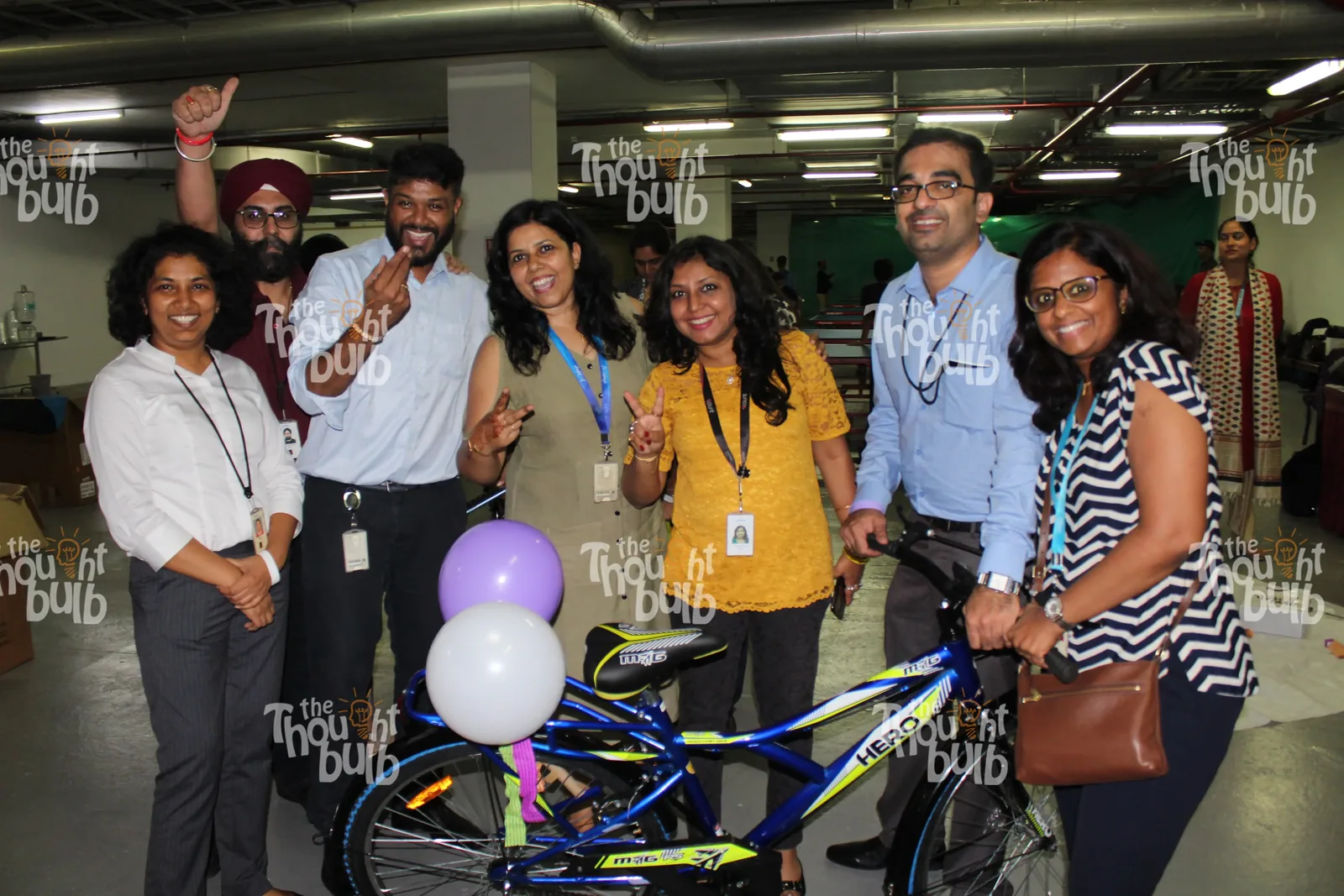
Working with the team at Infosys, the programme was designed explicitly around driving business results rather than running a generic fun day. Activities were tied to collaboration and goal-alignment objectives that the leadership team had already identified as gaps. Because the outcomes were defined up front, the impact on team alignment and momentum was visible in the way the group worked together afterward, not just in the feedback forms collected on the day.
You can read more outcomes like this across different industries on our case studies page, which documents the brief, the activity, and the result for each engagement.
Common Mistakes That Hide Your Return
Plenty of strong programmes look like failures simply because they were measured badly, or not at all. Avoid these traps.
Measuring satisfaction instead of behaviour. A high happiness score on the day tells you people enjoyed themselves, not that anything changed at work.
Skipping the baseline, which makes every later number unanchored and easy to dismiss.
Expecting results too soon. Behavioural and engagement shifts typically surface over 60 to 90 days, not the following Monday.
Running a one-off and expecting lasting change. Return compounds when team building is part of a rhythm rather than a single annual event.
Building that rhythm is easier when it is planned across the year, which is why many HR teams map activities against an employee engagement calendar so that connection is reinforced consistently rather than in one expensive burst.
Building a Programme That Pays for Itself
The organisations that get the strongest return treat team building the way they treat any other investment: with a defined objective, a baseline, and a review. They do not run an activity because it is December and there is budget left. They run it because a specific team needs a specific shift, and they can describe what success will look like before anyone books a venue.
If your leadership pipeline is the priority, weight your calendar toward structured leadership experiences. If morale has taken a hit after a heavy quarter, choose something restorative and collaborative. And if retention is the concern, focus on the teams where attrition risk is highest and measure them closely.
Conclusion
Team building in India has matured past the point where good intentions are enough. The return is genuinely there, often several times the amount invested, but it stays invisible unless you measure it. Define the outcome, capture a baseline, compare 60 to 90 days later, and translate the improvement into rupees. Do that consistently and the budget conversation stops being a defence and becomes a case for doing more.
If you would like help designing a programme with measurement built in from the start, the team at The Thought Bulb can help you scope objectives, choose the right experiences, and track the outcomes that matter. Explore our leadership team building programmes to see where to begin.