For most of the last decade, corporate social responsibility in India lived in the finance department. It was a line item, a compliance box, a 2 percent number that had to be spent and reported before the financial year closed. In 2026, that thinking is quietly being replaced. A growing number of HR and people leaders have realised that CSR, when designed as a shared team experience rather than a cheque written from a desk, is one of the most powerful engagement tools they have. When a team builds something with their own hands for someone who needs it, the bonding that follows is deeper and longer lasting than any rope course or quiz night.
This guide breaks down why CSR team building works so well in the Indian context, what the data says about its impact on engagement and retention, the activities that consistently deliver, and how to run a programme that creates real value for both your people and the community.
Why CSR Team Building Is Having a Moment in India
India was the first major economy to make CSR a legal mandate. Under Section 135 of the Companies Act, 2013, qualifying companies must spend 2 percent of their average net profits on approved social and developmental activities. That single piece of legislation has created one of the largest pools of structured social spending anywhere in the world, and it keeps growing.
CSR spending in India has grown by more than 247 percent, from about Rs 10,065 crore in FY 2014-15 to roughly Rs 34,909 crore in FY 2023-24, when 27,188 companies funded close to 59,633 projects across 14 development sectors according to the National CSR portal. Analysts expect annual CSR outlay to cross Rs 45,000 crore by 2028. The money is already committed. The question facing most companies is no longer whether to spend it, but how to spend it in a way that also strengthens the organisation from the inside.
That is exactly where CSR team building comes in. Instead of treating social impact and employee engagement as two separate budgets chasing two separate outcomes, smart Indian companies are merging them. The same afternoon that assembles 30 bicycles for schoolchildren also rebuilds trust between two departments that have not spoken properly since the last reorg.
What Makes CSR Team Building Different from a Regular Offsite
A normal team building activity asks people to collaborate for the sake of the team. A CSR team building activity asks them to collaborate for the sake of someone else, and that shift in purpose changes the emotional temperature of the room.
Purpose replaces performance pressure
When the goal is to win a game, competitive instincts can quietly sideline quieter team members. When the goal is to build something a child will ride to school, the stakes feel human, and people who normally hang back tend to step forward. The focus moves from looking capable to being useful.
The output is real and visible
Most engagement activities end when the music stops. CSR activities leave behind a finished, tangible result, a stack of bicycles, a set of solar lamps, a wall of art for a school. Teams can see the proof of what they did together, which makes the memory stick far longer than a leaderboard ever could.
It aligns culture with company values
Employees, especially younger ones, increasingly want to work for organisations whose values they can feel rather than just read on a poster. A well-run CSR experience is one of the clearest ways to show that the company means what it says about community and contribution.
The Data: What CSR-Linked Engagement Actually Delivers
The business case for combining social impact with team building is no longer anecdotal. Recent global research points in a consistent direction:
Corporate volunteerism increased employee retention by 52 percent, according to Benevity's Talent Retention Study.
In a 2024 Deloitte survey, 87 percent of employees said workplace volunteer opportunities matter when deciding whether to stay with their employer or look elsewhere.
An Association of Corporate Citizenship Professionals survey found that 77 percent of companies reported increased employee participation in volunteer opportunities in 2024, up sharply from 61 percent the year before.
In a market like India, where attrition in sectors such as IT and BPM has been a persistent boardroom worry, a 52 percent retention lift is not a soft benefit. It is a number that pays for the programme several times over. CSR team building lets you put your mandatory social spend to work on the engagement problem at the same time, which is rare efficiency for any people budget.
CSR Team Building Activities That Actually Work
Not every CSR activity creates the same energy. The ones that consistently land are hands-on, time-boxed, and end with a clear handover to a real beneficiary. Two stand out for Indian corporate teams.
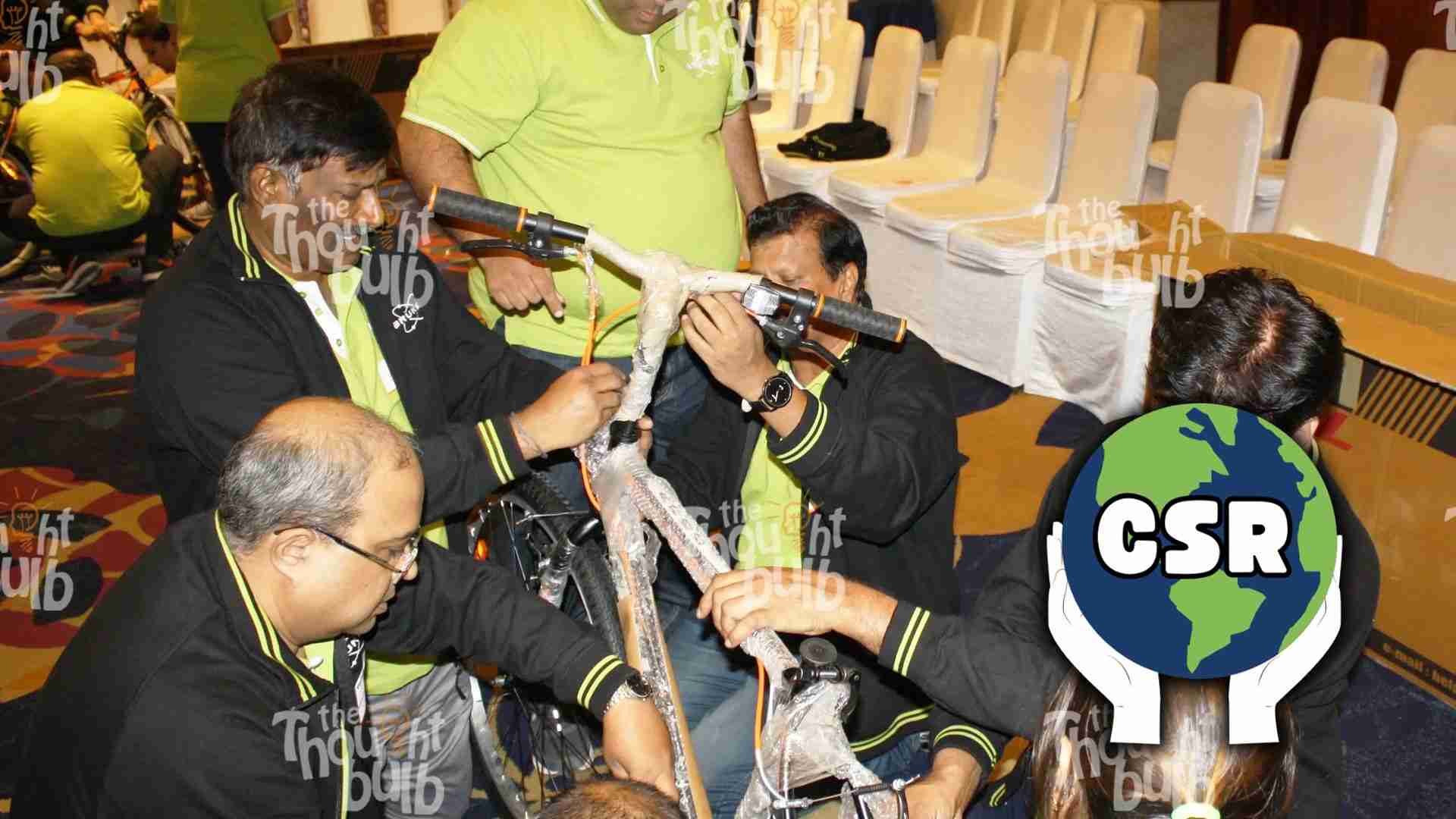
Build A Bicycle is one of the most loved CSR experiences we run. Teams are given parts and a set of clues, and they must collaborate, plan, and assemble fully working bicycles against the clock. The twist that makes the room go quiet is the reveal at the end: the bicycles are donated to underprivileged children, who often arrive to receive them in person. The activity blends genuine problem-solving and cross-team coordination with an emotional payoff that people talk about for months.
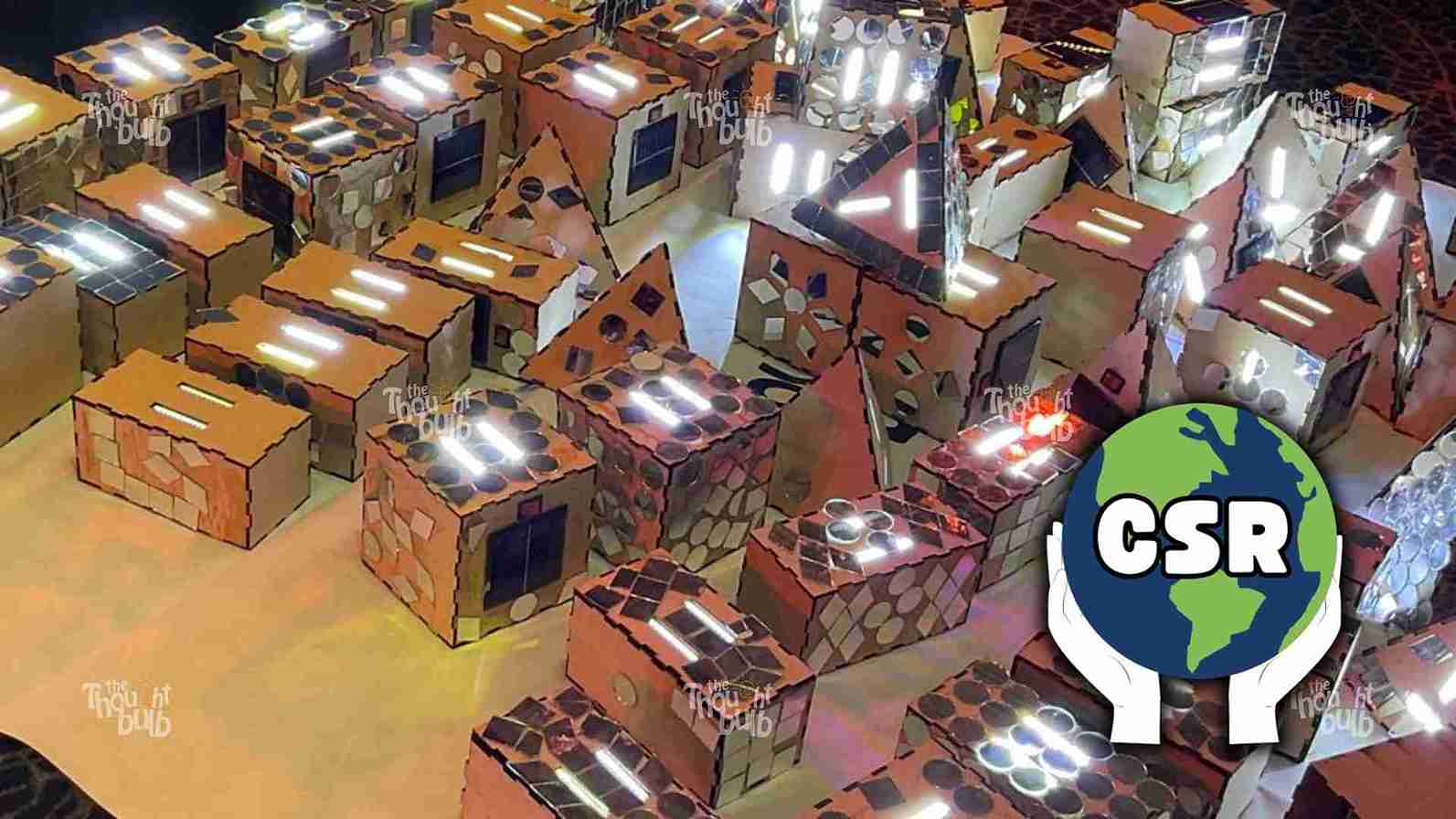
The Solar Fusion Challenge is ideal for teams that want their impact to be both social and sustainable. Groups assemble solar-powered lamps and units that are then donated to communities with limited access to reliable electricity. Because it combines a technical build with an environmental and social outcome, it works especially well for engineering, manufacturing, and technology teams who enjoy a problem they can engineer their way through.
Both of these sit within a wider menu of purpose-led formats. If you want to compare options before committing, our CSR activities collection lays out what each experience involves and the kind of community outcome it creates.
What It Looks Like in Practice
Theory is easy to nod along to, so it helps to see how this plays out with a real team. EY's team in Kolkata took on the Build A Bicycle challenge as part of a larger people engagement effort. Colleagues from different functions were split into groups, handed components and clue cards, and tasked with assembling roadworthy bicycles within a set time. The session moved through the familiar arc of any good team experience, early confusion, quick role allocation, and steady momentum, but it ended on a different note entirely when the finished bicycles were handed over to children from the local community.
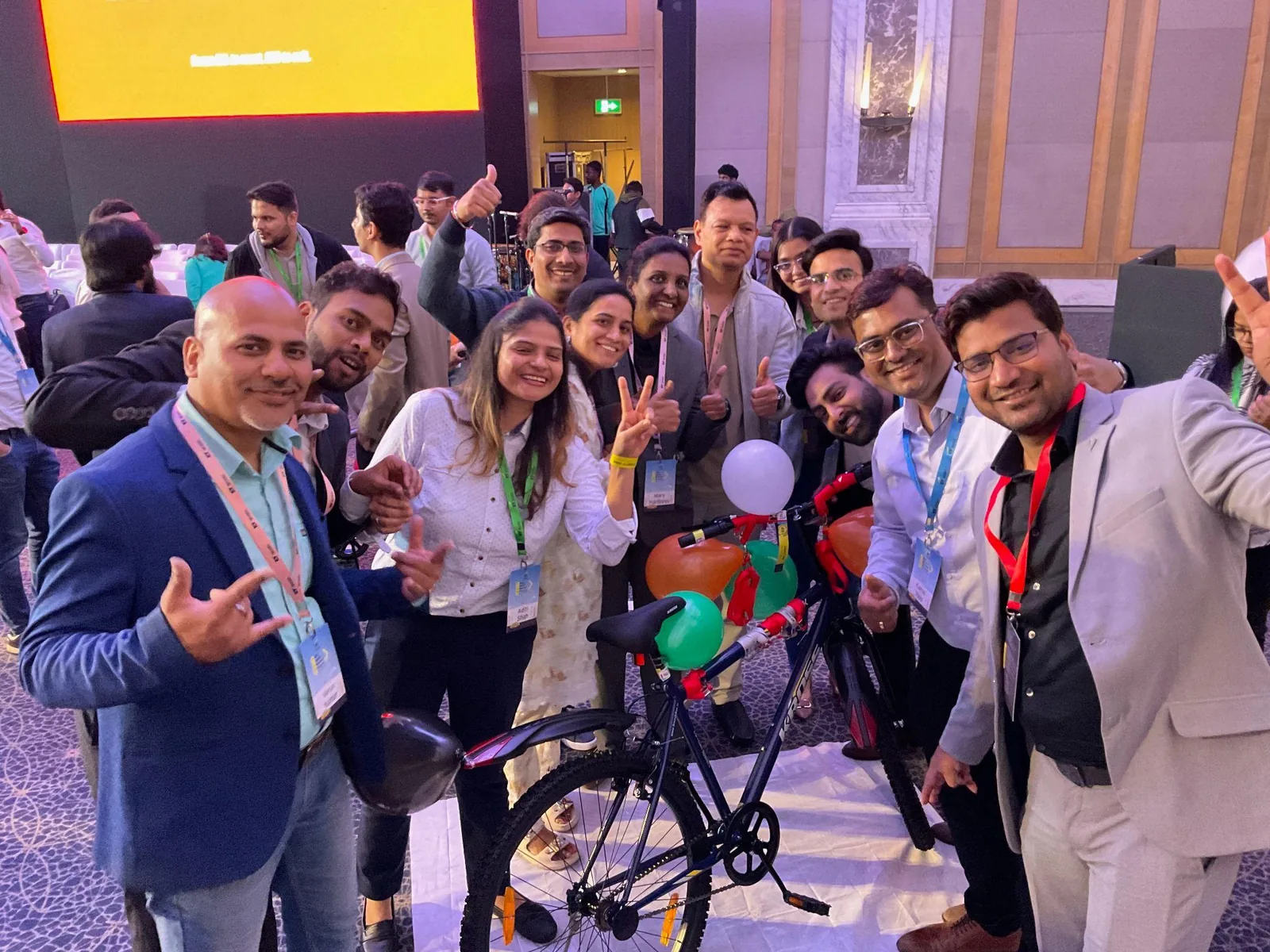
The outcome was a day that delivered measurable collaboration practice and a concrete social contribution at once, the kind of double return CSR team building is built to produce. You can browse more examples like this across industries in our case studies.
How to Run a CSR Team Building Programme That Lands
Getting the format right is only half the job. The difference between a feel-good afternoon and a programme that genuinely moves engagement comes down to a few practical decisions:
Connect it to a real beneficiary. Abstract giving feels hollow. The impact lands hardest when teams can see, or even meet, the people their work helps.
Keep teams cross-functional. Mix departments and seniority levels so the activity breaks down the silos that everyday work reinforces.
Build in a proper debrief. Spend 15 minutes afterwards connecting what happened in the activity to how the team collaborates back at work. Insight without reflection fades fast.
Tie it to your CSR reporting. Because the spend is already mandated, align the activity with an approved cause so it counts toward both your engagement and compliance goals.
Make it a rhythm, not a one-off. A single event is a nice memory. A recurring calendar of purpose-led experiences is what actually shifts culture.
If you are mapping engagement across the year, it helps to slot CSR experiences alongside festivals, quarterly resets, and wellness moments. Our employee engagement calendar is a useful starting point for planning a balanced mix.
The Bottom Line
CSR team building is one of the few initiatives where doing good and building a stronger team are not competing priorities, they are the same activity. In India, where the social spend is already on the books and engagement remains a live challenge, the logic is hard to argue with. You are going to spend the 2 percent regardless. Spending it in a way that also deepens trust, breaks silos, and gives your people a reason to feel proud of where they work is simply the smarter version of the same cheque.
If you would like help designing a CSR experience that fits your team size, location, and cause, the team at The Thought Bulb is happy to talk it through. Start by exploring our full range of activities and we can shape the right programme from there.