Because experiences alone don’t drive change, reflections do.
At The Thought Bulb, we believe a team-building workshop is far more than an energetic offsite or a day of laughter-filled activities. Yes, participants build towering structures, cross imaginary bridges blindfolded, and race against the clock to solve puzzles—but the real magic lies beneath the surface. True transformation happens not during the activity itself, but in the reflection that follows.
The moment participants pause and ask themselves, “Why did we react that way? What does this reveal about us as a team? How can we take this back to work?”—that’s when learning sticks. To bridge the gap between experience and insight, we use powerful CTA (Call-To-Action) Tools. These aren’t one-size-fits-all checklists; they are carefully curated, context-driven frameworks layered seamlessly into our facilitation process. Depending on the group’s energy, team dynamics, and specific learning objectives, these tools help participants reflect, articulate key takeaways, and commit to meaningful behavioral change.
In this blog, we share 10 CTA tools we use to transform fun team-building moments into actionable workplace insights—helping teams not just play together, but grow together.
1. Start–Stop–Continue
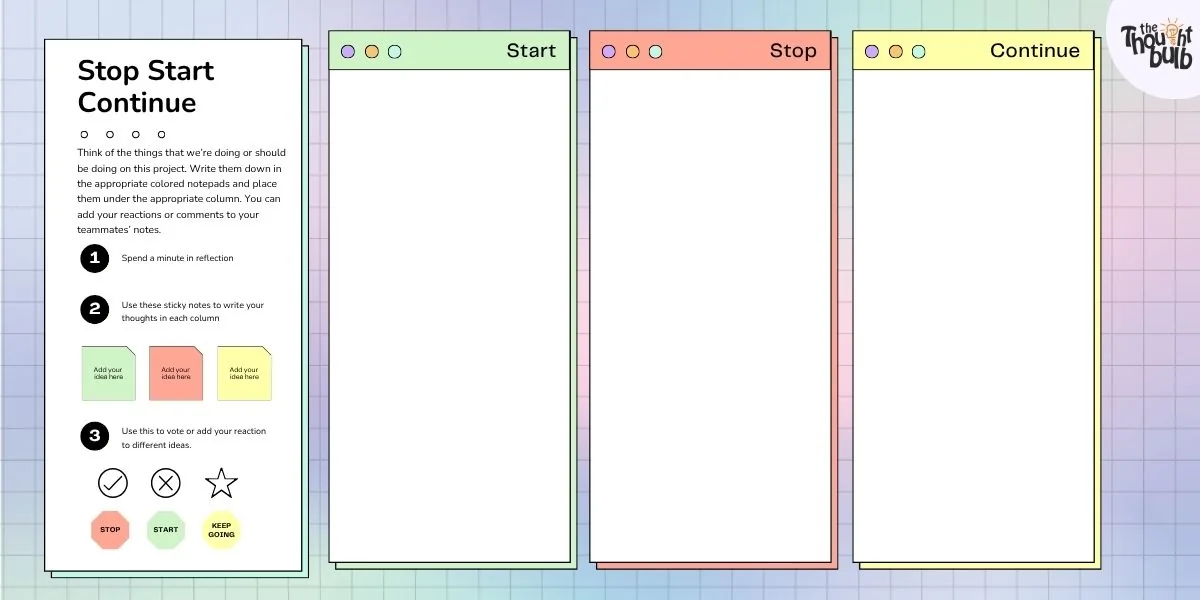
Participants identify what behaviors or habits they should:
Start doing: New, productive behaviors
Stop doing: Unhelpful or counterproductive actions
Continue doing: Positive habits worth maintaining
Why it works:
This model simplifies behavior change into a clear framework. It encourages ownership by helping participants distinguish between helpful and unhelpful behaviors in a structured way. It’s action-oriented and builds clarity around next steps.
How we use it:
Following a simulation, we invite individual reflection. Then, teams create a shared board or mural using sticky notes under each category. These visual cues reinforce the team's alignment.
Outcome:
Increased self-awareness
Clear behavioral action points
Stronger team alignment
2. Sailboat Retrospective
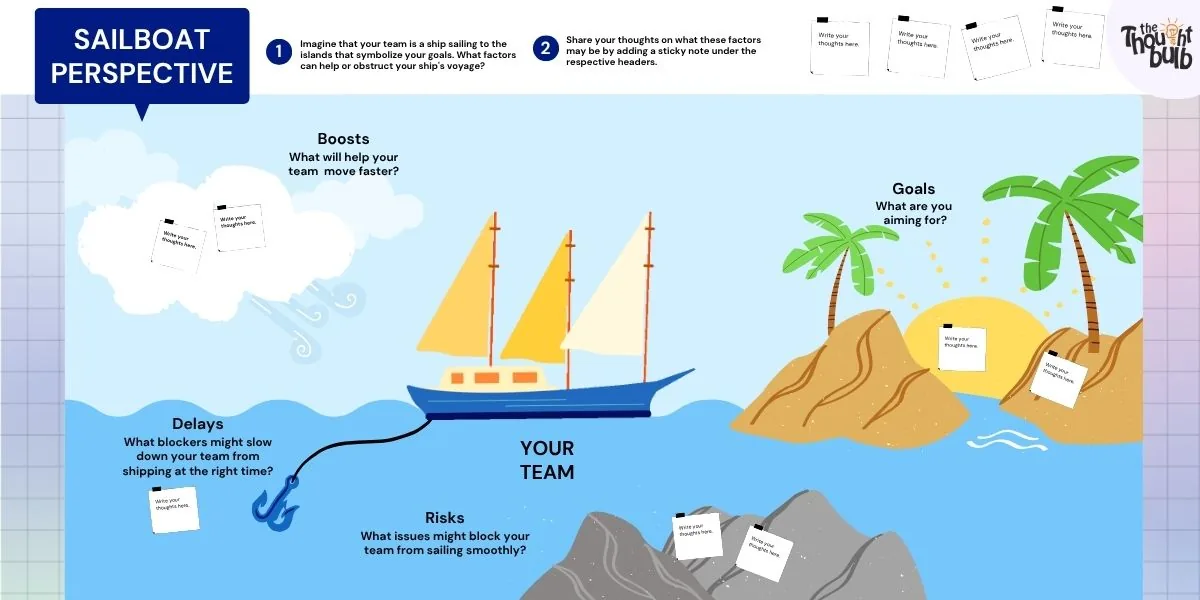
This visual metaphor uses a sailboat to reflect on team performance:
Wind: What pushes us forward
Anchor: What holds us back
Iceberg: Risks we may not see
Island: Our shared goal
Why it works:
Visual metaphors lower defensiveness and make complex discussions more accessible. Teams explore challenges and successes without assigning blame. It’s highly collaborative and encourages creative thinking.
How we use it:
We draw the sailboat on a whiteboard or digital canvas. Teams map insights using icons or sticky notes. The visual metaphor creates a safe, story-driven reflection.
Outcome:
Team alignment on goals and blockers
Constructive feedback culture
Stronger strategic awareness
3. 3H Model – Head, Heart, Hand
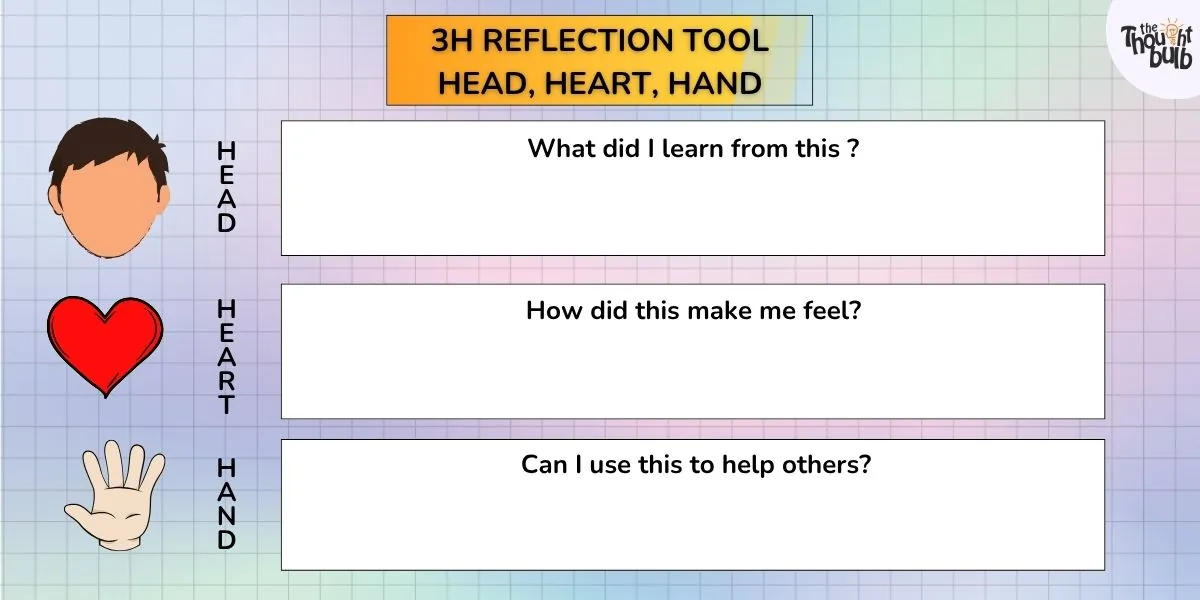
Participants reflect on:
Head: What they learned (cognition)
Heart: What they felt (emotion)
Hand: What they’ll do (action)
Why it works:
It appeals to the whole person. This tool integrates cognitive, emotional, and behavioral dimensions, making reflection more personal and holistic. It bridges the gap between insight and action.
How we use it:
At the end of a workshop or activity, participants fill out a 3H card or share in a reflective circle. This creates a full-bodied learning imprint.
Outcome:
Deeper emotional connection to learning
Commitment to personal action
Balanced head-heart-hand integration
4. PREP Model – Point, Reason, Example, Point
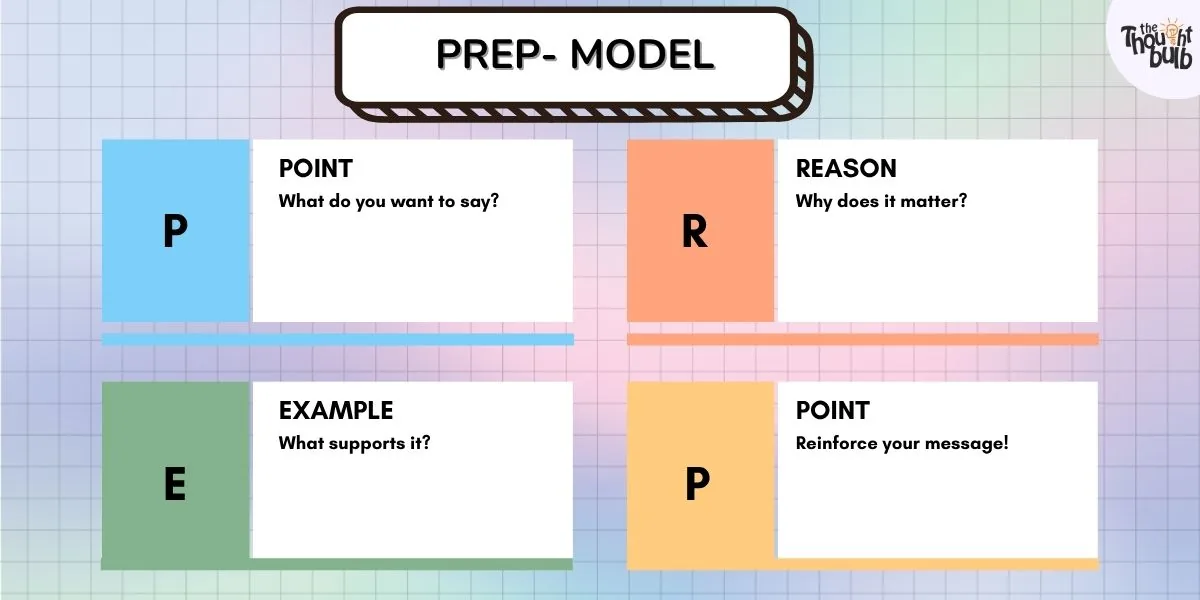
Originally a communication tool, PREP helps structure feedback:
Point: What you want to say
Reason: Why it matters
Example: Evidence or incident
Point (again): Reinforce message
Why it works:
PREP offers a framework for assertive, clear, and structured communication. It reduces ambiguity and supports healthy feedback conversations, especially during tense or emotional moments.
How we use it:
During post-activity feedback rounds, we invite participants to use PREP to frame feedback to teammates. This empowers even introverts to speak up.
Outcome:
Increased confidence in giving feedback
More structured, respectful communication
Growth in feedback culture
5. Powerful vs. Powerless Behaviors
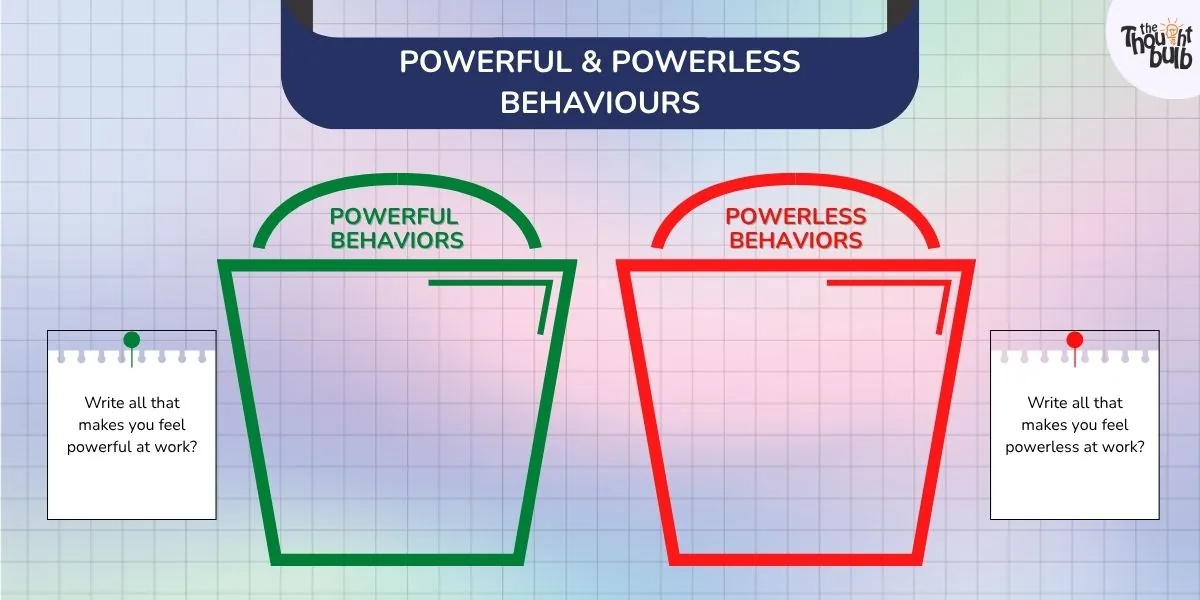
Participants identify:
Empowering behaviors: That boost morale and engagement
Disempowering behaviors: Those that diminish motivation or participation
Why it works:
This tool promotes emotional literacy. It helps teams understand how micro-behaviors shape macro culture. When people reflect on what lifts or lowers their energy, they become more mindful of their impact.
How we use it:
Post-simulation, we list behaviors on flipcharts. Teams vote, discuss, and co-create a behavioral agreement or team charter.
Outcome:
Improved team norms
Higher emotional intelligence
Clearer code of conduct
6. Reflection Circle
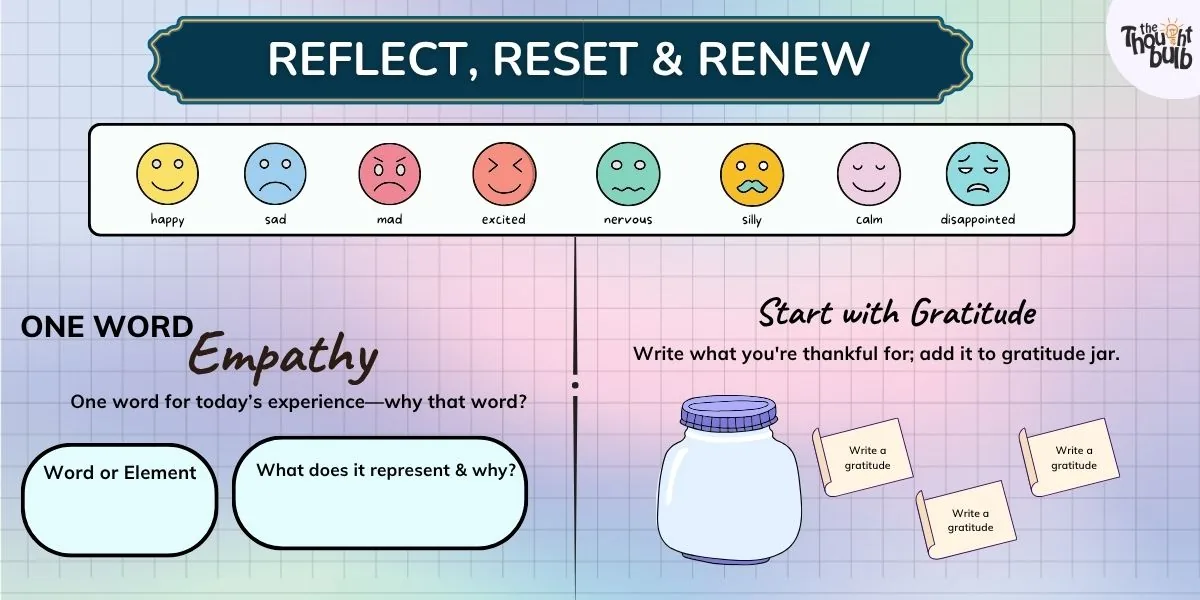
In this CTA, participants sit or stand in a circle. Each person shares a learning, insight, or emotion from the experience, without interruption.
Why it works:
Reflection Circles encourage equality—everyone gets a voice. With no crosstalk, it amplifies listening and psychological safety. This quiet but profound space often brings clarity and closure.
How we use it:
Used as a closing ritual. We use prompts like “One word I’m leaving with” or “One thing I’ll apply back at work.” A talking object helps manage turn-taking.
Outcome:
Shared meaning across the group
Emotional closure
Strengthened team presence and connection
7. Mirror Moments
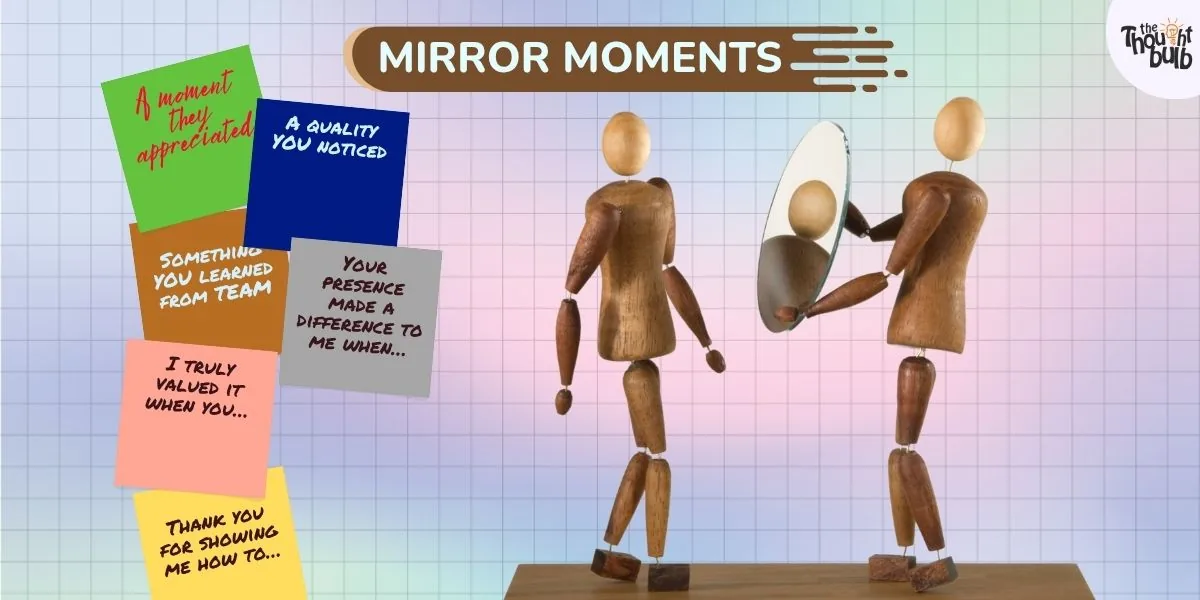
Each participant writes 2–3 anonymous notes to peers sharing:
A moment they appreciated
A quality they noticed
Something they learned from them
Why it works:
In most group settings, people rarely receive direct affirmation. Mirror Moments build awareness of how we’re seen by others, and elevate team positivity. It’s validating and unexpectedly powerful.
How we use it:
We provide note cards and allow time for silent writing. The facilitator collects and distributes notes post-session or digitally.
Outcome:
Enhanced trust and appreciation
Personal validation
Positive reinforcement culture
8. Role Swap Reflection
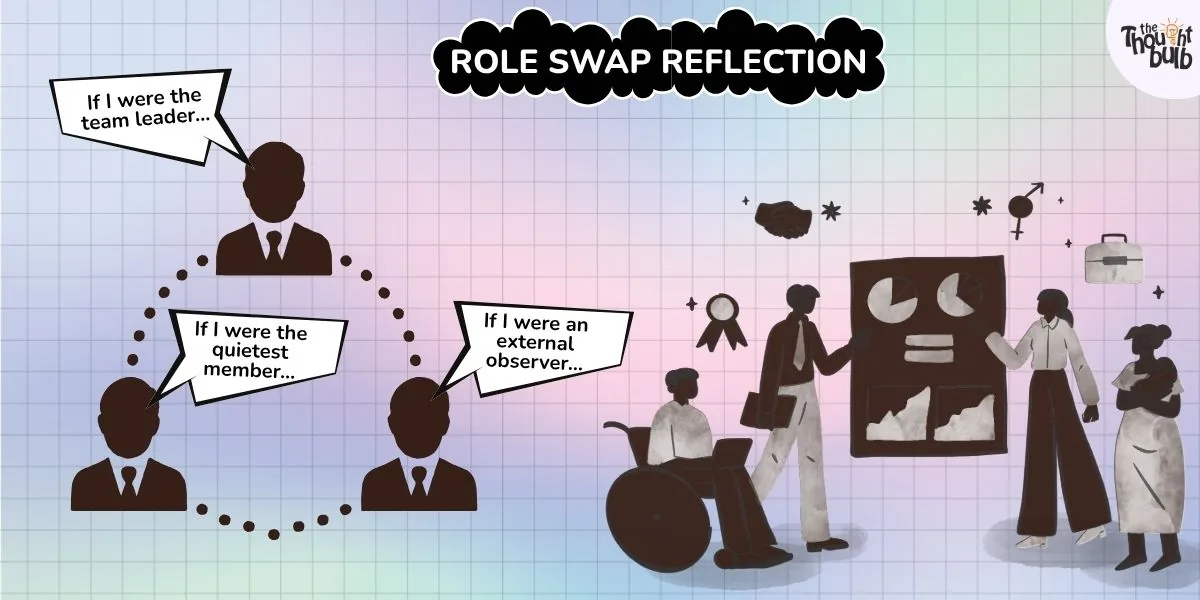
Participants reflect from another person’s lens:
“If I were the team leader…”
“If I were the quietest member…”
“If I were an external observer…”
Why it works:
Perspective-taking boosts empathy and reduces bias. It teaches teams to shift from judging others’ behaviors to understanding their context and intent.
How we use it:
After an activity, teams discuss role perspectives. Sometimes, we pair it with dramatizations or brief role-play.
Outcome:
Increased empathy
Better conflict resolution
Heightened team inclusivity
9. Intent vs. Impact Mapping
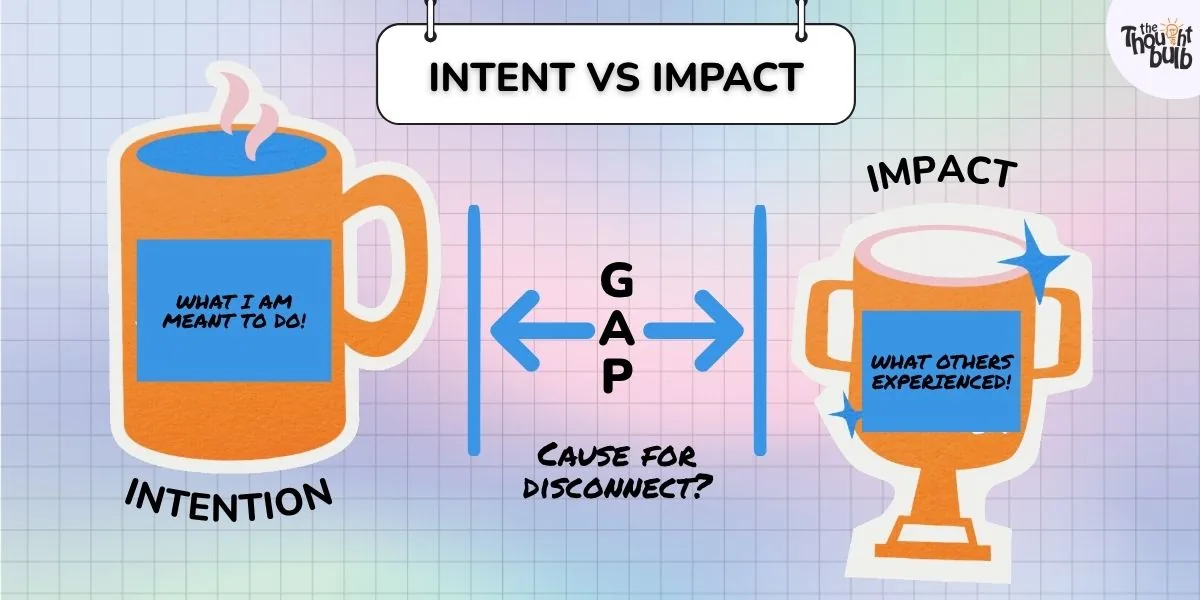
Participants explore:
Intent: What I meant to do
Impact: What others experienced
Gap: What caused any disconnect?
Why it works:
This tool surfaces misalignments that often go unspoken. It pushes participants to take responsibility not just for what they meant—but for how they made others feel. It’s transformative for culture and accountability.
How we use it:
Used in conflict debriefs or miscommunication-heavy simulations. Teams map out moments where intent and impact didn’t match and explore reasons.
Outcome:
Greater personal accountability
Clarity in communication
Strengthened relationships
10. Metaphor Mapping
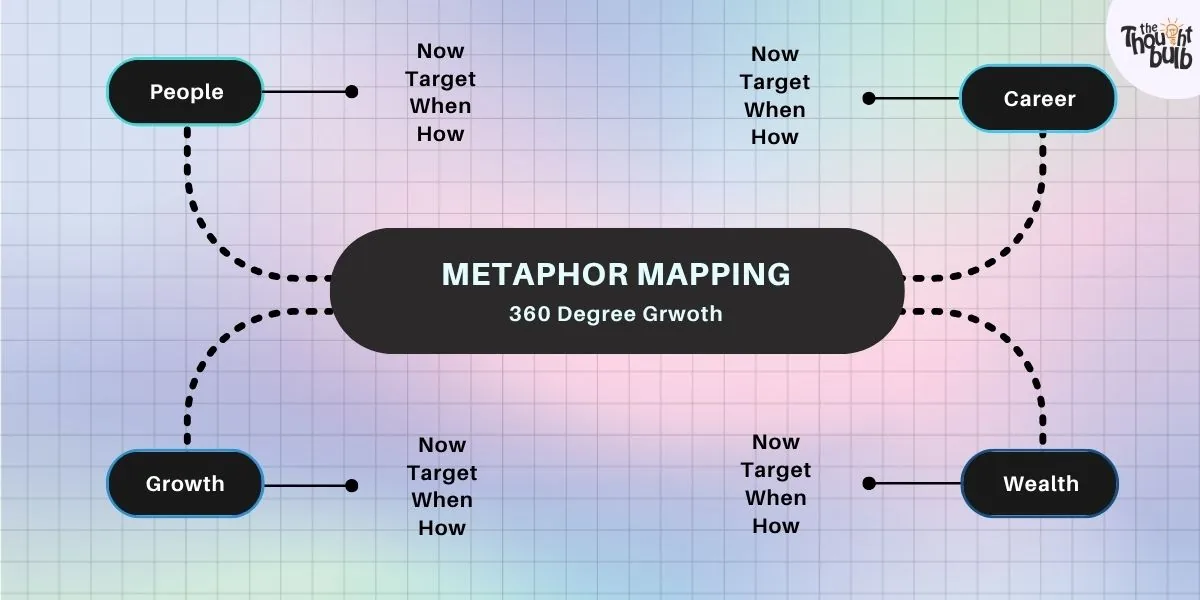
We ask playful prompts like:
"If your team were a weather pattern, what would it be?"
"If this project were a movie, what’s the title?"
"What animal represents your performance today?"
Why it works:
Metaphors allow access to abstract insights that literal language often misses. They trigger creativity, reduce tension, and let people express themselves more freely.
How we use it:
Ideal as a fun debrief closer. We invite teams to draw or explain their metaphors, followed by a group discussion.
Outcome:
Creative reflection
Abstract learning made visible
Team bonding through storytelling
Bonus: Living Commitments Wall
Participants commit to:
One behavior they’ll practice
One value they’ll bring
One change they’ll drive at work
We capture this on a “Living Wall”—a visual, interactive installation that remains throughout the workshop and is shared digitally later.
Why it works:
This commitment wall reinforces personal responsibility. Participants see their intentions in writing, creating a gentle accountability loop beyond the event.
Outcome:
Behavior anchored in values
Continuity beyond the session
Visible commitment to change
Final Thoughts: Debrief is the Real Workshop
Team building without reflection is entertainment. Team building with reflection is transformation.
These CTA tools are not templates. They are mirrors, scaffolds, and catalysts. They help teams unpack experiences, embrace insights, and embody new behaviors.
When used with skill, care, and curiosity, they:
Uncover hidden team dynamics
Build trust and communication
Bridge intent and impact
Drive long-term growth
That’s what we do at The Thought Bulb. We don’t just deliver activities—we facilitate transformation.
So next time you’re at a workshop, remember: The real shift happens after the last puzzle is solved, when the team leans in and asks—
“What did we learn about us?”
Want to design transformational team-building journeys? Let’s create them together.