

Every team has disagreements. The ones that hurt are the disagreements nobody says out loud: the product manager who stops inviting engineering to early reviews, the two regional heads who copy their bosses on every email, the new hire who quietly decides it is safer to agree with everyone. In Indian workplaces, where respect for hierarchy and a strong preference for harmony often keep friction below the surface, unresolved conflict rarely explodes. It leaks out slowly as missed deadlines, guarded meetings and resignations that arrive with a polite smile.
November and December make this worse. Appraisal conversations, year-end targets and 2027 budget fights all land at once, and teams that have been papering over tension for months suddenly have to make hard trade-offs together. This guide explains why workplace conflict deserves a real plan in 2026, what the data says about its cost, and how experiential team building can turn friction into the kind of trust that lets teams disagree well.
Why Workplace Conflict Looks Different in Indian Teams
Conflict itself is universal. How it shows up is cultural. Most HR leaders we work with describe the same three patterns.
Harmony on the surface, friction underneath
Many Indian professionals are raised to avoid open confrontation, especially with seniors. Disagreement gets routed through side conversations, WhatsApp groups and the manager's manager. The meeting ends with consensus, and the real debate starts in the corridor afterwards.
Hierarchy decides who gets to disagree
When the senior-most person speaks first, everyone else calibrates to that view. Junior team members with the best on-the-ground information often hold back, so decisions are made on incomplete data and resentment builds when those decisions fail.
Hybrid and multi-city teams amplify misunderstandings
A curt Slack message from Bengaluru reads very differently in Gurugram. Distributed teams lose the tone, the chai-break repair conversations and the quick clarifications that used to defuse small conflicts before they grew.
What the Data Says About the Cost of Conflict
Conflict is not a soft issue. It consumes time, drains engagement and pushes people out of the door. A few numbers worth putting in front of your leadership team:
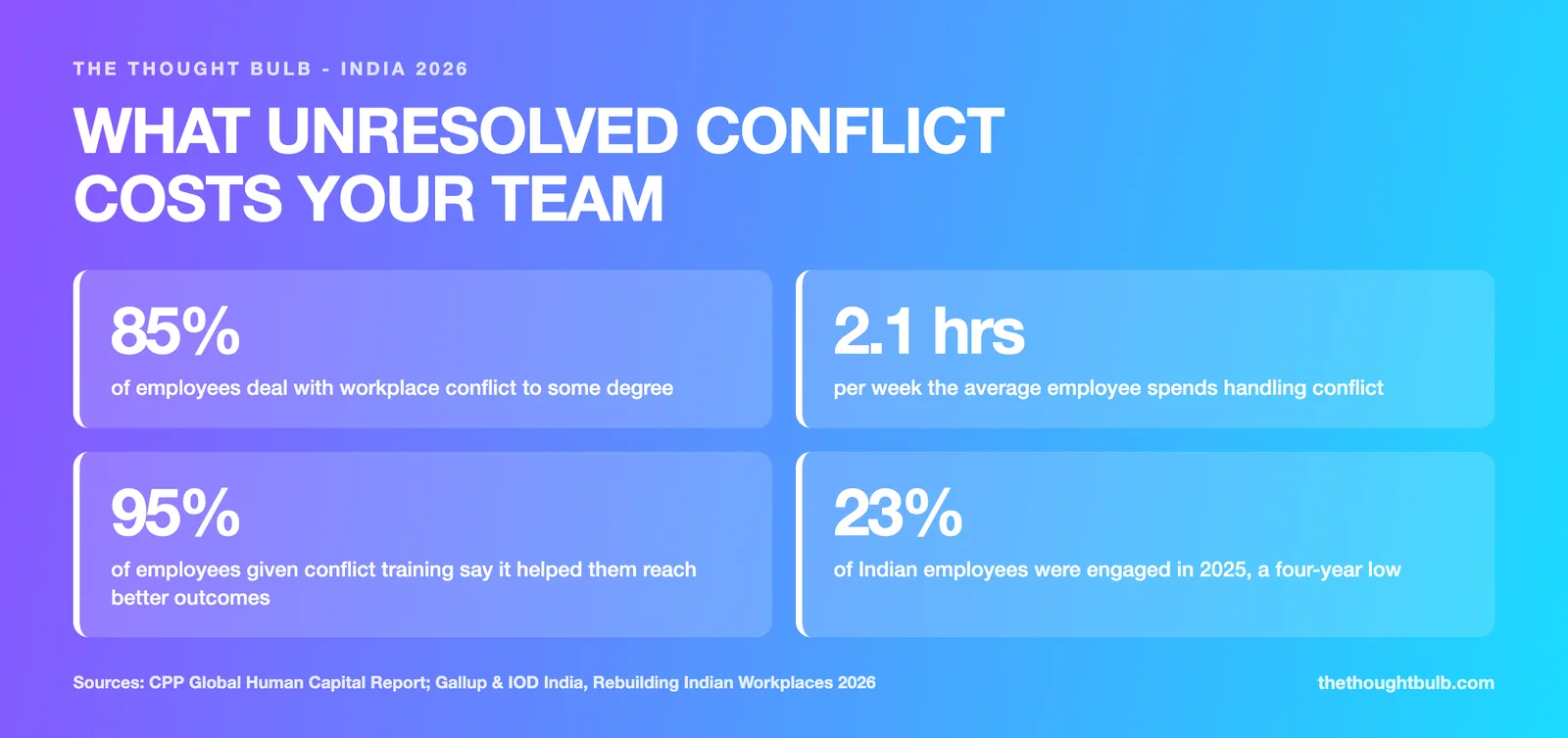
85% of employees deal with workplace conflict to some degree, according to the CPP Global Human Capital Report on workplace conflict.
The same study found that the average employee spends about 2.1 hours every week handling conflict. Across a 200-person business unit, that is more than 400 hours of lost focus each week.
Training works: 95% of employees who received conflict management training said it helped them reach better, more positive outcomes, yet most employees had never received any.
Engagement in India is falling. Gallup and the Institute of Directors India report that only 23% of Indian employees were engaged in 2025, a four-year low, while manager engagement dropped from 39% to 30%.
Read together, these numbers tell a clear story. Conflict is nearly universal, it quietly eats a working half-day every week, and the managers who are supposed to resolve it are themselves less engaged than they were a year ago. The good news is that the skill of handling disagreement is learnable, and the return on teaching it is unusually high.
Healthy Conflict vs Toxic Conflict: Know the Difference
The goal is not zero conflict. Teams that never disagree are usually teams where people have stopped caring or stopped speaking up. The goal is to keep conflict focused on ideas and away from identities.
Signs of healthy, task-focused conflict
People challenge the plan in the meeting, not after it.
Disagreements reference data, customers and outcomes rather than personalities.
Once a decision is made, everyone commits to it, including the people who argued against it.
Signs that conflict has turned toxic
Information is withheld or shared selectively to make a colleague look bad.
Escalations to senior leaders become the default way to settle routine disagreements.
Certain pairs of people are never put on the same project because 'it will not work'.
Exit interviews mention a specific manager or team relationship rather than pay or growth.
Five Practical Ways to Resolve Conflict in Your Team
1. Name the real source of friction
Most team conflict comes from one of three places: unclear roles, competing priorities or personal working styles. Fixing the wrong one wastes everyone's time. A short anonymous pulse survey and a handful of skip-level conversations usually reveal which one you are dealing with.
2. Agree the rules before the next fight
Teams that handle conflict well have explicit norms: how a disagreement is raised, who decides, how long debate runs and what 'disagree and commit' looks like in practice. Write these into a one-page team charter and revisit it every quarter.
3. Let people practise disagreement in a low-stakes setting
Nobody learns to swim from a slide deck. Experiential activities recreate the pressure of shared goals and scarce resources, so teams can see their own conflict patterns play out and talk about them without the stakes of a real deadline. The debrief is where behaviour change happens.
4. Equip managers to mediate, not adjudicate
Managers in India are often expected to settle disputes by deciding who is right. Coaching them to listen fully, restate both positions and separate the issue from the person builds far more durable resolutions. Our leadership team building programmes focus heavily on this shift from judge to facilitator.
5. Repair relationships, not just decisions
Even when a decision is settled, the relationship may still be bruised. Shared positive experiences, whether an offsite challenge or a 45-minute virtual mission, give colleagues a new story about each other that is not about the last argument.
Team Building Activities That Turn Friction Into Trust
Not every team activity helps with conflict. The ones that work share three features: teams depend on each other to succeed, information or resources are deliberately limited, and a skilled facilitator connects what happened in the game to what happens at work. Here are two we recommend for conflict-prone teams.
Bridge The Gap (in-person)
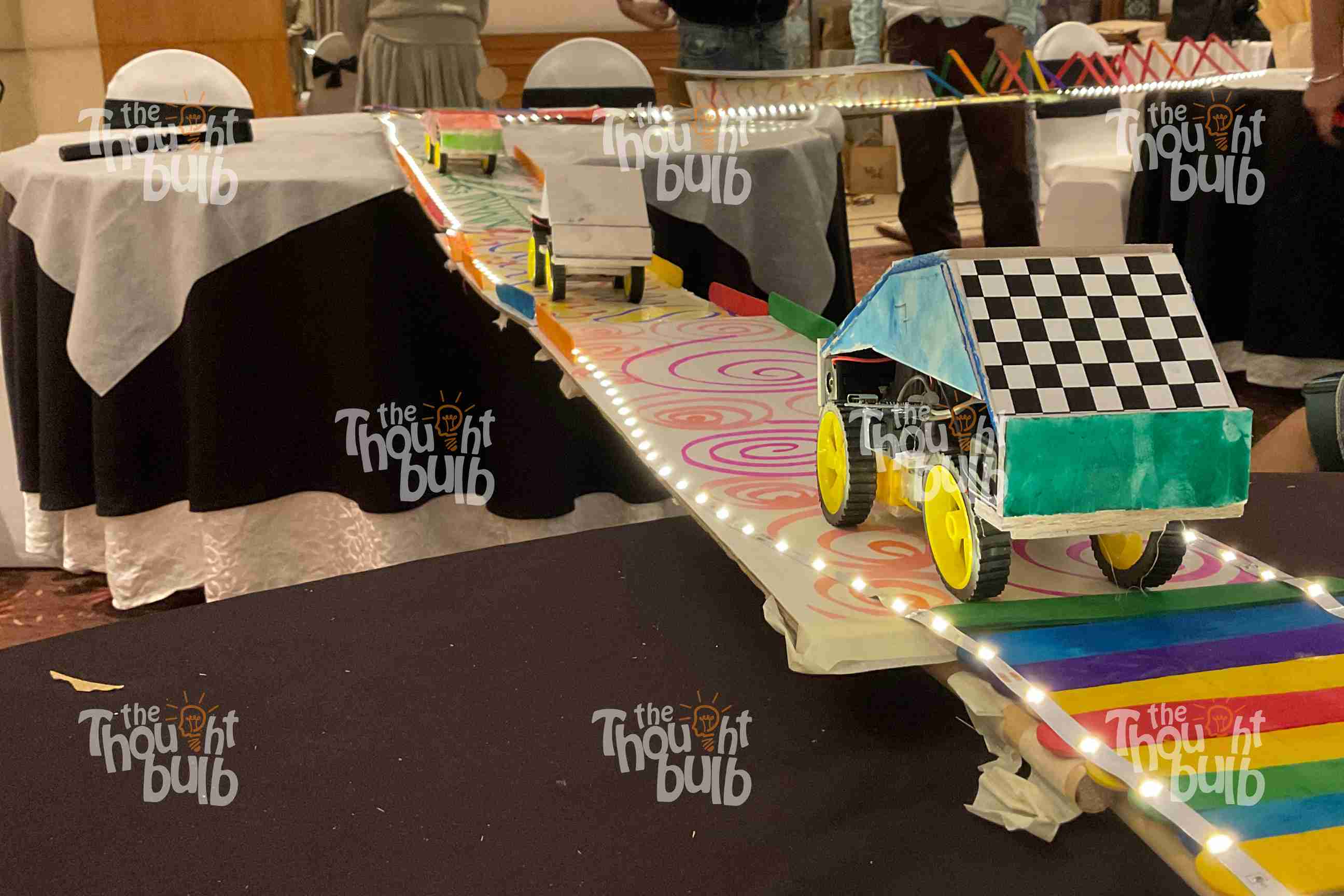
In Bridge The Gap, separate sub-teams each build one half of a bridge without being able to see the other side's work. The two halves have to meet perfectly in the middle, which means teams must negotiate specifications, share information clearly and resolve disagreements about approach under time pressure. It is a near-perfect mirror of cross-functional friction between sales and delivery, or between headquarters and regional offices.
Mission Moon Lander (virtual)
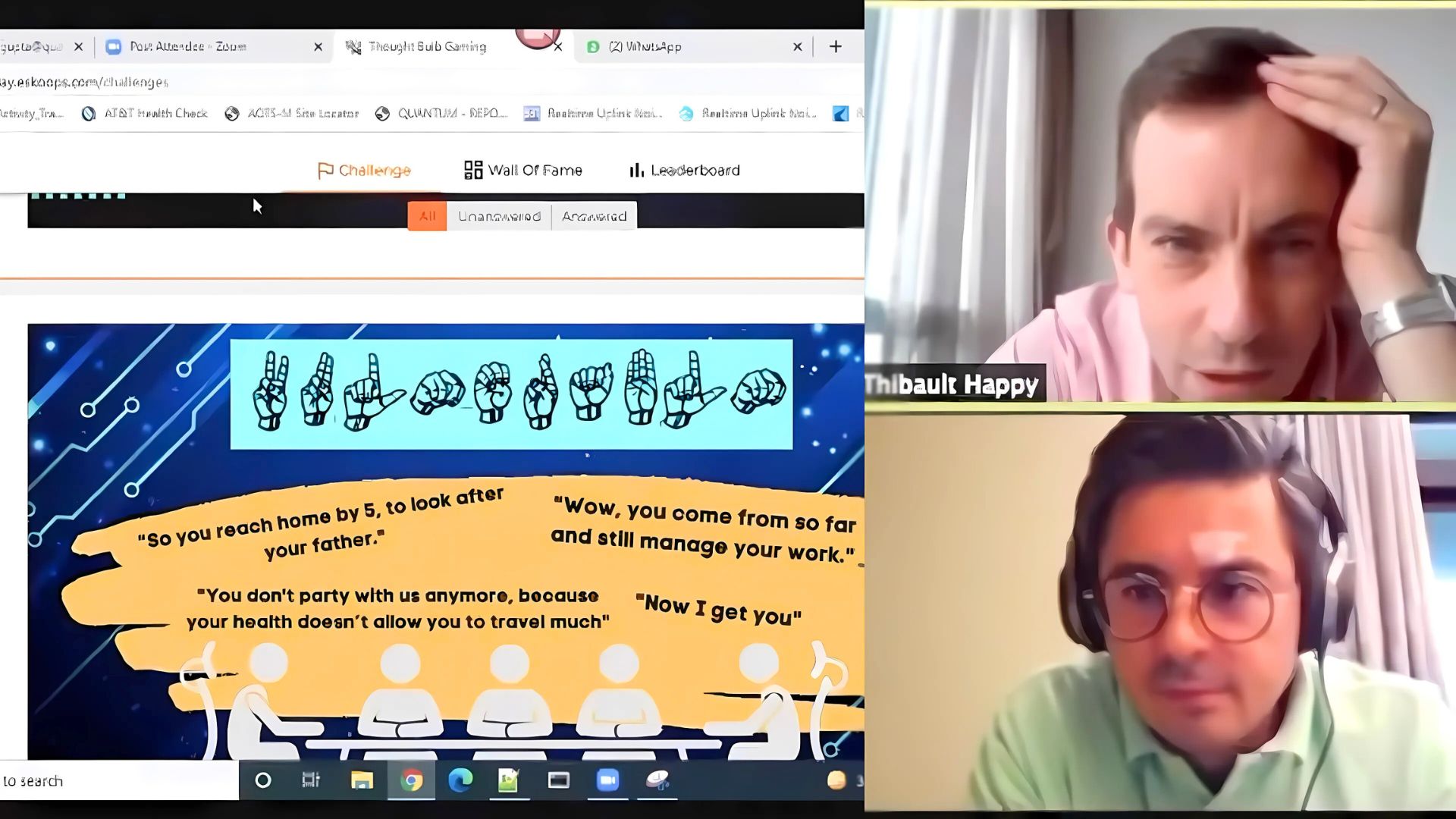
For hybrid and remote teams, Mission Moon Lander puts small groups in charge of landing a craft on the lunar surface with limited information and interdependent decisions, where no single person holds all the answers. The activity is designed around the five dysfunctions of a team, including fear of conflict, so the debrief naturally surfaces who held back, who dominated and how the team handled disagreement under pressure.
If your teams are spread across cities, browse our full range of virtual team building activities. For a mixed group, the Lost Dutchman Goldmine business simulation is another strong option, because teams must share scarce resources and negotiate trade-offs to win.
Case Study: Siemens Bridges the Gap in Mumbai
Siemens, a long-standing partner of The Thought Bulb, came back to us for a large-scale programme in Mumbai with a simple brief: have fun and collaborate. This was a repeat group with high expectations, 400 participants split into 40 teams, and a wide mix of functions and seniority levels.
We anchored the day on Bridge The Gap. After high-energy energisers, every team worked through a challenge where communication, strategic thinking and trust were the only tools that got them across. With mixed demographics in each team, different perspectives clashed and then combined into unexpected solutions, which is exactly the muscle conflict-prone teams need. A team of four to five facilitators kept all 40 teams supported, and a structured debrief connected what happened on the floor to real workplace behaviours.
The result was a high-energy day of spontaneous collaboration and creative problem-solving across the whole room, and another chapter in a growing partnership.
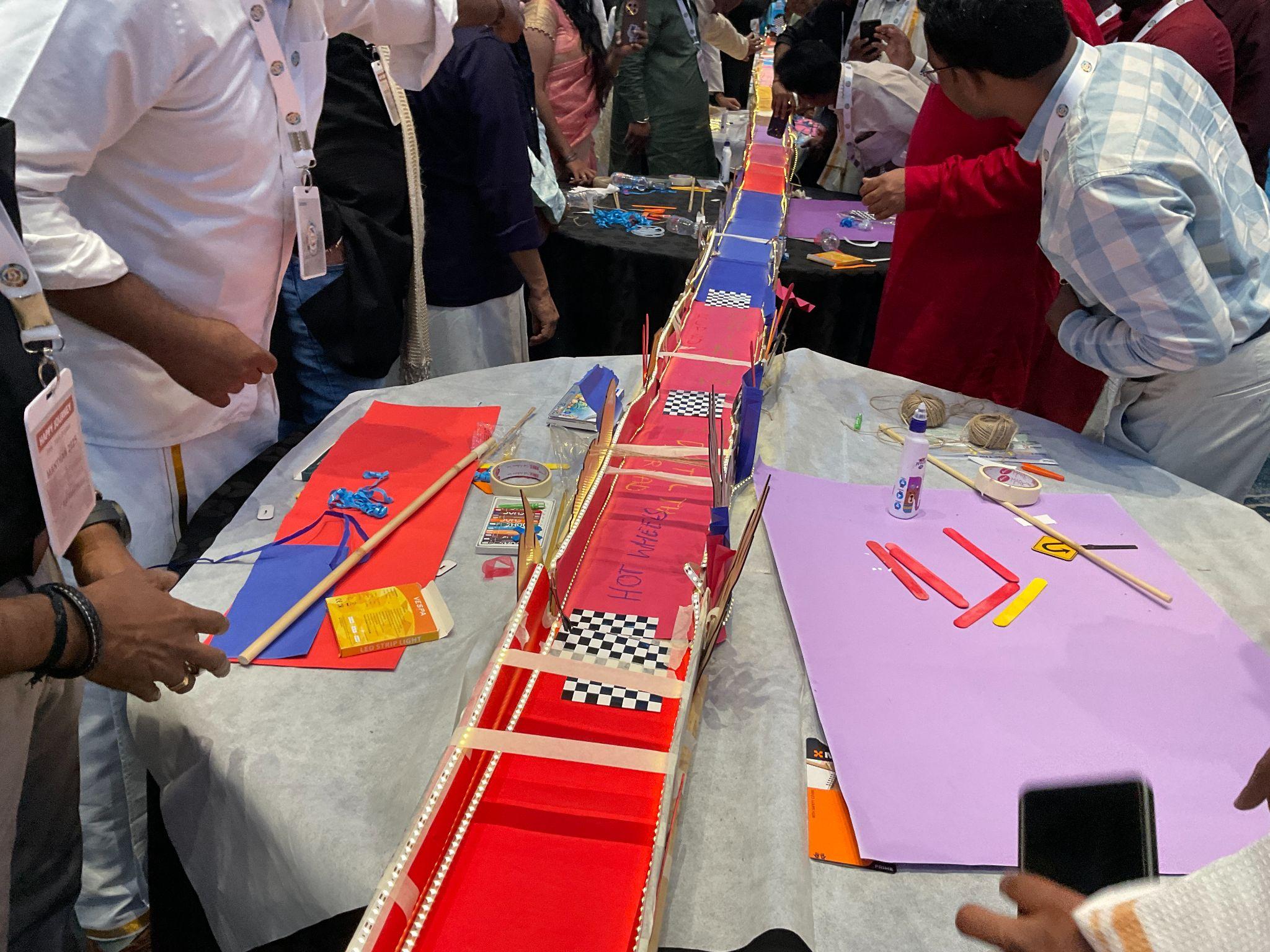
You can read this and other stories on our case studies page.
A 90-Day Plan to Turn Conflict Into Collaboration
One workshop will not fix a team that has been avoiding hard conversations for a year. A simple 90-day sequence gives the change time to stick:
Day 1 to 15, Diagnose: run a short pulse survey and skip-level chats to find out whether friction comes from roles, priorities or working styles.
Day 16 to 30, Set norms: co-create a one-page team charter covering how disagreements are raised, escalated and closed.
Day 31 to 60, Practise: run an experiential session built on shared, scarce resources, such as Bridge The Gap or Mission Moon Lander, then debrief the behaviour honestly.
Day 61 to 75, Equip managers: coach managers to mediate, listen fully and separate the issue from the person.
Day 76 to 90, Measure: re-run the pulse survey, track escalations and exits, and lock in a monthly team retrospective.
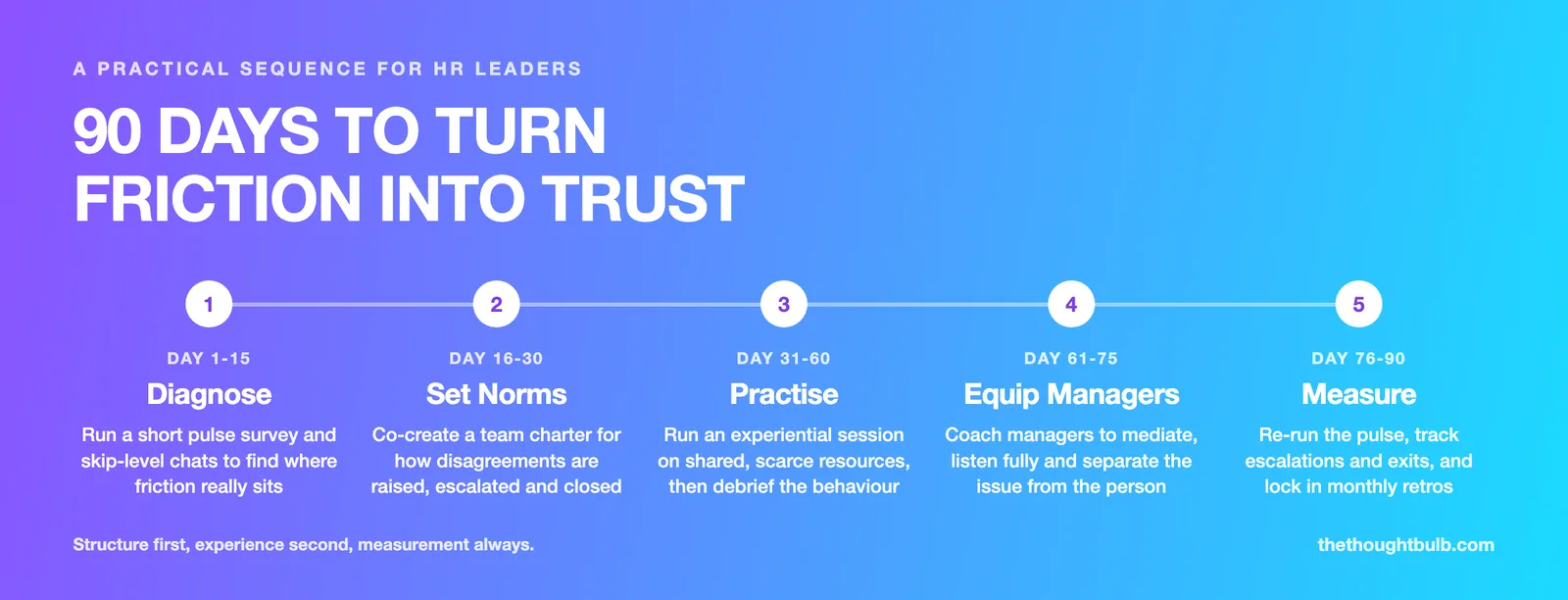
Structure first, experience second, measurement always. The charter gives people permission to disagree, the experiential session lets them practise it safely, and the measurement tells you whether behaviour has actually changed.
Conclusion: Make Disagreement a Team Skill
Conflict is not a sign that your team is broken. Unresolved conflict is. With engagement in India at a four-year low and year-end pressure building, the teams that will start 2027 strongest are the ones that learn to disagree openly, decide quickly and commit together. That skill can be taught, practised and measured.
If you would like help designing a programme for a team that has hit friction, explore our team building activities or talk to The Thought Bulb team about an in-person or virtual session built around your challenge.


