

Ask any HR leader in Bengaluru, Hyderabad, Pune or Gurugram what makes tech teams hard to bring together, and the answer is rarely a lack of goodwill. It is a calendar full of sprints, releases and on-call rotations, a team split across offices and time zones, and a deep suspicion of anything that feels like forced fun. Engineers will happily spend a weekend on a hackathon, yet quietly dread a trust fall.
That tension matters more in 2026 than it did a few years ago. Engagement across Indian workplaces has slipped to a four-year low, burnout in IT is widely reported, and AI is changing what technical roles look like. This guide explains what the numbers say, why generic team building often fails with engineers, which formats work better, and a 90-day plan you can start this quarter.
Why tech teams need a different approach
Deep work does not mix well with forced fun
Developers, data scientists, QA engineers and DevOps teams spend much of their day in focused, problem-solving mode. Interruptions are expensive, and a badly timed activity feels like a tax on the sprint. Tech professionals tend to respond well to structured challenges with clear rules, real constraints and a visible result, and poorly to vague icebreakers with no purpose.
Distributed work hides the relationships that make delivery smooth
Most tech teams in India now work across cities, client time zones and hybrid schedules. A pull request review between two people who have never shared a conversation is a very different thing from one between people who trust each other. The cost of that gap rarely shows up in a dashboard, but it shows up in slower handoffs, quieter standups and more escalations.
Pressure and uncertainty are higher than usual
Layoff headlines, AI-driven restructuring and long hours have made many technical employees cautious. When people are anxious about their roles, a loud, high-energy event can land badly. The format needs to feel safe, optional where possible, and clearly useful.
What the data says about tech teams in India
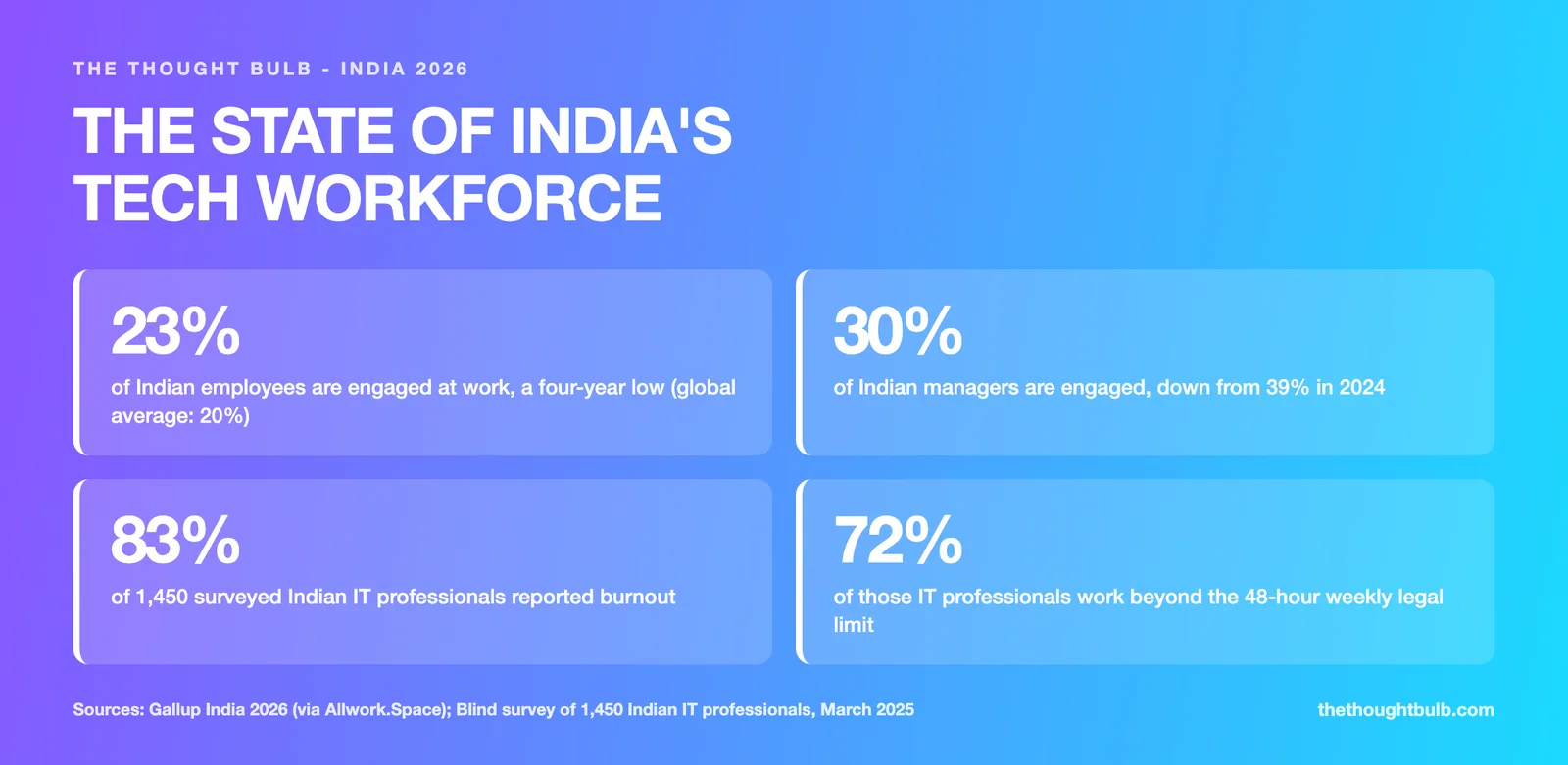
Gallup's India findings, reported in May 2026, show that only 23 percent of Indian employees are engaged at work, the lowest level in four years and just above the global average of 20 percent. The fall is sharper among managers, who are the people tech teams rely on most for context and support.
23 percent of Indian employees are engaged at work, a four-year low, against a 20 percent global average (Gallup, 2026).
30 percent of Indian managers are engaged, down from 39 percent in 2024, while individual contributors fell from 24 percent to 19 percent (Gallup, as reported by Allwork.Space).
In a Blind survey of 1,450 verified IT professionals in India, run in March 2025, 83 percent reported burnout and 72 percent said they work beyond the 48-hour weekly legal limit.
In the same survey, 25 percent worked 70 or more hours a week and 68 percent felt obliged to answer work messages outside office hours.
Great Place to Work data from 2024, reported by India Today, found that about 20 percent of Indian IT professionals were uncertain about their job stability.
Read together, these numbers describe a workforce that is stretched, watchful and tired. Team building for this audience has to give time back, not take more of it. That is why the best programmes for tech teams are short, purposeful and designed around real working constraints.
Why traditional team building fails engineers
Most failures come down to a handful of avoidable mistakes.
Scheduling it during a release week. Nothing signals disrespect faster than an outing that collides with a deadline.
Making it mandatory but meaningless. Engineers will join a session if the objective is clear, and will switch off if it feels like a box to tick.
Choosing loud, extrovert-heavy formats. Quieter team members, who are often your strongest problem solvers, end up on the sidelines.
Skipping the debrief. Without a conversation that links the activity to daily work, even a great session fades within a week.
Ignoring remote colleagues. Hybrid teams need formats that work for people on screens as well as people in the room.
Formats that work for technical teams
Build-something challenges
Tech teams respond well to activities where they create a tangible output under constraints. This mirrors how they already work: a brief, a deadline, shared tools and a demo at the end. The social side becomes a by-product of solving a real problem together.
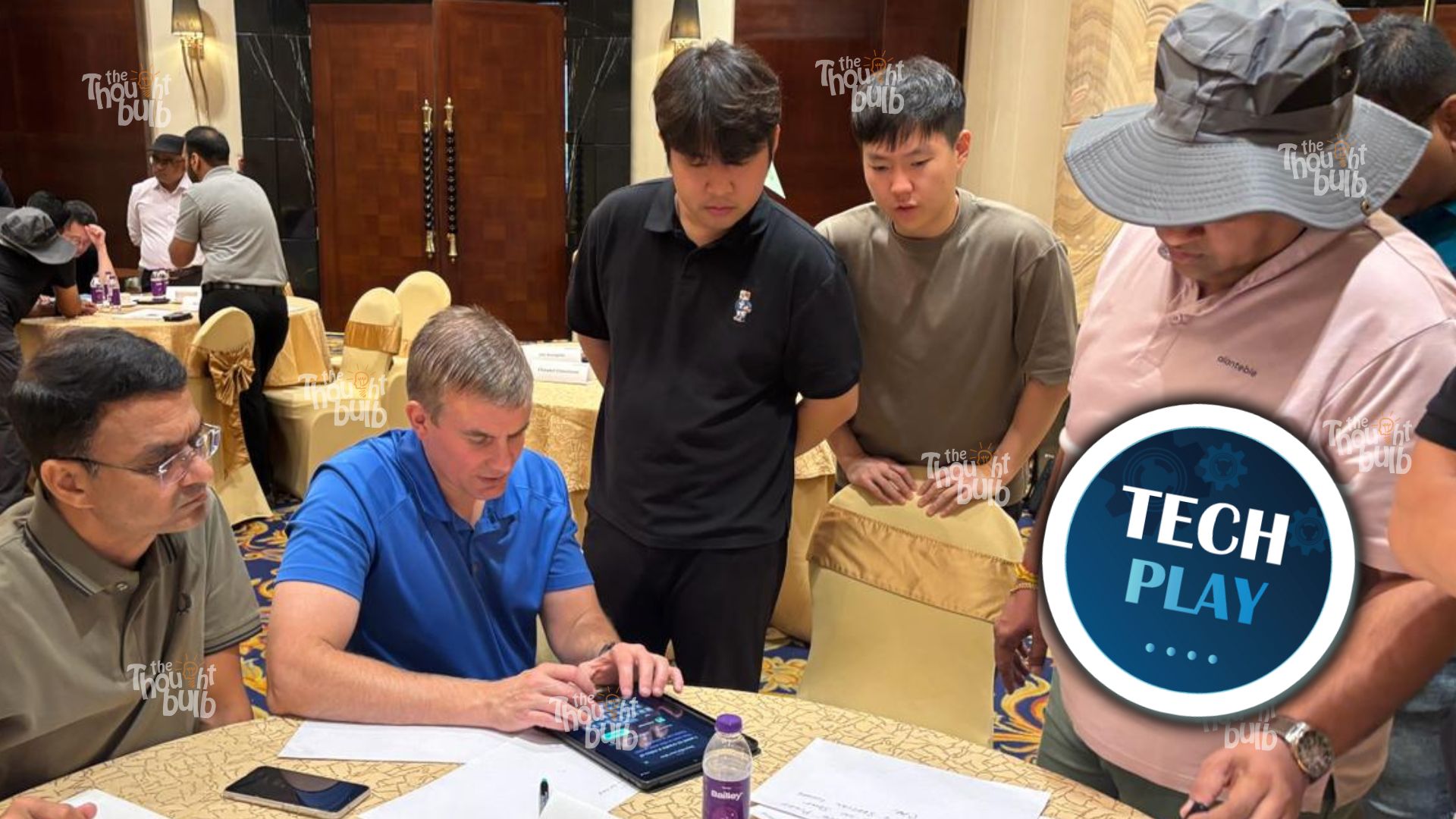
Our AI Movie Making Challenge is a good example. Teams are given a topic and use iPads and AI tools to create a short film, which is then screened for everyone. It suits groups of 3 to 100 people, rewards communication and creativity over technical seniority, and gives engineers a safe, playful way to use AI tools together rather than alone.
Remote-friendly problem solving
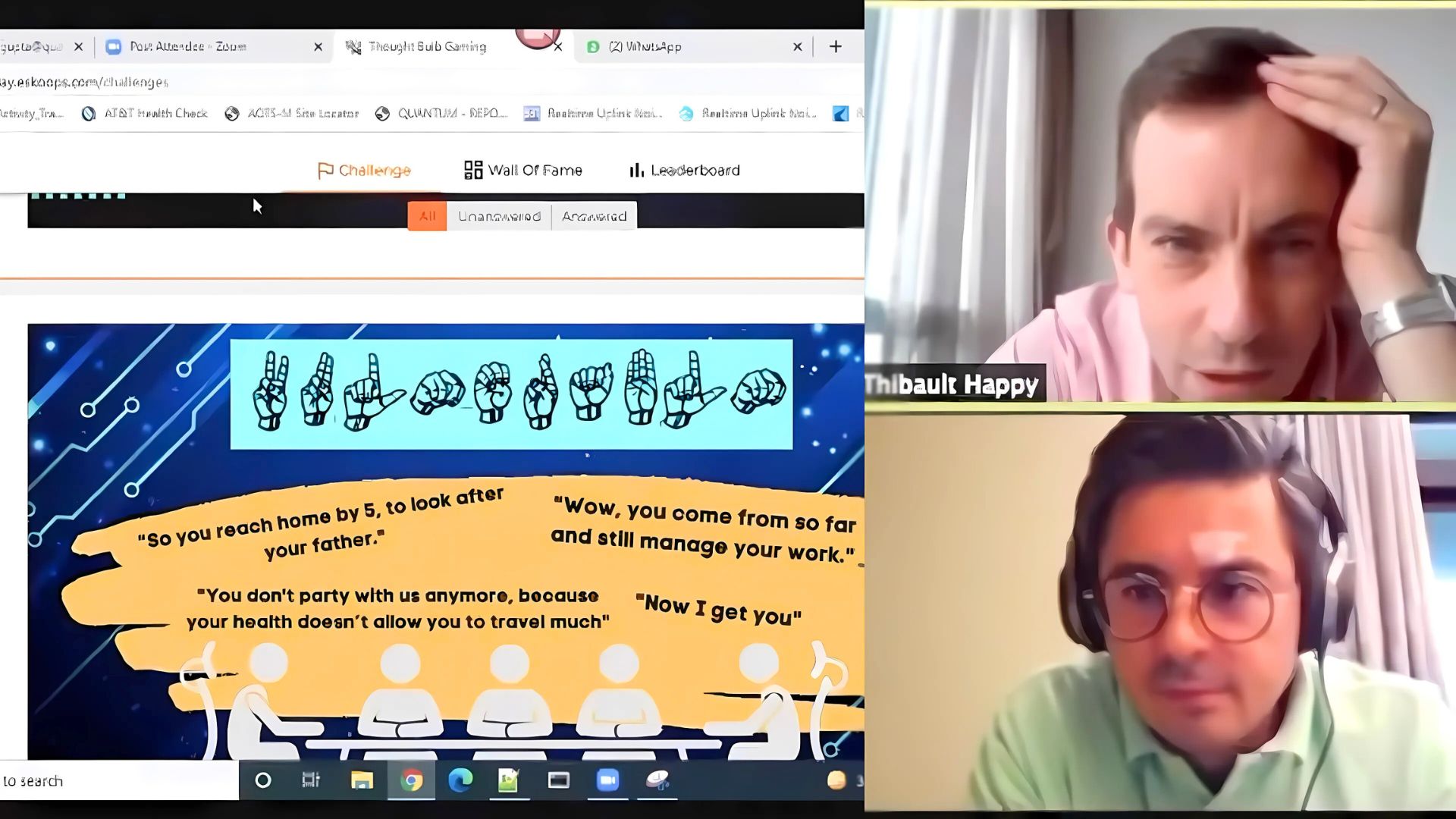
For distributed squads, a facilitated online experience works far better than a casual video call. Mission Moon Lander is a virtual challenge in which teams plan a lunar mission, assign roles and respond to unexpected situations. It runs for groups from 3 to 3,000 people, which makes it useful for large engineering organisations.
Remote and hybrid groups benefit from sessions designed for screens from the start. See our virtual team building options for ideas that keep everyone equally involved.
Leadership sessions for tech managers
Since managers are the most strained group, a dedicated session for engineering managers and team leads often pays off quickly. Our leadership team building programmes focus on communication, delegation and decision making in a way that fits technical environments.
A real example: Prodapt in Mahabalipuram
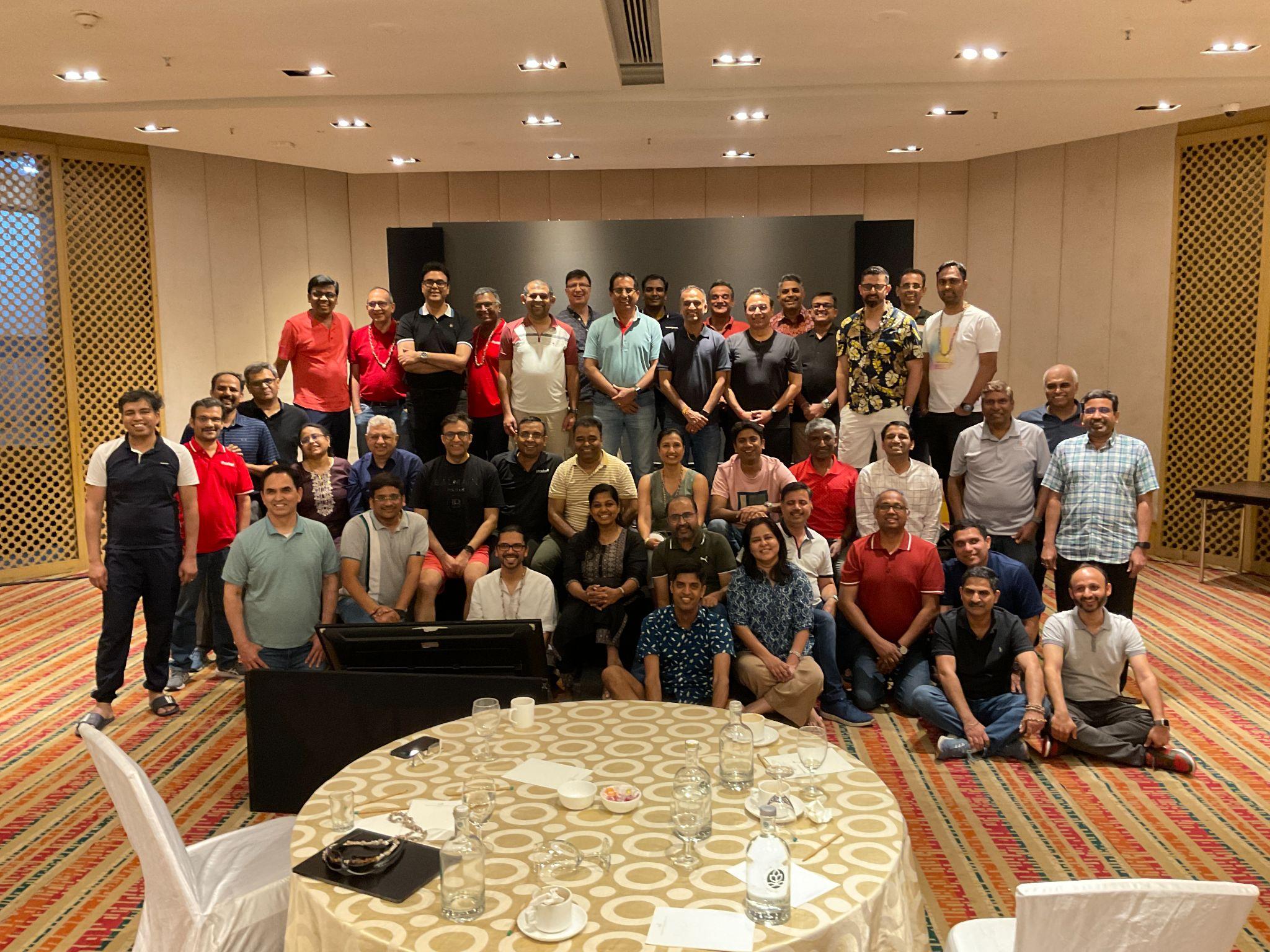
Prodapt, a technology consulting firm, brought around 55 colleagues to Mahabalipuram for an offsite designed to make the day count rather than fill an agenda slot. The Thought Bulb ran the AI Movie Making Challenge as the centrepiece.
Teams were asked to produce an original short film using AI tools, moving from concept to script to production against a tight deadline. Facilitators observed how each group aligned on a story, handled disagreement and pushed to finish, and used those observations in a debrief that linked the experience to how the teams actually collaborate. Every film was then played to the full room.
The takeaway for HR teams is simple: give technical people a real task with a visible result, and the connection follows. You can read more stories like this in our case studies library.
A 90-day plan for HR leaders
Good team building for tech teams is a sequence, not a one-off event. Here is a practical way to structure the next quarter.
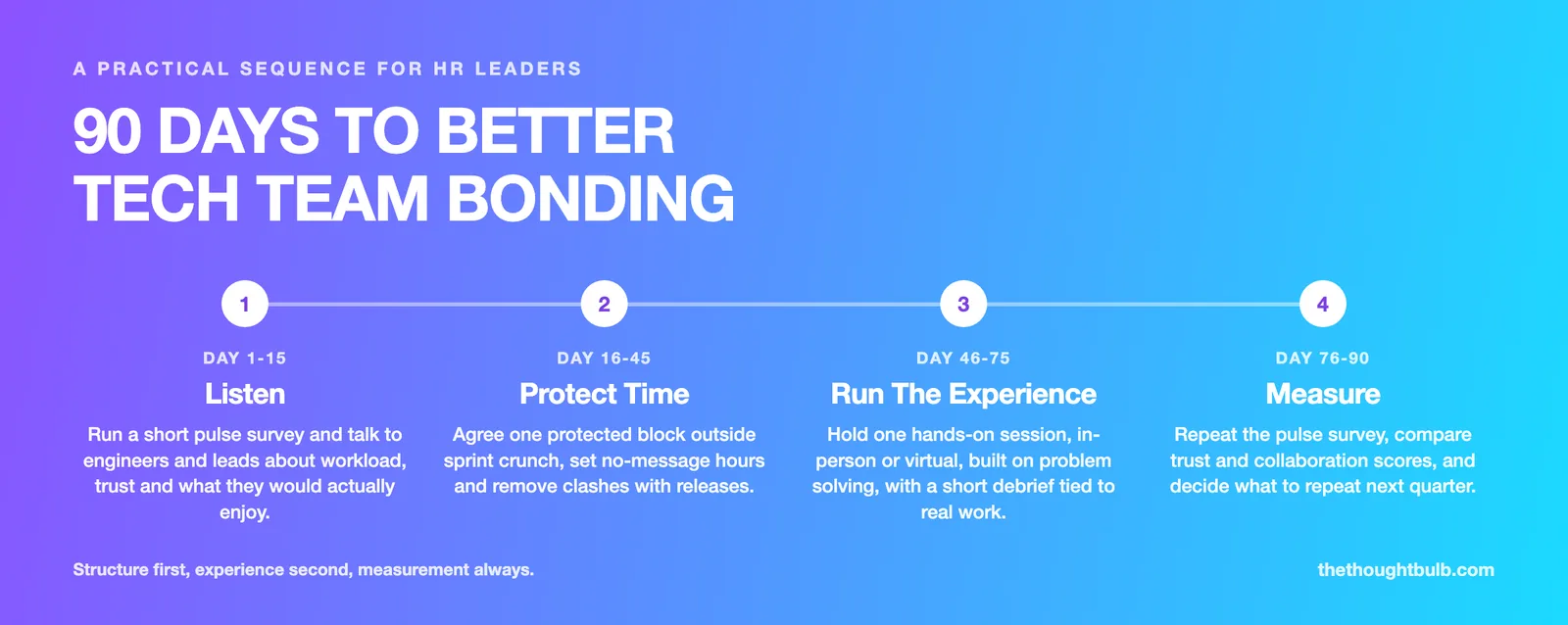
Days 1 to 15, listen: run a short pulse survey and speak to engineers and leads about workload, trust and the kind of experience they would actually enjoy.
Days 16 to 45, protect time: agree one protected block outside sprint crunch, set no-message hours around the event and check the plan against release schedules.
Days 46 to 75, run the experience: hold one hands-on session, in person or virtual, built around problem solving, with a short debrief tied to real work.
Days 76 to 90, measure: repeat the pulse survey, compare trust and collaboration scores, and decide what to repeat next quarter.
If you want to place these sessions alongside other people-programme dates, our employee engagement calendar is a useful planning reference.
Browse all formats on the activities page to match group size, location and goals.
How to measure whether it worked
Leadership will ask what the session delivered, so decide the signals before the event. Good options include a short pulse survey on trust and collaboration, the number of new cross-team working relationships, and manager feedback on how the team behaves in the following month. Repeat the survey at 30 and 90 days if you can, because a trend is more convincing than a single score.
For tech teams, it also helps to look at working signals such as review turnaround, handoff quality and the tone of retrospectives. These are imperfect, but they connect the session to outcomes engineers already care about.
Make the next session count
Tech teams do not need more noise. They need well-designed experiences that respect their time, use their problem-solving instincts and leave them with stronger working relationships. With engagement at a four-year low and burnout widely reported, a thoughtful programme is one of the few people investments that can show a visible return within a quarter.
If you would like help choosing a format for your engineering, product or data teams, the team at The Thought Bulb is happy to talk through options for your city, group size and calendar with no obligation.


