It is October 2026, and for most Indian HR leaders that means one thing: the 2027 budget conversation is about to begin. Before the calendar fills up with festive events and year-end celebrations, this is the moment to decide what team building should actually do for your organisation next year. The old answer, one annual offsite and a few pizza Fridays, is no longer enough. Engagement in India has slipped sharply, teams are split between office, home and hybrid, and AI is changing how people work side by side. This guide covers the team building trends in India that matter for 2027, the numbers behind them, and a practical 90-day plan to turn them into a calendar your CFO will approve.
Why 2027 Planning Has To Start Now
Team building budgets are usually locked between October and December. If you wait until January, you inherit last year's plan by default. Starting now gives you time to measure where your teams really stand, pilot two or three new formats, and walk into budget review with evidence instead of opinions.
There is also a timing advantage. Q4 is the one stretch of the year when most Indian companies already run celebrations, so you can use them as low-risk pilots. A Diwali event that is designed properly can double as a test of whether cross-team mixing, shorter formats or virtual elements work better for your people.
A practical test helps here. Ask yourself whether every employee, in every city and on every work arrangement, will get at least one meaningful shared experience with colleagues from another team in 2027. If the honest answer is no, your plan has a gap, and that gap is where disengagement quietly grows.
What The Engagement Data Says About Indian Teams
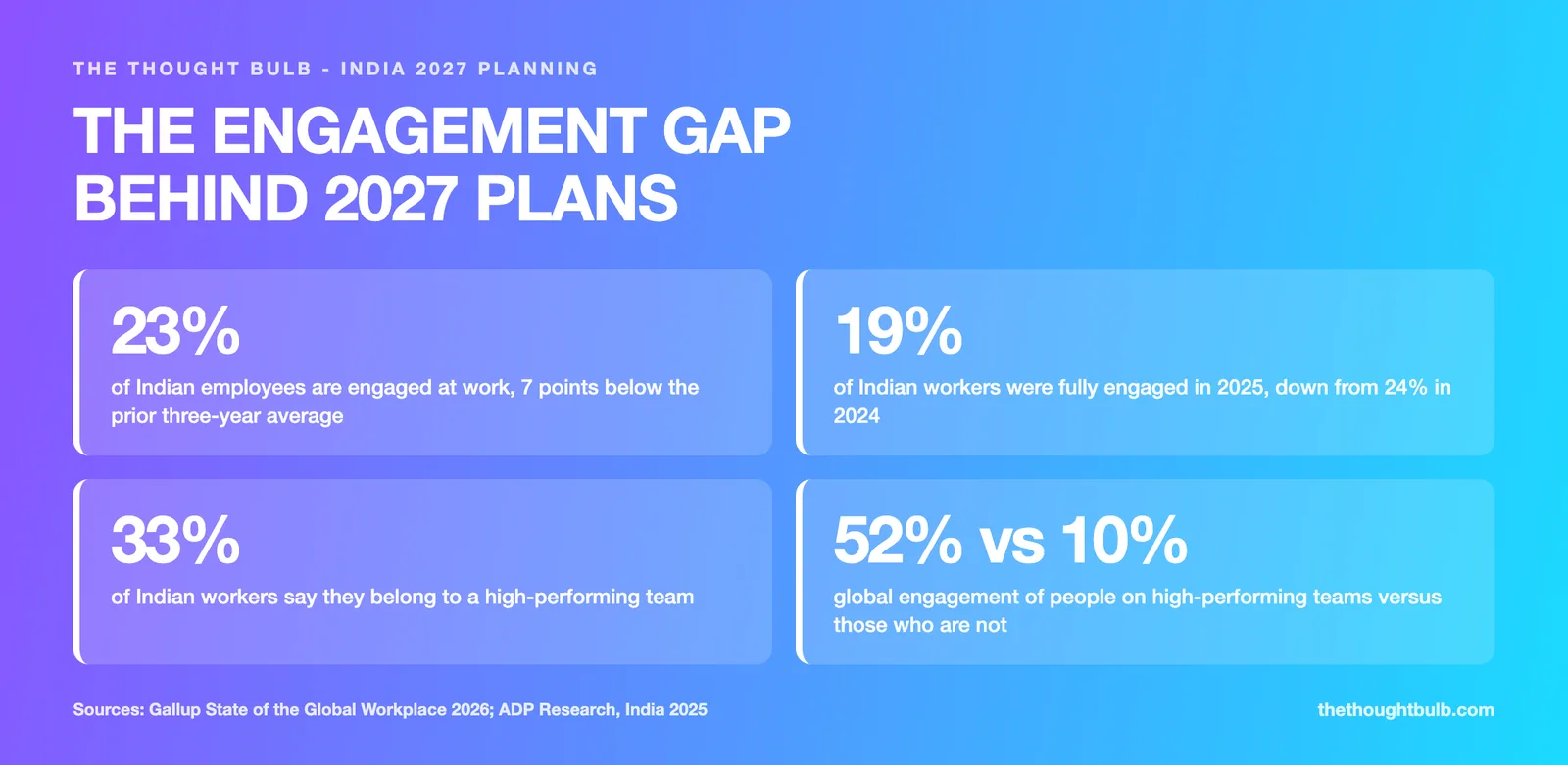
The case for rethinking team building starts with the data. Three numbers stand out from recent research:
Gallup's State of the Global Workplace 2026 reports that only 23% of employees in India are engaged at work, 7 points below the prior three-year average. Gallup also found that 28% of Indian employees experienced a lot of stress the previous day.
ADP Research's 2025 India study found only 19% of Indian workers fully engaged, down from 24% in 2024, one of the steepest falls globally.
The same ADP study found that 33% of Indian workers feel part of a high-performing team, and globally 52% of employees who feel that way are fully engaged versus just 10% of those who do not.
The last point is the one HR leaders should underline. Belonging to a team that works well together is the single clearest lever on engagement in that data set, and team building is one of the few interventions designed to build exactly that. The gap between 33% and the global engagement of high-performing team members is the opportunity.
Five Team Building Trends Shaping 2027
These trends reflect what we see across corporate programmes we design and run for Indian and global teams, read alongside the research above.
1. Belonging replaces bonding as the goal
Old-style team building aimed at a fun day out. The 2027 brief is different: HR leaders want people to leave feeling they belong to a team that works. That means designing for shared problem solving and visible contribution from everyone, not just the loudest voices in the room.
2. AI-themed experiences move from novelty to norm
Teams are being asked to adopt AI tools faster than they are being asked how it feels. Hands-on experiences where people build something with AI together, and then talk honestly about what worked, turn anxiety into shared curiosity. We expect technology-themed sessions to become a standard line item in 2027 plans.
3. Blended in-person and virtual design
With 36% of Indian workers on hybrid schedules and 14% fully remote, according to ADP, no single format reaches everyone. The strongest 2027 calendars mix in-person experiences for city clusters with facilitated virtual sessions for distributed groups. Our guide to virtual team building covers how to run the online half well.
4. Smaller, more frequent moments
One big annual offsite cannot carry a whole year of connection. Expect more 60 to 90 minute sessions spread across quarters, tied to real moments such as a new quarter, a product launch or a festive window. Our employee engagement calendar is a useful starting point for mapping those moments.
5. Measured programmes, not just memorable ones
Finance teams now ask what a team building programme changed. The answer lives in simple before-and-after pulse checks on belonging, manager trust and cross-team collaboration. Programmes that arrive with a measurement plan are the ones that survive budget season.
If you are building the case for leadership, the leadership team building page explains how senior groups can sponsor and model these shifts.
Experiences Worth Putting On The 2027 Calendar
Choosing formats is easier when you match them to the goal. Two experiences from our catalogue map neatly to the trends above, one for each side of the blended model.
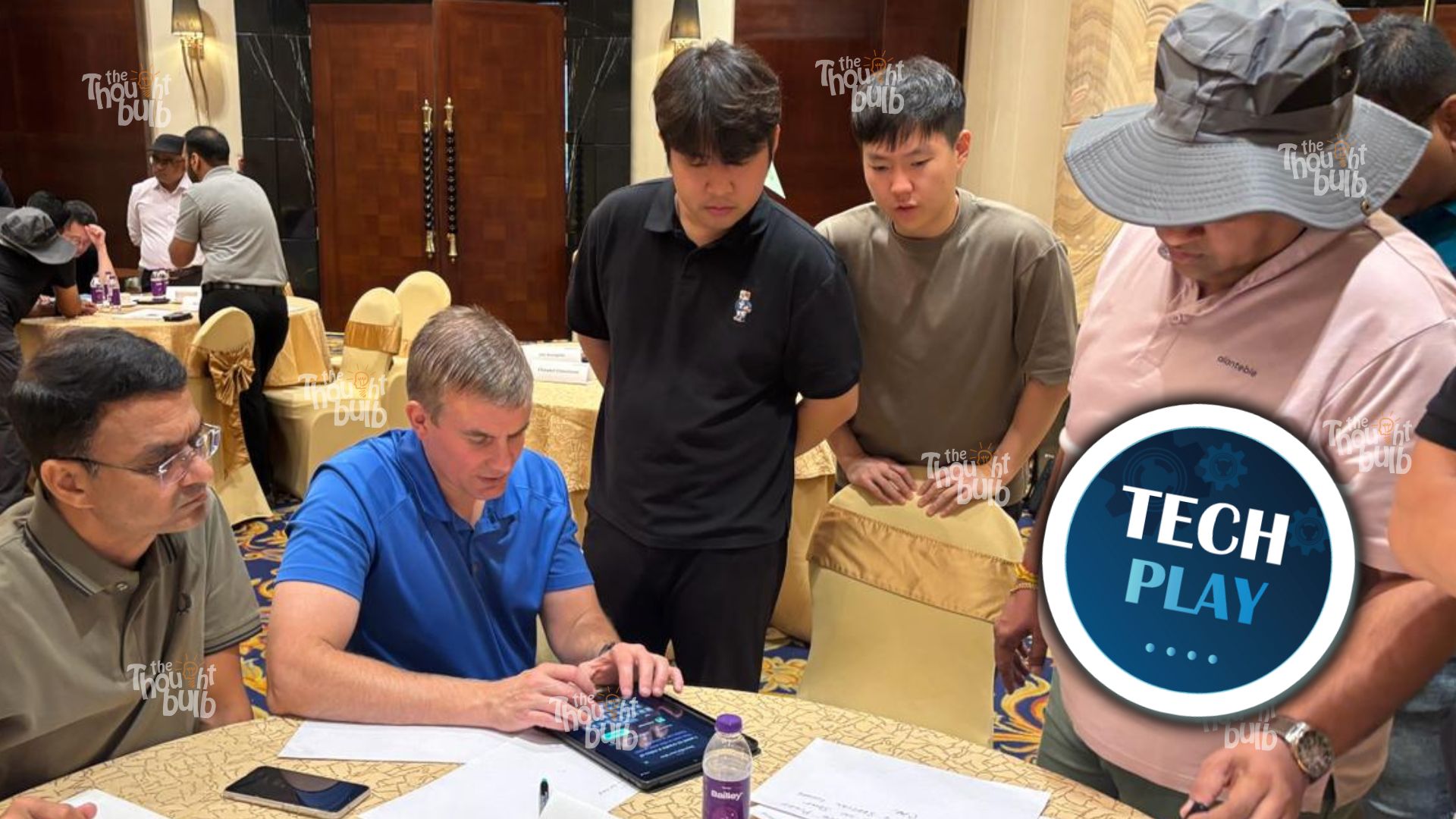
In-person: AI Movie Making Challenge
Teams of mixed functions are given a topic, an iPad and AI tools, and asked to produce a short film that is screened for the whole group. It works for groups of 3 to 100, and it hits two trends at once: AI confidence and cross-team belonging. People discover quickly that the real constraint is imagination, not technology.
Virtual: Mission Moon Lander
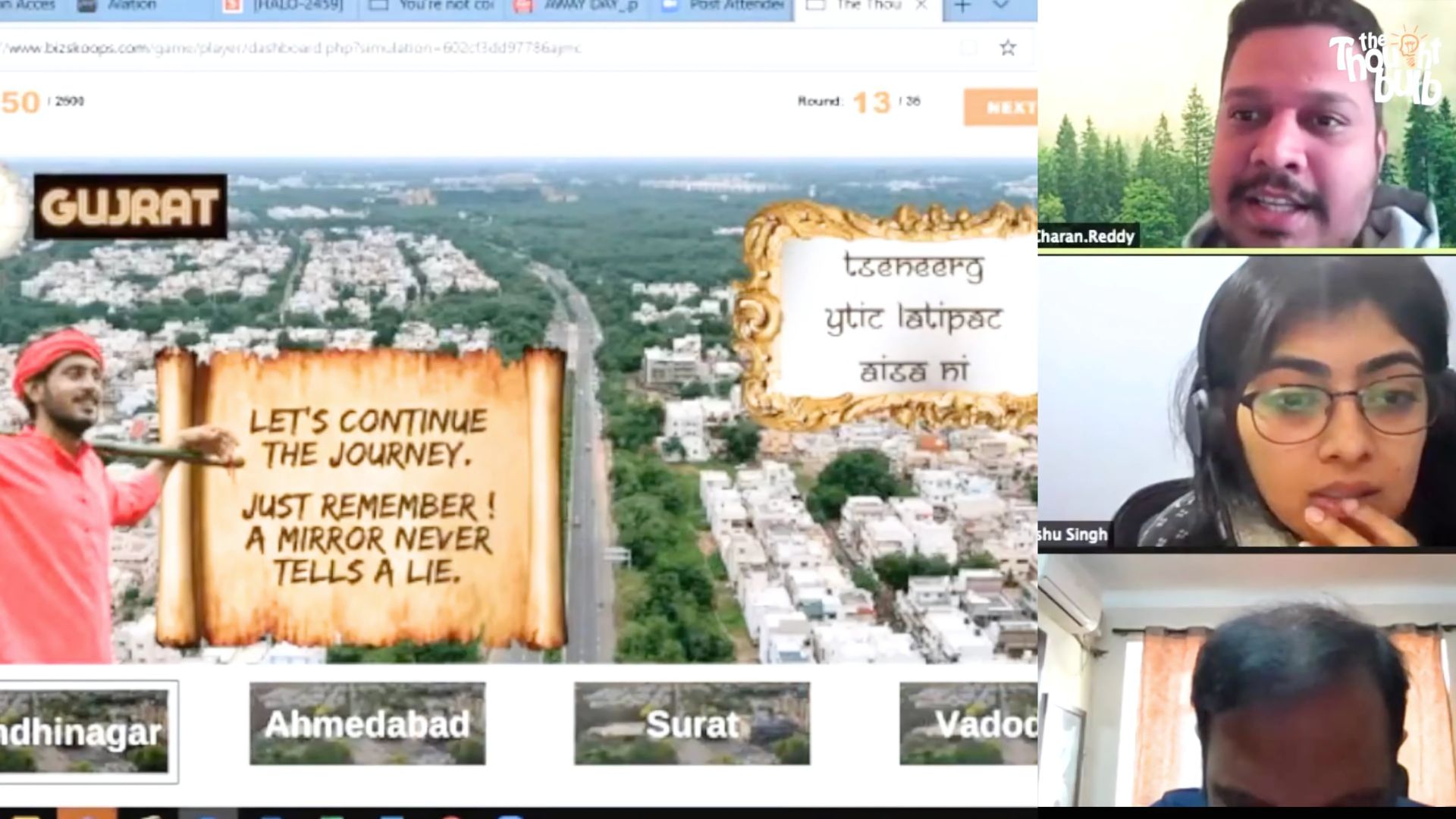
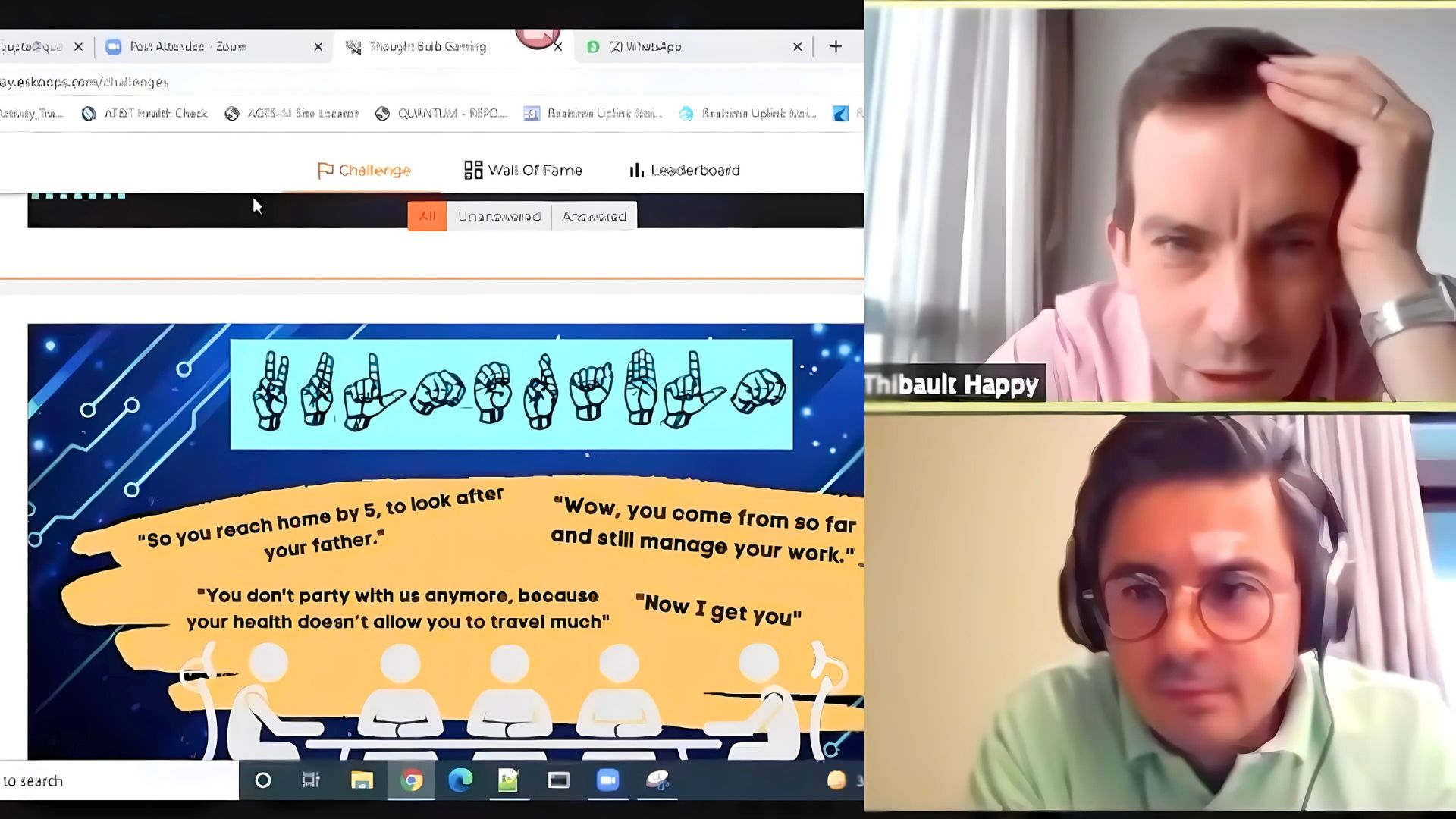
For distributed teams, Mission Moon Lander puts groups on a simulated lunar mission where they brainstorm, assign roles and make fast decisions when unexpected situations arise. It scales from 3 to 3000 participants, which makes it practical for company-wide virtual moments. You can browse more formats on our activities page.
Case Study: Building With AI In Under An Hour
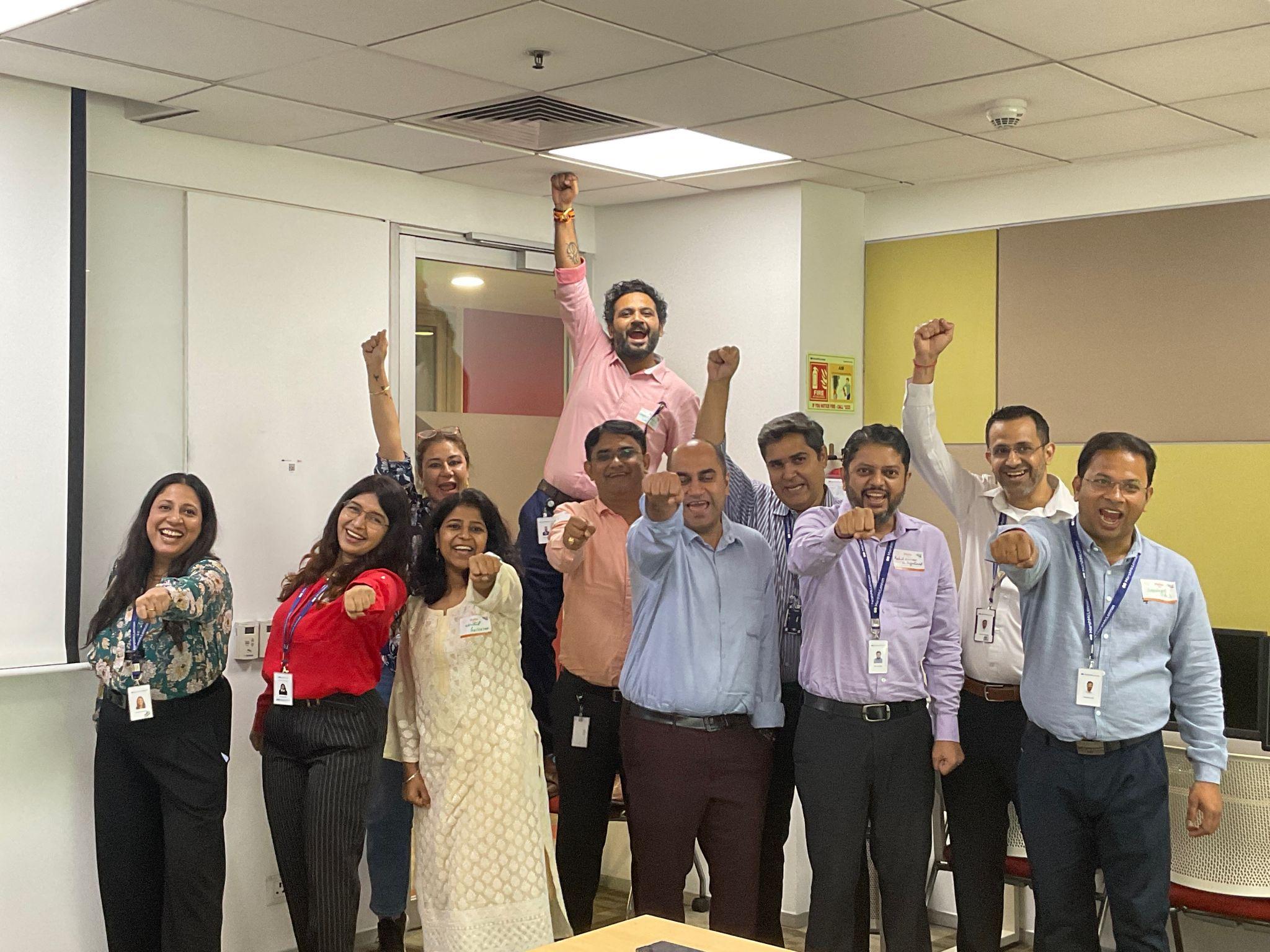
Mercer, a global leader in human resources consulting, asked The Thought Bulb for a technology-themed engagement session in Gurgaon. Twenty participants were split into four teams and given one mission: create an original short film with AI tools, start to finish, within the hour. Teams chose a concept, drafted a script, generated and refined visuals, and assembled a final cut against the clock.
The most useful part was the debrief. At Mercer's request, the conversation stayed anchored to the technology theme rather than drifting into abstract team dynamics. Participants moved from knowing about AI to having built with it, and discussed what they had learned about directing a tool rather than simply asking it questions. You can read the full story among our case studies.
A 90-Day Plan To Build Your 2027 Team Building Strategy
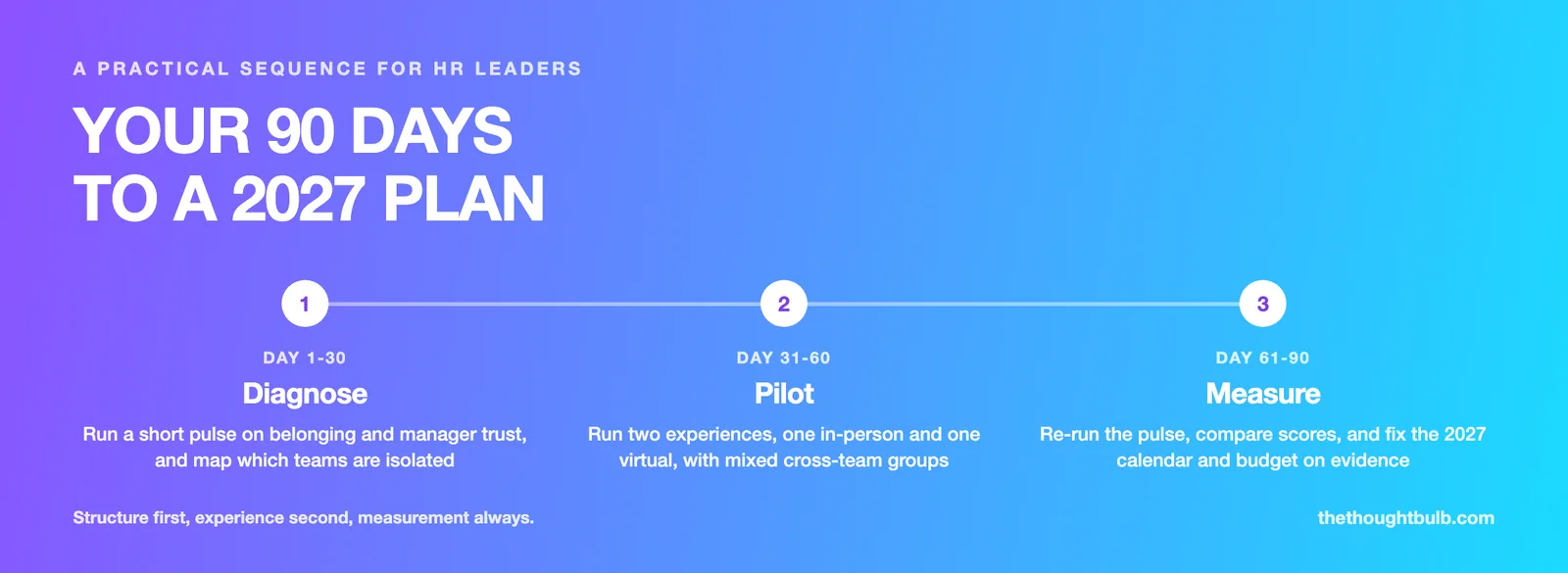
You do not need a large budget to start. You need a sequence. Here is the one we recommend to HR leaders planning for 2027:
Days 1-30, Diagnose: run a short pulse survey on belonging and manager trust, and map which teams are isolated, newly formed or most affected by hybrid schedules.
Days 31-60, Pilot: run two experiences, one in-person and one virtual, with mixed cross-team groups. Keep each to 60 to 90 minutes and capture feedback straight afterwards.
Days 61-90, Measure: re-run the pulse, compare scores with the baseline, and use the results to set the 2027 calendar and budget.
Keep the pilots honest by mixing groups on purpose, inviting remote colleagues to join live, and asking two simple questions afterwards: did you work with someone you rarely speak to, and would you do this again? The answers tell you far more than attendance numbers do.
Notice the order: structure first, experience second, measurement always. Skipping the first and last steps is how team building becomes a one-off event instead of a strategy.
Mistakes To Avoid While Planning
Treating team building as an annual event rather than a year-round rhythm.
Letting teams self-sort, which reinforces the silos you hoped to break.
Choosing a format before defining the outcome you want to measure.
Ignoring remote and hybrid colleagues, who are often the least engaged group. ADP found remote workers in India at just 8% engagement versus 21% for on-site workers.
Final Thoughts
Engagement in India is under pressure, but the data also points to a clear opportunity: people who feel part of a high-performing team are far more engaged. The 2027 winners will be organisations that design for belonging, blend in-person and virtual, run smaller moments all year, and measure what changes. If you would like help turning this into a plan for your teams, the Thought Bulb team is happy to talk it through, with no obligation.