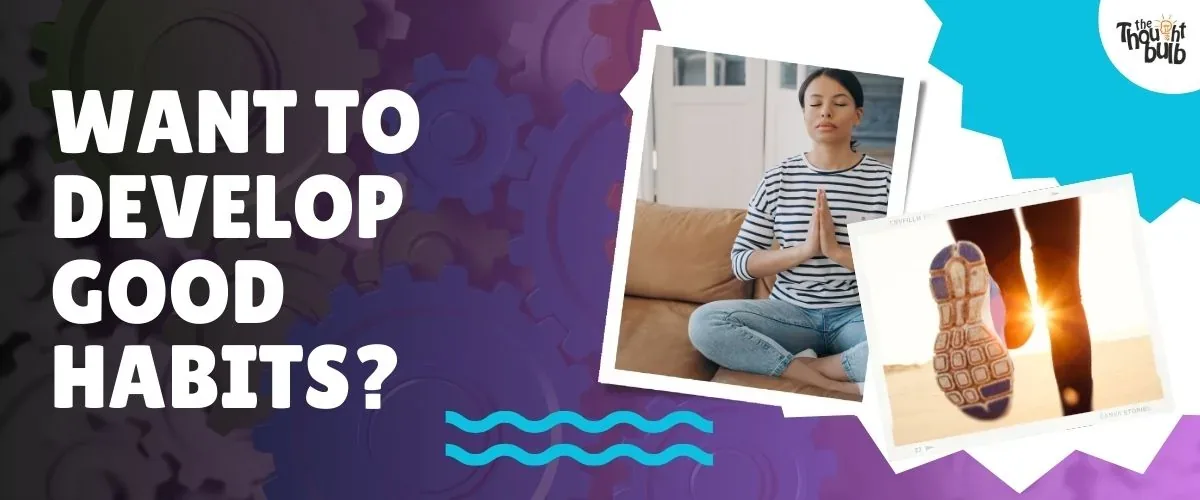
Habits are the essential building blocks of us as an individual. They can be considered as a factor to differentiate us from others. Repetition of certain activities day in and day out is what forms our routine. Many people believe that there will be a “one great habit” that will help them achieve their goals, but that is far from the truth. Transformation and good results are a culmination of small things, that matter, over time. Habit building is at the core of anything that you want to change in life.
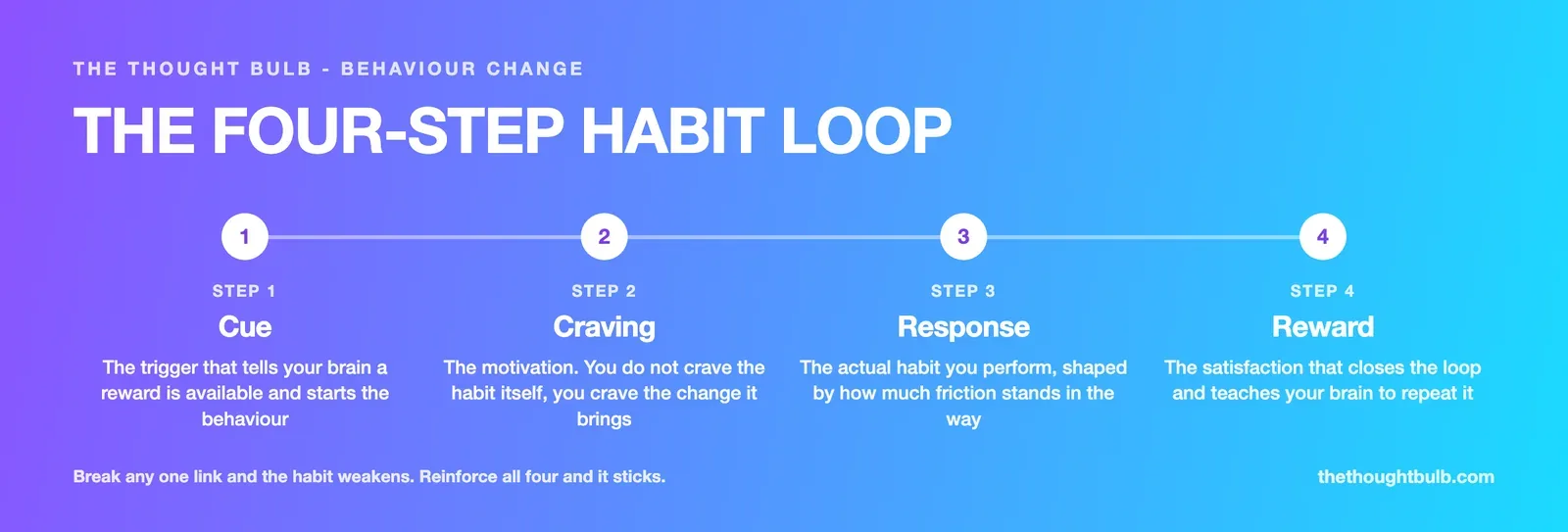
James Clear through his books wants to convey that our habits follow a 4-step loop which consists of Cue, Craving, Response and Reward. The book details practical techniques to ‘hack’ these 4 steps. The motive of this is for us to achieve a positive change in our life.
Our habits repeat this 4-step loop every single time. For example, Michael after leaving the office directly goes to the gym to work out.
Michael leaving office is the CUE.
He has a CRAVING to workout.
He RESPONDS by driving to the gym directly.
And finally, his REWARD is a healthy and fit body that he will acquire. That hit of dopamine when he exercises will ensure that Michael keeps repeating this every day.
Cues
“Habits are the compound interest of self-improvement”
Atomic Habits – James Clear
A cue is an essential spark that ignites a habit loop. It can be a person, any particular environment that helps you achieve this. But, how do we find and implement these cues to ignite that fire? An example of this can be keeping a water bottle with you at all times so that you remember to stay hydrated.
James Clear has also shared a few tactics regarding this:
Make a scorecard in which you list all your daily habits. You can rate these habits as essential and non-essential. This will help you in figuring out your habit goals.
Create an environment that promotes and enables you to practice those habits.
Implement the habits with concrete verbal commitments. Example: “When I wake up, Then I will brush my teeth”.
Cravings
Craving means a powerful desire or yearning for something. An example can be having a bar of chocolate to satisfy sugar cravings. But James Clear has mentioned some ways to use these cravings to build better habits.
Incentivize the habits that are difficult to build. For example: You can make a promise to yourself that if you exercise 5 days a week, you can enjoy a piece of cake.
Surround yourself with like minded people. For example: If you spend time with people who are all about fitness and working out, you will be always remain motivated to take care of your health as well.
Make a cons list of your bad habits. For example: If you want to give up junk food, then make a list of all the health problems that consuming such foods is going to cause in the long run.
Responses
“When you fall in love with the process rather than the product, you don’t have to wait to give yourself permission to be happy. You can be satisfied anytime your system is running.”
Atomic Habits – James Clear
The way you respond to your habits plays a big role in making or breaking your habit cycle. If the habits are easier to perform you will always be motivated to complete the tasks associated with them. There are several ways to simplify your habits:
Habits should not be complicated, and hence should be easy to start initially. For example: Start with doing a single round of your nearby park instead of running a half-marathon on the first day. Let’s say you are someone who is used to having dessert after all the 3 meals. Instead of giving up desserts altogether, best practice would be to just avoid dessert after 1 meal. Then subsequently you can stop eating dessert after 2 meals. This ensures a continuous flow in your process of habit building.
Make bad habits more difficult to practice. For example: If you are addicted to junk food, stop keeping those foods at home. In future, whenever your cravings for junk food arise, you would have no choice but to go out and buy it. And us being lazy humans, you would prefer to stay at home and eat whatever is available.
Some people strive to achieve perfectionism in every task that they do. This can easily backfire and prevent you from building good habits. The best way to prevent this is to just perform the task without worrying about the quality of the work. Quality will come over time; for now the focus needs to be on building an efficient habit.
Rewards
A reward is something that we get after achieving a particular task. Our brain has been wired to receive instant gratification, and the best way to ensure that you keep practising your habits is to reward yourself.
Make instant rewards a daily norm. For example: If you are successfully able to read one chapter of a book, you get to watch 20 minutes of television. But remember to punish your bad habits as well. For example: If you smoked a cigarette, run 2 laps of your local park.
Start taking accountability for your actions. Knowing that there are people who will know about your progress, will make you keep continuing. This can help them also to take accountability of their actions. Make a community of such people where everyone wants build a certain habit. This benefits everyone involved.
Keep tabs on your progress. Maintain a journal or a chart paper where you keep checking off your goals for the day. This will keep you on track and motivated.
Conclusion
In the book, James Clear has given a more thorough analysis of these steps. He has used various examples of great world leaders to make the concepts of habit building more relatable. This makes the book a must read for everyone trying to bring a change in their life.
Bibliography
Atomic Habits: An Easy & Proven Way to Build Good Habits & Break Bad Ones, James Clear, Random House Business Books.