Three years into India's hybrid era, the question facing most HR and people leaders is no longer whether to invest in team building, but where to spend the budget: on a high-energy in-person offsite, or on a slickly run virtual experience that anyone can join from their living room. With teams now split across home, office and a dozen different cities, the answer matters more than ever. This guide pulls together the latest 2026 data and our own delivery experience to show what virtual and in-person team building each do best, where each falls short, and how to build the mix that actually moves engagement for an Indian workforce.
Why This Debate Is So Loud in India Right Now
India did not simply return to the office after the pandemic. It settled into a durable hybrid pattern, and that pattern is now the single biggest driver of how teams bond. Most knowledge workers split their week between home and office, which means a manager rarely has the whole team in one room on any given day. That reality quietly reshapes every culture decision, including team building.
The stakes are real. India's engaged workforce is actually a bright spot globally, but holding on to that edge takes deliberate effort. When people only meet through a screen, trust erodes slowly and almost invisibly, until a project stalls or attrition spikes and leaders wonder what changed.
Hybrid is the default: most Indian knowledge teams now operate across home, office and multiple cities at once.
Culture is the worry: people leaders consistently name maintaining culture as their top hybrid-era concern.
Bonding no longer happens by accident: the corridor chats and shared lunches that once built trust have thinned out.
What the 2026 Data Actually Says
Before choosing a format, it helps to look at the numbers rather than the noise. A few findings from 2026 industry research and global workplace studies stand out for Indian leaders planning their engagement calendar.
India's employee engagement sits around 32 percent, comfortably above the global average of roughly 23 percent, but that lead has to be defended every quarter.
Employees working in a hybrid mode in India show stronger engagement than those who are fully remote or fully in-office, which is a strong argument for blending formats rather than picking one.
Virtual team-building events can cost around 75 percent less per session than in-person ones, and well-designed virtual formats have been shown to deliver up to 12 percent higher return on investment.
Hybrid formats that combine virtual and in-person elements now make up close to 45 percent of corporate team-building programmes, with demand growing around 20 percent year on year.
Across studies, structured team building returns roughly 4 rupees of value for every 1 rupee spent, when the activity is tied to a clear objective rather than run as a one-off.
The headline is not that one format wins. It is that cost, reach and measurable ROI increasingly favour a deliberate blend, while the deepest relationship-building still happens face to face.
In-Person Team Building: Where It Still Wins
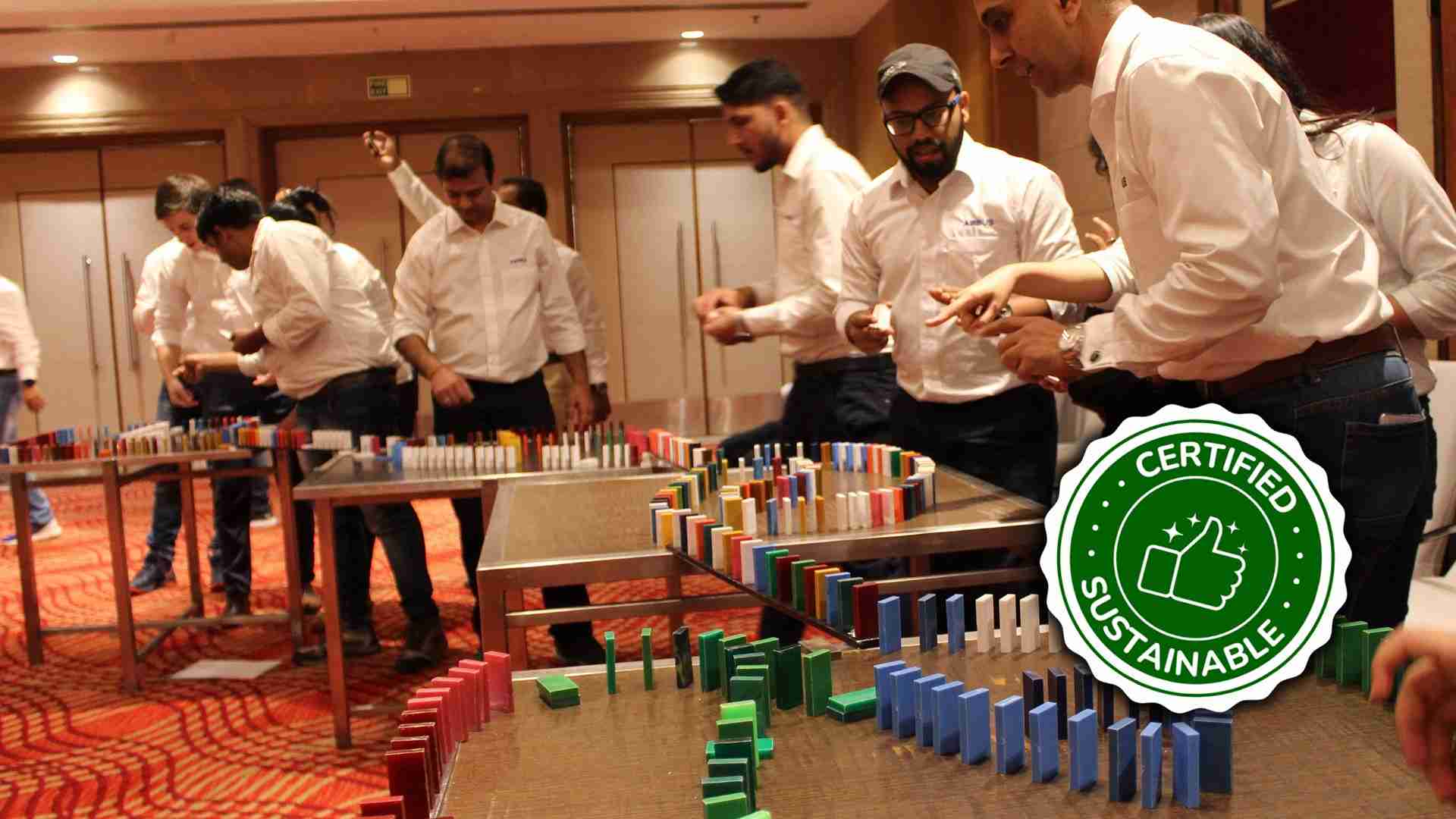
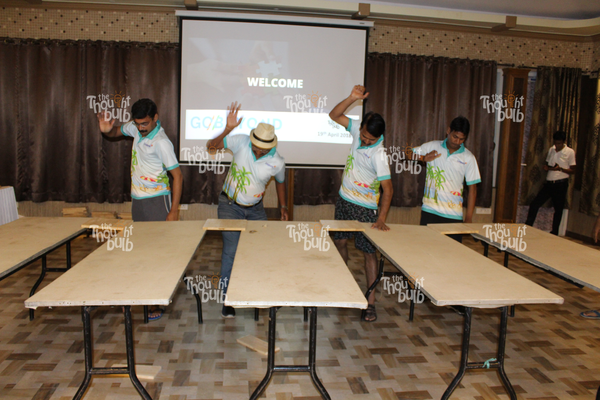
Nothing has replaced the energy of a room full of colleagues solving a problem together. In-person experiences compress weeks of relationship-building into a single day. People read body language, share meals, take risks in front of each other and create the shared stories that hold a team together long after the event ends.
Best suited for
Annual offsites, leadership resets and any moment that needs a genuine culture shift.
New teams or post-merger groups that have to build trust quickly from a low base.
High-stakes collaboration challenges where the lesson lands harder when it is physical and immediate.
The trade-offs
Higher cost per head once you add venue, travel and logistics.
Harder to scale across cities and impossible for colleagues who genuinely cannot travel.
Needs more lead time to plan and coordinate.
Virtual Team Building: More Than a Backup Plan
Virtual team building has matured far beyond the awkward quiz calls of 2020. Done well, it is fast to schedule, easy to scale to hundreds or even thousands of participants at once, and genuinely effective at pulling distributed colleagues into one shared experience. For teams spread across India and beyond, it is often the only practical way to get everyone engaged on the same day.
Best suited for
Distributed and cross-city teams that rarely share a physical location.
Frequent, lighter-touch engagement that keeps connection warm between bigger offsites.
Large-scale moments such as festival celebrations, all-hands energisers and global town halls.
The trade-offs
Screen fatigue is real, so sessions have to be tightly designed and time-boxed.
Informal, spontaneous bonding is harder to spark than it is in a shared room.
Weak facilitation shows up faster online, so production quality matters more.
Two Experiences That Show the Difference
It is easier to see the contrast through real activities rather than abstract pros and cons. Two of the experiences our teams run most often sit at opposite ends of the spectrum, and together they make a strong hybrid pairing.
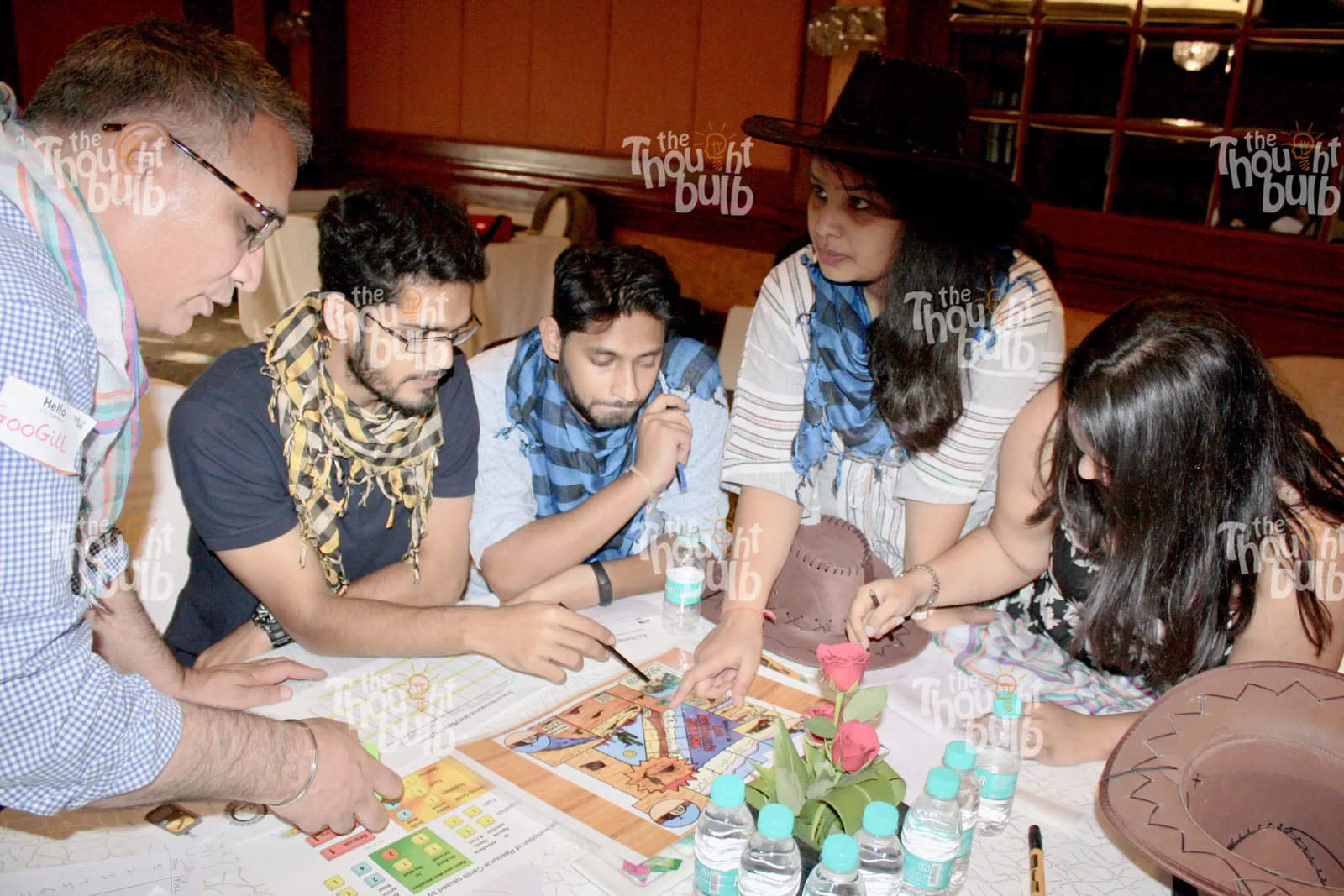
Lost Dutchman's Gold Mine is an in-person business simulation built around a deceptively simple idea: teams that hoard information and chase their own targets quietly sabotage the whole group's results. Played in a room, the penny-drop moment when people realise the cost of low trust is visceral in a way a screen rarely matches. It is a favourite for leadership groups and newly formed teams that need to feel, not just hear, why collaboration pays off.
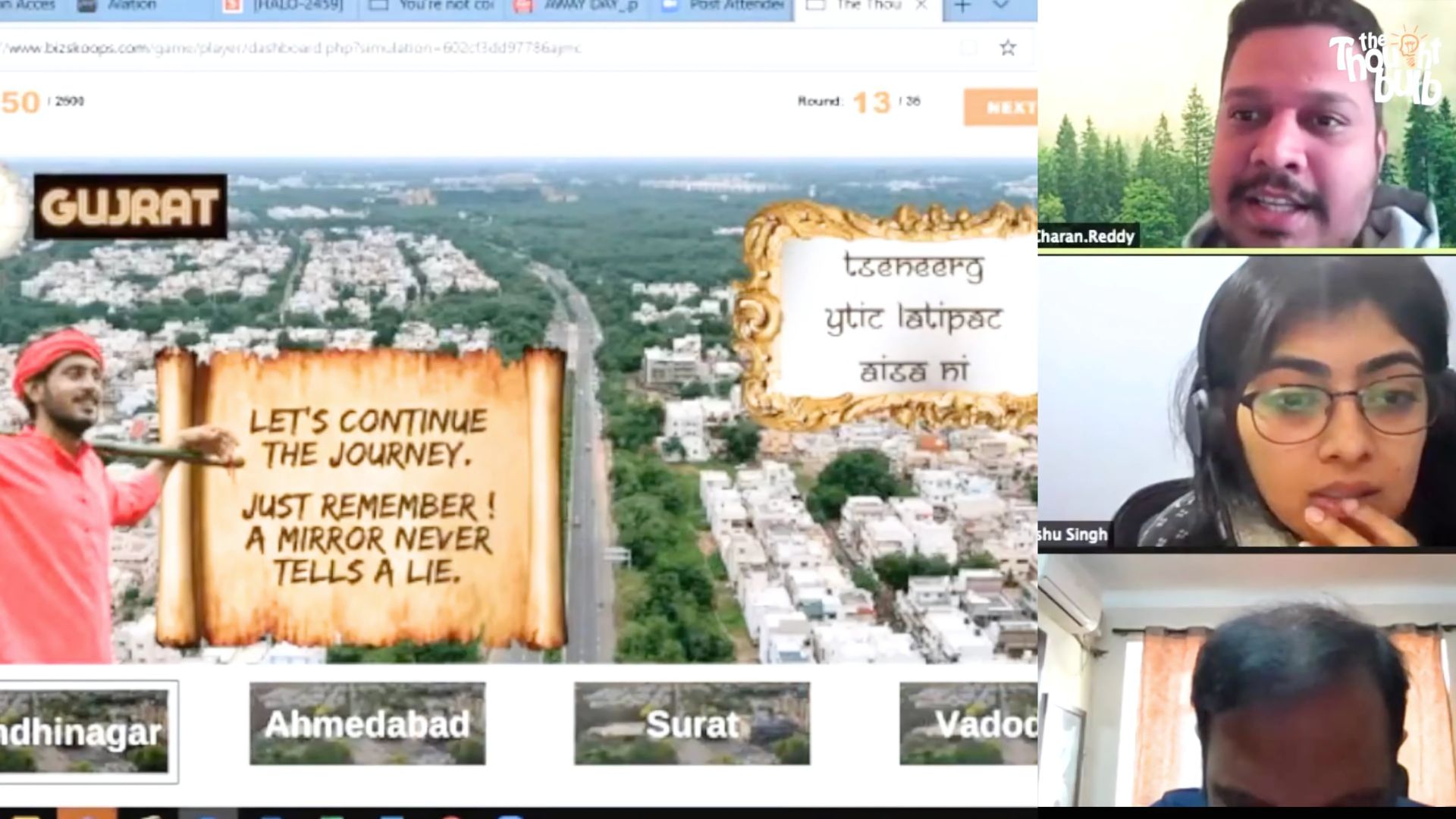
For teams who cannot all be in one place, the Incredible India Treasure Hunt is a virtual experience that sends colleagues racing through clues, trivia and challenges themed around the country, all from their own screens. It connects people across cities in real time, rewards quick communication and shared problem-solving, and scales comfortably to large groups, which makes it a natural fit for distributed and hybrid teams.
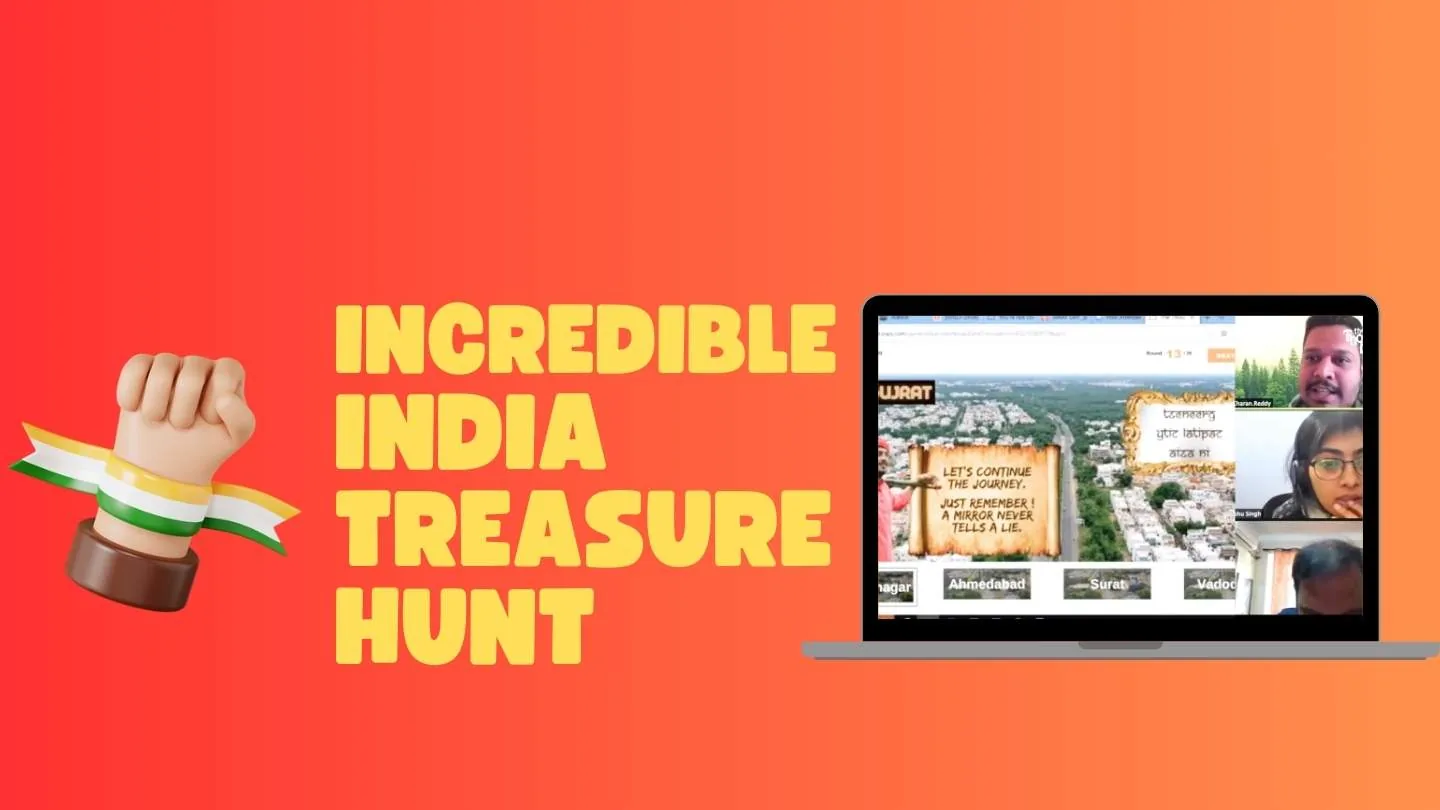
Both sit within a wider catalogue of in-person and virtual options, so it is worth browsing the full range of team building activities before locking a format to your objective.
What Scale Looks Like in Practice
The strongest case for virtual is not theory, it is reach. In one engagement, our team designed and delivered a single virtual experience for around 2,000 participants joining from multiple locations at once, keeping energy high and everyone genuinely involved across the session. An in-person event of that size would have meant enormous venue and travel cost and weeks of logistics. The virtual format made a shared, simultaneous moment possible for the entire group on one day, which is exactly the kind of cohesion hybrid organisations struggle to manufacture otherwise.
That same logic extends to remote-first and cross-border teams, and you can see more formats built for them on our virtual team building page.
How to Choose the Right Mix
The most effective people teams in 2026 stop treating this as virtual versus in-person and start treating it as a calendar decision. The question becomes: which format serves which moment in the year, and how do they reinforce each other?
Anchor the year with one or two in-person moments for deep bonding, culture resets and leadership alignment.
Keep connection warm between them with lighter, frequent virtual sessions that include everyone, especially remote colleagues.
Match the format to the goal: trust and conflict work in person, reach and inclusion virtually.
Always tie the activity to a measurable outcome so you can show the return, not just the photos.
If you want proof points before you commit budget, our client case studies show how Indian and global teams have combined both formats to lift engagement and collaboration.
The Bottom Line
Virtual and in-person team building are not rivals. In-person still owns the deep, trust-building moments that reset a culture, while virtual delivers the cost-efficient reach and inclusion that hybrid, multi-city teams cannot get any other way. The data points firmly toward a blend, and the organisations that win on engagement are the ones designing that blend on purpose rather than defaulting to whatever is easiest this quarter.
If you are mapping out your engagement calendar for the rest of 2026 and are not sure where in-person ends and virtual begins, that is exactly the conversation our team enjoys most. Tell us about your team's shape and goals, and we will help you design a mix that actually works.