Walk into almost any Indian sales floor in the second half of the financial year and you will find the same paradox. The team is loud, competitive and visibly working hard. And almost nobody on it trusts anybody else with a deal. Reps guard accounts from each other. Pre-sales and field sales quietly blame one another when a pitch collapses. Customer success finds out about a renewal risk three weeks too late. Everyone is busy. The number still misses.
Sales is the one function where Indian companies invest heavily in individual capability and almost nothing in collective capability. We send reps for negotiation training, buy them a new CRM, redesign the incentive plan twice a year, and then wonder why the floor behaves like a room of freelancers who happen to share a logo. Team building for sales teams is not about morale or a night out after the quarterly review. It is about whether the twelve people carrying your revenue number will actually cover for each other when one of them is drowning.
Why Sales Teams Are The Hardest Team In The Building To Build
Every function has friction. Sales has friction that is designed in. The comp plan rewards the individual, the leaderboard ranks the individual, and the recognition at the annual kickoff goes to the individual. Then leadership asks the same group to collaborate. That is not a culture problem but a structural contradiction, and no amount of enthusiasm from HR will resolve it.
The incentive fights the instruction
If a rep helps a colleague close a deal and receives nothing for it, they have learned something precise about what your company values. Do that for four quarters and you have trained a floor of people who will smile in the team meeting and hoard information the moment it leaves. Sales leaders who reward only individual quota attainment get exactly what they reward.
The pressure is public
Very few functions publish individual performance on a screen every week. That visibility drives urgency, but it also makes vulnerability expensive. A rep who admits a deal is slipping is admitting it in front of everyone who is ranked against them. So they do not admit it, and the forecast quietly rots until the last week of the quarter.
The team is rarely in one room
Between field territories, hybrid schedules and reps spread across Gurgaon, Bengaluru and Pune, most Indian sales teams are together in person perhaps twice a year. Relationships that are supposed to carry high-stakes trust are being built over Slack threads and a Monday standup nobody enjoys.
What The 2026 Data Says About The Cost Of Getting This Wrong
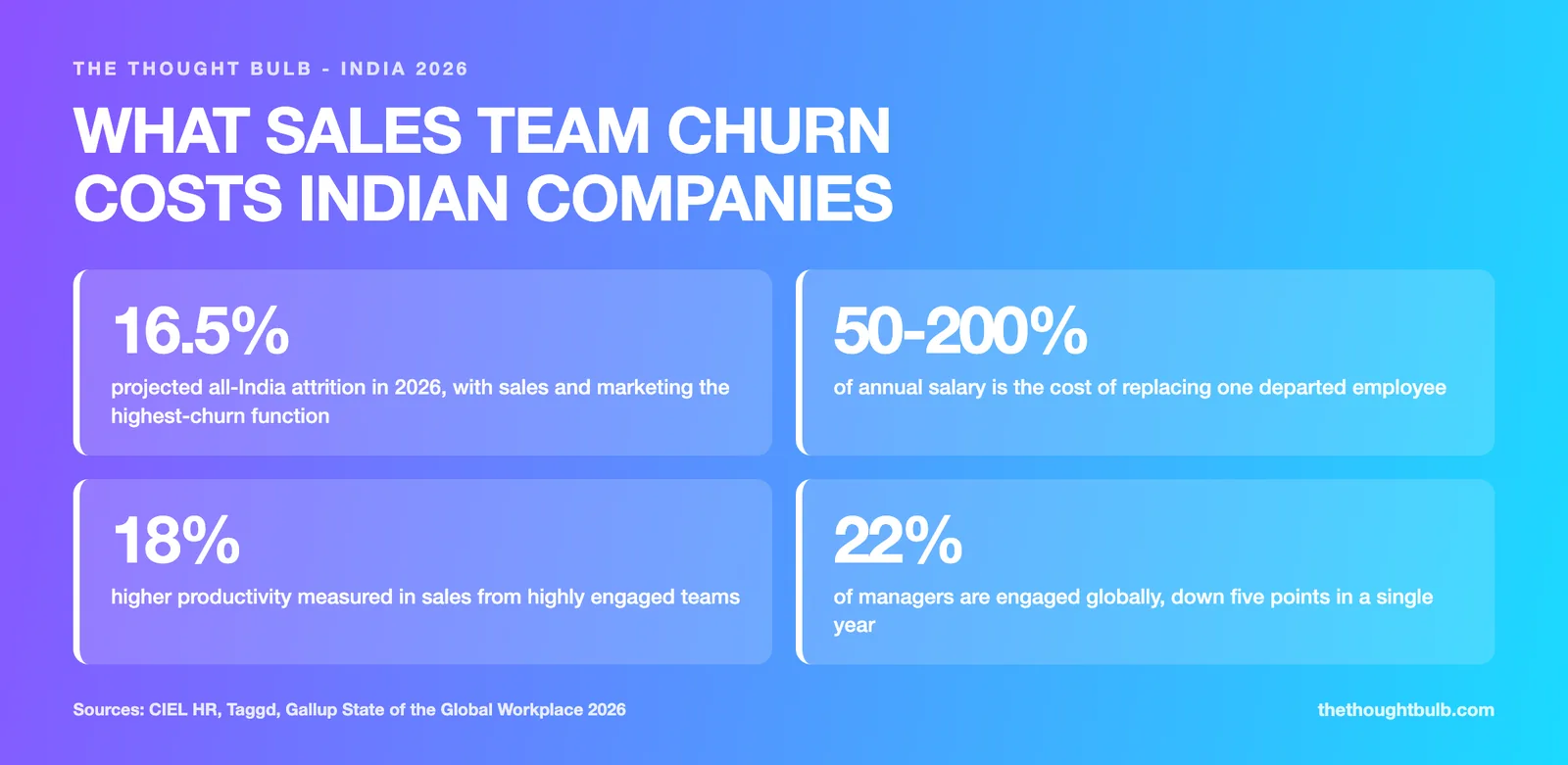
The numbers around sales team churn in India have got harder to ignore. All-India attrition is projected at roughly 16.5 percent in 2026, and sales and marketing consistently sit at the top of the function-wise attrition tables, ahead of IT and engineering. Sector variation is wide: e-commerce is running near 28.7 percent while manufacturing sits closer to 14 percent. Replacing one departed employee costs somewhere between 50 and 200 percent of their annual salary once you count hiring, ramp time and the pipeline they took with them.
The engagement side of the ledger is no better. Gallup's 2026 State of the Global Workplace found global engagement fell to 20 percent, the lowest since 2020, and manager engagement dropped five points in a single year from 27 to 22 percent. That last figure matters enormously for sales, because managers account for roughly 70 percent of the variance in team engagement. A checked-out sales manager produces a checked-out pod, and it happens fast. The upside is measurable in the same direction: Gallup's meta-analyses put highly engaged teams at 18 percent higher productivity measured in sales.
Put plainly, disengagement on a sales floor is not a soft cost. It shows up as slower ramp, worse forecast accuracy, and reps walking out of the door with relationships you paid to build.
Why The Usual Sales Offsite Does Not Change Anything
Most sales offsites in India follow an identical script. Morning: numbers review and a strategy deck. Afternoon: an energiser run by someone with a microphone. Evening: dinner and drinks. Everybody leaves calling it a good break, and nothing about Monday is different.
The reason is simple. Nothing in that day required the team to depend on each other under real pressure. Bonding over a buffet does not test whether a rep will hand over a warm lead. The experiences that change sales behaviour share three traits:
They create genuine interdependence, where no individual can win alone no matter how good they are
They surface the competition-versus-collaboration tension explicitly, rather than pretending it does not exist
They end with a debrief that connects what just happened to what happens in your pipeline reviews on Monday
That third point is where most programmes fail. An activity without a debrief is entertainment. The learning lives in the twenty minutes afterwards when somebody says out loud, that is exactly what we do with inbound leads.
Experiences That Actually Work For Sales Teams
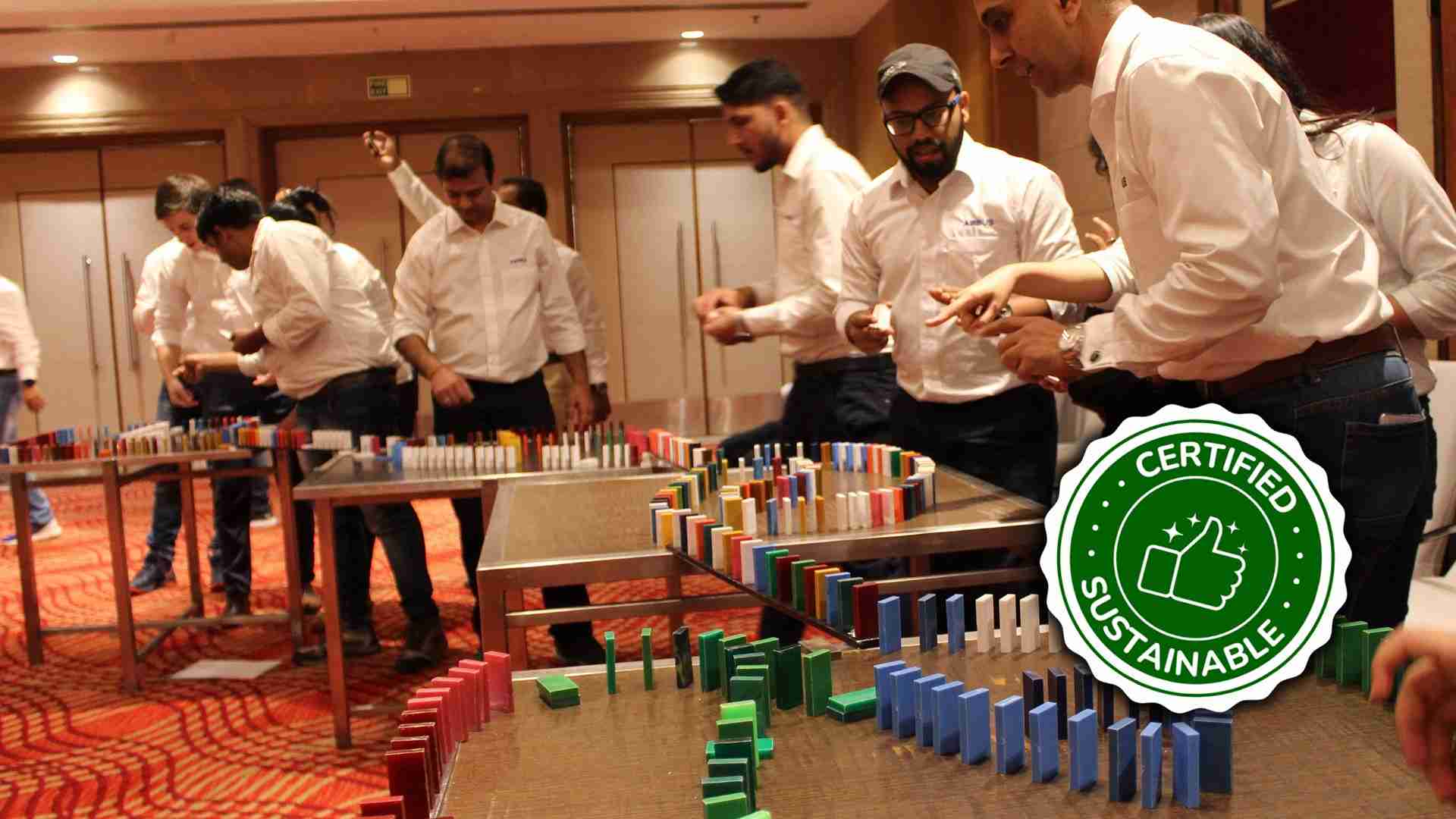
Not every team building format suits a sales floor. Sales people are competitive, allergic to anything that feels like forced fun, and quick to disengage from an exercise they judge to be beneath them. The formats that hold their attention tend to be simulations with real stakes, real resource constraints and a scoreboard. Across our team building activities, a few consistently earn the respect of revenue teams.
Cricket Auction Simulation
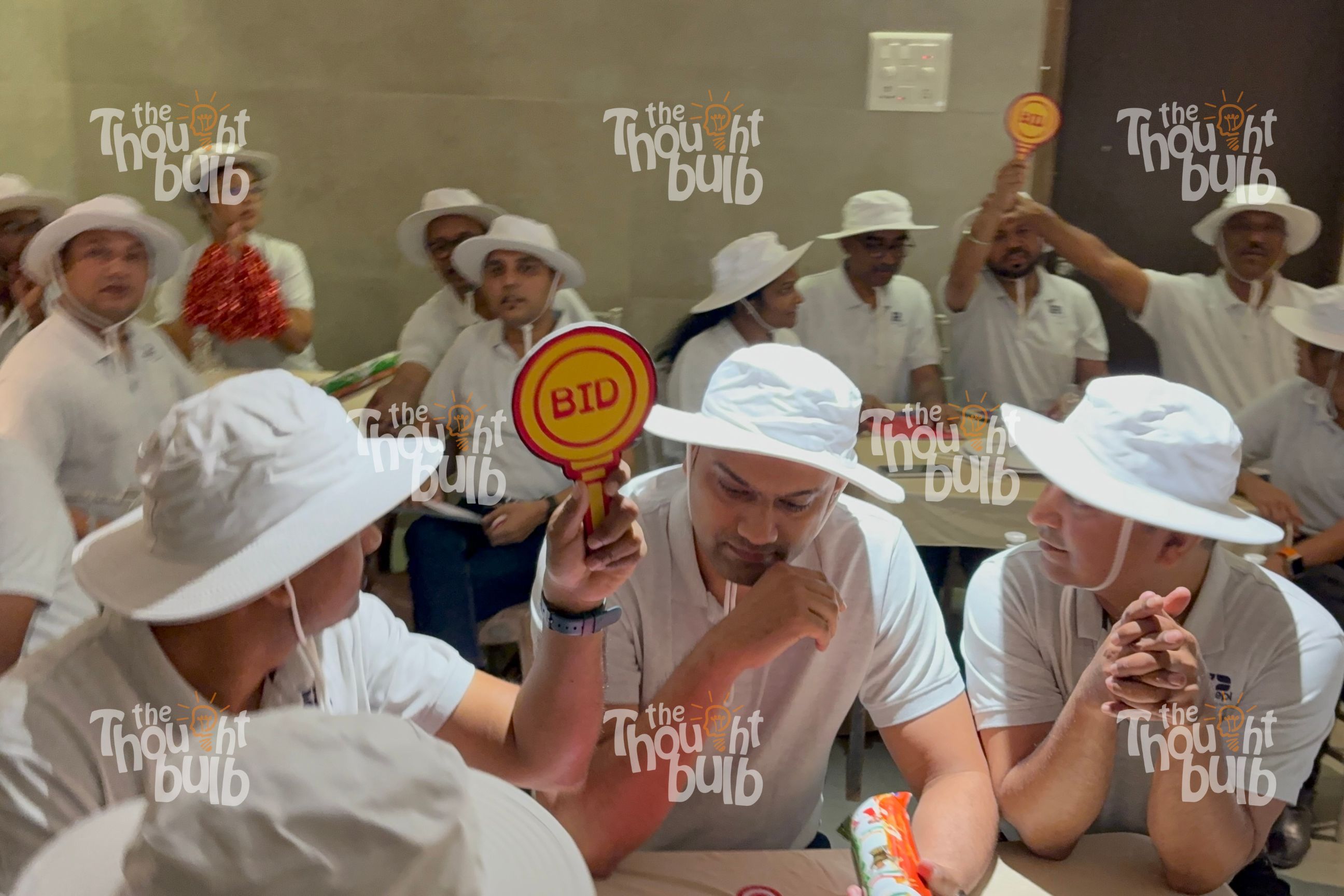
This one is almost unfairly well suited to sales. Teams get a finite budget and must build a squad through live bidding against rival tables, which means valuing an asset, reading the room, deciding when to walk away and living with a decision made in eleven seconds under pressure. Every sales person in the room recognises the feeling. The debrief writes itself: where did we overpay because of ego, where did we fail to plan our walk-away number, and who on the table actually got listened to when the bidding heated up.
Mission Moon Lander
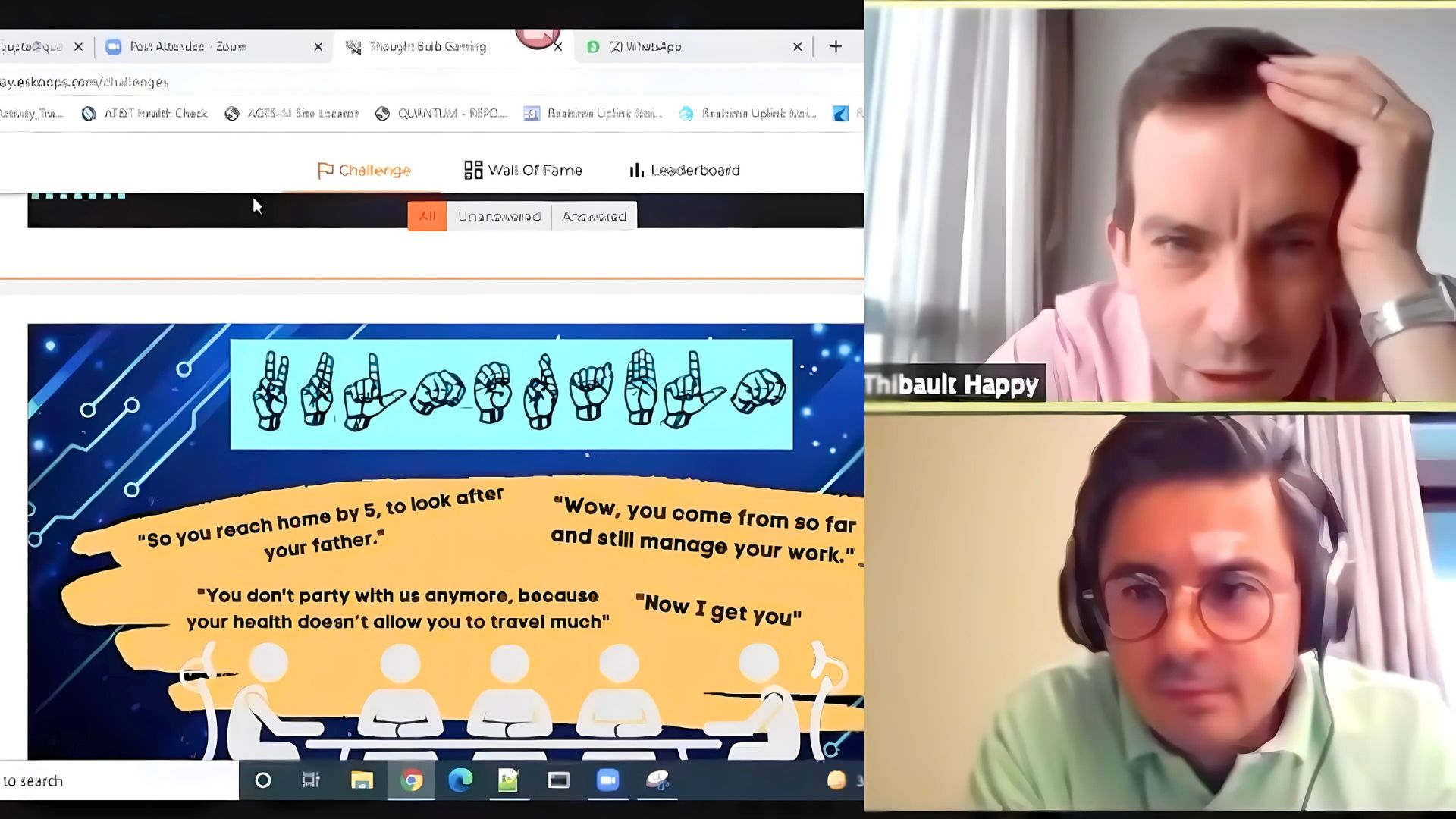
For distributed sales teams that rarely share a postcode, this virtual format puts a pod into a high-consequence decision with incomplete information and a hard clock. It works over video specifically because it forces the behaviours that a remote sales pod is worst at: stating an opinion clearly, disagreeing without stalling, and committing to one course of action instead of four people privately working on their own version of the plan. It is an efficient ninety minutes for a team that cannot justify flights.
The Lost Dutchman Goldmine
If your specific problem is that regions or pods compete instead of cooperating, this business simulation is the sharpest diagnostic we run. Teams pursue their own targets and almost always discover, too late, that the collective outcome was far larger than the sum of what they each protected. Sales leaders tend to go quiet during that debrief, because the parallel to how their patch operates is uncomfortably exact.
What This Looked Like With Infosys
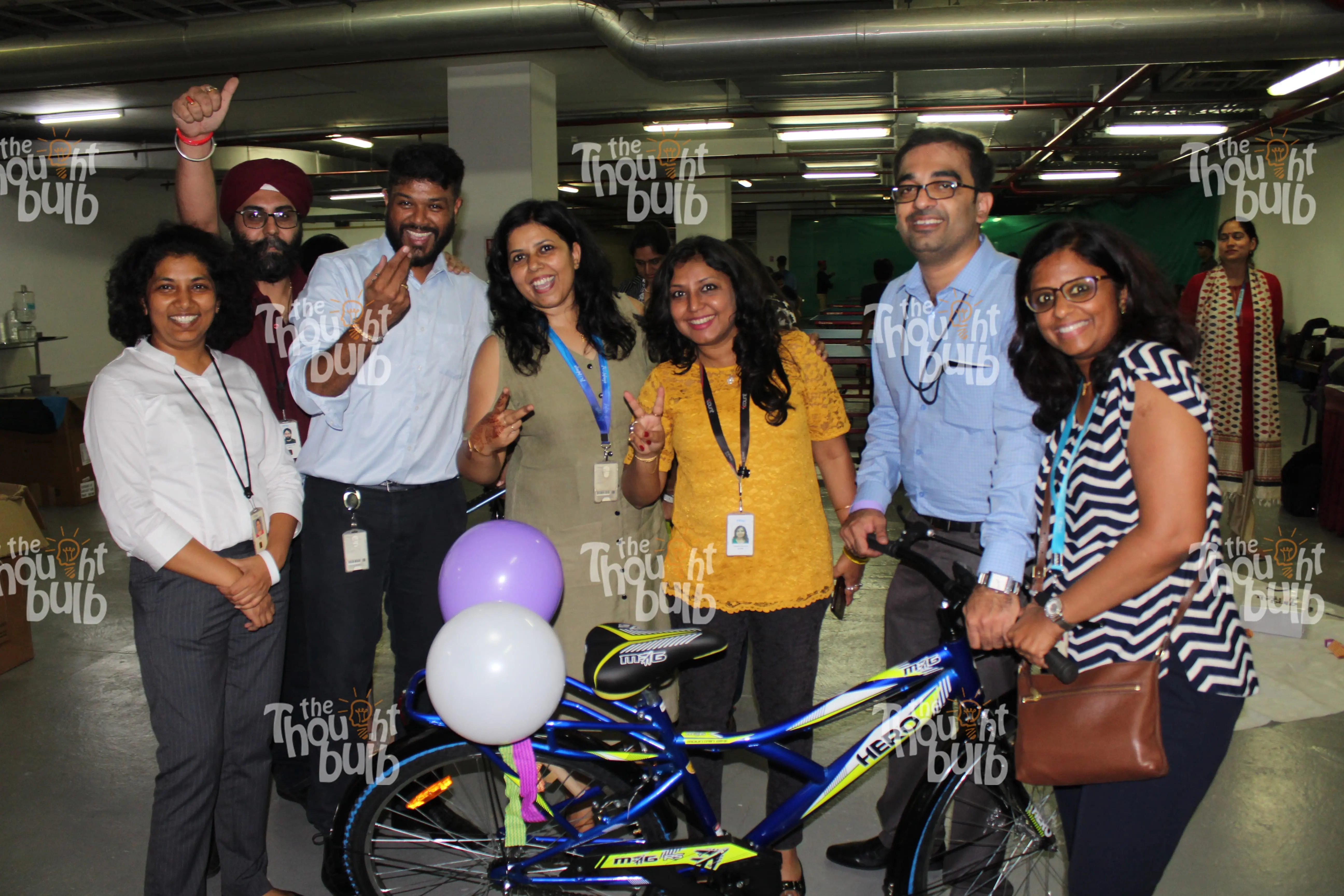
We worked with a team at Infosys on a programme built around driving business results rather than generic bonding. The group was capable individually and the brief was familiar: people were delivering their own targets while the collective outcome lagged. Rather than run a motivational session, the day was built as a business simulation where teams had to allocate limited resources, coordinate across groups and defend their decisions in a structured debrief.
The value was not the activity itself but what surfaced during the review, when participants could see how often local optimisation had cost the group a bigger result. That conversation is hard to have with a slide and easy to have when everyone has just lived through it.
You can read how similar programmes have played out for other revenue and leadership teams in our case studies.
A 90-Day Plan To Fix Sales Team Collaboration
One offsite will not undo four quarters of incentive design. What works is a sequence, where the experience sits in the middle rather than at the start. Here is the ninety-day version we recommend to sales and HR leaders who want something more durable than a good day out.
Day 1 to 15, Diagnose: Map where deals actually stall between reps, pre-sales and delivery. Ask three people in each function what a handover really feels like, not what the process document says
Day 16 to 45, Mix the room: Run one cross-functional experience that deliberately puts reps, pre-sales and customer success on the same team rather than in competing regional groups
Day 46 to 70, Change the scoreboard: Add at least one shared team metric to your review rhythm so that helping a peer close is visibly rewarded rather than quietly absorbed
Day 71 to 90, Measure and repeat: Recheck pipeline hygiene, new-rep ramp time and regretted attrition against the baseline you took on day one, then decide what the next quarter needs
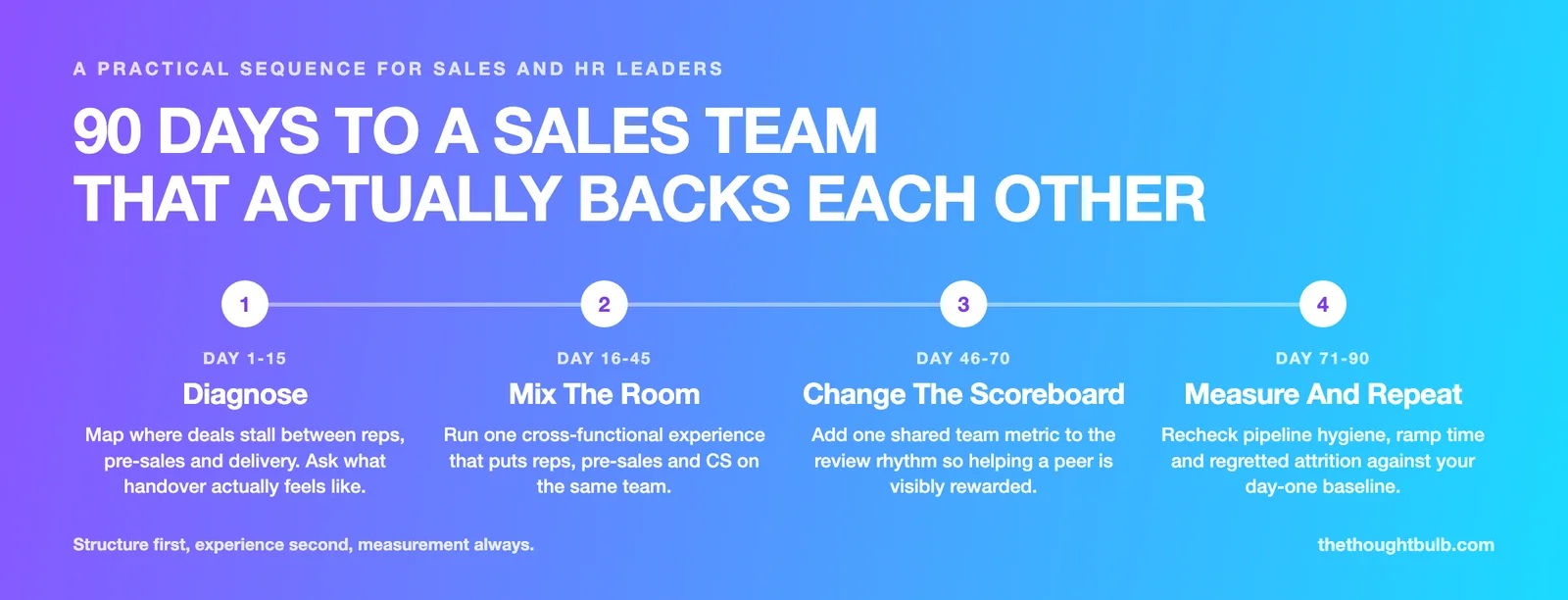
The order matters more than any individual step. Teams that run the experience before diagnosing the structural problem get a fun day and no change. Teams that change the scoreboard without ever putting people in a room together get compliance without goodwill.
How To Know Whether It Worked
Sales is the easiest function in the company to measure, which makes it strange how rarely team building for sales teams is measured at all. You do not need a bespoke analytics project. You need three numbers taken before and roughly ninety days after.
Ramp time for new reps, which shortens noticeably when a floor shares knowledge instead of protecting it
Forecast accuracy, which improves when reps feel safe flagging a slipping deal early rather than in week twelve
Regretted attrition within the sales org, the number that carries the 50 to 200 percent replacement cost
Leadership behaviour is the multiplier on all three. If sales managers do not model the collaboration they are asking for, the floor reads the gap immediately, which is why we usually pair a sales team programme with focused leadership team building for the managers carrying those pods.
The Quarter Ahead
With the festive quarter and the year-end push arriving together, most Indian sales teams are about to enter their hardest ninety days. That is precisely the wrong moment to discover that your floor is twelve individuals rather than one team. It is, however, a good moment to find out what is actually breaking between your reps, your pre-sales group and your delivery team, and to do something structural about it before the pressure peaks.
If you are planning a sales kickoff or a quarterly reset, design it around interdependence rather than inspiration. We are happy to talk through what would suit your team and budget.