
Every September, Indian offices fill up with fresh faces. Campus batches report in, lateral hires join ahead of the festive quarter, and GCCs onboard hundreds of people in a single month. Then, quietly, a chunk of them leave before Diwali. India's overall attrition is easing to around 16.5 percent in 2026, yet early attrition has barely moved: one in four new hires still walks out within the first 90 days. The uncomfortable truth is that most of those exits are decided in weeks three and four, long before the new hire has done any real work. That is an onboarding problem, and more specifically a belonging problem. This guide lays out the team building activities and the 90-day sequence Indian HR teams can use to fix it.
Why New Hires Leave Early In India
Ask an exiting new hire why they left and you will rarely hear about pay. You will hear that nobody knew their name after two weeks, or that they could not tell whether they were doing well. Early attrition in India is driven far more by isolation and ambiguity than by compensation.
The first fortnight decides the first year
Research on Indian hiring shows the decision to leave is often made in weeks three and four. By then the new hire has formed a view on three questions: do people here like me, do I understand what good looks like, and does anyone care whether I stay. Structured onboarding answers the second question. Team building answers the first and third.
Volume hiring makes it worse
Campus cohorts of 200 to 2,000 are common in IT services, BFSI and consulting. Large cohorts feel anonymous. A new joiner sitting in row 14 of an induction hall for five days learns policy but does not learn a single colleague's name. Junior-level turnover in Indian IT and e-commerce already runs above 22 percent, and induction formats that treat people as seat numbers push it higher.
What The Data Says About Onboarding And Retention
The numbers on onboarding are unusually consistent across sources, and they point in one direction: the return on getting the first 90 days right is larger than almost any other retention lever.
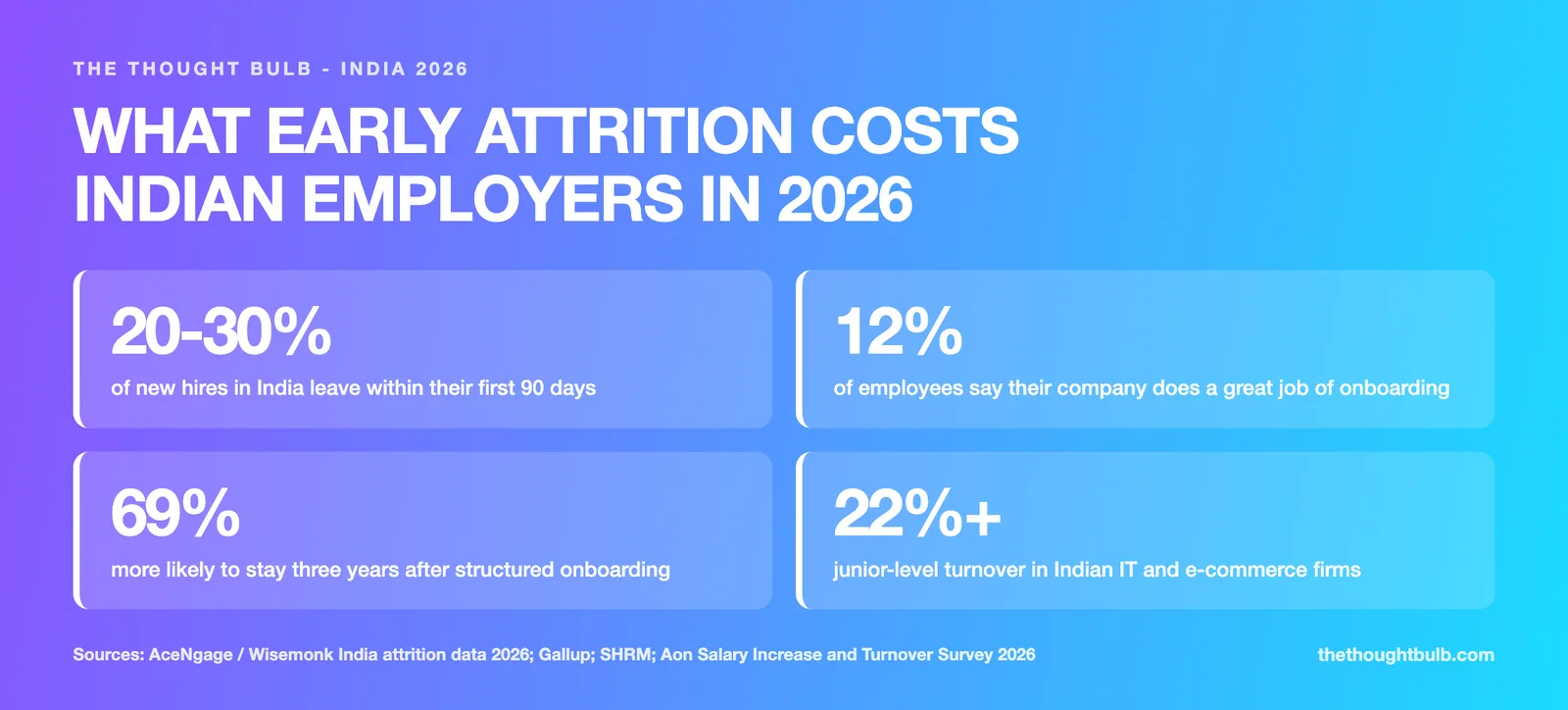
20 to 30 percent of new hires in India leave within their first 90 days, with the decision to quit often made by week three or four (AceNgage / Wisemonk, 2026).
Only 12 percent of employees say their company does a great job of onboarding, according to Gallup, which means most organisations are leaving retention on the table.
Employees who go through a structured onboarding programme are 69 percent more likely to still be with the company after three years (SHRM).
Junior-level turnover in high-growth Indian sectors such as IT and e-commerce exceeds 22 percent, against roughly 10 percent for senior leadership (Aon, 2026).
India's overall attrition is projected at about 16.5 percent in 2026, the lowest in five years, which means early attrition is now the biggest controllable slice of the total.
The arithmetic is simple. Hire 500 people a year, lose 25 percent inside 90 days, and you are re-hiring 125 roles that never produced anything. Cutting early attrition to 10 percent saves 75 replacement hires, each costing three to six months of salary in recruiting, training and lost productivity. An experience-led onboarding programme costs a fraction of that.
The Difference Between Induction And Onboarding
Most Indian companies run inductions. Far fewer run onboarding. Induction is a compliance event: forms, ID cards, policy decks and a welcome speech. Onboarding is a 90-day process that turns a stranger into a teammate. Only one of them affects whether the person is still around in December.
Signs your programme is induction, not onboarding
Everything happens in the first three days and nothing is planned for week four onwards.
New hires meet HR and the CEO but do not meet the five people they will actually work with.
There is no buddy, or the buddy is assigned but never briefed.
The first team activity a new hire attends is the annual offsite, months later.
You measure completion of modules, not whether the person feels connected.
The fix is to design onboarding as a sequence of experiences rather than a stack of sessions. Many teams find it useful to map those experiences onto their employee engagement calendar so that every cohort, regardless of joining month, gets the same connection points.
Team Building Activities That Work For New Hires
Not every team building activity suits new joiners. The best onboarding activities share three traits: they mix new hires with tenured colleagues, they give everyone an equal footing, and they produce something visible the cohort can point to afterwards.
Bridge The Gap: the classic cross-team builder
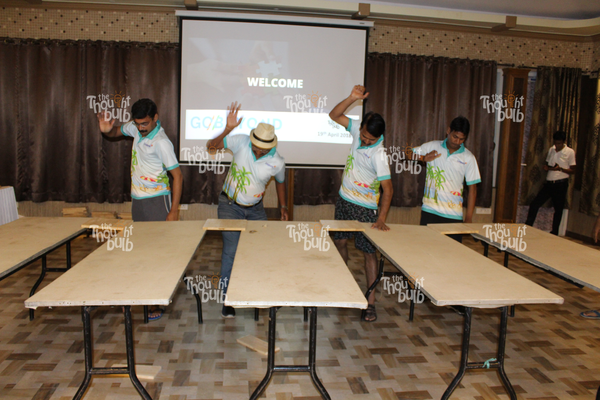
Bridge The Gap splits a large group into teams that each build one section of a bridge, without seeing what the other teams are building. The sections have to connect at the end. New hires and existing staff are mixed across teams, and the metaphor is not subtle: your work only matters if it joins up with everyone else's. We run it indoors or outdoors for groups from 30 to 500, a natural anchor for day two or three of a campus cohort programme.

Snap Story: learn the people, not just the policy
Snap Story sends mixed teams around the office or venue to capture photographs that tell a story about the organisation, its people and its values. For new hires it doubles as orientation: they learn where things are, who sits where and what the company actually cares about, while making friends in the process. The output, a visual story presented back to the room, becomes the cohort's first shared achievement. It works well in week one and also as a lighter week-four reconnect.

Comic Strip Virtual Challenge: for remote and hybrid joiners
Plenty of Indian companies now onboard people who will not set foot in an office for weeks. For them, the Comic Strip Virtual Challenge is a strong choice. Teams collaborate over video to script and design a comic strip about a work scenario, a company value or the new hire experience itself. It takes 60 to 90 minutes, needs no physical materials, and gives remote joiners the same first-week bonding that in-office cohorts get.
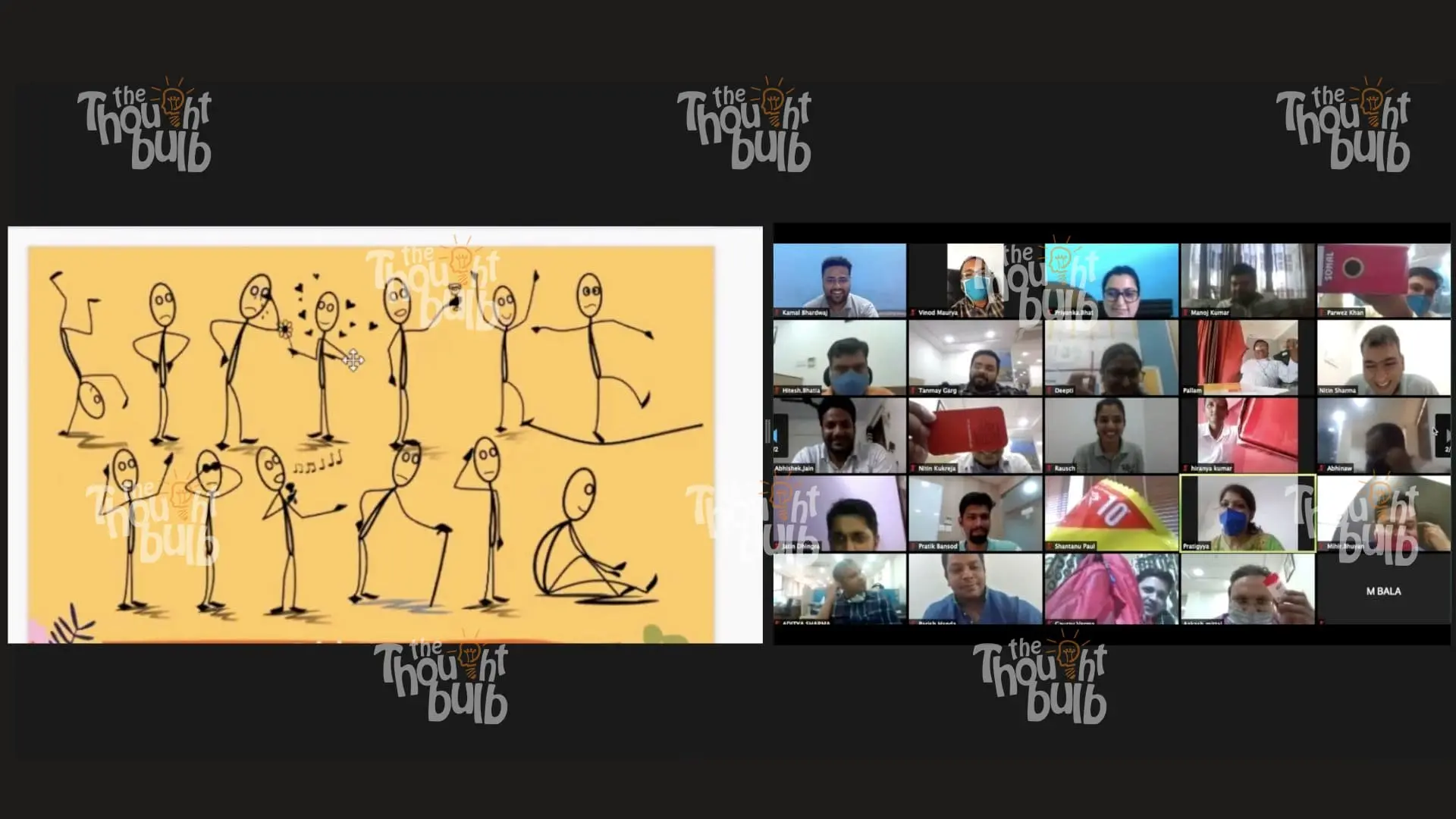
Browse the full range of in-person and virtual team building activities to match formats to your cohort size and location mix.
Case Study: Bridge The Gap With Siemens In Mumbai
Siemens brought a large, mixed-tenure group together in Mumbai for a Bridge The Gap session designed to break down silos between teams that rarely worked side by side. Participants were split into teams that each built a section of a bridge to a shared specification, then had to connect their sections with everyone else's under time pressure. The debrief focused on what happened when teams assumed rather than asked, and how that plays out in day-to-day handovers.
The outcome Siemens valued most was practical: people who had only ever exchanged emails now had a shared experience and a shared vocabulary for collaboration. That is exactly what a new hire needs in the first month.
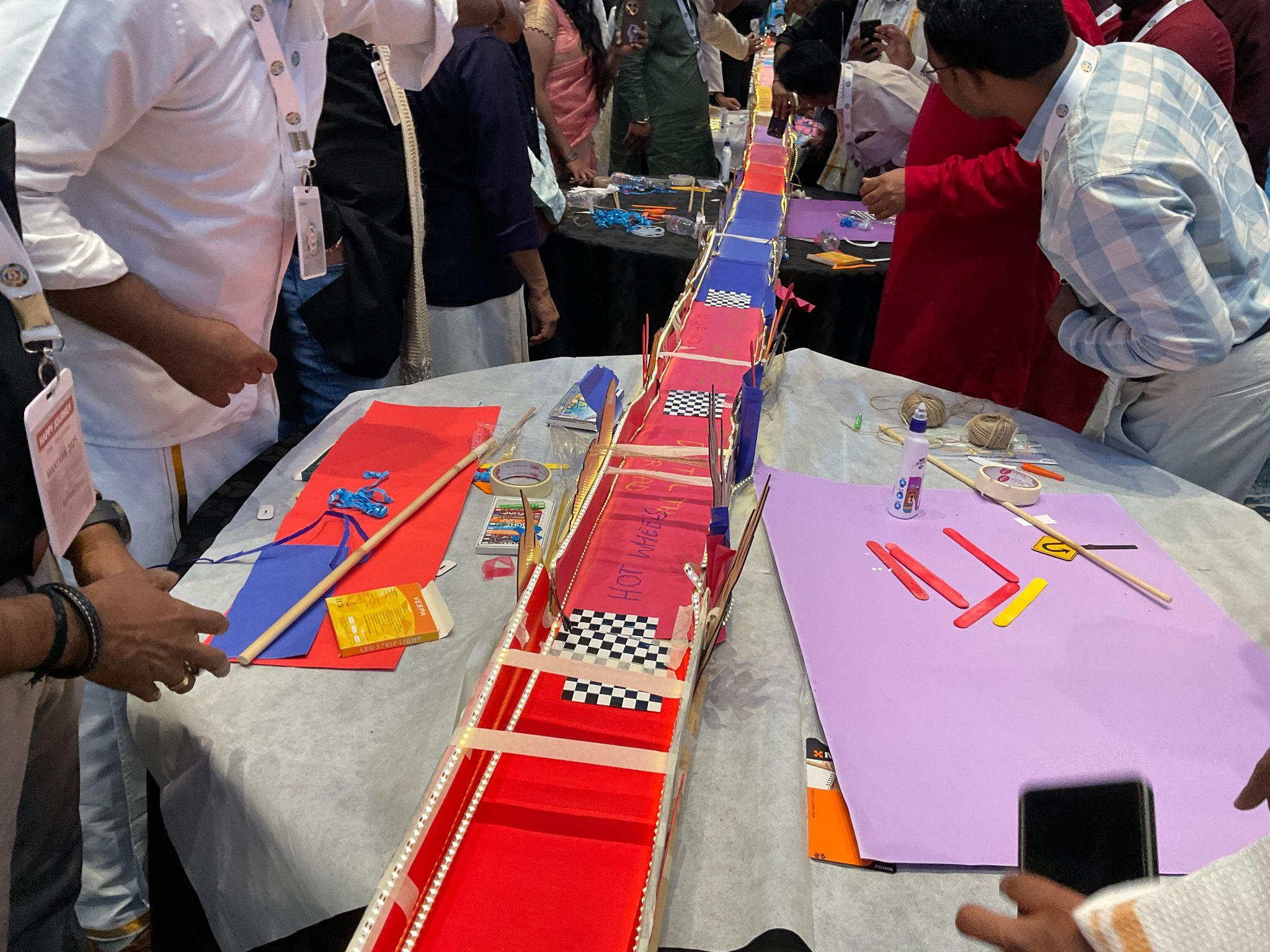
You can read this and other programmes in detail on our case studies page.
A 90-Day Onboarding Roadmap For Indian Teams
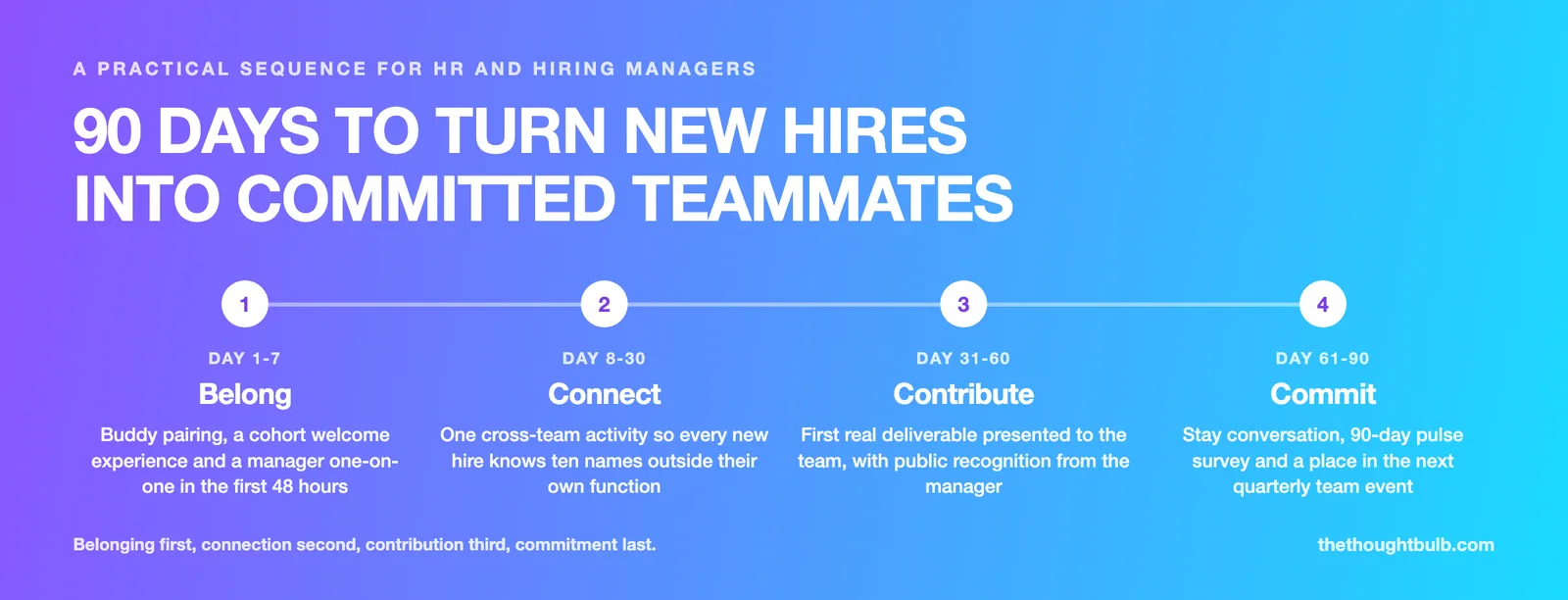
Here is the sequence we recommend. Each stage can be run with an external partner or in-house; what matters is that every stage happens, on time, for every cohort.
Days 1 to 7: Belong
Assign a buddy before day one and brief the buddy on what to do. Run a cohort welcome experience on day two or three, such as Bridge The Gap or Snap Story, that mixes new hires with tenured colleagues. Make sure every new hire has a one-on-one with their direct manager within 48 hours, not a group meeting, and not a calendar invite for next week.
Days 8 to 30: Connect
Schedule one cross-team activity in this window so that by day 30 every new hire knows ten names outside their own function. For hybrid joiners, run a virtual experience such as the Comic Strip Virtual Challenge. This is the window in which the decision to leave is usually made, so visible investment in connection here has an outsized effect.
Days 31 to 60: Contribute
Give each new hire a first real deliverable that they present to the team, and make sure the manager recognises it publicly. People stay where they feel seen. A five-minute shout-out in a team meeting does more for retention in month two than a rise does in month twelve.
Days 61 to 90: Commit
Hold a stay conversation, not an exit interview. Ask what would make them leave and fix what you can. Run a 90-day pulse survey and compare it to the day-30 result. Finally, give every new hire a place in the next quarterly team event so the connection does not end when the onboarding programme does.
Day 1-7: buddy pairing, a cohort welcome experience, a manager one-on-one within 48 hours.
Day 8-30: one cross-team activity so every new hire knows ten names outside their function.
Day 31-60: first real deliverable presented to the team with public recognition.
Day 61-90: stay conversation, 90-day pulse survey, a seat at the next quarterly team event.
Common Mistakes Indian Companies Make With New Hire Activities
Even organisations that do run onboarding activities often undermine them. These are the errors we see most frequently.
Running the activity only for new hires. If tenured colleagues are not in the room, the new hires bond with each other and remain strangers to the team.
Front-loading everything into week one. The risk window is weeks three and four, and a programme that goes silent after day five misses it.
Choosing activities that reward insider knowledge, such as quizzes on company history, which make new hires feel behind on day one.
Skipping the debrief. Without a facilitated conversation about what the activity showed, it is just a fun afternoon rather than a lesson in how the team works.
Not briefing managers. Eighty-three percent of Indian managers have no formal people-management training, so expecting them to onboard well without a script is optimistic.
Manager capability is often the hidden variable. If your first-line managers are new to leading people, pairing onboarding with a leadership team building programme for them will pay back faster than either investment alone.
Conclusion
Early attrition is expensive and, unlike market-driven churn, almost entirely within your control. The organisations that keep their new hires are not paying more. They make sure every joiner builds something with colleagues in week one, knows ten names outside their function by day 30, and has been recognised and asked to stay by day 90. Team building is not the reward at the end of onboarding; it is the mechanism that makes onboarding work. If you are planning your next campus cohort or a wave of lateral hires, we would be glad to help you design the first 90 days so that they become the first three years.