Walk into almost any Indian office in 2026 and you will find a 24-year-old analyst who joined during a fully remote onboarding, a 34-year-old team lead who has changed jobs four times in eight years, a 47-year-old manager who built her career on face time and long apprenticeships, and a 58-year-old director who still believes the best decisions happen in a room. They share a P and L, a Slack channel and a canteen. They do not share a definition of what good work looks like. That gap is now one of the quietest and most expensive problems in Indian HR, and most companies are trying to solve it with a policy document when the real fix is structural and experiential.
This matters more in India than almost anywhere else. India has one of the youngest workforces in the world feeding into leadership structures built by a much older generation, and the two groups are colliding at exactly the moment engagement numbers are falling. Here is what the data actually says, and a ninety-day sequence you can run without waiting for a culture transformation budget.
What The Numbers Say About India's Four-Generation Workforce
Generational commentary is full of lazy stereotypes. The underlying data is more useful, and more uncomfortable, than the headlines suggest.
The composition is lopsided, and shifting fast
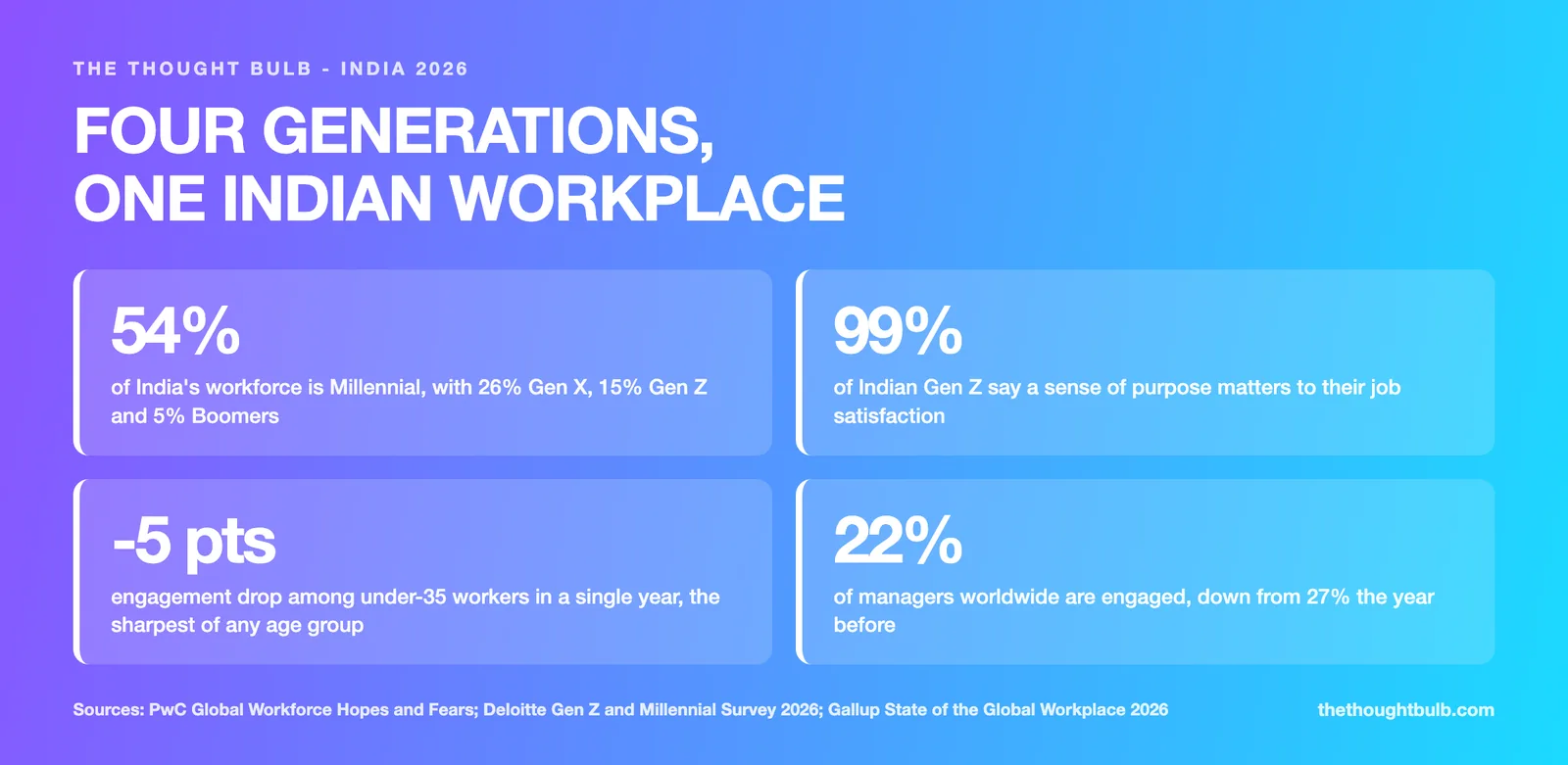
According to PwC's Global Workforce Hopes and Fears research, India's workforce is roughly 54 percent Millennial, 26 percent Gen X, 15 percent Gen Z and 5 percent Baby Boomers. Millennials are the centre of gravity, but Gen Z's share is rising quickly, especially in technology and global capability centres, where Gen Z and Millennials together account for the overwhelming majority of headcount. Gen X, meanwhile, is small in number but heavily concentrated in senior and managerial roles. So the generation making most of the decisions is not the generation doing most of the work.
Purpose is not a soft preference in India
Deloitte's 2026 Gen Z and Millennial Survey found that 99 percent of Indian Gen Z and 98 percent of Indian Millennials say a sense of purpose is important to their job satisfaction. It shows up in behaviour, not just sentiment: 48 percent of Indian Gen Z and 41 percent of Millennials say they have rejected a potential employer because of a mismatch with their personal values. When older leaders read that as entitlement, they miss the operational point, which is that purpose has become a retention lever with measurable cost attached.
The engagement decline is concentrated among the young and among managers
Gallup's State of the Global Workplace 2026 reports that only about 20 percent of employees worldwide are engaged, and that workers under 35 saw the sharpest fall of any group, down five percentage points in a single year. The most cited reasons are lack of recognition, lack of resources and limited opportunity to learn and grow. Manager engagement fell too, from 27 percent to 22 percent, which means the very people expected to bridge generational differences are themselves running on empty. Fix the manager layer and you move both ends of the age range at once.
Where Multigenerational Teams Actually Break Down
In our experience running programmes for Indian and global teams, generational friction rarely announces itself as a generational problem. It shows up disguised as something else.
Four failure patterns we see repeatedly
Feedback mismatch: senior managers give sparse, indirect feedback because that is how they were managed. Younger employees read silence as disapproval and start looking elsewhere.
Recognition mismatch: one group wants a title and a stage; another wants a same-day message that names what they did well. Companies pick one and alienate the other.
Visibility mismatch: older leaders equate presence with commitment, younger employees equate output with commitment. Hybrid policy turns this into a daily argument.
Knowledge hoarding by accident: experienced employees hold enormous context that never gets transferred because nobody has created a structured reason for the two groups to work side by side.
Notice that none of these are personality problems. They are design problems, which is good news, because design problems respond to deliberate intervention.
Stop Segmenting By Age And Start Mixing On Purpose
The instinctive HR response is to build separate programmes: a Gen Z engagement track, a leadership series for senior folks, a wellness push for mid-career staff. This feels responsive and it quietly deepens the divide. Every hour people spend only with their own cohort is an hour they are not learning how the other cohort thinks.
The higher-leverage move is structured mixing: putting people of very different ages and tenures into a shared task with a real constraint, then debriefing what happened. Age stops being a category and becomes just another difference the team has to work with, the way it works with function or location.
If you are building a plan for the year, it helps to sequence these mixed experiences deliberately rather than reacting month to month. Our employee engagement calendar is a useful starting frame for spacing them across quarters.
Two Experiences That Do The Mixing Work
Not every activity creates cross-generational understanding. Quizzes and parties put people in the same room without changing how they see each other. What works is a task nobody can complete alone, where the skills required are distributed unevenly across the age range.
Bridge The Gap, for in-person teams
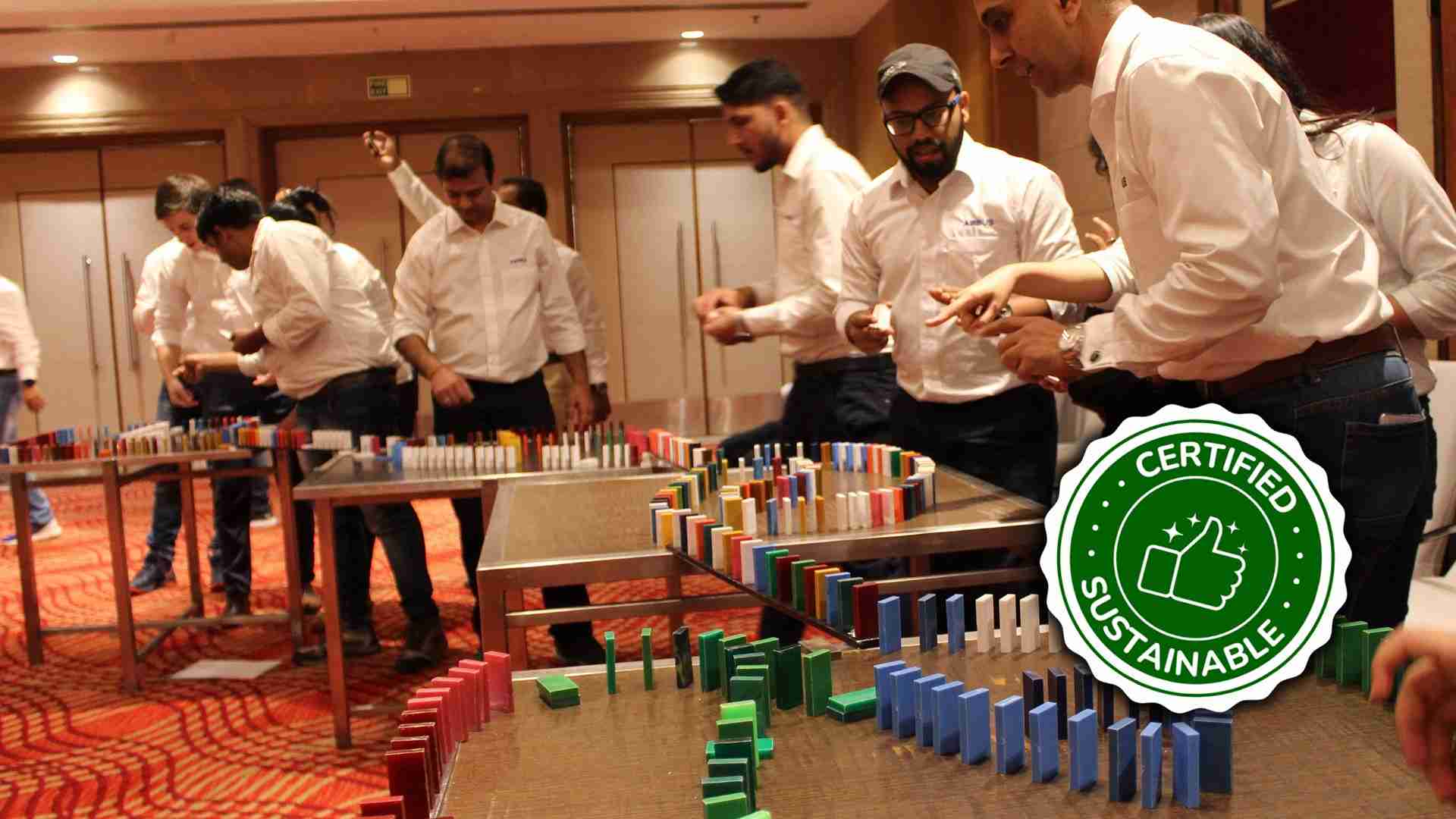
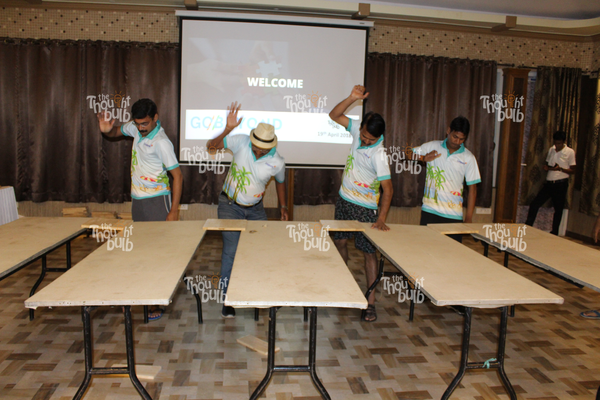
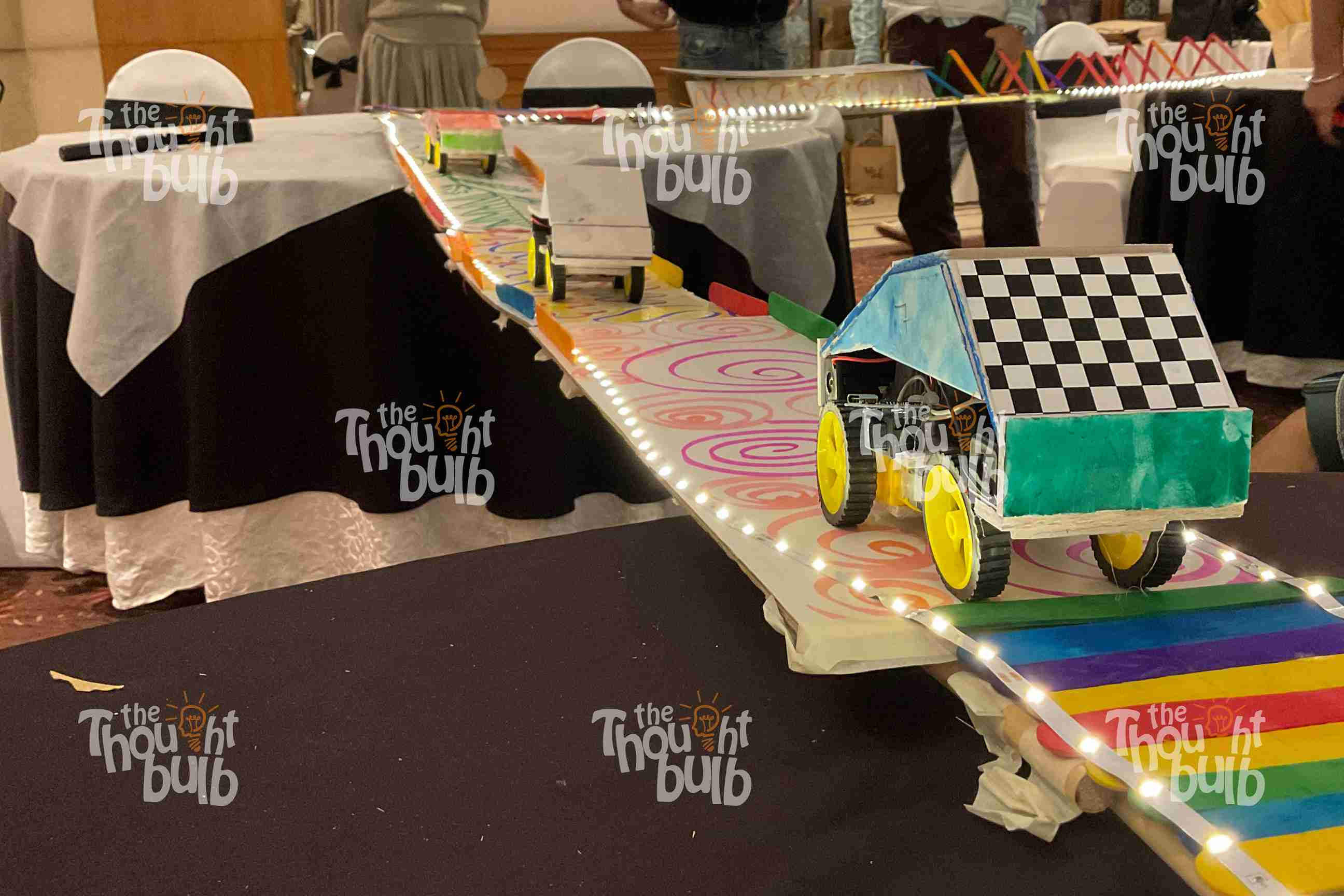
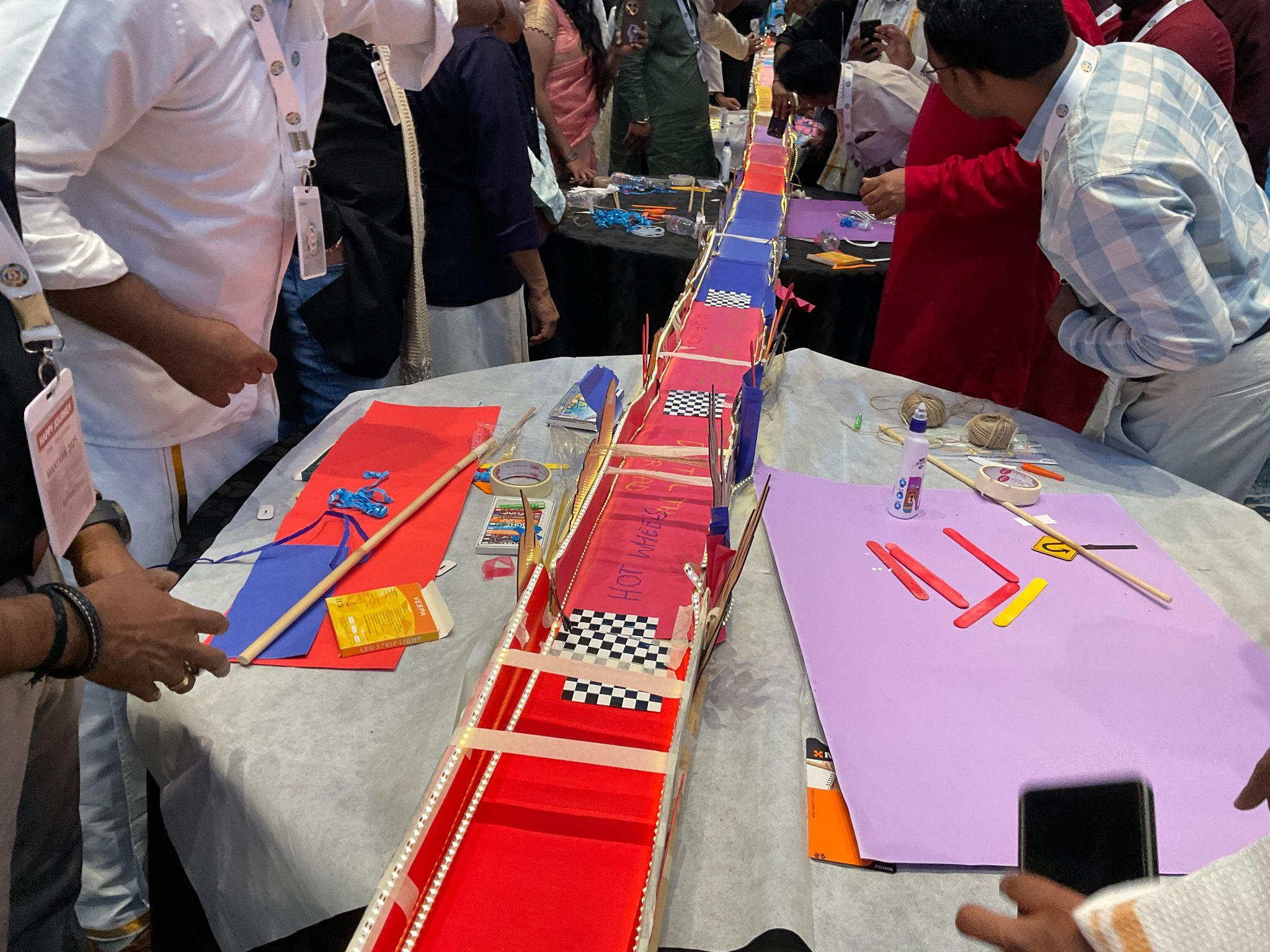
Bridge The Gap puts teams into a scenario where communication, planning and trust are the only tools available. Sub-teams build interdependent sections of a structure with limited information about what the others are doing, then have to make them meet. It surfaces generational habits immediately: who assumes authority, who waits to be asked, who documents, who improvises. The debrief is where the value lands, because people recognise their own workplace behaviour in what just happened. It also scales well, which matters for large Indian offices where a single programme may need to hold four hundred people at once.
Once Upon A Time, for virtual and distributed teams
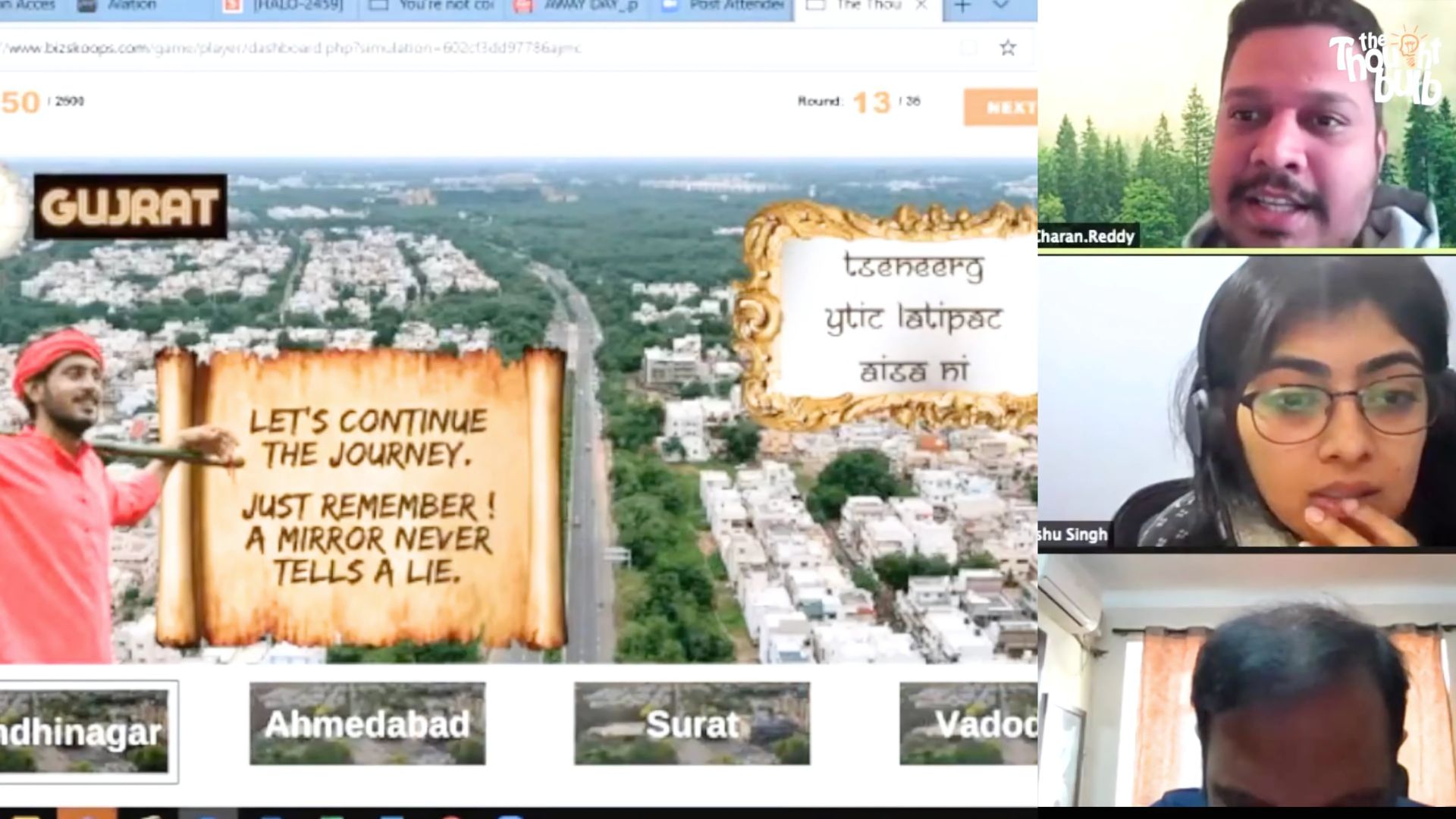
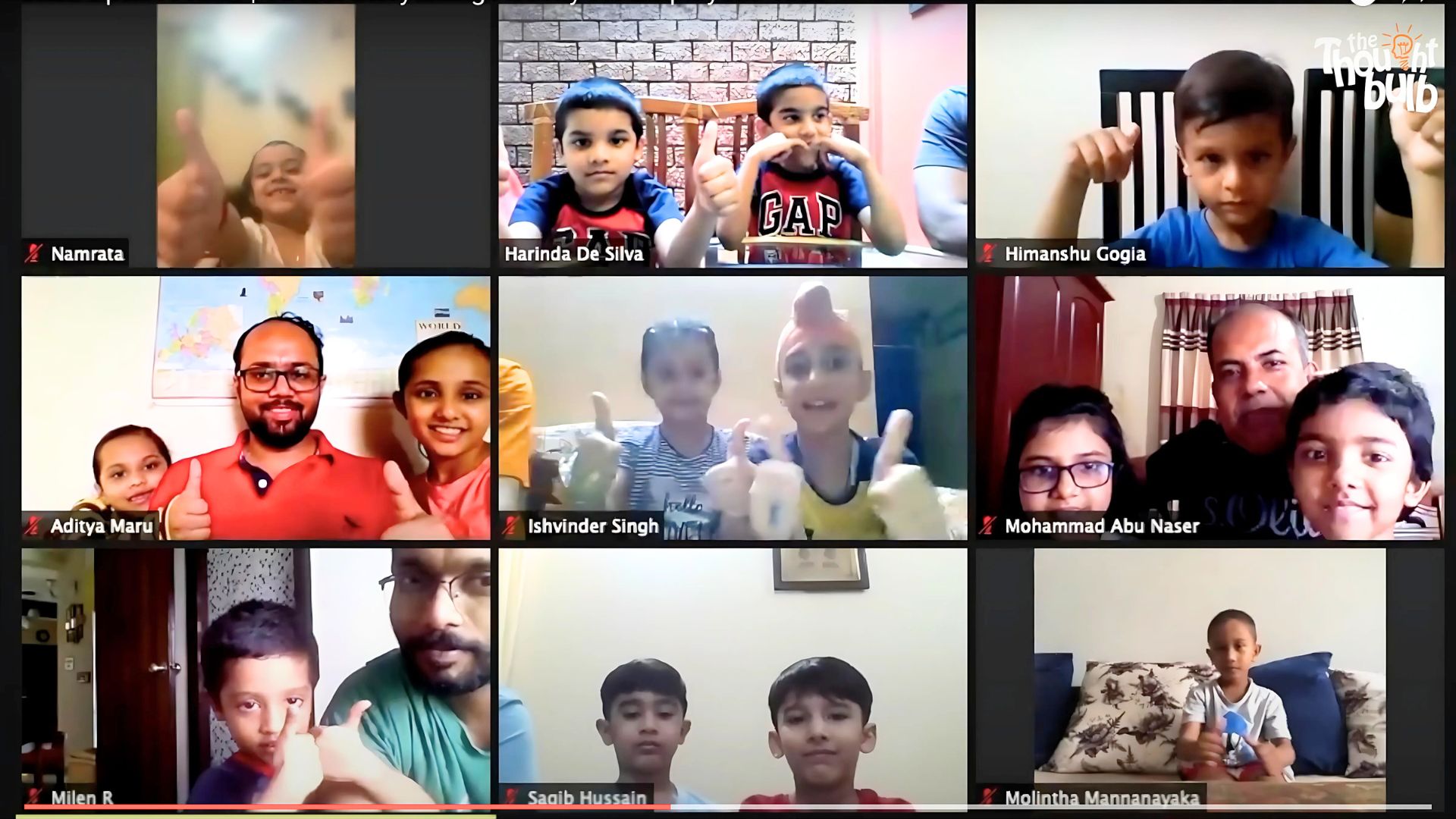
For teams spread across cities or working hybrid, the Once Upon A Time storytelling workshop does something a video call rarely allows: it gives people a legitimate reason to talk about their own experience. Participants build and tell structured stories in small mixed groups. A 26-year-old hears how a colleague handled a crisis in 2009. A 50-year-old hears what it is like to start a career without ever having met your manager in person. That exchange is exactly the context transfer that never happens organically in a hybrid setup, and it costs an afternoon rather than a mentoring programme.
Speed Networking works well as a shorter opener before either of these, forcing rapid one-to-one conversations across levels. You can browse the full range of formats on our activities page, including options built specifically for remote and hybrid groups.
What This Looked Like At Siemens
Siemens, a long-standing partner, returned to The Thought Bulb for a large team-building programme in Mumbai. Four hundred participants were split across forty teams running the Bridge The Gap challenge simultaneously, supported by a team of four to five facilitators and opened with energisers before the main activity.
What stood out was the effect of the mixed demographics. With forty teams running at once and a wide spread of ages and seniority inside each one, different perspectives drove solutions that would not have emerged from a homogenous group. The structured debrief connected what happened in the activity back to real workplace behaviours. Because this was a repeat engagement, the same facilitator from their previous programme was brought back, which gave the session immediate credibility with a group that already had high expectations.
A 90-Day Plan For Indian HR Leaders
You do not need a culture transformation mandate to start. You need one quarter and the discipline to measure the gap rather than the average.
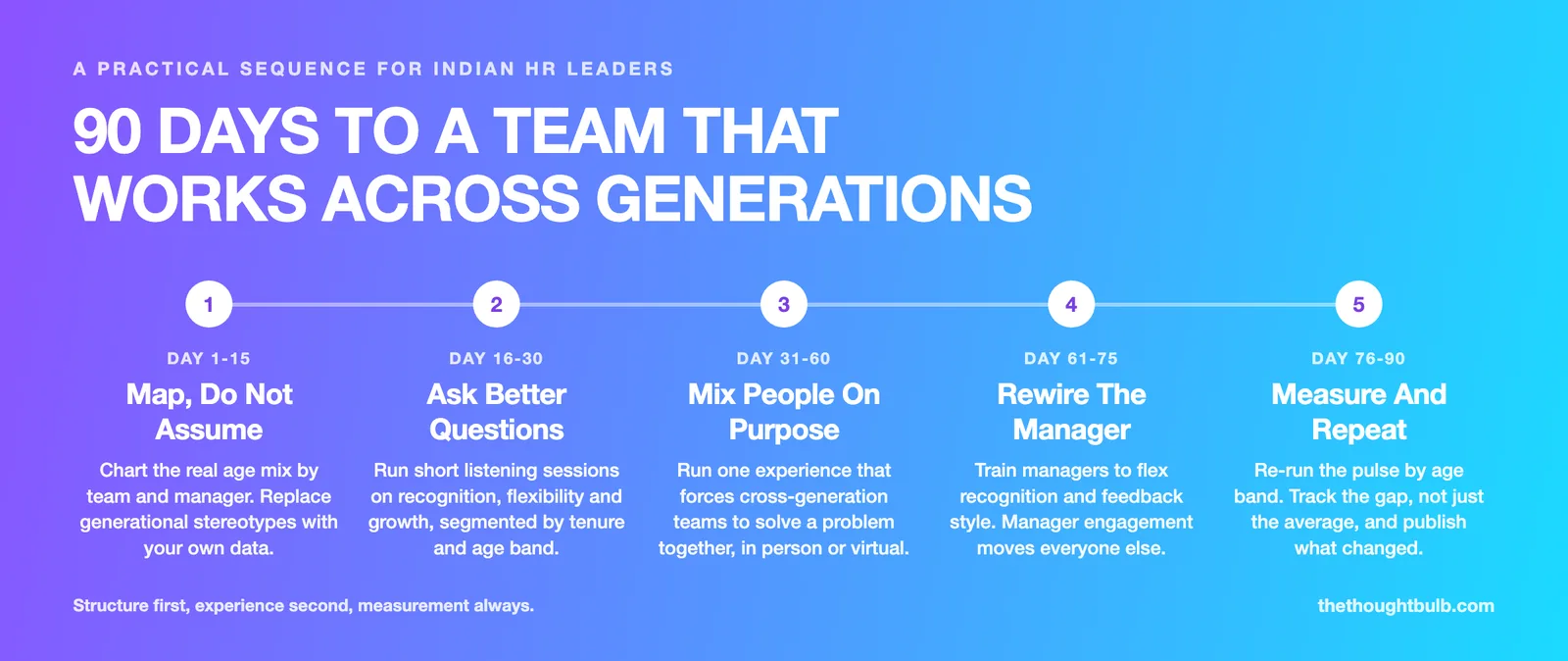
Day 1 to 15, map rather than assume: chart the real age and tenure mix by team and by manager. Most companies discover their generational problem is concentrated in two or three teams, not spread evenly.
Day 16 to 30, ask better questions: run short listening sessions on recognition, flexibility and growth, and segment the responses by age band and tenure. The segmentation is the whole point.
Day 31 to 60, mix people on purpose: run one experience that forces cross-generation teams to solve a problem together, in person or virtual. One well-designed session beats six webinars.
Day 61 to 75, rewire the manager: train managers to flex recognition and feedback style by person rather than by default. With manager engagement down to 22 percent globally, this layer moves everyone else.
Day 76 to 90, measure and repeat: re-run the pulse by age band, track whether the gap between the youngest and oldest cohorts narrowed, and publish what changed. Visible follow-through is itself an engagement intervention.
Three Mistakes To Avoid
Treating generation as a personality type
The variation inside any generation is larger than the variation between generations. Use age data to find where communication is breaking down, not to predict how an individual will behave. The moment a manager says 'that's just Gen Z', the diagnosis has stopped.
Making mentoring one-directional
Traditional mentoring assumes knowledge flows downward by age. In practice, reverse flows matter just as much, particularly around AI tools, customer expectations and digital workflows. Pairs that are explicitly set up as two-way exchanges last longer than programmes framed as the senior person helping the junior one.
Confusing a celebration with an intervention
Festivals, offsites and Fun Fridays are worth doing and they build goodwill, but they do not by themselves change how a 27-year-old and a 52-year-old give each other feedback on a Tuesday. Pair the celebration with at least one structured experience per quarter. Our leadership team building formats are designed for exactly that structured half of the equation.
The Advantage Nobody Is Claiming Yet
Most Indian companies are treating four generations in one workplace as a problem to be managed down. It is closer to an unclaimed asset. A team that genuinely combines institutional memory with digital fluency, long-horizon judgement with fresh customer instinct, makes better decisions than a team that is uniform in age. But that combination does not happen by proximity. It happens when someone deliberately designs the conditions for it and then measures whether it worked.
If you are planning your next quarter and want to build a session that actually mixes your generations rather than seating them at the same lunch table, we are happy to help you think through the format. Start with the team where the gap is widest, not the team that is easiest to schedule.