The monsoon is one of the most loved seasons in India, but for HR and people teams it quietly creates a problem. The outdoor offsite you booked in Lonavala gets rained out. The cricket tournament on the lawn becomes a mud bath. Half the team is stuck at home because the roads near the office have flooded again. Between June and September, the activities that usually bring people together are exactly the ones the weather refuses to allow. And yet this is precisely the stretch when teams need connection the most, because long grey commutes and back-to-back virtual calls are when energy and morale tend to dip the furthest.
The good news is that a washed-out forecast does not have to mean a washed-out culture. With a little planning, the rainy season is a genuinely great window for indoor and virtual team building, formats that are not weather-dependent, are easier to schedule, and often deliver deeper conversations than a noisy outdoor field day ever could. This guide looks at what the latest engagement data is telling Indian employers in 2026, and lays out practical indoor and virtual ideas you can run without a single ray of sunshine.
Why Engagement Quietly Slips During Monsoon
Disengagement rarely announces itself. It shows up as cameras staying off, fewer people volunteering for stretch projects, and a slow drift in the quality of everyday collaboration. The monsoon amplifies all of this. Commutes get longer and more stressful, hybrid teams default to working from home for weeks at a stretch, and the informal moments that build trust, the chai break, the walk to the parking lot, the impromptu lunch, simply stop happening.
Longer, unpredictable commutes increase fatigue and absenteeism just as energy is needed most.
Extended work-from-home stretches reduce the casual, unstructured contact that builds team trust.
Outdoor and travel-based offsites get cancelled or postponed, leaving a gap in the engagement calendar.
Seasonal low mood is real, and teams that do not actively counter it tend to coast rather than connect.
The takeaway is not to push engagement to the post-monsoon months. It is to deliberately design connection into the season using formats the rain cannot disrupt.
What the 2026 Data Says
The case for not pausing engagement during a tough season is backed by some sobering numbers. Globally, employee engagement fell to just 20 percent in 2025, its lowest level since 2020, a slide that Gallup estimates costs the world economy around 10 trillion dollars in lost productivity. India is not insulated from this. Gallup estimates that workplace disengagement costs India roughly 351 billion dollars a year in lost productivity, equal to about 9 percent of the country's GDP. South Asia, led by India, also recorded the steepest decline in manager engagement of any region, an eight-point drop in a single year.
Global engagement sits at 20 percent in 2025, the lowest since 2020 (Gallup).
Disengagement costs India around 351 billion dollars annually, close to 9 percent of GDP (Gallup).
Regular team building is linked to roughly 30 percent higher employee retention.
About 85 percent of employees report feeling more engaged after taking part in team building activities.
The signal for Indian HR leaders is clear: engagement is something you build on a rhythm, not a one-off annual event. Mapping activities across the year, including the months when the weather works against you, is the most reliable way to stay ahead of the dip. If you do not have a structured plan yet, our employee engagement calendar is a useful starting point for spacing activities sensibly through the seasons.
Indoor Team Building Activities Built for the Rainy Season
Indoor formats are the backbone of monsoon engagement. They run inside your office, a banquet hall, or a hotel ballroom, which means rain is irrelevant and logistics are simple. The best indoor activities still create energy, friendly competition, and cross-team mixing, without anyone getting wet.
A standout option is Indoor Olympics, a high-energy series of fun, low-risk sporting and skill challenges designed to be run entirely indoors. Teams rotate through a circuit of quirky mini-games, earning points and bragging rights, and because the games are deliberately simple, everyone from interns to senior leaders can dive in without feeling self-conscious. It is one of the most reliable ways to get a large group laughing together on a wet afternoon.
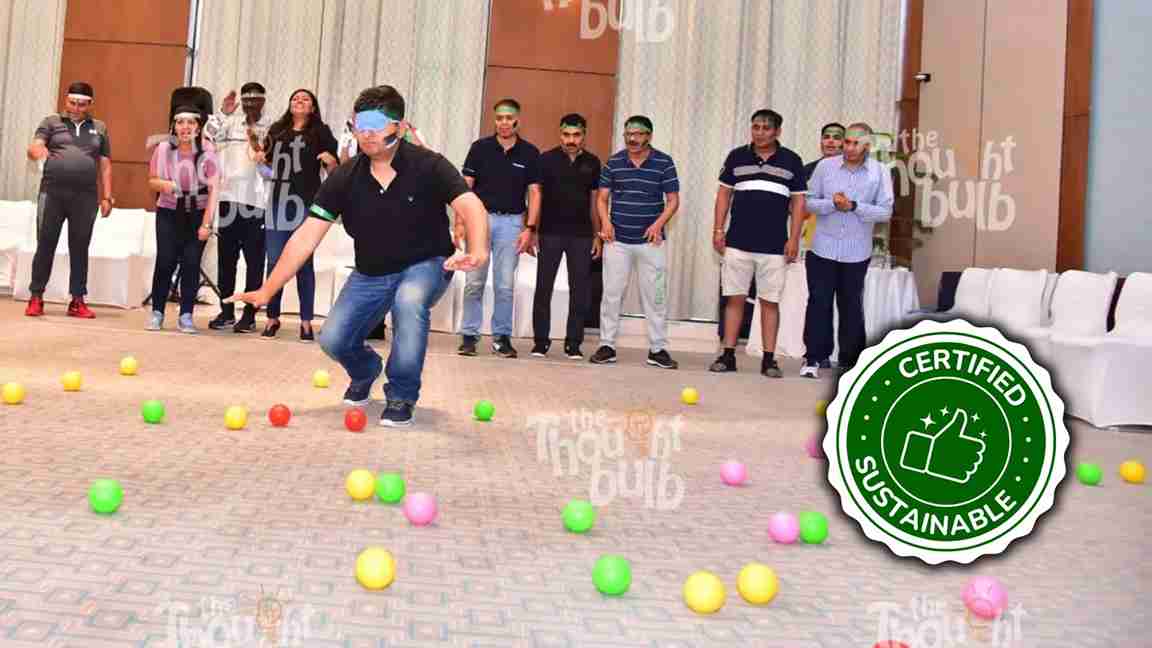
Indoor Olympics: rotating mini-games and friendly competition for large groups.
Tambola and quiz-style formats: low-prep, high-participation, ideal for mixed seniority.
Cooking and creative challenges: hands-on, collaborative, and naturally conversational.
Business simulations: structured problem-solving that doubles as leadership development.
Virtual Team Building When the City Floods
On the days when the roads are genuinely unsafe and people cannot make it in, virtual team building keeps connection alive. Done well, a virtual session is far more than a video call with a quiz tacked on. It uses structured collaboration, shared goals, and a bit of theatre to pull a distributed team into the same emotional space, which is exactly what hybrid teams lose during long monsoon stretches at home.
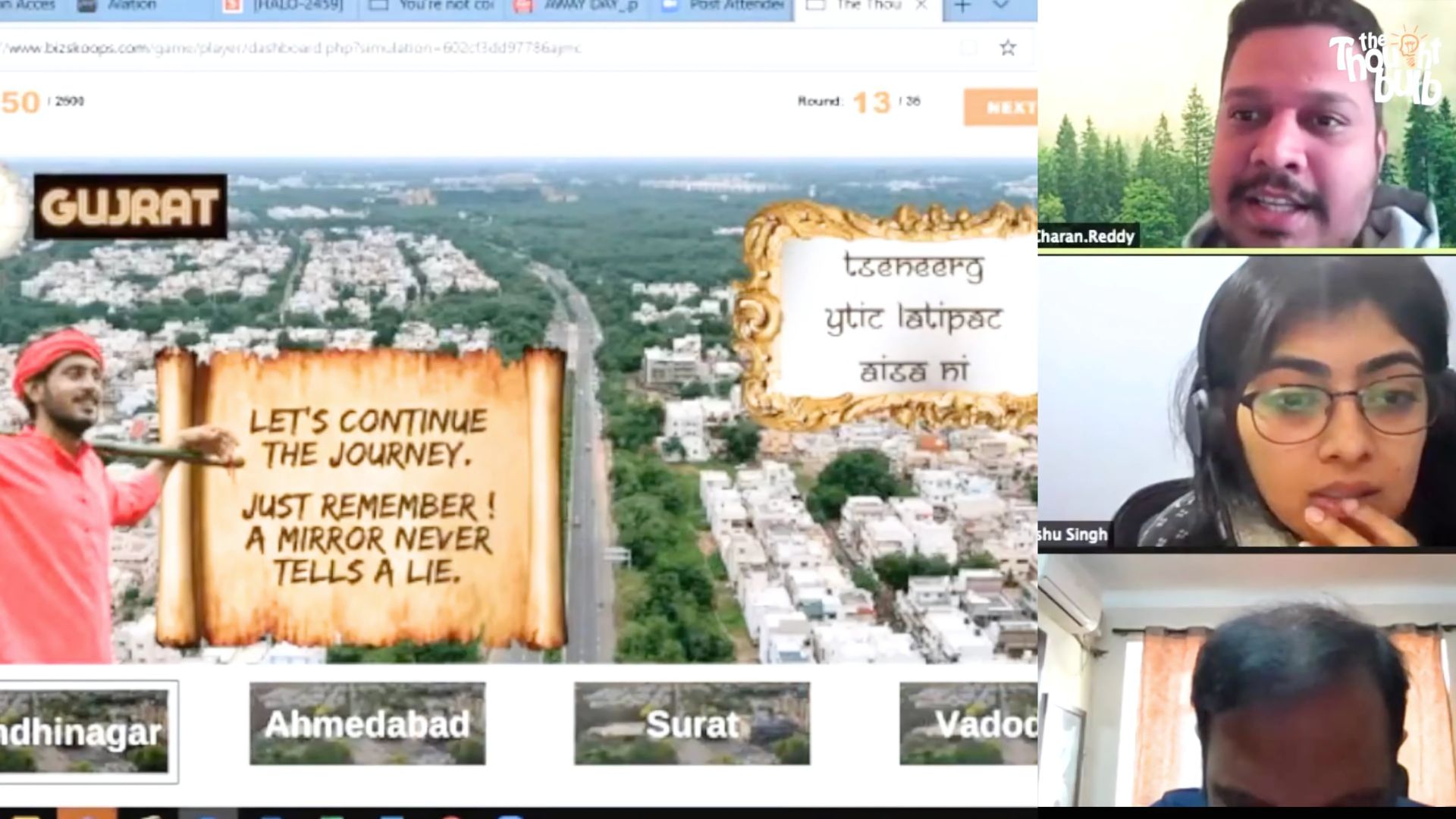
Pirates of Askabaan is a good example of a virtual experience that actually builds teamwork rather than just filling an hour. Teams work against the clock to solve a series of themed puzzles and challenges, which forces them to communicate clearly, divide tasks, and trust each other's judgement under mild pressure. It is the kind of remote activity people talk about afterwards, and it works just as well for a team scattered across cities as for one stuck indoors in the same one.

Virtual formats also scale beautifully, which matters when you are trying to engage people across multiple offices or work-from-home setups at once. You can find a wider range of remote-ready formats on our virtual team building page, from quick energisers to half-day immersive experiences.
A Real Example: Indoor Olympics with ITC in Noida
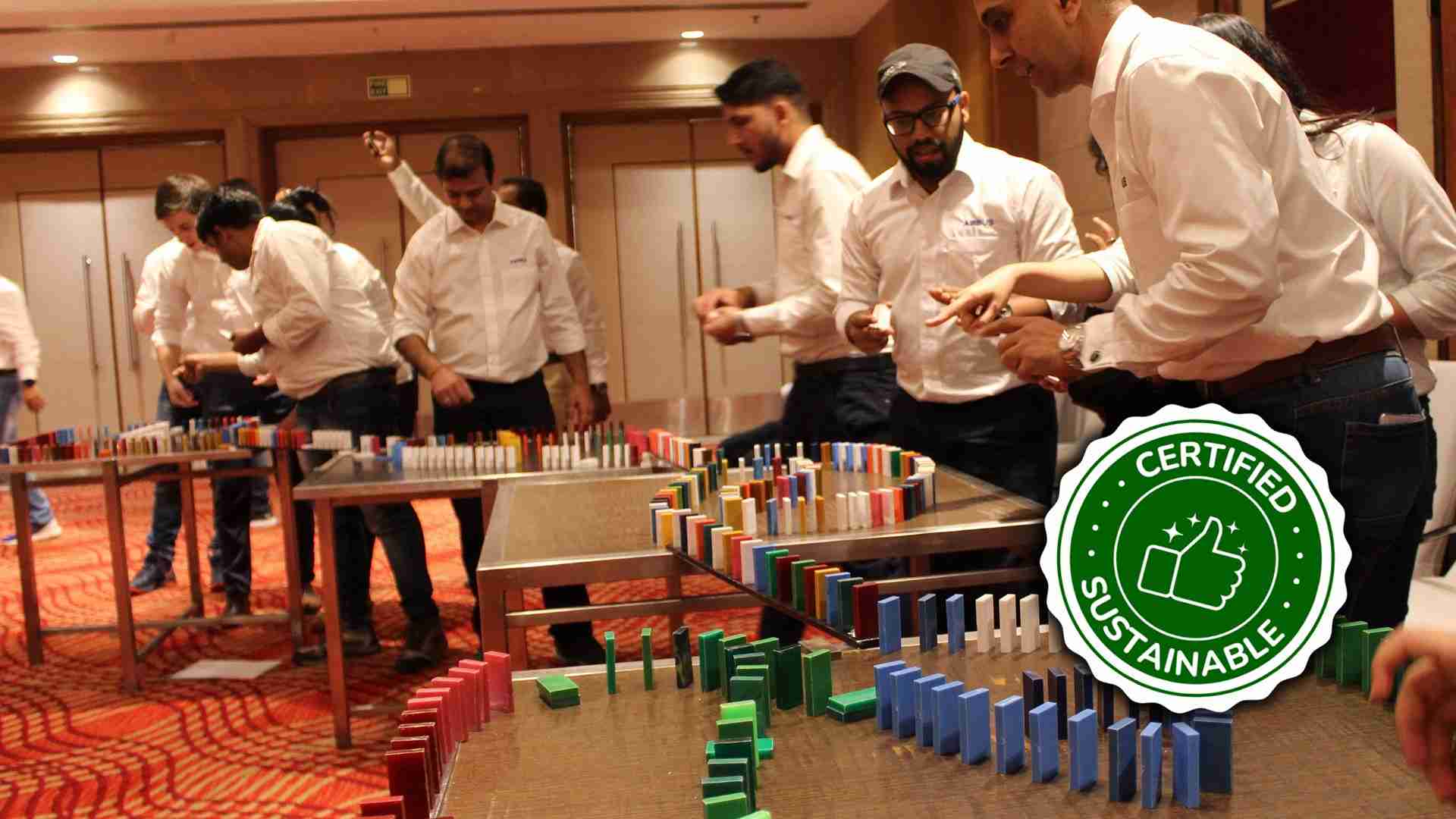
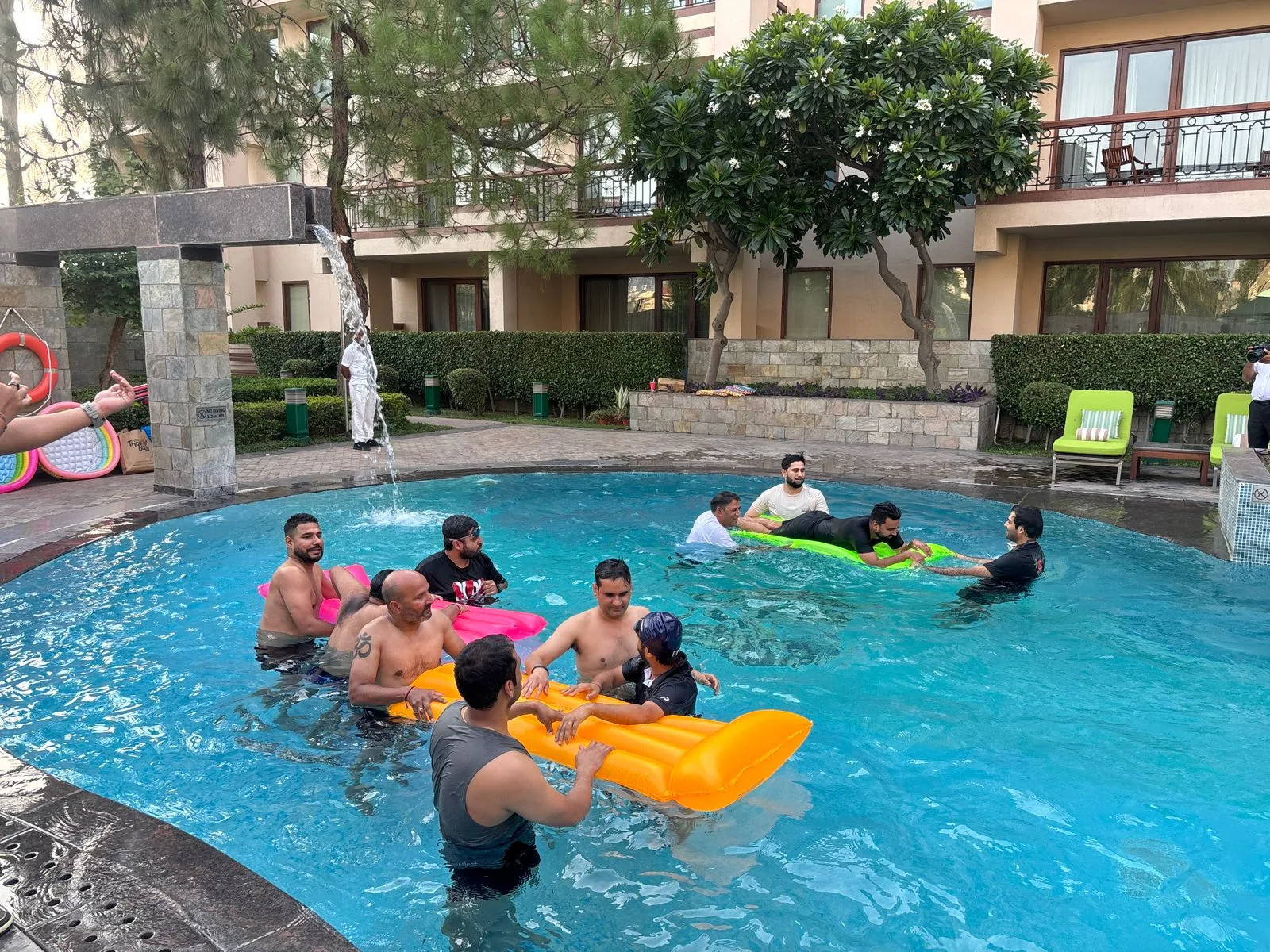
To see how an indoor format plays out at scale, consider the Indoor Olympics we ran for ITC in Noida. The brief was familiar: bring a large group of employees together for a day of connection that did not depend on the weather or a sprawling outdoor venue. We set up a full circuit of indoor sporting and skill challenges inside the venue, organised employees into mixed teams, and let friendly competition do the rest. Cross-functional groups who rarely interacted day to day found themselves strategising, cheering, and problem-solving side by side. The result was a high-energy, inclusive day that lifted morale and strengthened the informal bonds that make everyday collaboration easier, the kind of outcome that is hard to manufacture but easy to feel in the room afterwards.
How to Plan a Monsoon-Proof Engagement Calendar
The teams that stay connected through the rains are usually the ones that planned for it. A few simple principles keep your season on track even when the forecast does not cooperate.
Default to indoor venues from June to September, and book them early before the rush.
Keep one or two virtual formats ready to deploy at short notice for days when travel is unsafe.
Mix in-person and virtual deliberately so hybrid and fully remote colleagues are never left out.
Schedule on a rhythm, for example one connection moment a month, rather than a single big event.
Brief facilitators on flexible timing, since monsoon disruptions can shift start times.
If you would rather start from a menu of ready-to-run formats than build everything from scratch, browse our full range of team building activities and filter for indoor and virtual options that suit your group size and goals.
Measuring Whether It Worked
Engagement spend is easiest to defend when you can show it moved something. You do not need an elaborate framework. A short pulse survey before and after the activity, a simple participation rate, and a qualitative read on energy in the weeks that follow will tell you most of what you need to know. Watch practical signals too: are cameras coming back on, are people volunteering more readily, is cross-team collaboration getting smoother. Given that engaged teams are linked to meaningfully lower absenteeism and higher retention, even modest improvements during a hard season are worth tracking and repeating.
Make the Rain Work For You
Monsoon does not have to be the season your culture goes quiet. With indoor formats that ignore the forecast and virtual experiences that reach everyone wherever they are, you can turn three or four difficult months into a genuine high point for team connection. The weather is one of the few things HR cannot control, but the experience of your people during it is entirely in your hands.
If you are planning your monsoon engagement and want ideas grounded in what has actually worked for other Indian teams, take a look through our case studies or reach out to the team to design a session built around your group.