It is the last week of July 2026, which means most Indian companies just closed the books on the first quarter of FY27 and are staring at H2 targets. It is also, quietly, the moment when employee engagement either gets a reset or gets forgotten for another six months. Gallup's 2026 State of the Global Workplace report found that employee engagement in India fell to 23 percent, a four-year low, down from 30 percent the year before, with an estimated productivity loss of 351 billion dollars, or nearly 9 percent of the country's GDP. If your organisation has not run a genuine mid-year check-in yet, this is the week to start, before H2 hiring plans, appraisal cycles and festive-season distractions take over.
Why Mid-Year Check-Ins Matter More in 2026 Than Ever Before
Annual engagement surveys were always a lagging indicator, but in 2026 they have become almost useless. Teams reorganise every quarter, hybrid schedules shift, and managers are stretched across larger spans of control than they were three years ago. Waiting until December to ask employees how they feel means you find out about attrition risk after your best people have already updated their resumes.
A mid-year check-in, done properly, is not just a survey. It is a structured pause: reviewing what worked in H1, being honest about what did not, and resetting expectations for the rest of the fiscal year. Done well, it tells leadership exactly where culture is cracking before those cracks show up as resignation letters.
The Data: What Is Actually Happening to Engagement in India Right Now
A few numbers from recent research make the case better than any opinion piece could.
Employee engagement in India dropped to 23 percent in 2025, down from 30 percent the previous year, according to Gallup's State of the Global Workplace 2026 report, with South Asia recording the sharpest regional decline in manager engagement of any region tracked.
Attrition in India is projected to stabilise around 13 to 14 percent in 2026, down from roughly 17 percent in 2025, but it still varies sharply by sector, with e-commerce and IT seeing 25 to 28 percent turnover against 10 to 15 percent in manufacturing and pharma.
Supervisor behaviour is cited by 25 percent of Indian employees as the single biggest reason they consider leaving, ahead of compensation and work-life balance in several recent surveys.
Teams that receive weekly manager feedback report 21 percent higher engagement than teams relying on quarterly or annual conversations, yet only 1 in 5 employees actually receives feedback that often.
91 percent of Indian employees working hybrid schedules report better engagement than peers working fully remote or fully in-office, reinforcing that rhythm and choice matter as much as location.
Put together, the story is simple: Indian employees are not disengaging because they dislike their jobs. They are disengaging because nobody is checking in on them often enough, and when someone finally does, it is usually their direct manager delivering bad news about targets rather than a genuine conversation about how they are doing.
Building a Mid-Year Check-In That Employees Actually Trust
1. Separate the pulse check from the performance review
The moment a check-in feels like a disguised performance conversation, honesty disappears. Run engagement pulses as a distinct exercise, ideally facilitated outside the direct reporting line, with clear communication that responses will not affect ratings.
2. Ask fewer questions, more often
A 40-question annual survey gets rushed through in five minutes. A 5-question monthly pulse gets genuine attention. Indian retail and BPO organisations that have shifted to short monthly pulse-and-action cycles, pairing quick surveys with rapid response meetings and visible follow-through, have reported attrition drops of around 15 percent within six months of adoption.
3. Close the loop publicly
Nothing kills trust in a check-in process faster than silence afterward. Share what you heard, what you are doing about it, and what you cannot change and why, even if the news is not entirely positive.
4. Give teams a shared, structured moment to reset together
Surveys tell you what people think. Facilitated team experiences tell you how people actually behave together, and they give teams permission to reconnect after a stretched, target-driven first half.
Experiences That Make Mid-Year Check-Ins Stick
Data collection is only half the job. The other half is giving teams a real moment to exhale, reconnect and reset, which is where a well-chosen activity earns its place in the H2 calendar.
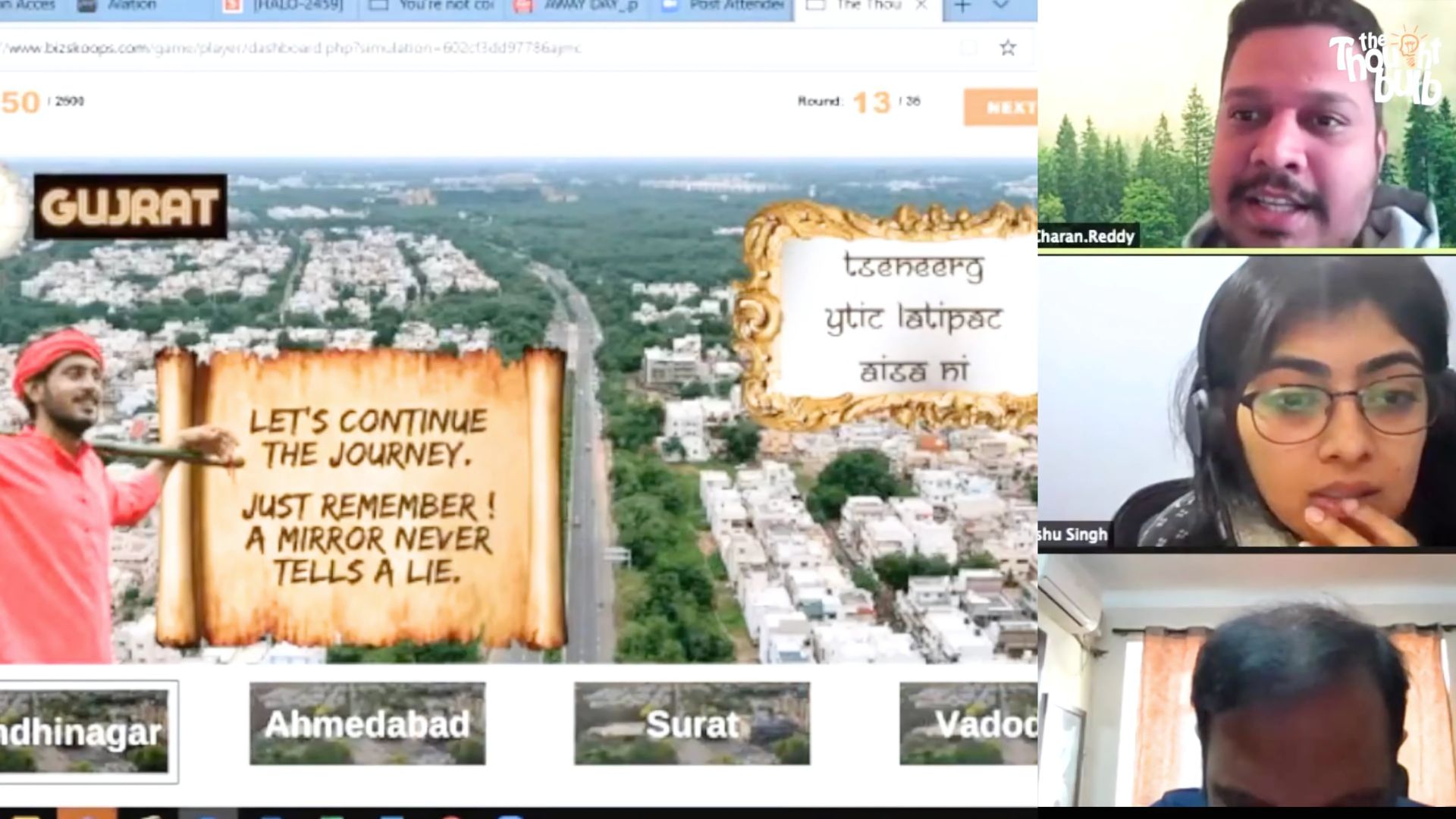
For distributed and hybrid teams, the Team Happiness Challenge is built specifically around this kind of mid-year reset. It is a virtual, facilitated session where teams surface what is genuinely working, what is draining them, and what they want more of, in a format that feels closer to a guided conversation than a survey.

For teams that can get into a room together, the Vision Board activity works well as a companion to a mid-year check-in. Instead of only looking backward at H1 performance, teams physically map out what they want the second half of the year to look like, individually and collectively, which turns a check-in from an audit into a planning exercise employees actually want to participate in.

Case Study: What a Genuine Reset Conversation Looks Like
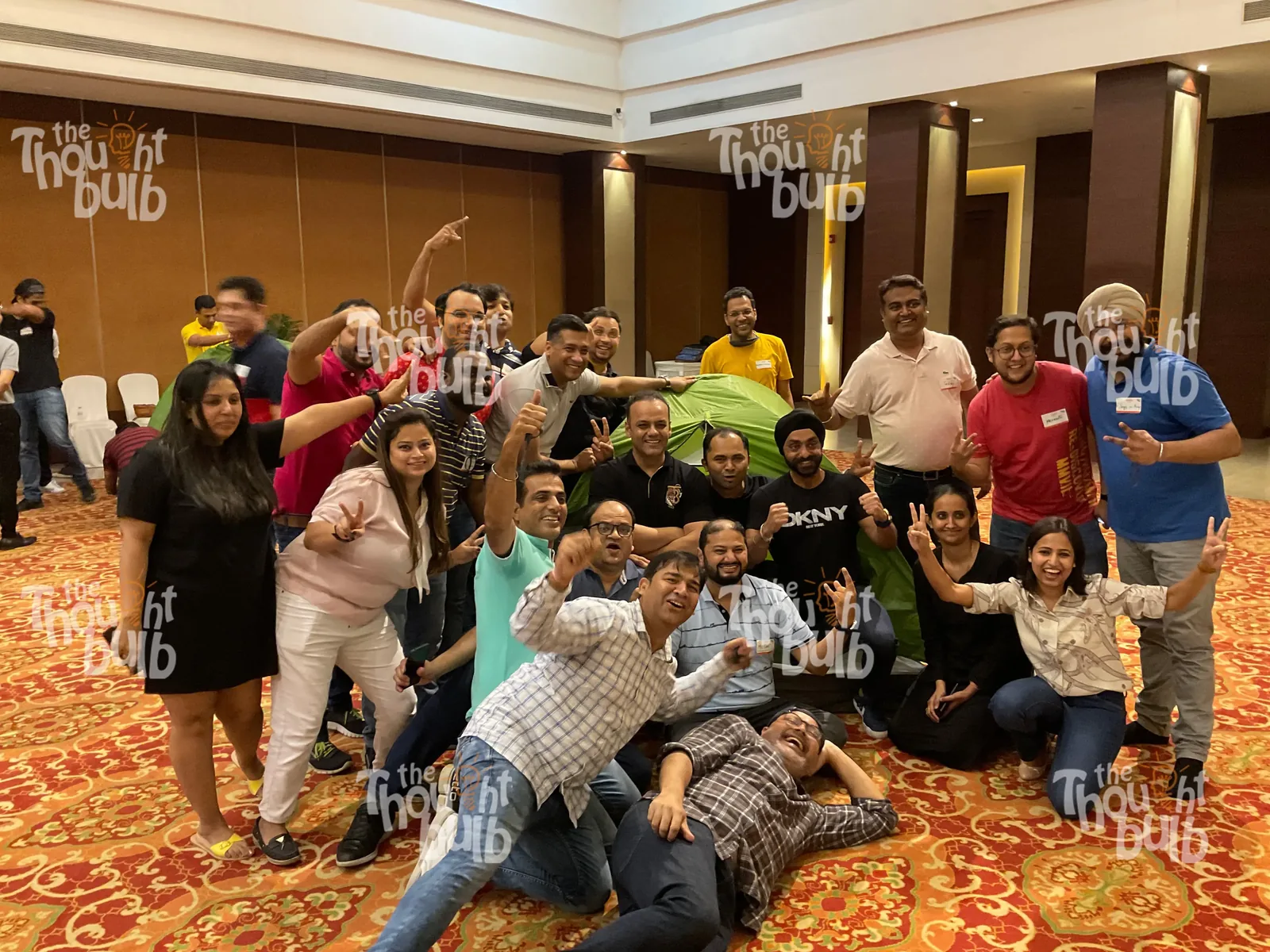
When OLX brought its CEO and extended leadership team together for a dedicated reflection and bonding session, the goal was not a status update. Leadership needed unfiltered time away from dashboards to talk honestly about how the organisation was really functioning, where alignment was breaking down between teams, and what needed to change going into the next stretch of the year. The Thought Bulb designed and facilitated the experience, structuring space for candid reflection alongside trust-building activities so that the conversations that emerged translated into real alignment rather than a one-off offsite memory. It is a useful reminder that mid-year resets are not only an employee-level exercise; leadership teams need the same honest pause, and often need it even more.
What to Do With What You Learn
If engagement scores are down
Look at manager-level engagement data first, not just company-wide averages, since supervisor behaviour remains the top driver of attrition risk in India.
Invest in structured manager feedback training rather than another all-hands town hall.
Audit hybrid and RTO policies against what is actually improving engagement in your data, not what looks good on a policy slide.
If engagement scores are stable or improving
Use the mid-year moment to publicly recognise the teams and managers driving that stability.
Lock in the habits that got you there, whether that is regular team activities, transparent communication, or manager check-in cadence, before H2 pressure erodes them.
If you are building out a full calendar of engagement touchpoints for H2, our employee engagement calendar is a useful starting point for pacing activities across the rest of the fiscal year.
For organisations whose mid-year data points specifically to leadership and manager gaps, it is worth looking at leadership team building programmes designed to close exactly that kind of trust deficit.
Teams that are distributed across cities or working hybrid schedules can explore our full range of virtual team building formats built for exactly this kind of mid-year reconnection.
Conclusion
The second half of FY27 is going to be shaped by decisions Indian HR and business leaders make in the next few weeks. Engagement in India is at a four-year low, attrition risk is concentrated around manager relationships, and employees are telling researchers, loudly, that they want more frequent, more honest check-ins than they are currently getting. A mid-year pulse, paired with a real team reset rather than another survey nobody reads the results of, is one of the highest-leverage moves available to any HR team right now.
If you want help designing a mid-year check-in that goes beyond a survey form, browse our full library of team building activities or look through recent
case studies to see how other Indian and global organisations have approached theirs.