Effective team communication is the secret sauce behind every high-performing team. Whether you're leading a project, launching a new initiative, or navigating change, the way your team talks makes all the difference. It’s not just about words—it's about trust, rhythm, intention, and structure.
In this blog, we explore five communication rules that transform average teams into aligned, resilient, and result-driven ones. These aren't just theoretical tips—they're the day-to-day behaviors that reshape how great teams communicate at work.
1. Everyone Speaks, Everyone Listens
In great teams, communication isn’t dominated by one or two voices. There’s a healthy rhythm where everyone gets to contribute, and everyone is heard. It’s called balanced participation, and it builds engagement, clarity, and ownership.
If your team has a few silent members during meetings or brainstorming sessions, you’re likely missing out on ideas, concerns, and opportunities. Great leaders create space for quieter voices, invite opinions directly, and normalize sharing early, rough ideas without judgment.
Tip: Start meetings by going around the room with a short check-in. Rotate facilitation roles to ensure varied voices lead the flow.
2. They Build Psychological Safety
One of the most defining traits of successful teams is psychological safety—the belief that you won’t be punished or humiliated for speaking up with a question, idea, or mistake.
When teams feel safe, they talk openly. They challenge respectfully. They bring up concerns before they snowball. Most importantly, they don’t fear being wrong—they see it as part of learning.
Leaders play a vital role in this. When a manager says, “That’s a great question,” or “Thanks for pointing that out,” they’re reinforcing a culture of safety.
Tip: When someone speaks up with a concern, thank them first. Then explore the issue together. Don’t rush into solving—start with listening.
3. They Talk Frequently, Not Just Formally
Poor teams wait for the next formal check-in. Great teams don’t. They use frequent, short, informal communication to stay aligned.
A five-minute sync-up can prevent a week’s worth of confusion. A one-line update on chat can remove blockers. Waiting for a weekly meeting to raise critical updates is a recipe for misalignment.
High-functioning teams don’t just communicate more—they do it faster, with more transparency, and with fewer filters.
Tip: Encourage lightweight, regular updates. A daily standup, an end-of-day wrap-up, or a simple “here’s where I’m stuck” channel can go a long way.
4. They Clarify Before They Assume
Most team friction comes not from disagreement, but from misinterpretation. Great teams have learned to pause and ask: “What did you mean when you said that?”
They clarify timelines. They double-check expectations. They paraphrase to confirm. Why? Because they know that every assumption costs time, trust, or both.
These teams replace passive-aggressive silence with curiosity. They don’t shy away from tough conversations—they lean in, gently.
Tip: Use phrases like “Can I clarify what you meant?” or “Here’s how I understood it—did I get that right?” to keep everyone on the same page.
5. They Reflect and Reset Often
Great communication is not a one-time achievement—it’s a continuous, evolving skill. High-performing teams take time to reflect on how they talk.
They debrief after projects. They discuss what helped and what hindered communication. They call out patterns like “We rushed decisions” or “We didn’t loop in the right people.” Then, they reset norms and move forward with sharper awareness.
Tip: After every major project or sprint, dedicate 15 minutes to reflect as a team: What worked? What didn’t? What do we want to do differently next time?
Quick Recap: The 5 Rules Great Teams Follow
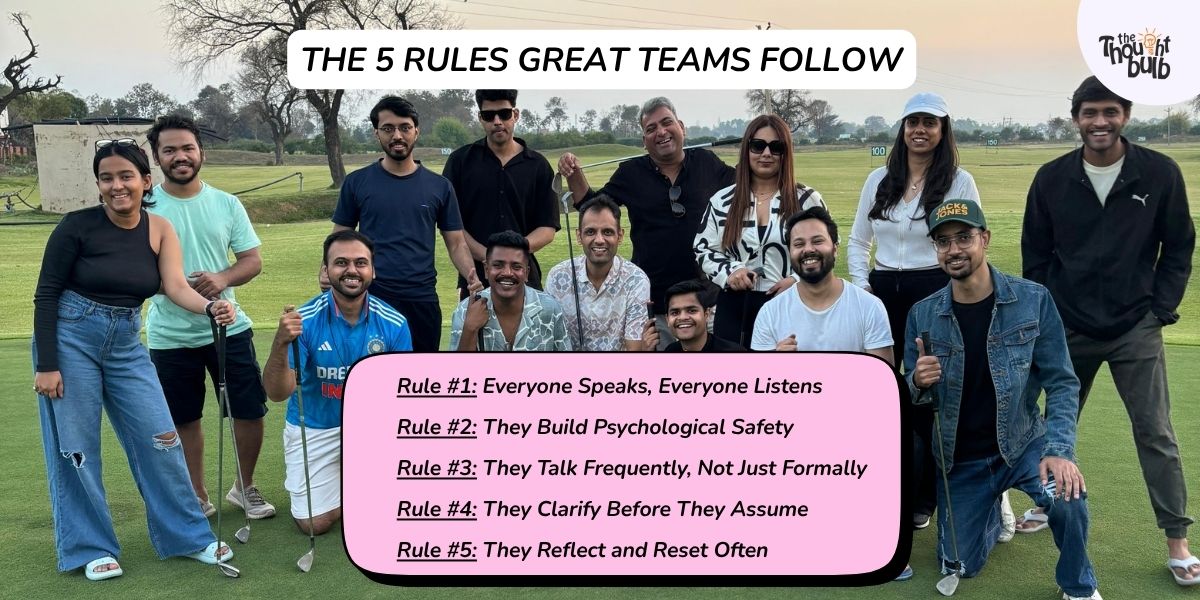
Start small—introduce one rule per week and observe the shift.
Final Word: The Way You Talk Defines the Way You Work
Team communication is more than sharing information—it's about how people think, feel, and connect while doing work together.
If you want a team that delivers under pressure, innovates consistently, and sticks together through challenges, start by improving how you talk.
Make space for all voices. Build trust. Communicate early and often. Clarify constantly. Reflect regularly.
Great teams talk differently. And that changes everything.