1The Challenge
What was the challenge?
This was not a typical team-building audience. The group was made up of super-senior executives — around 15 to 20 leaders from India, with the rest joining from Australia, the US, Switzerland and beyond. Many were meeting in person for the first time, all were used to high-stakes rooms, and none needed another session that felt like a workshop. They had spent the day in a townhall; by the evening, they wanted to connect, relax and enjoy themselves.
At the same time, EY wanted the evening to carry real substance around change management. And the brief came with a firm condition: no debrief. Every insight about change had to be built into the activity itself, discovered by participants rather than explained to them. All of this in just ninety minutes, for a culturally diverse group spanning several continents.
2Our Solution
What solution did we design?
The Thought Bulb designed a two-part evening: Speed Networking to turn a room of colleagues from different countries into a connected group, followed by the Lost in Space Escape Box — an immersive, tabletop escape challenge with the change-management theme woven directly into its design.
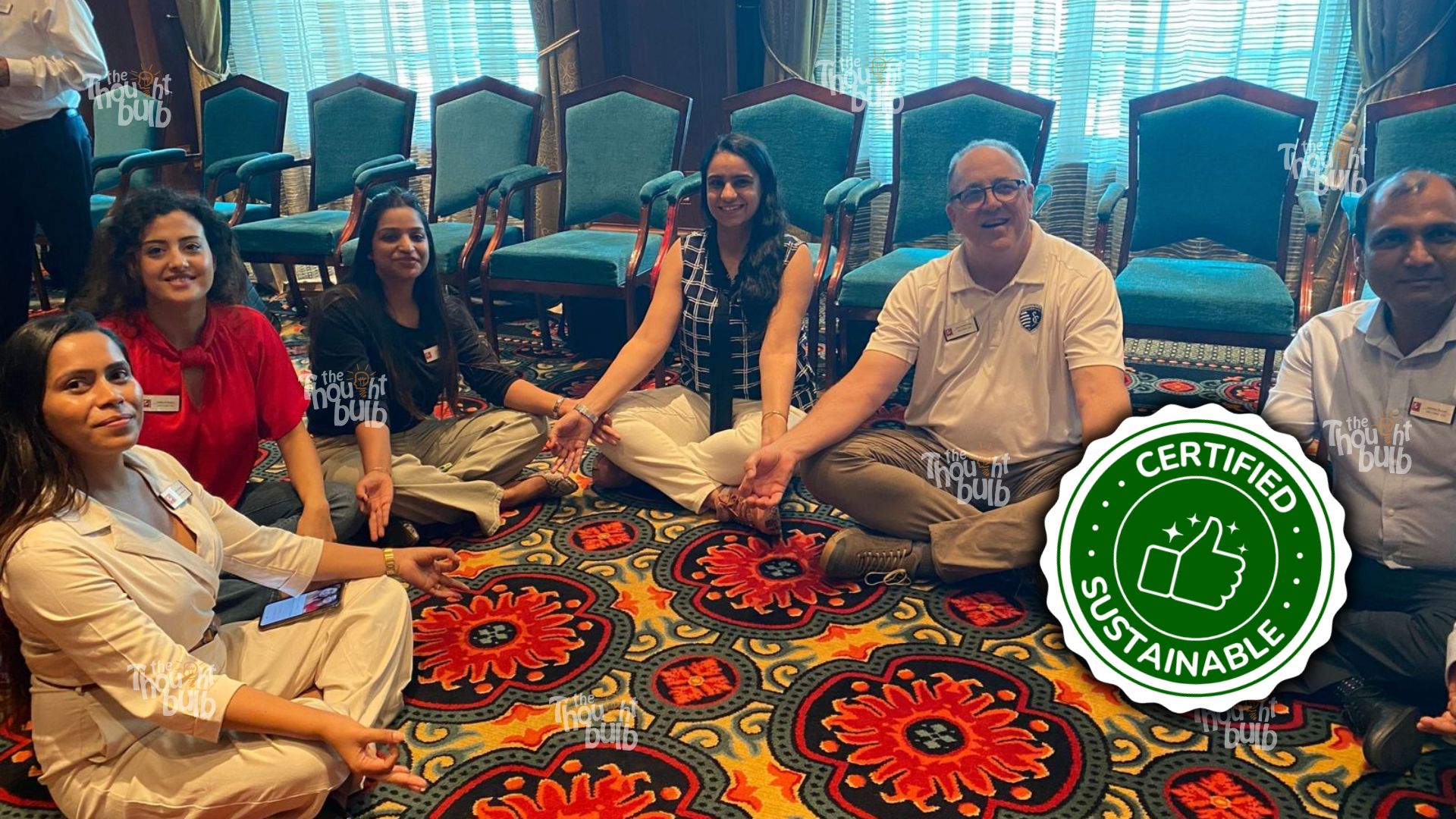
Part 1 — Speed Networking opened with fast-paced structured conversations that let every participant meet colleagues they'd only known through calls and email. By the end of the round, names had faces, and the room was ready to work together.
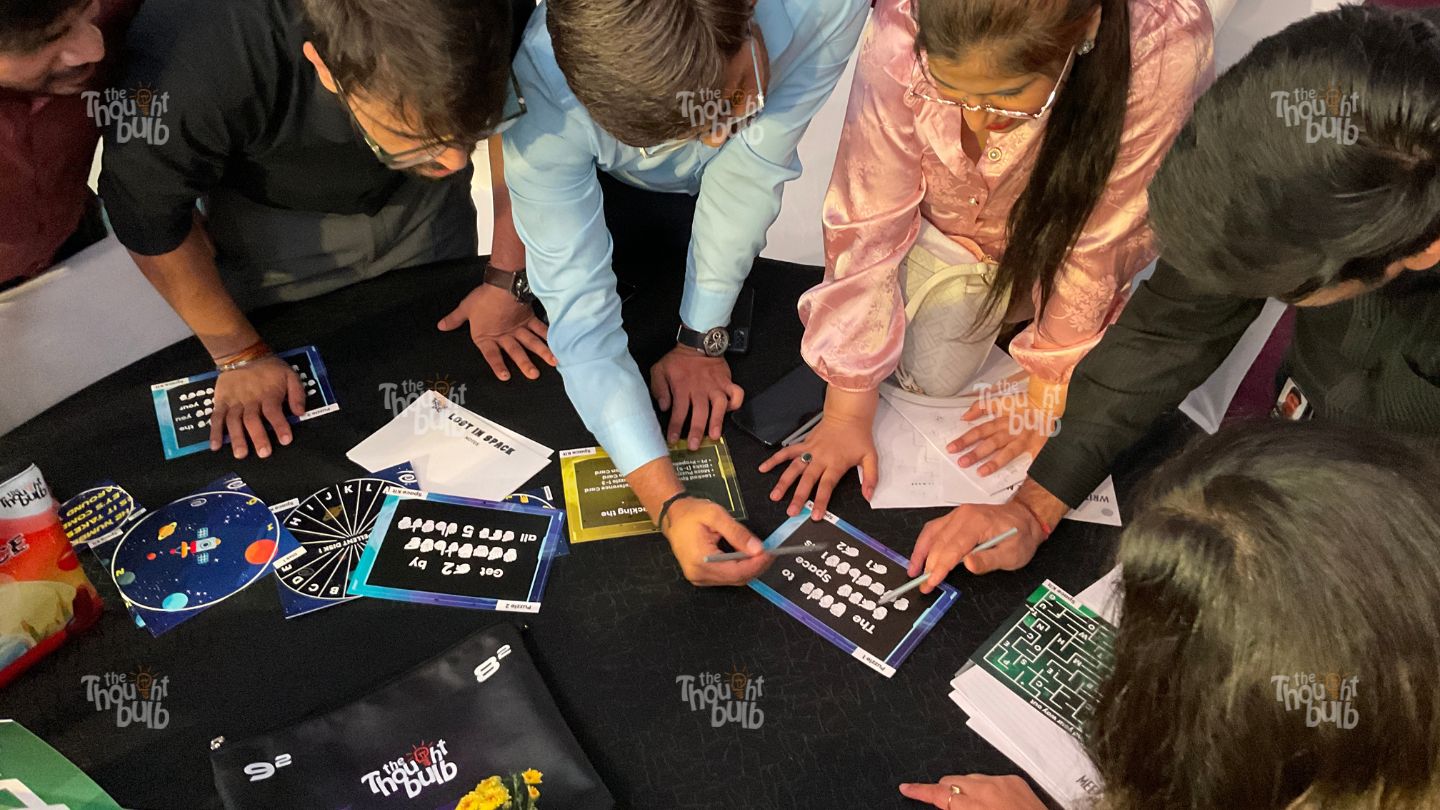
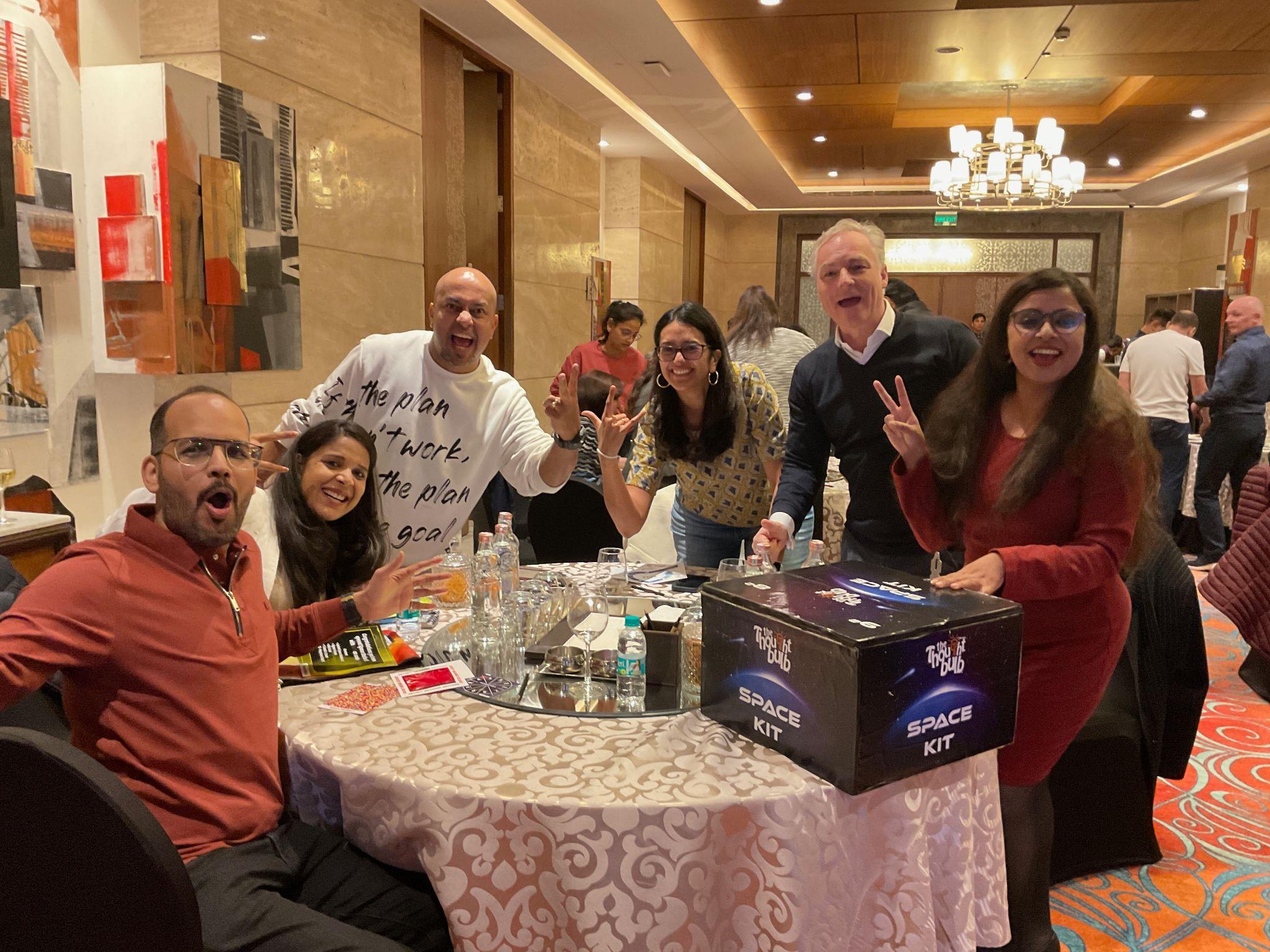
Part 2 — Lost in Space Escape Box. The group split into 5 teams, each receiving a sealed box. The premise: the team is stranded in space, systems are failing, and the only way home is to unlock the box layer by layer — cracking codes, decoding clues and piecing together information before time runs out. Each layer was a different kind of change: a sudden disruption, a communication breakdown, a situation where the old approach no longer worked.
3How We Did It
How was the programme delivered?
The evening ran at the Hyatt, Gurgaon, from 5:30 PM. Speed networking opened the session with short, structured conversations — enough time to meet but not so long that the energy dipped. The format was fast and light, designed for a group that didn't need icebreakers but did need introductions.
Teams then moved straight into the Lost in Space boxes. Five teams, five sealed kits, a ticking clock. Facilitators circulated to keep the pace high but stayed hands-off — the brief was clear that the night had to feel like a discovery, not a lesson. No debrief followed: the insights were built into the challenge itself, surfacing through the experience of navigating change rather than being explained after it.
4Key Outcomes
What were the results?
An activity-only format for a super-senior audience is a risk — it works only if the activity itself is strong enough to carry the message without a facilitator spelling it out. Lost in Space delivered. Every team experienced disruption, adaptation and recalibration in real time, and the change-management themes surfaced through action rather than instruction.
The evening ended with energy still in the room. For a group that had spent the day in formal sessions, ninety minutes of genuine play — with real pressure, real teamwork and a bit of friendly competition — was exactly the shift they needed. The connections made during speed networking carried forward into the escape challenge, and the challenge itself gave a diverse, international leadership group a shared story to carry into the days that followed.