Imagine walking into your office on a Monday morning and seeing vibrant posters, buzzing learning booths, hands-on activities, and an air of excitement instead of yawns. That’s the power of a well-orchestrated Learning Week.
At The Thought Bulb, we believe that learning at the workplace doesn’t have to be locked inside a meeting room. It can be fun, creative, and deeply impactful when designed right. Here's your step-by-step guide to organising an unforgettable Learning Week at the Office.
Why a Learning Week?
Before we dive into the how, let’s address the why. Learning Weeks:
Reignite curiosity and a growth mindset
Break silos through cross-functional learning
Upskill employees in a stress-free, engaging format
Turn passive learning into active participation
Align individual growth with organisational goals
Done right, a Learning Week becomes more than a calendar event—it becomes a cultural movement.
7 Steps to Organise an Office Learning Week:
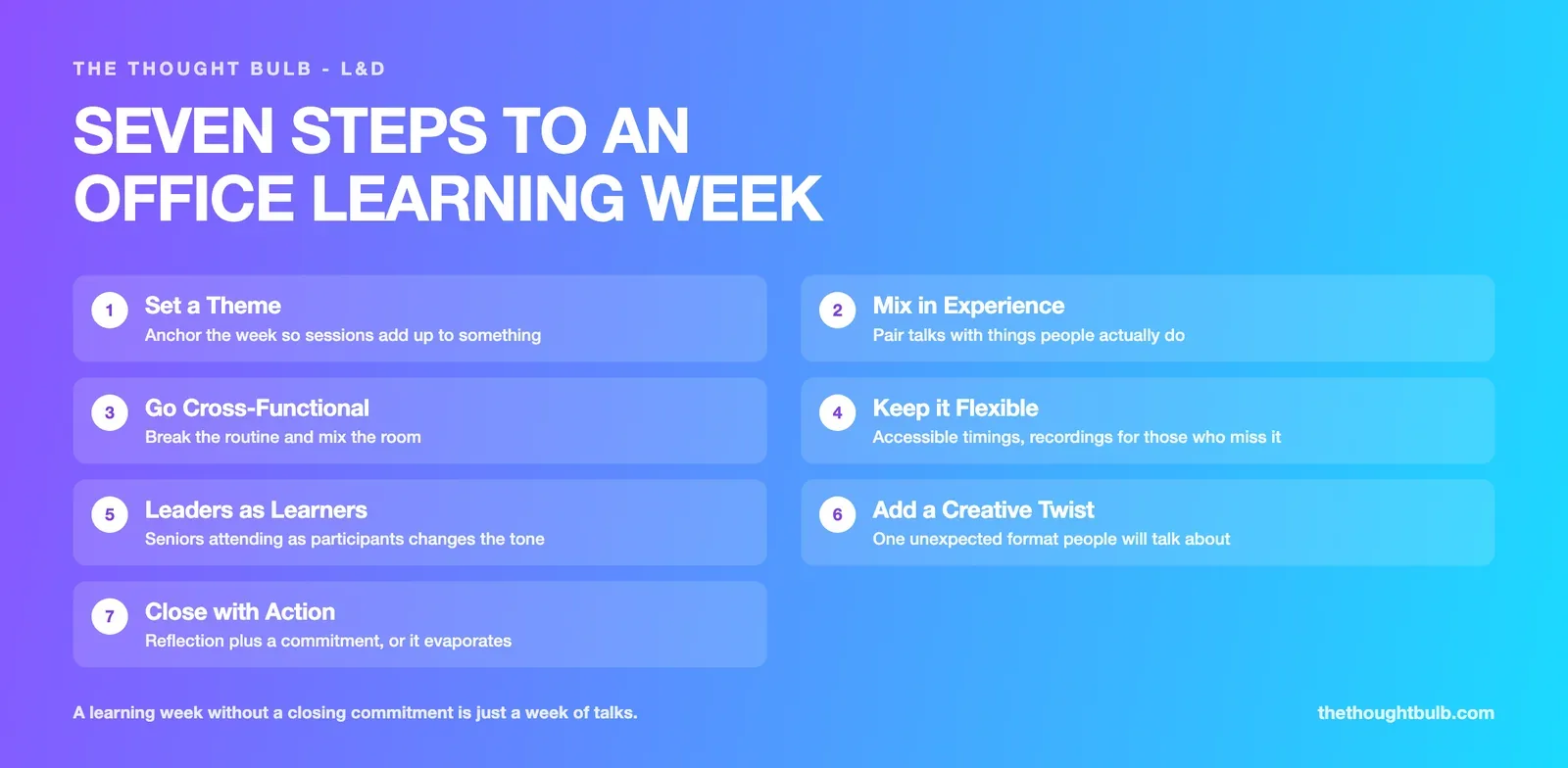
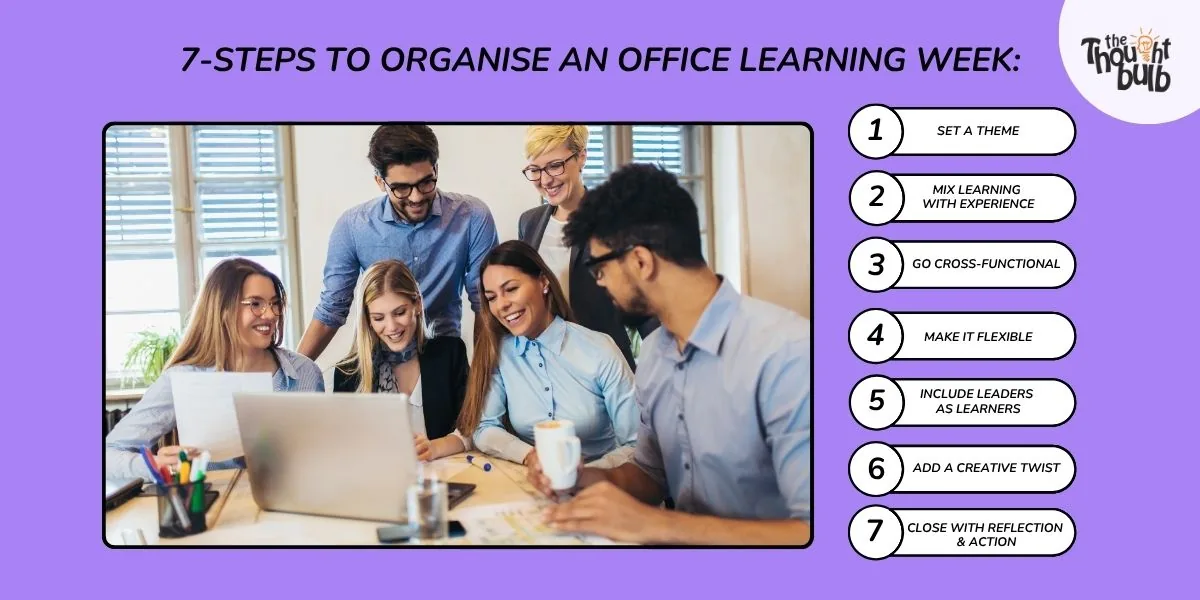
1. Set a Theme: Anchor the Learning
Pick a compelling theme. A strong theme acts like a magnetic north for your learning week—it gives every session a clear purpose and emotional coherence. Whether tied to strategy or culture, the right theme energizes participation and keeps everyone aligned on what really matters.
Example Themes:
Future Ready Skills
Innovate, Collaborate, Accelerate
From Feedback to Feedforward
Growth Mindset at Work
Pro Tip: Launch the theme with a teaser video or a creative mailer to build excitement in advance.
2. Mix Learning with Experience
People don’t just want to listen—they want to feel the learning. Blending concepts with action, reflection, and fun helps teams absorb new ideas faster and retain them longer. Experiential learning turns passive audiences into active problem-solvers.
Sample Activities:
Play With Building Blocks: For creative problem-solving
AI Movie Making Challenge: For communication & collaboration
Domino Chain Reaction: For change agility
World Café Conversations: For peer-to-peer learning
Speed Coaching Booths: Bite-sized mentoring for personal growth
Pro Tip: Think beyond slides. Make people move, talk, build, reflect, and solve.
3. Go Cross-Functional: Break the Routine
Learning becomes more dynamic when different teams step out of their silos to share what they know. Cross-functional sessions reveal hidden skills, deepen respect across departments, and spark unexpected innovations—without a hefty training budget.
Why it works:
Builds empathy across functions
Encourages internal subject-matter experts (SMEs) to shine
Promotes peer learning without external costs
Pro Tip: Host a “Teach Back” challenge where teams explain another department’s function creatively!
4. Make it Flexible & Accessible
To make your learning week truly inclusive, build it around your employees' time and attention spans. Offering diverse formats makes it easier for everyone to engage, whether they have five minutes or fifty. Flexibility is the foundation of sustainable learning culture.
Not everyone can block hours off. So offer learning in multiple formats:
15-minute learning sprints before daily stand-ups
Podcast playlists on internal channels
QR-based learning trails across office spaces
Pro Tip: Use a digital leaderboard to nudge participation and reward top learners.
5. Include Leaders as Learners
When senior leaders join in not to instruct, but to explore and grow, it reshapes the entire learning atmosphere. Their presence shows that development isn’t a top-down initiative—it’s a collective journey. This authenticity sparks greater participation from all levels.
Invite them to:
Attend sessions
Host reflection circles
Share a learning failure story
Pro Tip: A candid “Leaders Learn Too” panel is always a crowd-puller.
6. Add a Creative Twist
Break out of the classroom mindset and bring in elements of surprise, play, and participation. A little creativity adds emotional stickiness to learning, making it memorable and meaningful. When learning is fun, it doesn’t feel like another work task—it feels like a reward.
Blend in the unexpected:
Learning Passport: Stamp it for every session attended
Pop Quizzes with a Twist: Unlock clues to an office treasure hunt
Open Mic Learning Nights: Where employees share inspiring stories
Learning Wall: Where people post “What I learned today” notes
Pro Tip: Gamify the experience. Learning + Fun = Lasting Impact
7. Close with Reflection & Action
Don’t let the energy fade away after the last session. End your learning week by helping people reflect on what they’ve gained—and commit to what comes next. Reflection turns learning into habit, and action plans give it staying power.
Host:
A Showcase Day: Where teams share key learnings or innovations
Reflection Circles: What changed for them in the week?
Commitment Cards: What will they apply in the next 30 days?
Pro Tip: Send a digital journal post-week for self-reflection and goal tracking.
Bonus: A Sample Learning Week Calendar
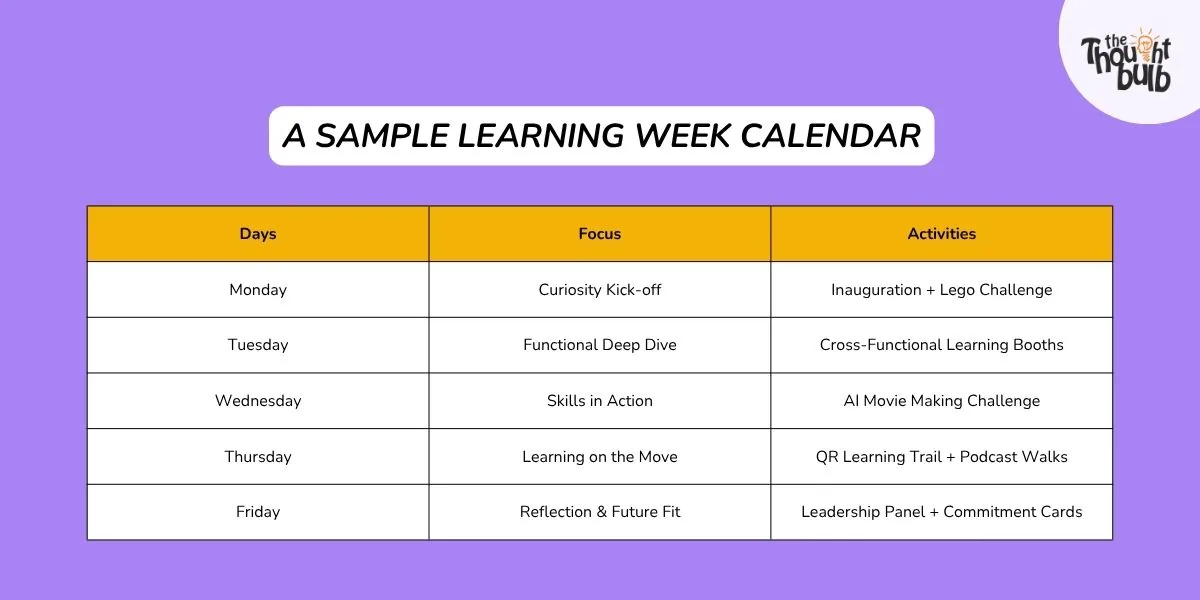
Day |
Focus |
Activity |
Monday |
Curiosity Kick-off |
Inauguration + Lego Challenge |
Tuesday |
Functional Deep Dive |
Cross-Functional Learning Booths |
Wednesday |
Skills in Action |
|
Thursday |
Learning on the Move |
QR Learning Trail + Podcast Walks |
Friday |
Reflection & Future Fit |
Leadership Panel + Commitment Cards |
Final Thoughts
Learning Weeks, when done right, become culture creators. They’re not just about knowledge transfer—they’re about mindset transformation, energy, and connection.
If you’re ready to move beyond workshops to real engagement, we’re ready to help. Let’s co-create your organisation’s most energising Learning Week yet.
Let’s make learning feel less like a chore and more like an adventure.