1The Challenge
What was the challenge?
2Our Solution
What solution did we design?
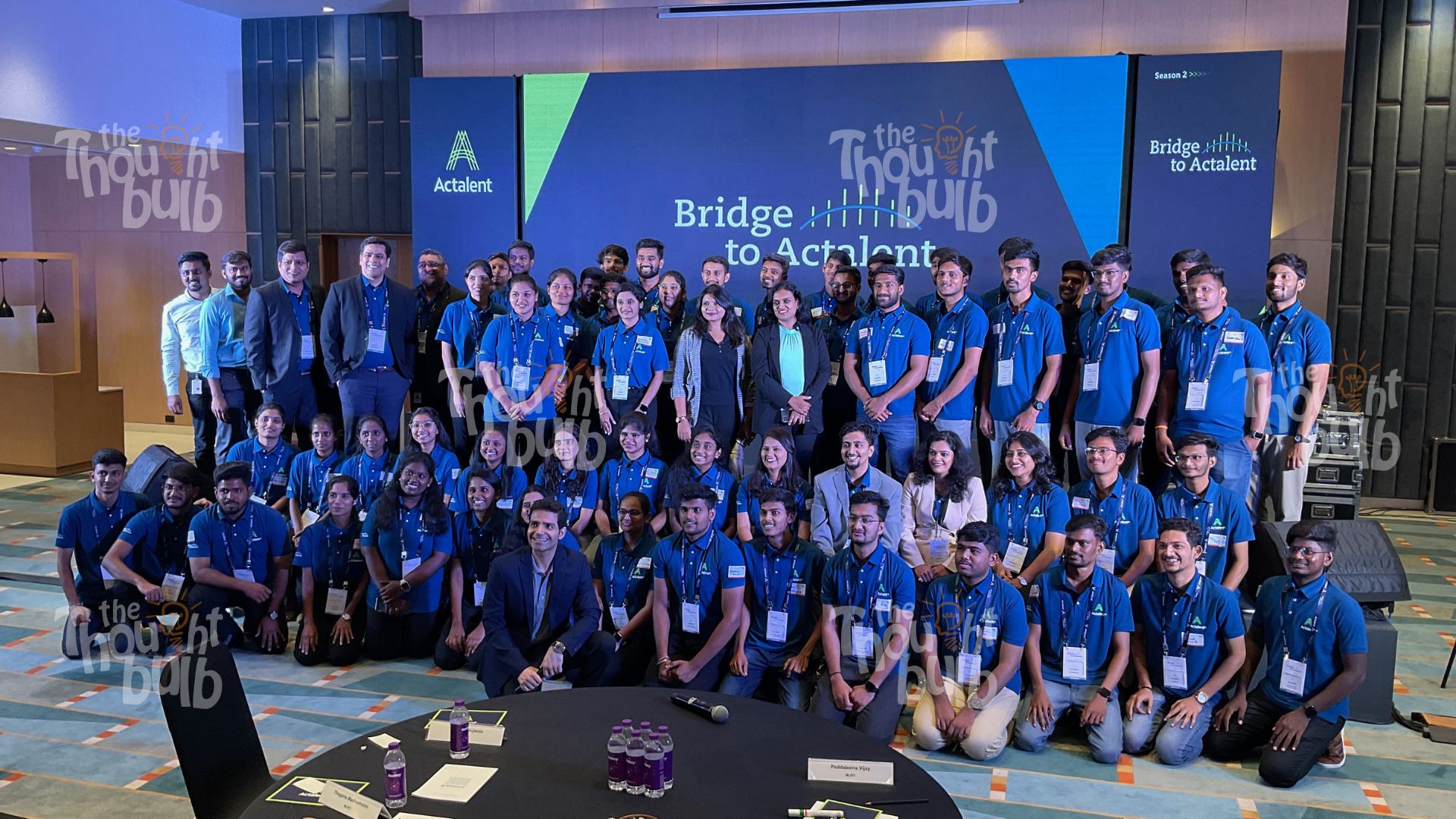
In today’s fast-paced corporate environment, effective communication skills are essential, especially for young professionals embarking on their careers. Actalent recognized this need and sought to equip its campus recruit engineers with the ability to craft and deliver compelling narratives. To address this, The Thought Bulb designed a tailored workshop titled ‘Storytelling Made Easy’. This program was specifically created to help these young engineers master the art of storytelling, enabling them to better present their ideas, share their experiences, and engage their audiences.
The workshop aimed to demystify the process of storytelling and make it accessible to individuals who might not naturally gravitate towards it. The primary goal was to enhance the participant's ability to communicate complex concepts in a relatable and engaging manner. By the end of the workshop, participants were expected to feel more confident in their storytelling abilities and be able to apply these skills in various professional settings.
3How We Did It
How was the programme delivered?
The ‘Storytelling Made Easy’ workshop was structured to be interactive and hands-on, reflecting the dynamic nature of Actalent’s young engineers. The session was divided into several key segments:
- Introduction to Storytelling: The workshop began with an overview of storytelling principles. Participants learned about the structure of a good story, including the importance of a clear beginning, middle, and end. The concept of creating emotional connections with the audience was emphasized, as well as the role of authenticity in storytelling.
- Practical Exercises: To put theory into practice, participants engaged in a series of interactive exercises. These included group activities such as movie making where they had to craft short stories based on the assigned topics. The exercises were designed to help participants understand how to structure their stories and incorporate elements that would captivate their audience.
- Feedback and Refinement: After each exercise, participants received constructive feedback from both their peers and the facilitator. This feedback focused on how effectively they communicated their message and engaged their audience. Participants were encouraged to refine their stories based on this feedback, helping them to improve their delivery and narrative skills.
- Application to Professional Scenarios: The final segment of the workshop focused on applying storytelling techniques to professional scenarios. Participants practiced presenting technical information and project updates in a story format, which helped them see the practical benefits of storytelling in their everyday work.
Throughout the workshop, emphasis was placed on creating a supportive environment where participants felt comfortable experimenting with their storytelling techniques. This approach ensured that all participants, regardless of their initial skill level, were able to make meaningful progress.
4Key Outcomes
What were the results?
- Enhanced Communication Skills: Participants gained confidence in their ability to craft and deliver compelling stories.
- Audience Engagement: They learned that storytelling is about creating connections with the audience and making complex ideas accessible.
- Practical Application: Skills acquired can be applied to professional scenarios, such as presenting technical information and project updates.
- Empathy and Creativity: Effective storytelling involves understanding the audience and incorporating empathy and creativity into presentations.
- Impactful Presentation: Participants are now better equipped to present ideas persuasively and make a lasting impact in their roles.
Participants left the workshop with a newfound confidence in their ability to craft and deliver compelling stories. They learned that effective storytelling involves more than just the technical aspects of communication—it requires empathy, creativity, and a clear understanding of the audience. By integrating these elements into their professional interactions, the engineers are now better equipped to present their ideas persuasively, foster collaboration, and make a lasting impact in their roles.
The team completed the programme with an overall satisfaction score of 9.6/10. Facilitation quality was independently rated 9.8/10. Actalent reported a visible and sustained improvement in cross-team communication in the weeks following the programme — and subsequently engaged The Thought Bulb for a follow-up session.