
1The Challenge
What was the challenge?
Siemens was hosting 25 of its senior global leaders — a genuinely international group, every one of a different nationality — in India, and wanted to do more than run a team activity. The goal was fun and team bonding, yes, but with a distinctive layer: to introduce these visiting leaders to Indian culture, and to make sure the significance behind each experience came through, not just the activity itself.
That brief carries a specific sensitivity. A group of senior leaders from many different countries needs an experience that is warmly inclusive rather than assuming any shared reference point — the language and even the music had to work for everyone in the room. And "cultural immersion" is easy to get wrong: done carelessly, it becomes tokenistic. Done well, it's a generous, memorable welcome. The bar was to make 25 accomplished people from around the world feel genuinely hosted, while giving them something authentic to take home about the country they were visiting.
2Our Solution
What solution did we design?
The Colours of India Challenge was designed as exactly that welcome. Framed as a gamified treasure hunt with challenge stations spread across the property, it sends teams to designated points to take part in a curated set of hands-on cultural experiences — five local-flavour traditions drawn from different regions of India:
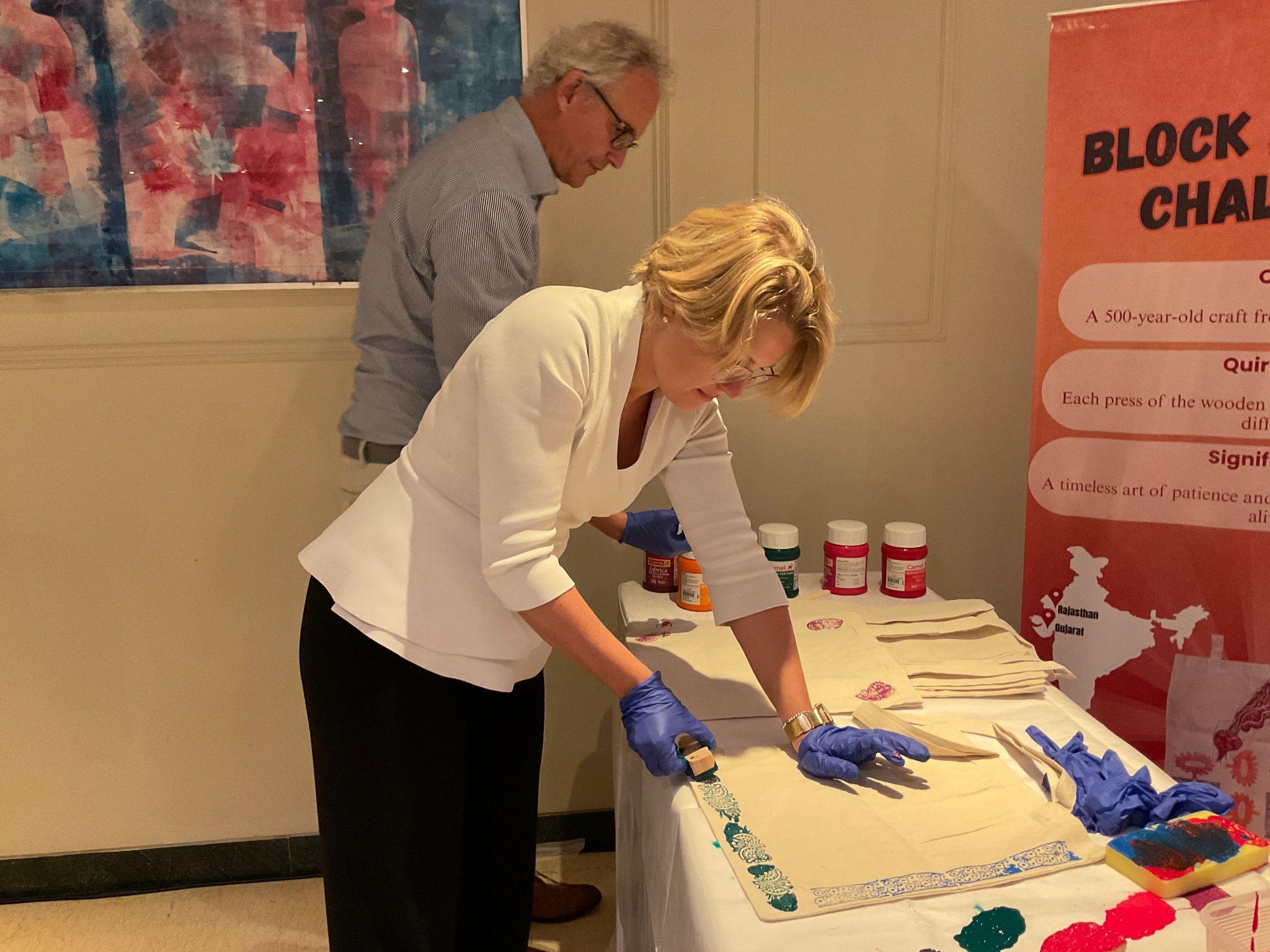
The Safa Challenge, tying the traditional Rajasthani turban; the Gol Gappa Challenge, with a regional twist celebrating how one street food takes three names across three cities — Gol Gappa in Delhi, Pani Puri in Mumbai, Puchka in Kolkata; the Chai-Making Challenge, brewing Indian masala chai, a ritual woven into every region's daily life; the Mehndi Challenge, celebrating the henna tradition; and Rajasthani Block Printing, a distinctive textile art form.
The design deliberately pairs doing with meaning. Rather than leaving each activity to speak for itself, every challenge station carried a standee or poster explaining the significance of the tradition — so leaders learned the why behind the turban, the chai, the henna, not just the how. That's what turns a fun station into genuine cultural immersion. The treasure-hunt frame supplied the bonding and light competition; the curated experiences supplied the substance; and the whole thing was kept inclusive in language and music so that a room of 25 nationalities felt equally welcome throughout.
3How We Did It
How was the programme delivered?
The programme opened with high-energy icebreakers and energisers to get a diverse, newly-assembled group comfortable with one another, then divided the 25 leaders into four teams for the hunt. Teams moved between the challenge stations spread across the venue, completing each of the five local-flavour experiences in turn.
Two facilitators ran the session, keeping the pace lively and the tone warm and inclusive across the 60-to-90-minute flow. At each station, the significance of the tradition was made explicit through the standees and the facilitators' framing, so participants left each challenge understanding what they'd just taken part in and why it mattered. The result was less a debrief in the conventional sense than a continuous thread of cultural storytelling running alongside the fun — fitting for a session whose goal was bonding and cultural introduction rather than workplace learning.
4Key Outcomes
What were the results?
The Colours of India Challenge gave Siemens' visiting global leaders a warm, hands-on welcome to Indian culture — turning a team activity into a genuine cultural introduction. Across five regional traditions, 25 leaders from around the world bonded over shared new experiences, each one framed so its significance came through.
For a group of senior international leaders being hosted in India, the session did exactly what Siemens hoped — it was fun, it brought a diverse group together, and it sent them home with an authentic taste of the country's vibrant culture.