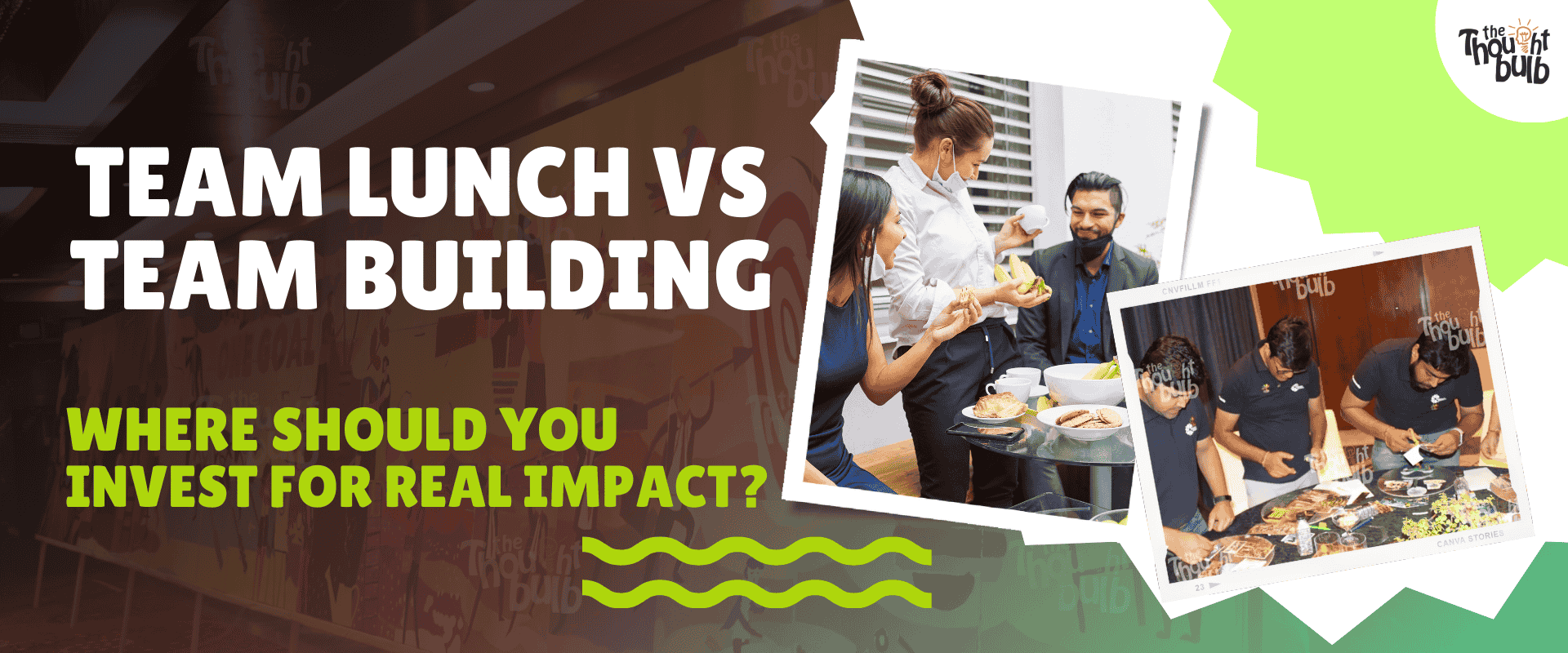
Imagine a regular Monday afternoon. Your team heads to a restaurant for a casual team lunch. Laughter fills the air, plates are passed around, and for an hour, everyone feels relaxed. But once they return to the office, it’s back to emails, deadlines, and business as usual.
Now, picture a different scenario. Instead of a lunch outing, your team is immersed in The Terminal Quest—an experiential learning activity designed to simulate high-pressure airport operations. It’s not just fun—it’s a full-blown corporate team-building experience. Each participant takes on a dynamic role—handling luggage logistics, managing flight delays, or coordinating emergency landings.
To succeed, they must strategize, collaborate, and think on their feet—exactly what today’s work culture demands.
Which experience do you think will create lasting impact? The answer is clear.
Why Team Building Outshines a Lunch Break
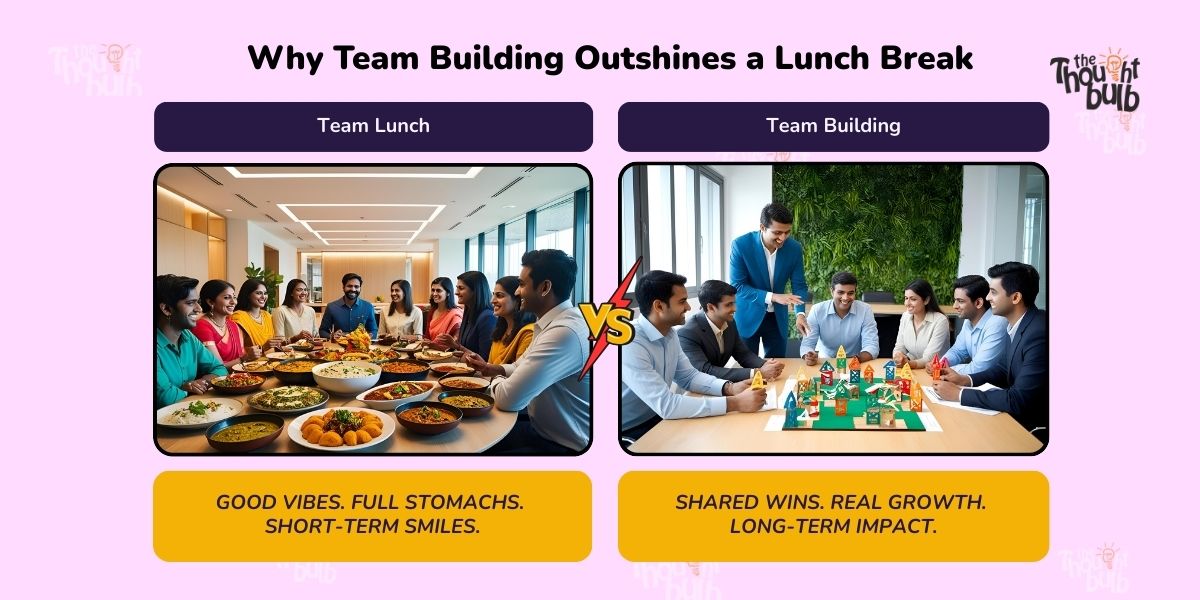
Team lunches are great for momentary bonding. They offer a casual setting to relax, share a laugh, and enjoy a break from the usual grind. But once the plates are cleared and everyone’s back at their desks, the workplace dynamics largely remain unchanged. Laughter doesn’t always translate into lasting collaboration.
<br> Team building, however, is intentional. It’s not just about spending time together—it’s about learning how to work better together. Whether through structured challenges, brain teasers for work meetings, or shared creative tasks like ice breaker puzzles, these exercises mirror real workplace scenarios in a low-risk environment. The result? People learn to trust, communicate, and collaborate more effectively.
<br> Where a lunch might help a team feel connected for a moment, team-building creates shared memories tied to growth, learning, and progress. It provides the psychological safety to try new things, the structure to work through challenges, and the space to discover each other’s strengths. In short, it doesn’t just feed the team—it fuels it.
The Long-Term Benefits of Team Building
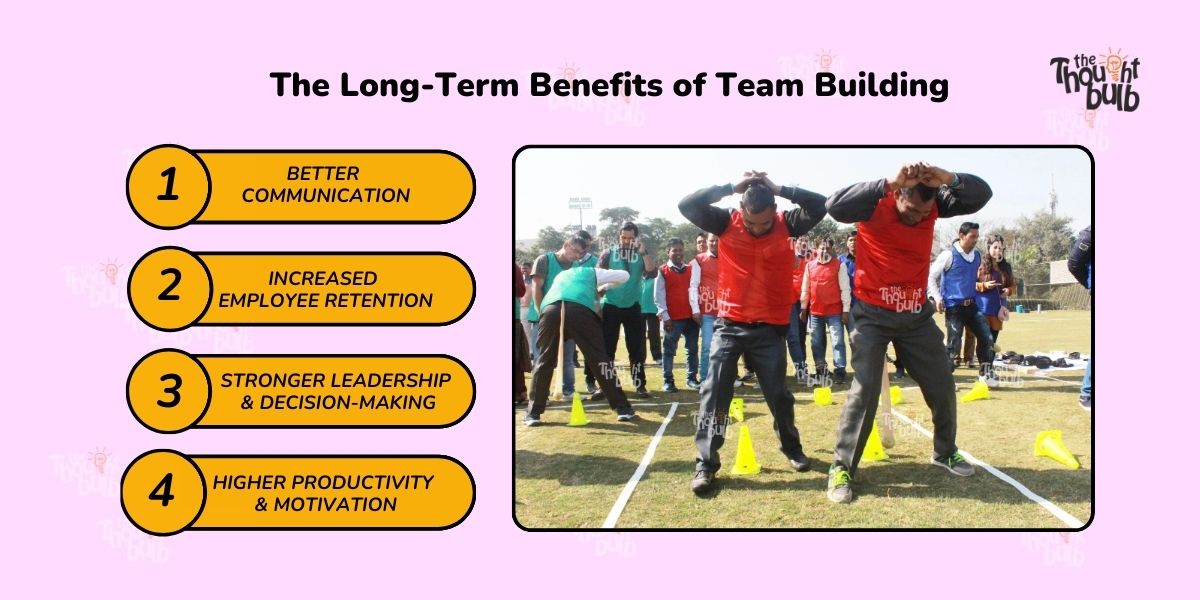
Companies that invest in corporate team-building programs experience sustainable improvements in workplace culture:
Better Communication – Through collaborative team activities, employees listen more, misunderstand less, and work more efficiently as a unit.
Increased Employee Retention – Teams that bond through shared experiential learning tend to stay loyal and connected longer.
Stronger Leadership & Decision-Making – Activities like The CEO Simulation, a powerful leadership development workshop, help identify and nurture future leaders.
Higher Productivity & Motivation – With enhanced employee engagement, performance and morale naturally rise.
How The Thought Bulb Creates Lasting Team Impact
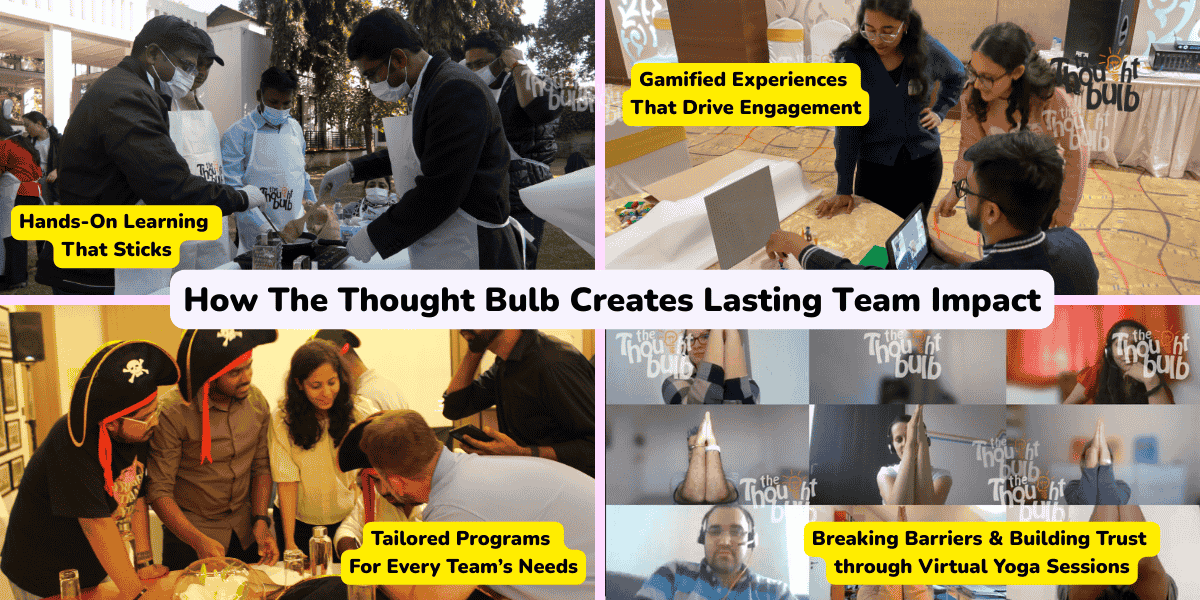
1. Hands-On Learning That Sticks
We believe the best learning happens when teams do rather than just discuss. Example: Consider a sales team that struggles with coordination. Instead of a routine lunch discussion, they participate in our Soap Making Challenge—a fun yet structured experiential learning activity. They must work together to craft, package, and market handmade soaps under time constraints. This simulates real-world project management, teaching them to handle pressure, distribute tasks, and meet deadlines—while having fun!
2. Tailored Programs for Every Team’s Needs
Not all teams face the same challenges. That’s why we offer customized team-building activities tailored to meet specific goals. Example: A software company’s R&D team might benefit from our Innovation Sprint, which promotes idea generation and prototyping. Meanwhile, a consulting firm may thrive in our Negotiation Masterclass, designed to strengthen business communication skills through simulated high-stakes deal-making.
3. Gamified Experiences That Drive Engagement
We use gamified team-building activities and role-playing scenarios to make learning fun, interactive, and impactful. Example: A finance team recently joined The AR Treasure Hunt by The Thought Bulb, solving cryptic clues and navigating virtual markers to uncover treasures. Using augmented reality team games, they developed stronger problem-solving, attention to detail, and collaboration—all within a dynamic, tech-enhanced experience.
4. Breaking Barriers & Building Trust
Hierarchies can create communication gaps—but interactive virtual team activities can bridge them. Example: In one of our Virtual Yoga Sessions, a senior VP and a junior analyst practiced mindfulness together. By the end, they shared not just a moment of calm but a new level of mutual respect. Would lunch have done that? Probably not.
Why Investing in the Right Team Experience Matters
In today’s competitive landscape, companies aren’t just looking for one-off events—they’re searching for corporate team building programs in India that align with long-term organizational goals.
Experiential learning activities for employees—whether on-site or through virtual team-building modules—offer more than fun; they build essential soft skills like adaptability, resilience, and strategic thinking.
If you're wondering how to improve team collaboration at work, the answer lies in consistent, purposeful engagement—not occasional pizza outings. Thoughtfully crafted programs help teams return recharged, aligned, communicative, and motivated to work toward shared goals.
Conclusion :
A lunch break lasts an hour. It’s fun while it lasts—but its impact fades fast. In contrast, experiential team-building activities deliver lessons that last a lifetime. The relationships built, communication skills honed, and leadership qualities developed stay with employees long after the session ends.
So, the next time you think about bringing your team together, ask yourself: Do you want a momentary bonding experience—or do you want to build a high-performing, motivated, and connected team?
If it’s the latter, The Thought Bulb is here to lead the way with interactive corporate team-building programs that truly make a difference.
Ready to create unforgettable team moments? Let’s make it happen!