Team building isn’t just about fun – it’s about meaningful transformation. At The Thought Bulb, we craft powerful experiences where fun and learning go hand-in-hand. But here’s the catch – the real magic happens after the last game ends, the last bubble pops, or the final domino falls.
So, how do you drive learning at the end of a team-building program? Let’s take you behind the scenes to see what makes our programs truly impactful.
Experiential Learning: Learning by Doing, Reflecting, and Applying
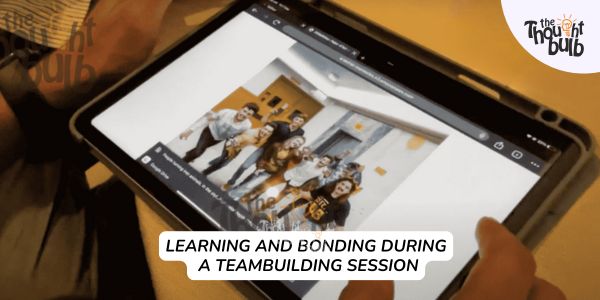
Every Thought Bulb experience is rooted in the Experiential Learning Theory (ELT), pioneered by David Kolb. It’s not about a facilitator telling you what to learn — it’s about discovering it yourself through experience.
Think about your last team challenge. Did you notice how you reacted to a roadblock, how you collaborated, or how your team made decisions under pressure?
Here’s how it works in our programs:
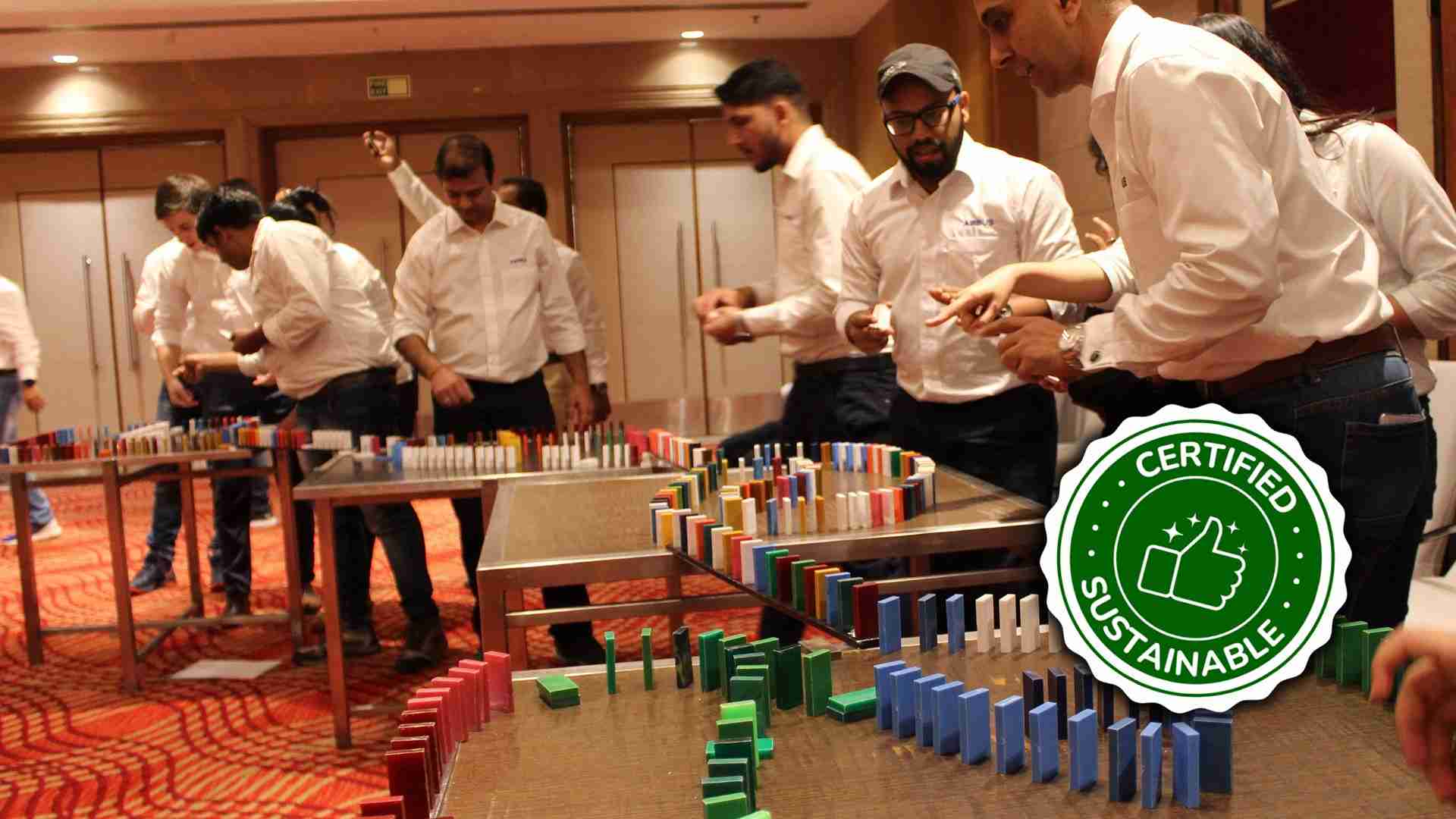
1. Concrete Experience: Participants engage in activities like the Domino Challenge, AI Movie Making.
2. Reflective Observation: Post-activity, the facilitator encourages teams to reflect on what just happened.
3. Abstract Conceptualization: Through guided questioning, participants extract key takeaways linked to business and behavioral themes.
4. Active Experimentation: They explore how these insights can be applied in real-world situations back at work.
It’s seamless. It’s scientific. And it sticks.
Stitching Learning Models Into Every Moment
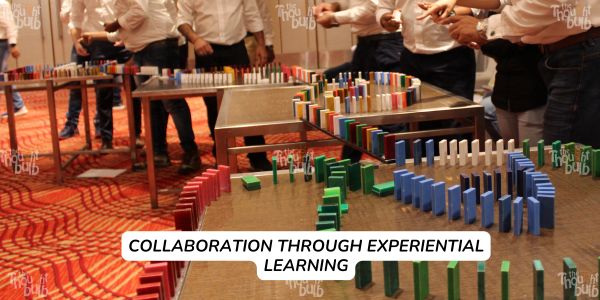
We don’t do surface-level engagement. We embed robust theoretical frameworks into each activity, not in a textbook way, but in a way that feels natural, relatable, and real.
Let’s break this down:
During the Roman Olympics Challenge, teams unknowingly navigate Tuckman’s Team Development Model – forming, storming, norming, performing – just like real teams do.
The Wheels of Change on Kurt Lewin’s Change Model, mapping how teams initiate, manage, and sustain change.
These models are stitched subtly into the storyline of each activity, allowing learning to emerge organically, not forcefully.
The Debrief: Where Magic Turns Into Meaning
Once the activity ends, we enter the most transformational space of our process: The Debrief.
This isn’t a summary or a lecture. It’s a mirror. A psychologically safe environment where insights are drawn out, not delivered.
Our facilitators step in — not with answers, but with powerful, reflective questions:
“What surprised you most about your team’s behavior?”
“How did your team handle unexpected obstacles?”
“What would you do differently if this were a live work project?”
We follow a layered debrief model:
What happened? (Recount the experience)
So what? (Understand the impact)
Now what? (Plan action and application)
Our Toolbox: Thought Bulb's Signature Debrief Tools
To ensure every debrief is meaningful and personalized, we bring in a range of facilitation tools based on the program design and participant energy. Here’s a sneak peek:
1. Start–Stop–Continue
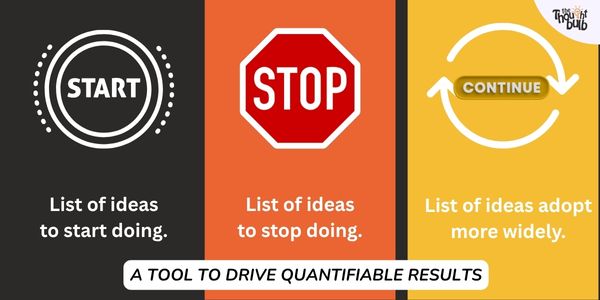
A classic, no-fluff reflection framework that invites participants to evaluate:
What behaviors they should start doing
What they should stop doing
And what they must continue doing
It sounds simple, but it sparks deep self-awareness, accountability, and team alignment. Whether it’s about dominating conversations, micromanaging, or showing more appreciation, the tool gets people to call it out — constructively.
Best used when you want to drive ownership around team habits, communication styles, or collaboration patterns.
2. Sailboat Retrospective
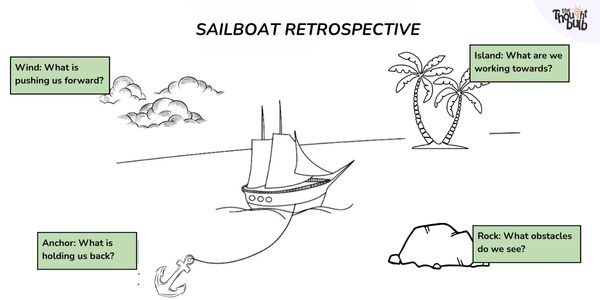
A visual metaphor that transforms debrief into a strategic dialogue. Participants reflect on:
Winds – What’s pushing us forward?
Anchors – What’s holding us back?
Icebergs – What risks are hidden beneath the surface?
This tool brings business acumen into the room in a non-threatening, creative way, making it perfect for teams dealing with change, silos, or planning future roadmaps.
Use this when your objective is strategy, clarity, and surfacing unspoken blockers within the team.
3. The PREP Model – Point, Reason, Example, Point
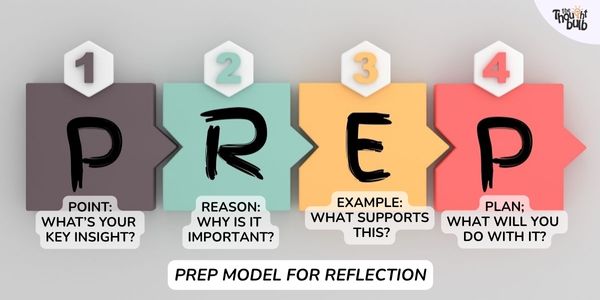
Communication is at the heart of every team challenge. The PREP model empowers participants to structure feedback, communicate assertively, and disagree without disrespect.
We use this during debriefs that touch upon conflict, feedback loops, or broken communication patterns. It gives people a script — a safe format to voice what they felt, without the fluff or the fire.
Ideal for communication-heavy teams or leadership groups navigating difficult conversations.
4. The 3H Model – Head, Heart, Hand
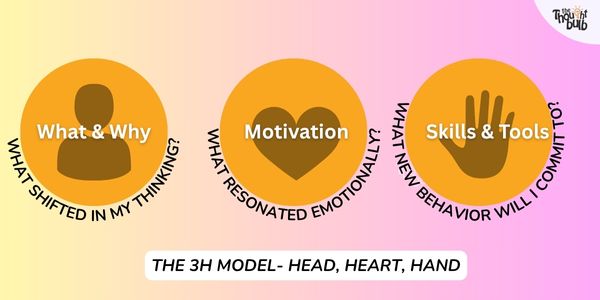
This is our go-to for holistic reflection. It allows participants to process the experience from three angles:
Head – What did I learn?
Heart – What did I feel?
Hand – What will I do next?
It touches both the rational and emotional sides of participants, making learning feel personal, meaningful, and actionable.
Perfect for leadership cohorts, new managers, and team offsites where emotional intelligence matters.
5. Powerful vs. Powerless Behaviors
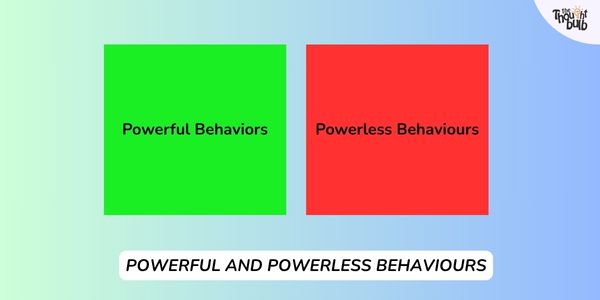
A bold reflection tool where participants pen down:
Behaviors that make them feel powerful – confident, heard, uplifted
Behaviors that make them feel powerless – ignored, shut down, insecure
This exercise builds empathy, emotional awareness, and team cohesion. We often facilitate it silently first, then open it up for discussion — and the insights are raw, real, and revealing.
Use this when exploring trust, leadership presence, or emotional intelligence in team dynamics.
6. The Reflection Circle
A sacred space. A judgment-free zone. A circle of voices where every participant gets to share their reflections, takeaways, or even just a word that captures their experience.
The Reflection Circle fosters psychological safety and promotes collective meaning-making. It’s not about right or wrong — it’s about presence and perspective.
Ideal as a closing debrief tool to wrap up intense, emotional, or transformational experiences.
Important to Know
These tools are not plug-and-play checklists. At TTB, we use them like a conductor uses instruments — contextually, musically, and intuitively. A lot depends on:
The dynamics of the group
The learning objectives of the session
The energy in the room
And most importantly, what’s not being said, but needs to emerge
That’s where our facilitators step in. They don’t just run a tool — they hold space. They listen. They ask powerful questions. And they guide teams to the insights that matter most.
Real Learning, Real Life Impact
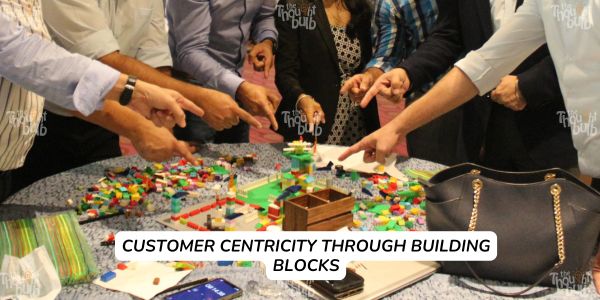 Customer centricity through building blocks" loading="lazy" />
You’ll hear comments like:
“I never realised how I dominate conversations until now.”
“We didn’t listen to each other in the beginning, but look at how we aligned by the end.”
“This reminds me exactly of how we handled the product launch last month.”
That’s what we aim for. Reflection that leads to realization, and realization that fuels change.
Whether the goal is to build collaboration, drive innovation, enhance communication, or navigate change, we ensure every participant walks away with not just a memory but a mindset shift.
Tips to Maximize Learning Post-Activity
Whether you’re running a team-building program internally or with a partner like The Thought Bulb, here are a few tips to keep learning alive after the event:
Plan for the debrief, not just the activity. Set aside time to reflect and discuss.
Use real-life prompts. Ask participants to link activity learnings with current workplace situations.
Make it personal. Encourage individual reflection journals or team learning huddles.
Assign “application buddies.” Let participants check in on each other post-program to track action points.
Follow-up. Whether it’s a coffee chat, a workshop recap email, or a leadership dialogue, keep the momentum going.
Final Thoughts: Don’t End with Fun, End with Purpose
At The Thought Bulb, we believe the final few minutes of a team-building program are just the beginning of change. When done right, a powerful debrief bridges the gap between experience and application. It transforms a fun offsite into a business-aligned learning intervention.
So, the next time your team gears up for an activity, remember: It’s not just about what they do. It’s about what they learn, reflect, and take back with them.