Change is no longer a one-time event - it’s an ongoing reality. Whether it’s shifting to a hybrid work model, adopting a new HR tech platform, or transforming workplace culture, today’s organizations face constant waves of organizational change.
In this dynamic environment, HR professionals and leaders must go beyond announcements and policies. They need to guide people through change with empathy, clarity, and intention. That’s where Kurt Lewin’s Change Model stands the test of time.
Understanding Kurt Lewin’s Change Model
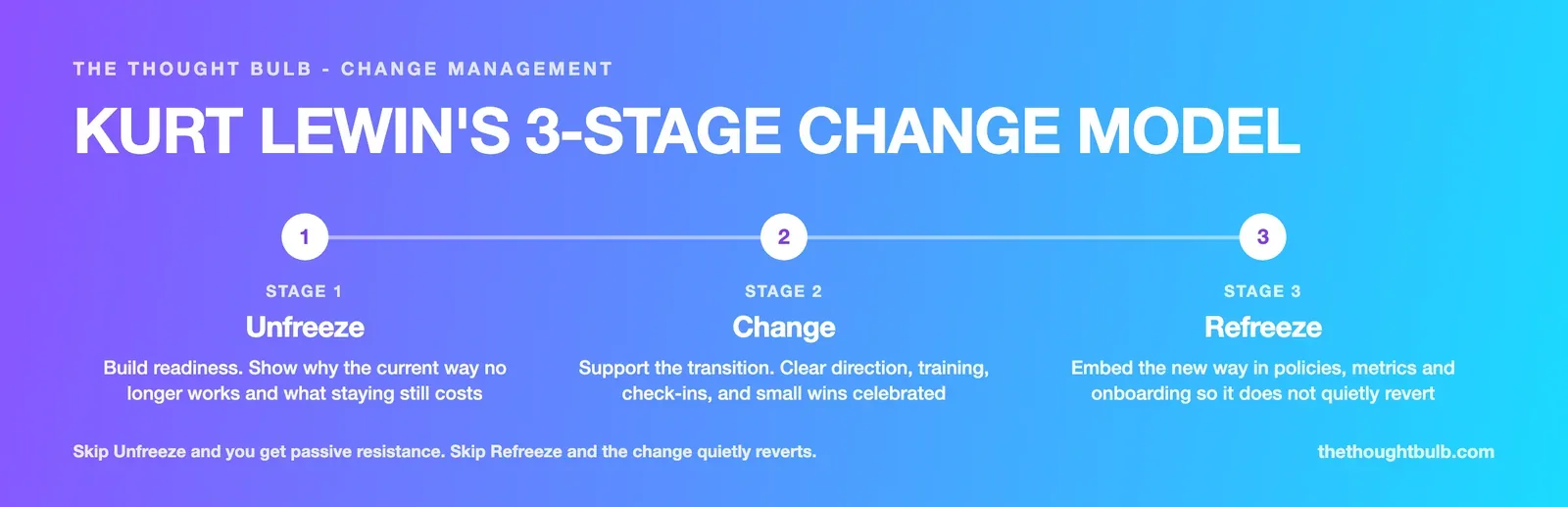
Pioneered by social psychologist Kurt Lewin, this timeless model outlines a simple yet powerful three-stage framework for leading transformation:
Unfreeze – Prepare people for the change.
Change – Transition to the new way.
Refreeze – Stabilize and reinforce the change.
While often viewed as theoretical, this change management model is highly practical. When applied intentionally, it reduces resistance, builds trust, and fosters a culture of adaptability in the workplace.
Stage 1: Unfreeze - Creating Readiness for Change
Unfreezing means breaking people out of autopilot. It’s about helping individuals and teams realize that the current way of working may no longer be effective.
Key questions HR leaders can ask to start unfreezing:
Why are we changing?
What’s no longer working?
What’s the risk of staying the same?
If leaders skip this step, they often encounter passive resistance. But when employees are invited into the “why” behind the change, they begin to engage rather than oppose.
In practice: Before introducing a new performance management system, HR can share feedback and data that highlight delays or inconsistencies in the current process. Stories, metrics, and even everyday frustrations can spark awareness and openness.
Stage 2: Change - Navigating the Transition
Once awareness is built, the transition begins. This stage often brings uncertainty and discomfort, which makes change leadership and employee engagement critical.
Leaders and HR can support this phase by:
Providing a clear direction - even when outcomes are evolving.
Offering training, check-ins, and continuous communication.
Normalizing discomfort while celebrating small wins.
Here, HR plays a pivotal role as change coaches, listening to concerns, adjusting strategies based on feedback, and offering real-time support.
In practice: If a company is rolling out a hybrid work policy, HR can pilot it with one team, gather insights, and iterate before scaling. This shows responsiveness and flexibility, building trust in the process.
Stage 3: Refreeze - Embedding the New Way
Many change initiatives fail not during the transition but afterward - when people quietly return to old habits. Refreezing is about embedding the new behaviors, celebrating progress, and making the change stick.
To ensure lasting impact, HR and leaders can:
Recognize and reward new behaviors.
Integrate changes into policies, performance metrics, and onboarding.
Share stories that reflect success in the new system.
In practice: After introducing a new learning management platform, HR can host monthly spotlight sessions where employees share how they used the platform to solve real business problems - turning adoption into habit and culture.
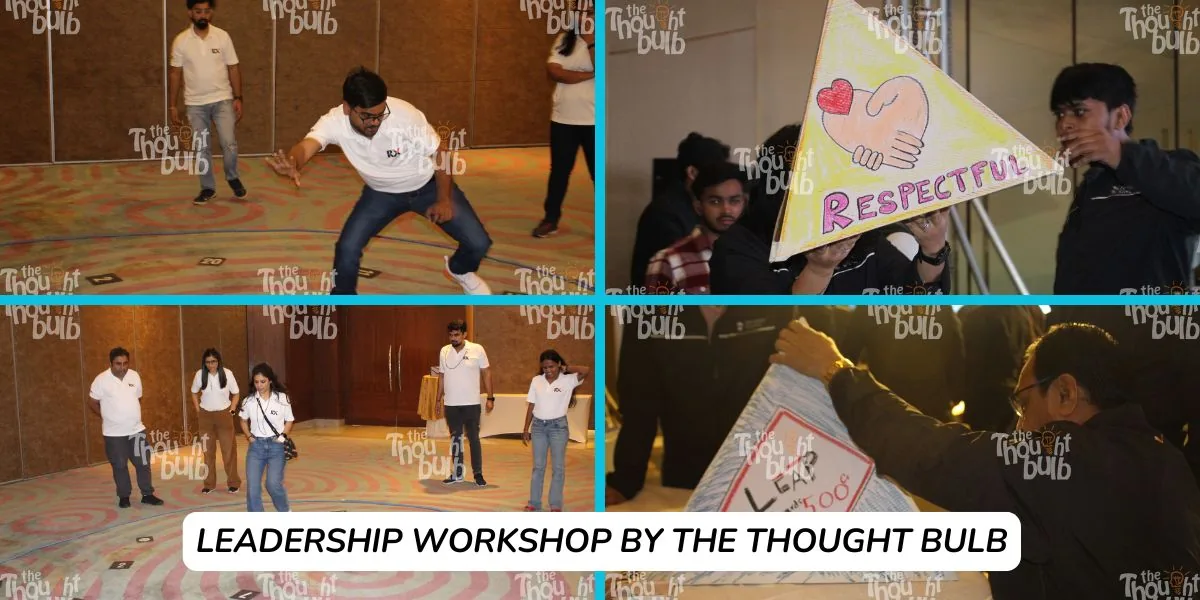
Leadership Workshop By The Thought Bulb:
 Everyday Leadership Applying Lewin’s Model in Daily Decisions" loading="lazy" />
We believe leadership isn’t reserved for titles or big transformations. It’s in the everyday choices—how teams adapt, communicate, and grow together.
That’s why we run our Everyday Leadership workshop—where participants learn to apply Lewin’s Change Model to real-life workplace moments.
Here’s how the model works in daily decision-making:
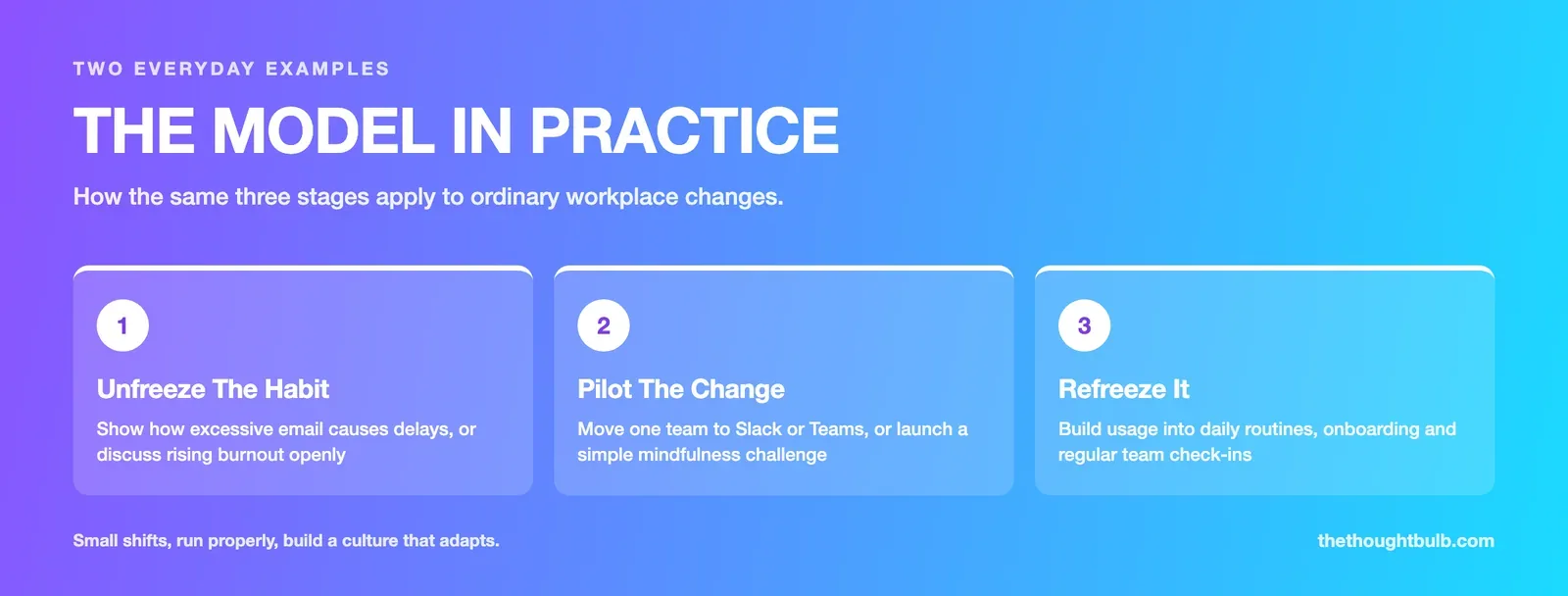
Situation 1: Moving from email to collaboration tools
Unfreeze: Show how excessive emails cause delays.
Change: Start pilot teams on a tool like Slack or Microsoft Teams.
Refreeze: Integrate usage into daily routines and new-hire onboarding.
Situation 2: Introducing a wellness program
Unfreeze: Discuss rising burnout trends.
Change: Launch simple mindfulness or movement challenges.
Refreeze: Make wellness check-ins a regular team practice.
These small shifts build a strong culture of adaptability and resilience—traits vital for future-ready teams.
Final Thought: Leading Change with Intention
In today’s fast-paced world, change can feel chaotic. But when grounded in intention and guided by structured frameworks like Kurt Lewin’s Change Model, HR professionals and leaders can turn disruption into opportunity.
Because at its core, successful change management isn’t about systems or processes - it’s about people. And when change is led with empathy and clarity, transformation isn’t just possible - it becomes sustainable.
Also, explore our blog: "Culture Building Through Hybrid Experiences: The New Role of HR" to understand how connection is becoming HR's superpower.