
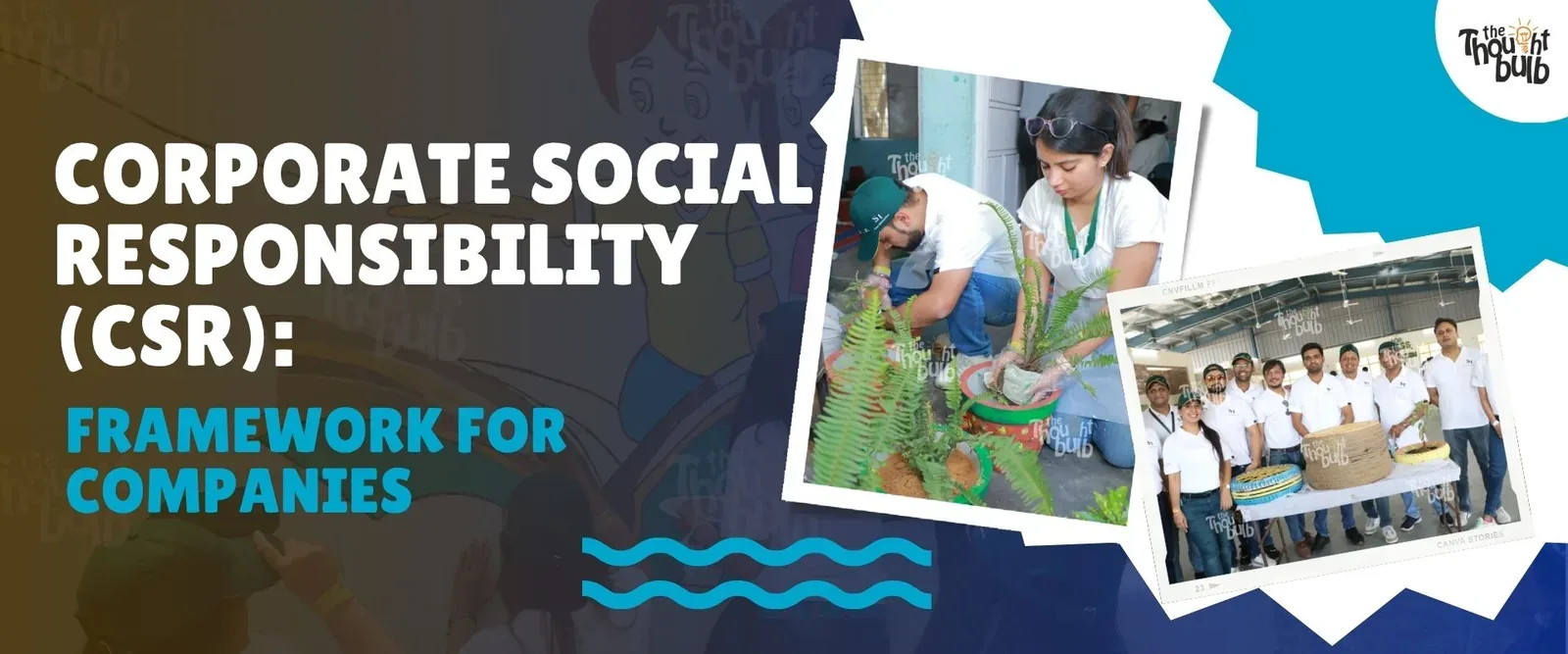
Corporate Social Responsibility (CSR) has moved far beyond being a buzzword—it’s now a core part of how progressive companies define success. Today’s employees, customers, and investors expect organizations to go beyond profits and contribute meaningfully to society.
But how do you do that, and where do you start?
Whether you're a startup taking your first steps into CSR or an established company looking to refresh your approach, this guide walks you through everything you need to know.
What Is a CSR Framework?
A CSR framework is the structured approach a company uses to plan, run and measure its social responsibility work — typically organised around focus areas (environment, community, employee volunteering), a budget and governance owner, and a set of metrics tied to business outcomes. A clear framework is what separates one-off CSR events from a programme that compounds year over year. Below, we break down what CSR is, why it matters, and how to build yours.
What is CSR?
Corporate Social Responsibility (CSR) refers to a company’s efforts to positively impact society, the environment, and the economy. It involves initiatives that go beyond legal compliance to actively contribute to sustainable development and social good.
Why CSR Matters?
CSR goes beyond goodwill—it drives real business value. Effective CSR strengthens your brand, boosts employee morale, earns customer loyalty, and attracts responsible investors. Plus, in certain regions, it’s mandated by law.
Brand Reputation: Companies with strong CSR programs build trust and goodwill.
Employee Engagement: People want to work for companies that make a difference.
Customer Loyalty: Consumers are increasingly supporting ethical brands.
Investor Confidence: Responsible practices can attract ESG-focused investors.
Legal Mandates: In countries like India, CSR is legally mandated for certain companies under the Companies Act, 2013.
Global Compliance and CSR Laws
Corporate Social Responsibility is more than a voluntary commitment in many parts of the world. Numerous countries have established legal frameworks mandating CSR activities, ensuring companies contribute to social and environmental causes. Navigating these global regulations helps businesses maintain ethical standards and maximize their positive impact across borders.
Key CSR Laws Around the World:
India: The Companies Act, 2013 makes CSR mandatory for companies meeting specific net worth, turnover, or profit thresholds. Companies must spend at least 2% of their average net profits over the last three years on approved CSR activities and report their spending in annual reports.
United Kingdom: While CSR isn't mandatory, the UK Companies Act 2006 requires directors to consider community and environmental impacts when making decisions. UK-listed companies also must report on environmental, employee, and social matters in their strategic reviews.
European Union: The EU Corporate Sustainability Reporting Directive (CSRD) mandates large companies and listed SMEs to disclose their social and environmental impact, including human rights and anti-corruption efforts, aligning with the EU Green Deal.
United States: There are no federal CSR laws, but companies are subject to sector-specific regulations (like the SEC’s ESG disclosure guidance) and increasing pressure from investors and consumers for transparent environmental and social practices.
Australia: The Modern Slavery Act 2018 mandates large entities to report on risks of modern slavery in their operations and supply chains, emphasizing ethical sourcing as part of broader CSR efforts.
Why Compliance Matters:
Avoid legal penalties and reputational damage
Gain access to socially responsible investment funds
Build trust with international partners and consumers
Ensure CSR spending aligns with global sustainability goals (e.g., UN SDGs)
Companies expanding globally or operating across multiple jurisdictions must monitor CSR-related regulations and adapt strategies accordingly. Partnering with local legal advisors or international NGOs can help ensure compliance while maximizing social impact.
Types of CSR Activities
CSR can take many forms. Here are the four major types:
1. Environmentally Responsible CSR

Environmental CSR activities help businesses take ownership of their ecological impact. From reducing emissions to adopting green technologies, it's about building a climate-conscious future.
Tree plantations and afforestation drives
Reducing carbon footprints
Waste management & recycling programs
Sustainable product packaging
Renewable energy adoption
2. Socially Impactful CSR

This pillar of Corporate Social Responsibility focuses on improving quality of life. Companies that invest in people-centric causes foster social equity, inclusion, and long-term community upliftment.
Education programs and scholarships
Healthcare camps and disease awareness
Women empowerment & gender equality initiatives
Child welfare and nutrition
Senior citizen support programs
3. Economically Inclusive CSR
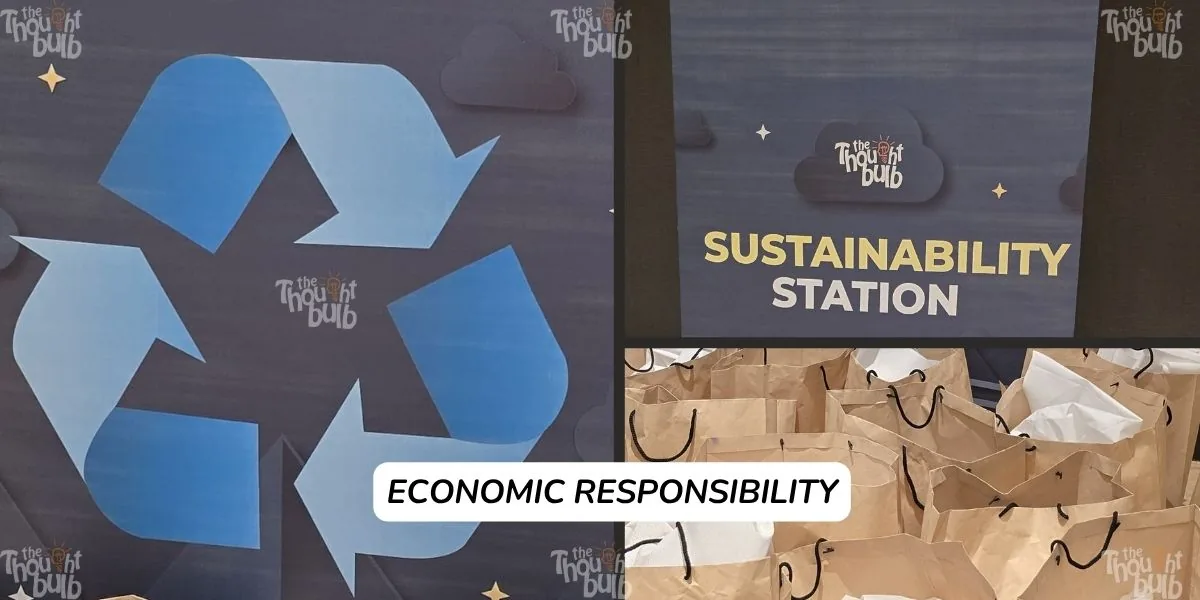
CSR for companies isn’t just about giving—it’s about enabling. Supporting small businesses, creating jobs, and encouraging ethical trade drives inclusive growth at the grassroots level.
Fair trade practices
Supporting local artisans and vendors
Skill development and livelihood training
Micro-financing or entrepreneurship support
4. Ethically Grounded CSR

Ethical responsibility ensures your CSR strategy is rooted in integrity. Upholding transparent practices, fair labor, and diversity reflects a company’s true commitment to doing good business.
Transparent governance
Anti-corruption measures
Fair wages and safe working conditions
Inclusion and diversity policies
Types of Beneficiaries
An impactful CSR initiative begins with understanding who it helps. Companies can direct their CSR activities toward diverse beneficiary groups, creating inclusive, meaningful change across society.
Children and students
Senior citizens and old age home residents
Physically challenged individuals
Women from underserved communities
Marginalized or tribal populations
Underprivileged youth and job seekers
Frontline and essential service workers
CSR Activity Ideas for the Workplace
CSR doesn’t have to be complicated—it starts with small, meaningful actions. From education to environment and even virtual efforts, here are hands-on ideas your team can implement.
Here are practical CSR activities companies can implement:
Education: Donate books, sponsor schools, teach children
Environment: Plant trees, clean rivers, ban single-use plastic
Health: Organize blood donation camps, eye checkups
Community: Build toilets, provide clean water, support orphanages
Workplace: Hire from underrepresented groups, reduce office waste
Remote: Virtual fundraisers, online mentorship, donation matching
How to Build a CSR Strategy: Step-by-Step
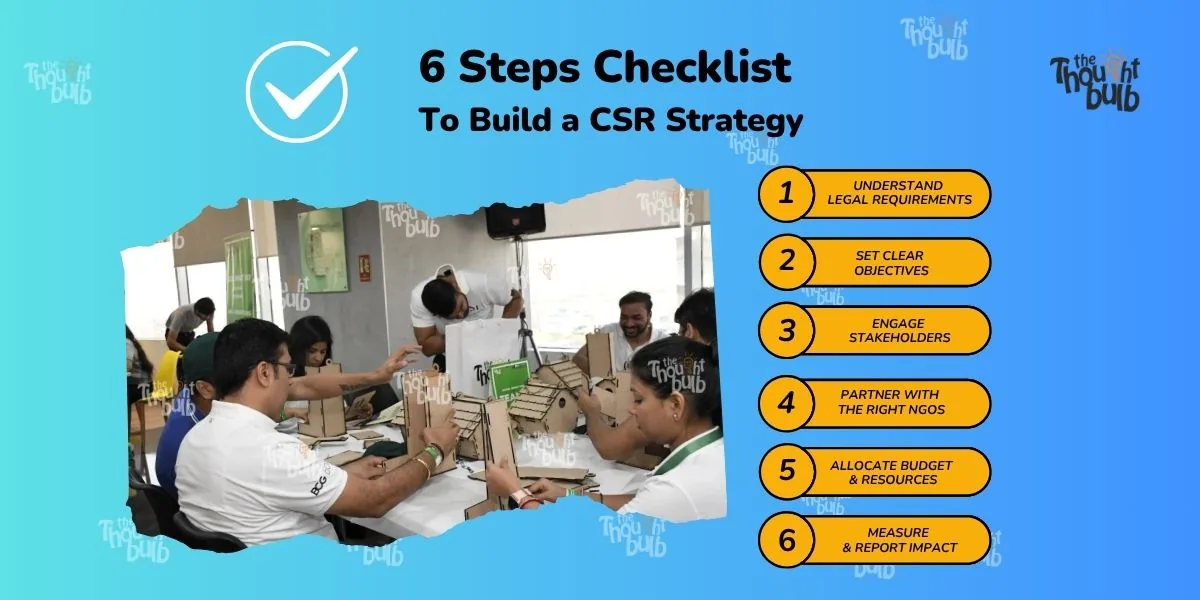
Planning your CSR efforts is just as important as the execution. This step-by-step approach helps ensure your initiatives are focused, measurable, and aligned with your long-term vision.
1. Understand Legal Requirements If applicable (e.g., in India), comply with mandatory CSR rules regarding percentage of profits and eligible activities.
2. Set Clear Objectives Define your CSR goals based on company values, community needs, and sustainability priorities.
3. Engage Stakeholders Involve employees, leadership, and community members in selecting causes and designing initiatives.
4. Partner with the Right NGOs Work with credible organizations that align with your cause, can scale impact, and ensure accountability.
5. Allocate Budget & Resources Decide how much time, money, and people you can commit annually or quarterly.
6. Measure & Report Impact Track key metrics like number of beneficiaries, hours volunteered, or funds raised. Publish annual CSR reports to build transparency.
Measuring CSR Impact
To understand whether your CSR initiatives are making a real difference, it's essential to track both data and human stories. Here’s how you can measure success effectively.
Use both quantitative and qualitative metrics:
Number of lives impacted
Environmental units saved (water, trees, energy)
Volunteer hours contributed
Employee participation rates
Stories/testimonials from beneficiaries
CSR Trends to Watch in 2025 and Beyond
As CSR continues to evolve, companies are embracing more innovative, inclusive, and tech-enabled approaches. Here are the top trends shaping the future of responsible business.
Employee-led volunteering as a culture builder
Tech for Good: AI, data, and platforms driving social change
Climate-positive actions over climate-neutral ones
Cross-sector collaborations between corporates and social enterprises
Storytelling & Transparency via digital CSR storytelling
Final Word
CSR is no longer a "nice-to-have"—it’s an essential aspect of doing business ethically and sustainably. Whether you're hosting a blood drive, mentoring students, or helping reduce your carbon footprint, every action counts.
Done right, CSR not only changes the world—it transforms your workplace culture and legacy.