Introduction: Why Team Building Gets a Bad Rap
For many employees, team-building workshops feel like just another mandatory workday event. The usual icebreakers, trust falls, and scavenger hunts can seem forced, adding little value to their daily work. The result? Employees disengage, viewing these activities as a distraction rather than an opportunity.
But what if team building could be different? When experiential learning and expert facilitation take center stage, team-building transforms from an obligation into a powerful tool for collaboration, trust, and workplace growth. Employees become proactive participants, vocal about their learning, viewpoints, and experiences, making the session more dynamic and meaningful.
1. The Real Reason Employees Resist Team Building
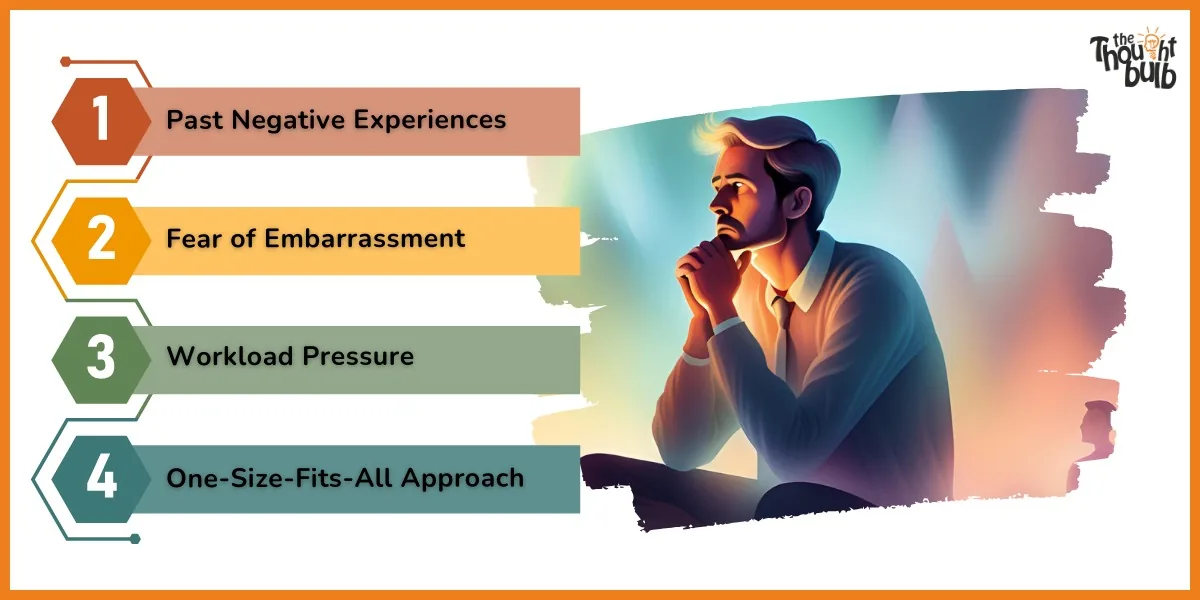
Employees often have legitimate reasons for resisting team-building activities. Here’s why:
Past Negative Experiences – Many employees recall dull, unstructured, or irrelevant activities that lacked a clear purpose and didn’t translate into workplace improvements.
Fear of Embarrassment – Exercises like public speaking, trust falls, or role-playing can make employees feel uncomfortable, discouraging participation.
Workload Pressure – When deadlines are looming, employees see team-building as an interruption rather than an investment in growth.
One-Size-Fits-All Approach – Generic team-building activities fail to resonate with diverse teams and personalities, making participation feel obligatory rather than meaningful.
2. Forced Fun vs. True Engagement: What’s the Difference?
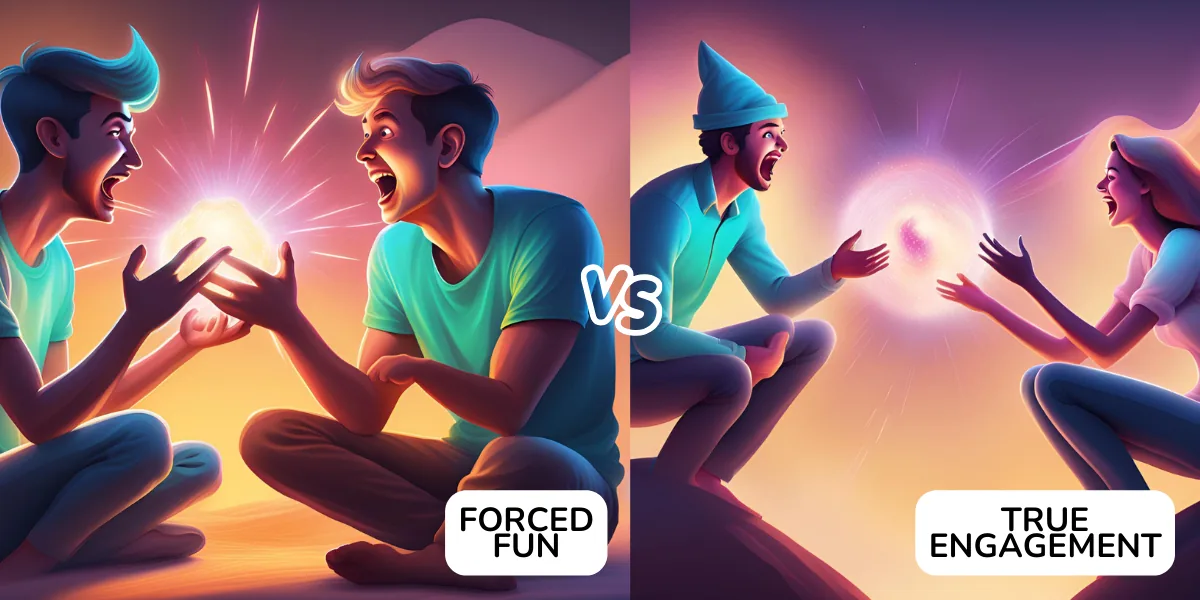
Not all team-building experiences are created equal. Understanding the distinction between forced fun and true engagement is key.
Forced Fun feels like an obligation. Employees participate because they have to, not because they see value in it. There’s no clear connection to their work, leading to minimal engagement and takeaways.
True Engagement happens when employees find real value in the experience. They walk away with insights, strengthened team bonds, and practical skills they can apply to their daily roles.
3. Shifting Mindsets: How to Make Team Building Work
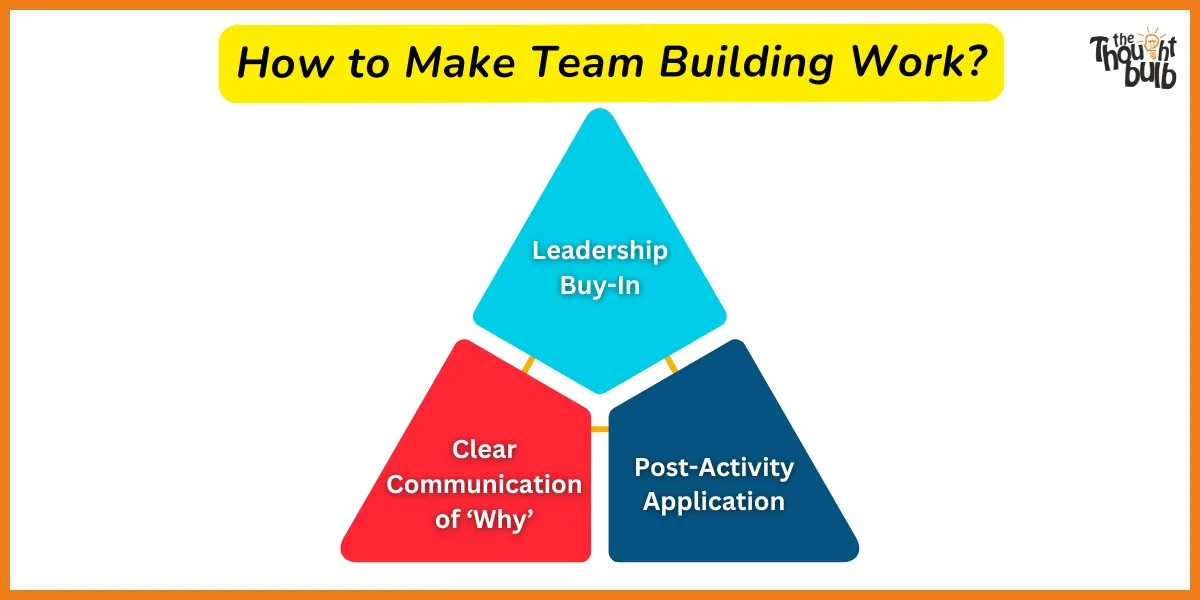
For team building to be truly effective, organizations must shift how they approach it. Here’s how:
Leadership Buy-In – When managers actively participate, employees see the value and engage more willingly.
Clear Communication of ‘Why’ – Employees need to understand the purpose of team-building activities, not just be told to attend.
Post-Activity Application – The learning shouldn’t stop after the event. Encouraging teams to apply takeaways in their daily roles ensures long-term impact.
4. Examples of ways to create buzz around Team Building?
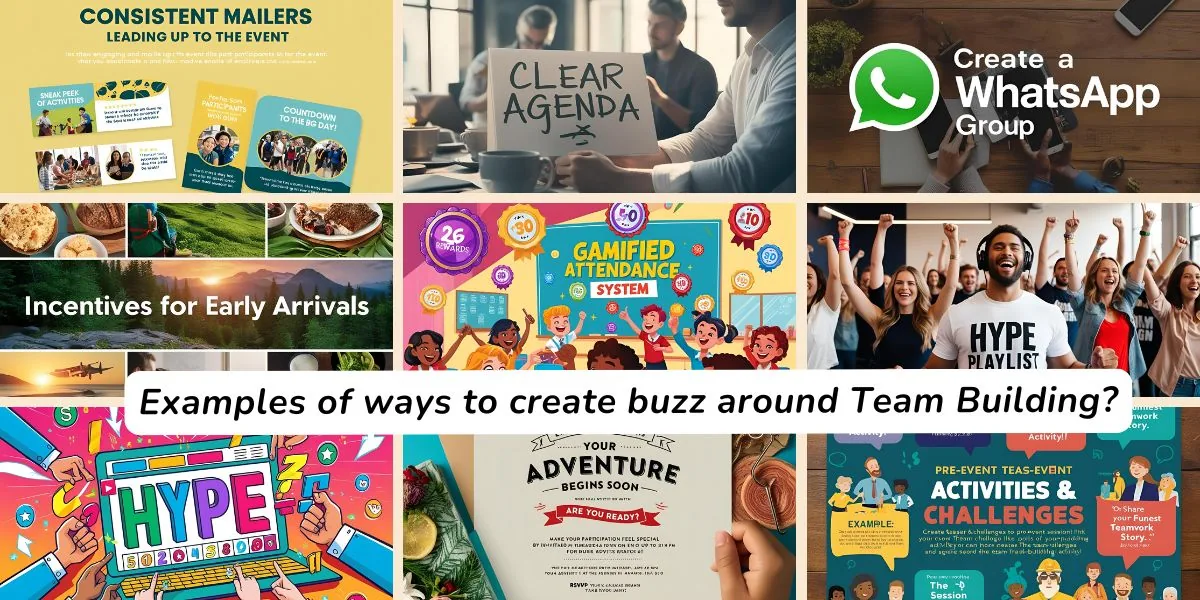
Creating excitement before a team-building session increases participation and engagement. Here’s how you can build anticipation:
Consistent Mailers Send engaging emails leading up to the event. Share sneak peeks of activities, testimonials from past participants, or a countdown to the big day.
Clear Agenda People love knowing what to expect! Share a well-structured agenda outlining the key sessions and objectives. This sets the right expectations and builds curiosity.
Video Snapshots of Leaders Encourage senior leaders to record short video messages sharing why the event matters. When leadership is excited, employees follow suit!
Incentives for Early Arrivals Reward punctuality with simple perks like early breakfast, premium coffee, or small goodies. It encourages enthusiasm right from the start.
Create a WhatsApp Group A dedicated WhatsApp group keeps everyone in the loop! Share updates, reminders, and fun teaser content leading up to the event. Bonus: It helps sustain engagement even after the program.
Teaser Activities & Challenges Create pre-event challenges like quizzes, puzzles, or polls related to the upcoming session. Example: "Guess the Team-Building Activity!" or "Share Your Funniest Teamwork Story."
Gamify Attendance Introduce a point-based system where employees earn rewards for engagement. Points can be given for replying to teaser emails, participating in polls, or arriving on time.
Podcast or Internal Blog Posts Feature short podcasts or blogs where past participants share their experiences, takeaways, and fun moments from previous team-building events.
Exclusive Invitations Make participation feel special by sending personalized invites (digital or printed) with a creative hook like, "Your adventure begins soon—are you ready?"
Employee Ambassadors Appoint a few enthusiastic team members as "buzz ambassadors" to casually talk about the event, answer questions, and build excitement among their peers.
Hype Playlist Create a Spotify playlist with energizing songs to get everyone in the right mindset. Share it before the event and play it during breaks to keep up the momentum.
Behind-the-Scenes Sneak Peeks Share photos or videos of event prep—maybe a glimpse of the venue, facilitators setting up, or teaser shots of props and materials.
Mystery Element Keep some part of the event a surprise! Tease employees with a "mystery challenge" or "special guest" without revealing details. Curiosity = engagement!
Hype Countdown on Social Media or Intranet Post a daily countdown with interactive content like polls, fun facts, or short testimonials from leadership.
5. Make your team building experiential in nature
What Is an Experiential Program?
An experiential team-building program goes beyond conventional workshops by actively engaging participants in hands-on, real-world simulations. Instead of passively absorbing information through lectures or PowerPoint slides, employees learn by doing—solving challenges, making decisions, and reflecting on their experiences.
(image: Hands-on learning in action—teams solving challenges through real-world simulations.)
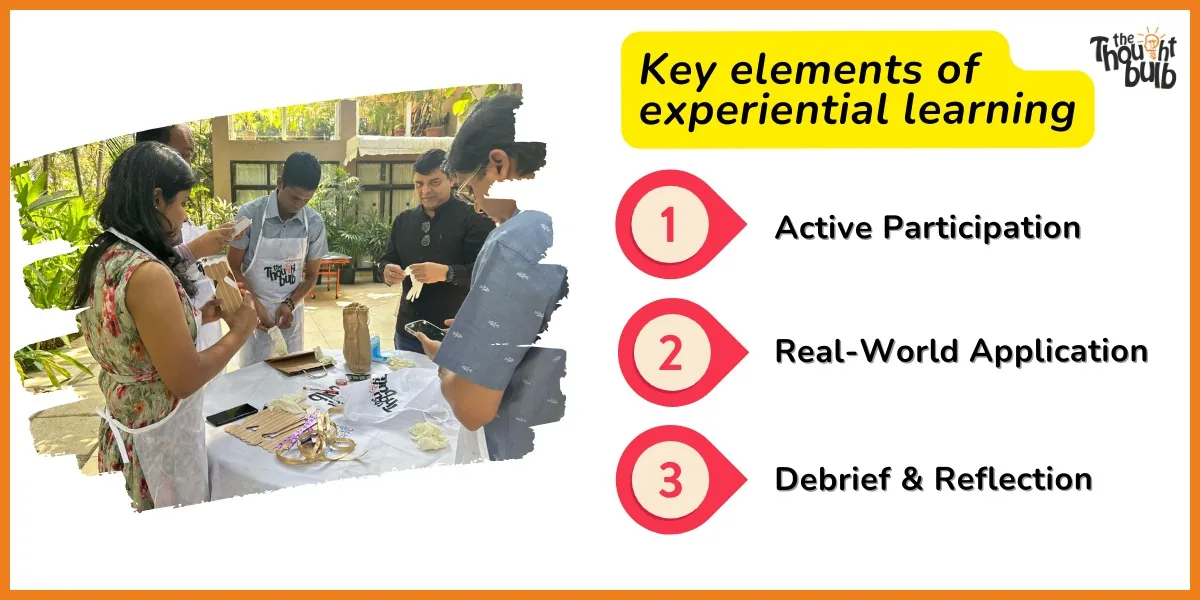
Key elements of experiential learning include:
Active Participation: Employees are not just spectators; they actively engage in activities that mirror workplace scenarios.
Real-World Application: Exercises are structured to mimic actual business challenges, ensuring relevance and direct applicability.
Debrief & Reflection: A critical part of experiential learning is structured reflection, where participants connect insights from activities to workplace behavior and strategies.
Tie the Program with an Objective
For team-building to create lasting impact, it must align with a clear business objective. Rather than engaging in activities for the sake of fun, each session should address a specific workplace challenge.
Here’s how:
Breaking Silos: If departments work in isolation, activities should foster inter-team collaboration and build cross-functional trust.
Fostering Leadership: If leadership development is the goal, experiential activities should challenge employees to take ownership, make decisions, and lead under pressure.
Driving Innovation: If creativity is the focus, activities should push teams to think outside the box, experiment, and embrace risk-taking.
Real Life Case Studies Of An Experiential Program
At The Thought Bulb, we’ve seen firsthand how experiential team-building can transform teams from disengaged groups into highly collaborative units. Here are some examples where meaningful engagement led to tangible results:
Google Cloud CXOs – From Strategy to Synergy
(image: Google Cloud CXOs strategizing during the tech-driven treasure hunt at Taj Falaknuma Palace.)
At a heritage-themed team-building event at the Taj Falaknuma Palace, Google Cloud CXOs took part in a tech-driven treasure hunt. This immersive challenge wasn’t just about solving clues—it encouraged strategic thinking, quick decision-making, and seamless collaboration. The result? Stronger professional connections and a deeper appreciation for teamwork, reinforced by real-world business parallels.
BCG’s Space-Themed Expedition – 450 Minds, One Mission
(image: BCG employees collaborating during the space-themed expedition, tackling challenges that foster teamwork and innovation.)
In a full-day, space-themed team-building experience, 450 BCG employees discovered the power of cross-functional collaboration. With challenges designed to highlight customer-centricity, inclusion, and teamwork, the experience broke down silos and unified teams under a shared mission. Post-event feedback showed a 20% increase in team cohesion and alignment with business objectives.
How Thought Bulb Creates Meaningful Team Building?
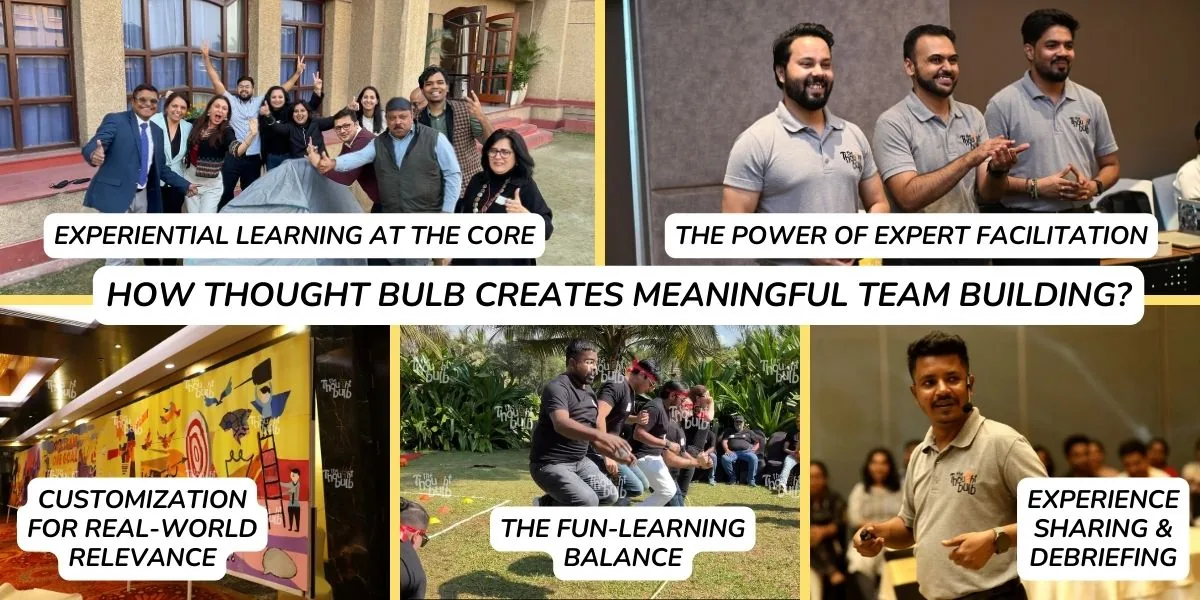
At The Thought Bulb, we don’t believe in generic, one-size-fits-all activities. Instead, we design experiential team-building programs that blend learning, engagement, and real-world application. Here’s how we create truly impactful experiences:
Experiential Learning at the Core Unlike traditional training sessions, experiential learning immerses participants in hands-on challenges that mirror real workplace scenarios. Instead of just discussing leadership, collaboration, or problem-solving, employees experience these skills in action.
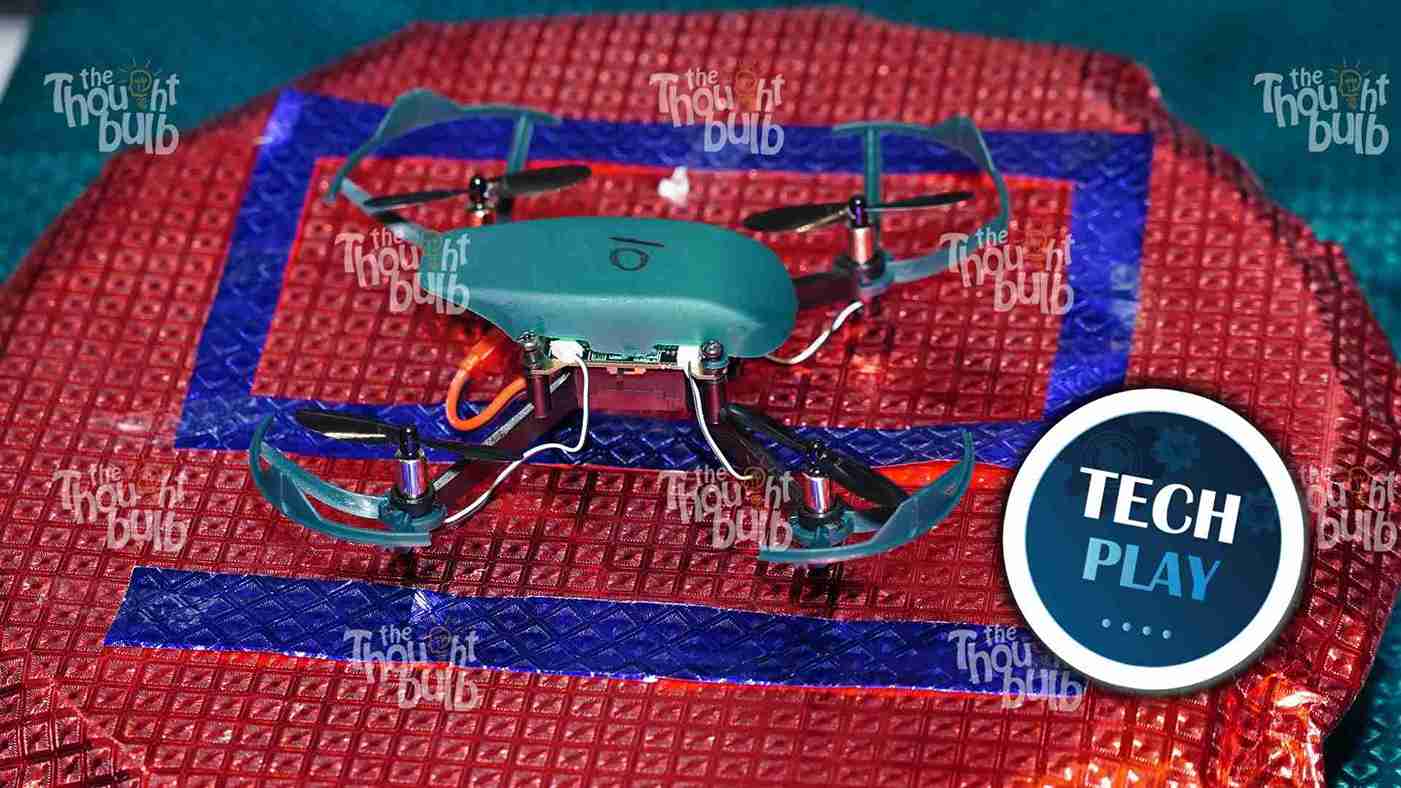
Example: During the Drone Around the World Challenge with Siemens, participants didn’t just hear about teamwork—they had to build and race drones collaboratively. This hands-on activity reinforced strategic thinking, coordination, and adaptability, turning abstract concepts into tangible lessons.
The Power of Expert Facilitation A well-designed activity is only as impactful as its facilitation. At Thought Bulb, our facilitators don’t just lead games—they guide structured reflections that turn experiences into actionable insights.
Example: In the Everyday Leadership workshop for Swiss Re, facilitators helped participants connect their challenges to leadership frameworks, ensuring takeaways were directly applicable to their roles. Participants left with clearer leadership strategies and a stronger sense of team alignment.
Customization for Real-World Relevance Every team is different, and so are their challenges. That’s why we customize every program to align with a company’s goals, values, and team dynamics.
Example: Flipkart’s management team wanted to focus on Change Management, Empathy, and Trust Building. Our customized full-day session integrated these themes into engaging activities, ensuring every takeaway was immediately useful in their workplace.
The Fun-Learning Balance Engagement is key to learning. We ensure that every activity is exciting yet insightful, striking the perfect balance between fun and professional growth.
Example: During the Olympics Challenge for Perfetti’s Sales Team, sales behaviors were transformed into competitive, sports-based activities, making learning dynamic, interactive, and retention-friendly.
Experience Sharing & Debriefing The real magic happens after the activity. Post-event debriefs help teams reflect, share insights, and apply lessons to their work. This process cements learning outcomes, ensuring that team-building doesn’t end when the session does.
Example: The Udaipur City Race for Google was more than just a fun event—it sparked meaningful discussions on teamwork, decision-making, and problem-solving. The structured debrief afterward ensured that the excitement translated into real workplace improvements.
When team-building is experiential, well-facilitated, and customized, it transforms from just an event into a catalyst for growth, connection, and organizational success.
Closing Thought: It’s Not Just a Game—It’s Growth
Team-building isn’t about forcing fun—it’s about crafting meaningful experiences that foster collaboration, adaptability, and engagement. When done right, it shifts teams from resistance to realization, turning skeptics into advocates.
Are you ready to transform your team-building experience? Connect with The Thought Bulb and let’s create team-building programs that truly matter!