Let’s set the scene.
You’ve planned what you think is a fun, engaging team-building session. There’s a cool venue, well-thought-out games, and even snacks. But instead of excitement, you’re met with sighs, silence, or worse—eye rolls.
You hear comments like:
"Ugh, not another icebreaker." "Can I skip this? I have so much work." "This stuff is so forced."
If you’ve ever experienced this kind of reaction, you’re not alone. A surprising number of leaders face resistance to team-building, especially in high-pressure environments or with diverse teams.
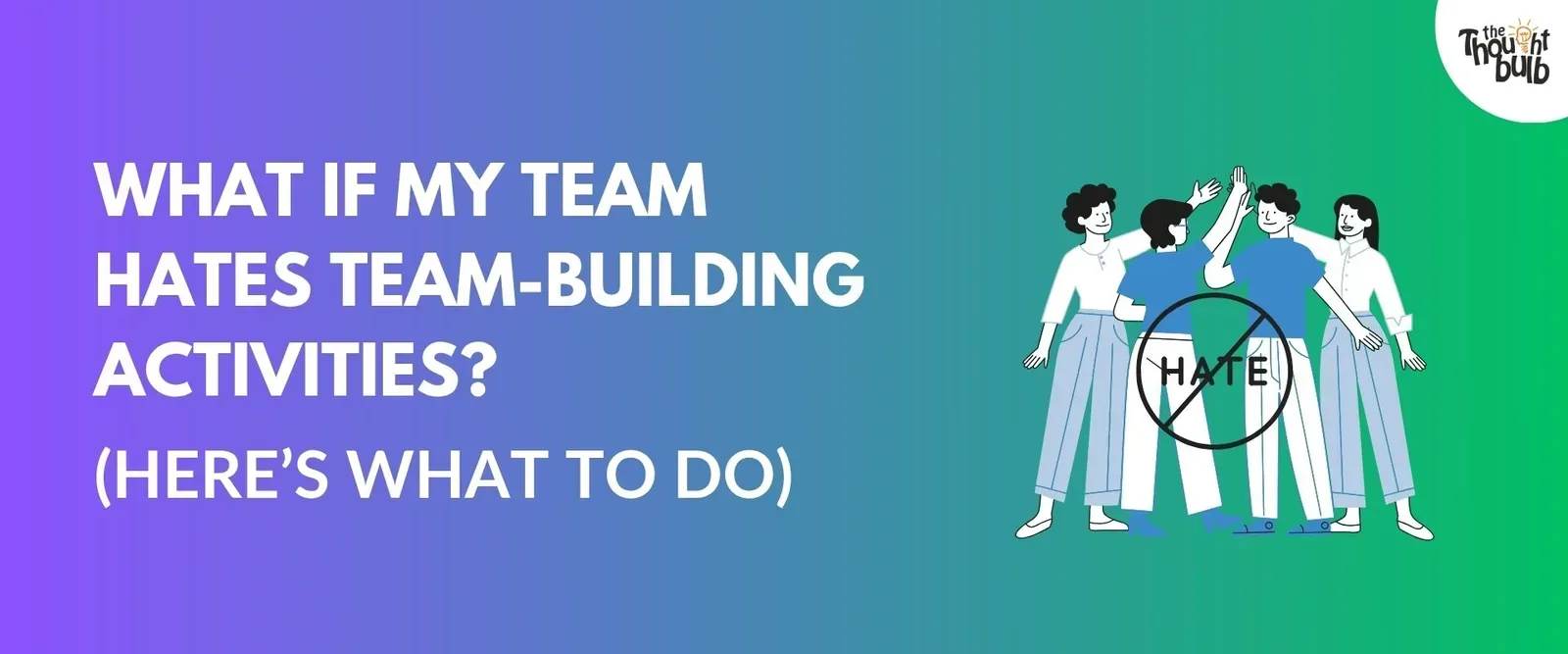
So, what do you do when your team hates team-building?
You don’t abandon it. You redesign it.
In this blog, we’ll explore:
Why teams push back against team-building
What myths and past experiences are blocking them
How to reset the narrative and deliver value-driven, respectful, and effective engagement
Real-world strategies for winning over even the most skeptical teams
First: Why Does This Even Happen?
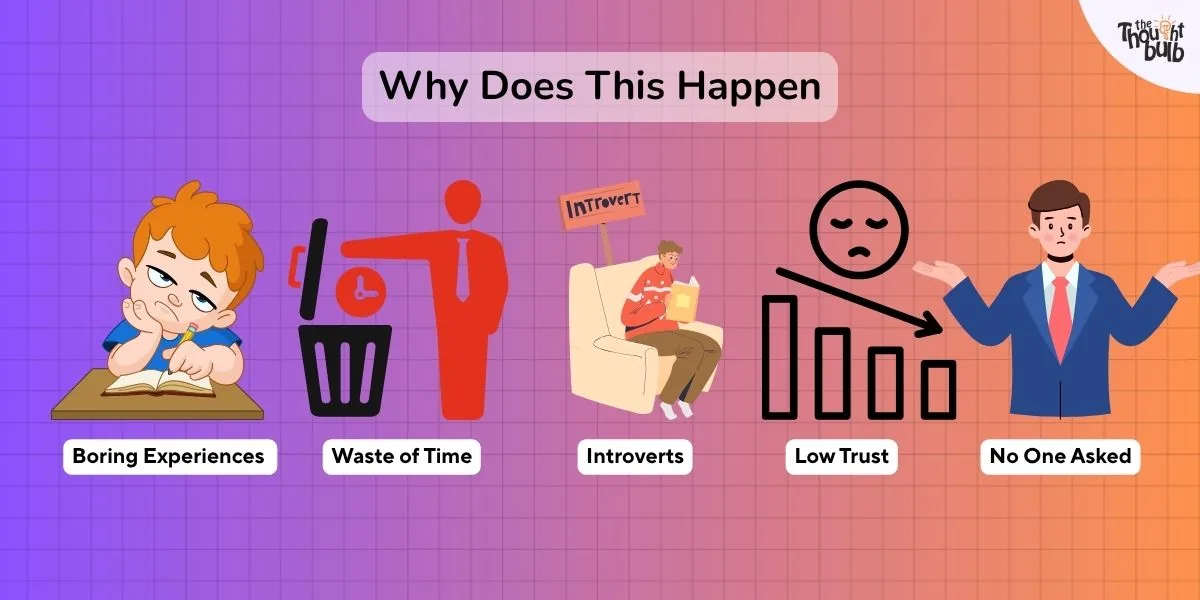
Before you jump into solutions, it’s crucial to understand the real reasons behind the resistance. Here are some common ones:
1. Past Experiences Were Boring or Awkward
Too many team-building sessions feel like corporate school picnics—childish games, forced fun, and little relevance to real work. People remember these, and their resistance grows.
2. It Feels Like a Waste of Time
When activities aren’t clearly linked to purpose or business context, employees—especially high performers—see it as time taken away from “actual work.”
3. Introverts & Neurodiverse Employees Feel Uncomfortable
Not everyone thrives in high-energy, extrovert-friendly formats. For some, group games are anxiety-inducing, not energizing.
4. Team Trust Isn’t High
If there's a lack of psychological safety or unresolved tension in the group, asking people to “bond” feels artificial and forced.
5. No One Asked Them What They Wanted
Many team-building plans are top-down. If your team has no say in the activity type, timing, or location, they’ll treat it like a checklist item, not an experience.
The Myths That Need Busting
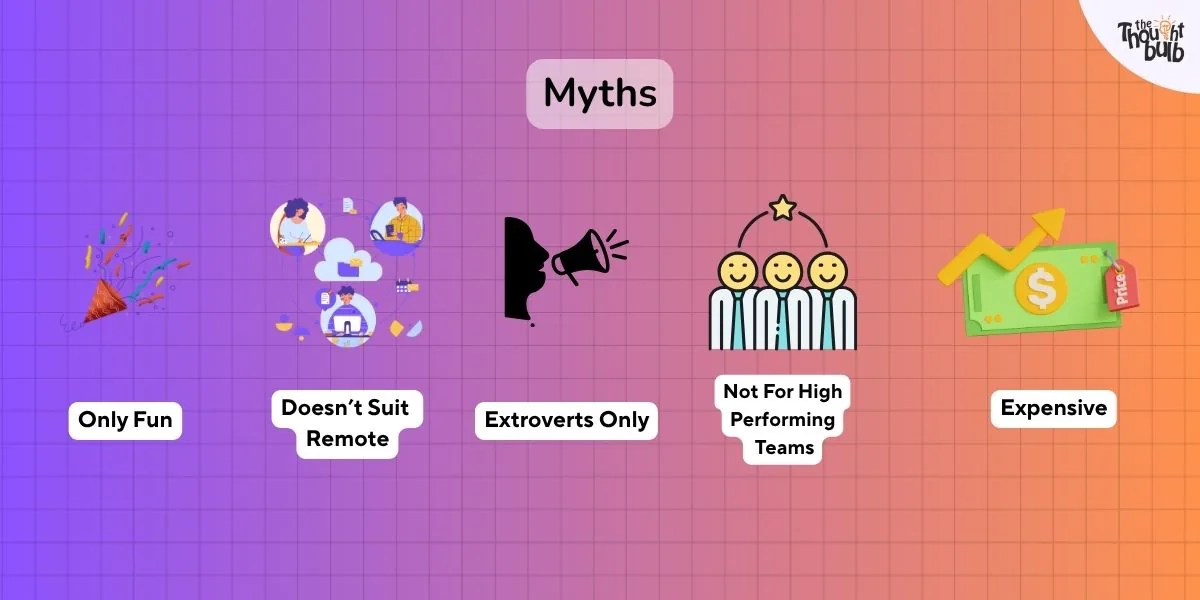
If you're hearing statements like these, it's time to bust some myths:
Myth 1: “Team-building is just for fun.”
Fact: The right activity improves collaboration, communication, conflict resolution, and morale—all of which impact business outcomes.
Myth 2: “It doesn’t suit remote or hybrid teams.”
Fact: Tech-infused virtual formats can be just as engaging with the right platform and facilitation.
Myth 3: “It’s only for extroverts.”
Fact: Activities can be inclusive, creative, and reflective, like storytelling, vision boards, or strategy games.
Myth 4: “We don’t need it. We work well together.”
Fact: Even high-performing teams need time to recharge, align, and reconnect—especially during transitions or stressful quarters.
Myth 5: “It has to be expensive to work.”
Fact: Some of the best team-building outcomes come from low-cost, high-creativity formats like problem-solving games or community projects.
What To Do When Your Team Pushes Back
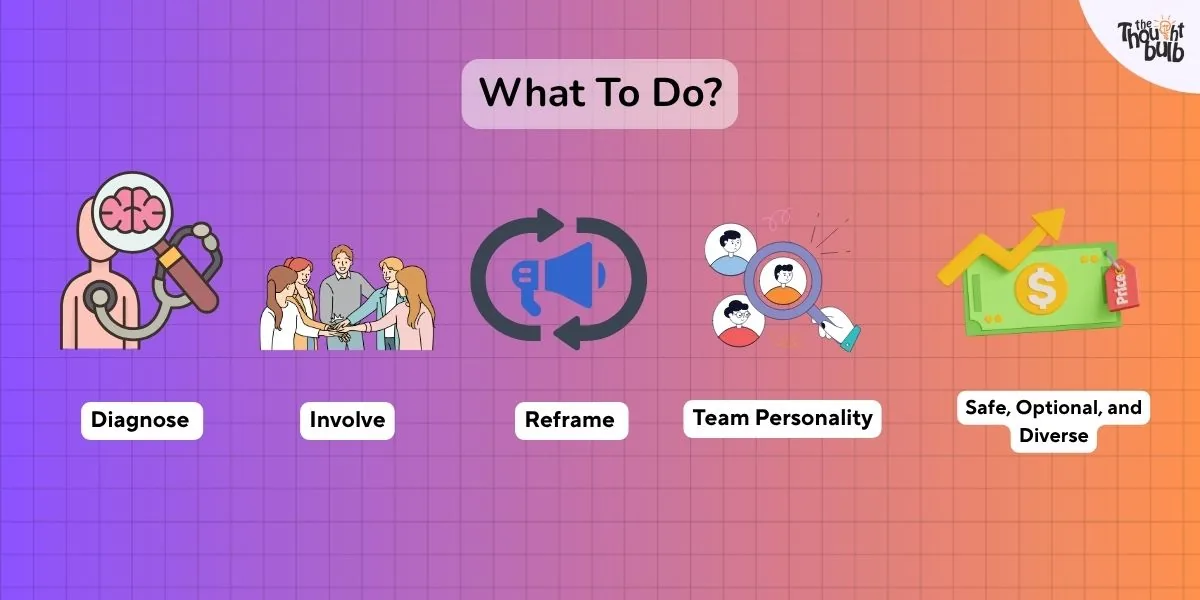
Here’s a 5-step action plan to redesign your team-building approach—and win buy-in:
1. Diagnose Before You Prescribe
Ask your team why they dislike past experiences. Use anonymous surveys, informal chats, or pulse check-ins.
Good questions to ask:
What’s your ideal way of connecting with the team?
What did/didn’t work in past team-building sessions?
Would you prefer physical, virtual, or hybrid formats?
This will give you honest input without forcing people to perform politeness.
2. Involve the Team in Planning
The best way to reduce resistance? Give them a voice.
Let them:
Vote between 2-3 activity options
Suggest a theme (wellness, innovation, creativity)
Nominate a small team to co-plan the experience
When people are part of designing something, they feel respected and are far more likely to participate.
3. Reframe the Purpose of the Activity
Stop calling it “team-building” if that word triggers groans. Instead, name it based on the outcome:
“Creative Jam” for brainstorming and fun
“Recharge Hour” for stress relief and bonding
“Innovation Sprint” for problem-solving games
“Connection Café” for deep conversations
Also, link it to the work context:
“This quarter’s been intense—let’s take 60 minutes to step back and recharge together. Think of it like resetting before our next sprint.”
4. Match the Format to the Team Personality
If your team is data-driven and analytical, they may prefer:
Strategy games
AI-based simulations
Puzzle room challenges
Escape games or role-play decisions
If they’re creative and people-oriented, consider:
Virtual treasure hunts
Avoid one-size-fits-all games like “Two Truths and a Lie” unless you know it suits your culture.
5. Make It Safe, Optional, and Diverse
Never force full participation. Create space for quiet contributors.
Allow observers. Some may join just to watch first time—and that’s okay.
Include solo + group elements in your activity mix.
Avoid putting people on the spot. Use breakout rooms or small groups where possible.
Psychological safety > flashy execution.
Formats That Work (Even for Skeptical Teams)
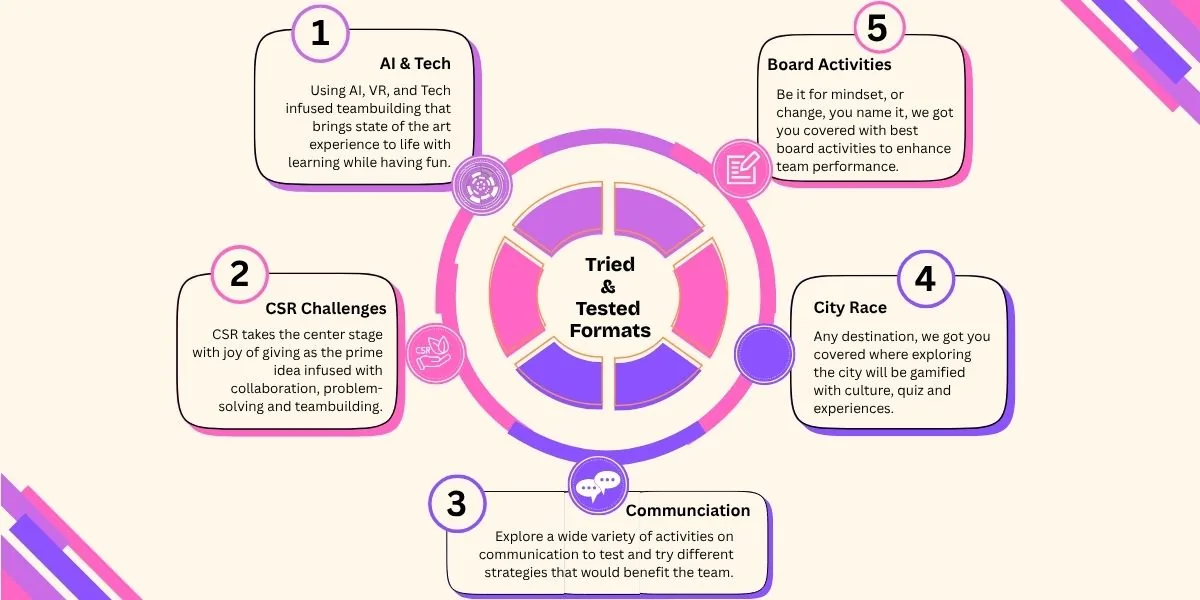
Here are proven formats that combine low pressure with high value:
🔹 AI-Powered Problem-Solving
Let teams use various AI tools, one at a time, to solve real-world business scenarios. Tech meets strategy meets learning.
🔹 CSR Impact Challenge
Teams design solutions for real-world social issues using recyclable materials. Add a pitch round for extra engagement.
🔹 Communication Strategy Game
A game where teams must complete a challenge using various communication strategies in the given scenario. Builds empathy, clarity, and teamwork.
🔹 City Race (Indoor/Outdoor)
A fast-paced adventure across office zones or local areas with missions, QR codes, and live points. Hybrid-friendly too!
🔹 Vision Board Workshop
A quiet, creative session where team members craft personal and professional goal boards. Can be done physically or digitally.
Success Signals to Aim For
You’ll know your new format is working when:
People talk about it even after it ends
There’s laughter, but also depth
People bring ideas from the activity into work
Participation rises over time
Someone says, “That wasn’t as bad as I expected.”
That’s when you’ve made progress.
Final Word: Don’t Drop the Idea: Drop the Label
When your team resists team-building, don’t give up on connection. Don’t assume “they just aren’t the type.” And don’t take it personally.
Just shift the focus from “activity” to experience. From “engagement” to value. From “forced bonding” to authentic interaction.
Because in a world where burnout, silos, and Zoom fatigue are very real, we don’t need less connection—we need better connection.
And when you design for that, even the most skeptical teams can come around. Reach out today to customize your teambuilding experience!