Zoom fatigue. Stiff small talk. Blank cameras. If this sounds like your typical virtual meeting, it’s time to shake things up. Enter: the virtual talent show—a dynamic, creative, and heartwarming way to bring your team together, no matter where they’re located.
Unlike routine icebreakers, a virtual talent show offers your team a chance to express themselves in ways that go beyond their job titles. Singing, mimicry, poetry, dance, cooking, sketching—anything goes. With the right structure and a sprinkle of fun, this virtual team-building activity can transform your screen into a celebration of human connection and employee engagement.
Whether it’s for a quarterly town hall, an annual party, or just a mid-year morale boost, here’s your complete guide to hosting a virtual talent show that’s engaging, inclusive, and easy to pull off.
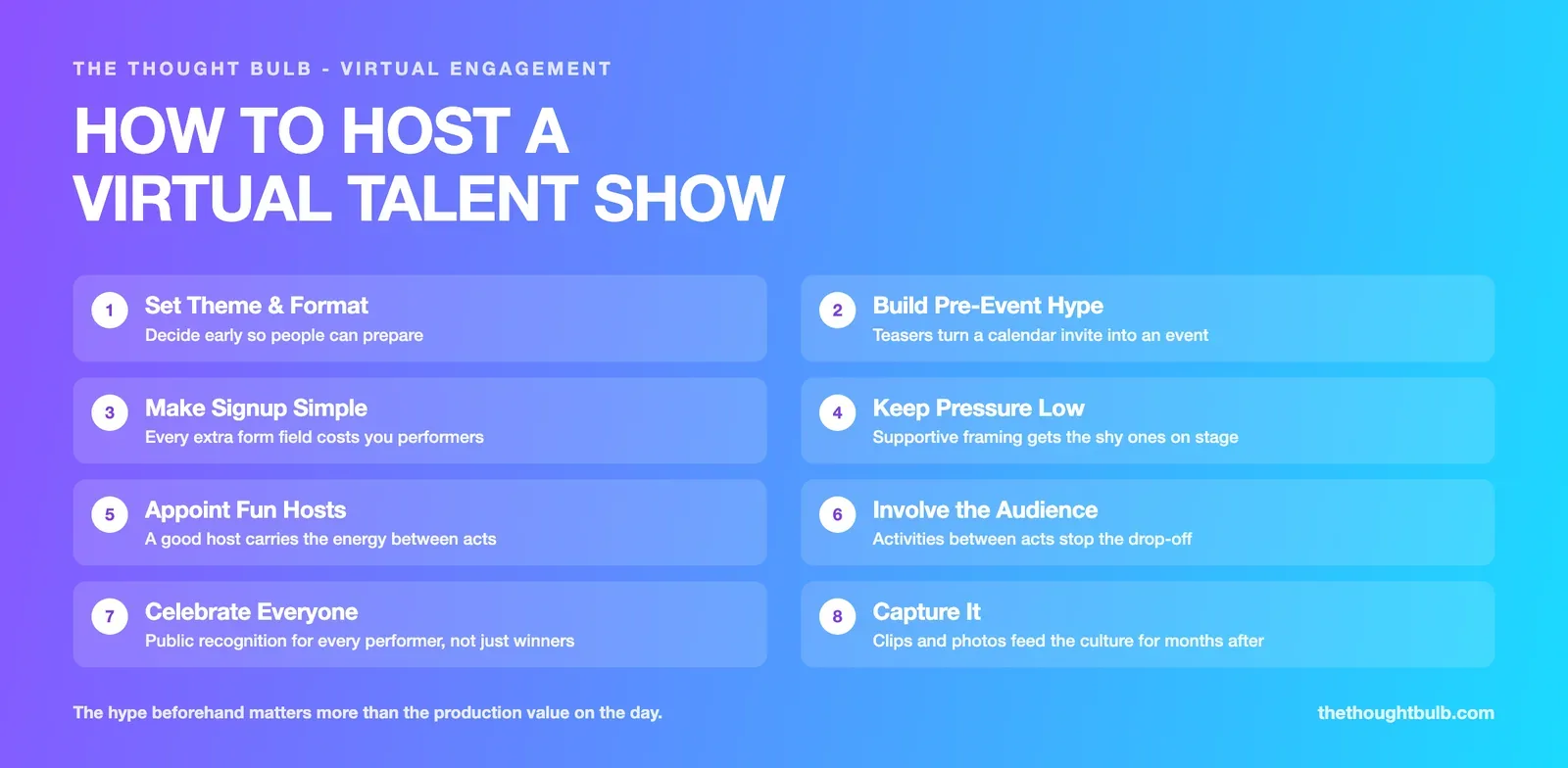
1. Set the Theme and Format Early
Before you begin reaching out to participants, define the look and feel of your talent show. Will it be a relaxed, open-mic format or a structured competition with categories and scores?
Ideas to consider:
Themes like “Hidden Talents,” “Quarantine Creations,” or “Homegrown Heroes”
Categories: Performing arts, comedy, cooking, art, or even pet tricks
Format: Live performances on Zoom, pre-recorded videos, or a hybrid
Why it works: When your team knows exactly what to expect, it reduces anxiety. A theme also gives them creative direction and boosts the overall energy of the event.
2. Build Excitement with Pre-Event Hype
A successful virtual event begins long before showtime. Use internal platforms—emails, Slack, Teams, or your company intranet—to generate buzz.
Ways to promote:
Countdown posts with fun facts (“7 days to go—who’s planning a surprise duet?”)
Flashback photos or clips from previous events
Hints about special guests or quirky judges (even your CEO in a costume!)
Why it works: A bit of playful anticipation sets a fun tone and motivates people who might be unsure about participating. It also spreads the word organically among remote teams.
3. Make It Super Simple to Participate
Not everyone has the time or tools to prep a big performance. Make sure signing up is frictionless and expectations are clear.
What you can do:
Use a short signup form with basic questions (Talent type, preferred time slot, props needed)
Offer a practice session for those who want to test tech setup
Provide music or background templates if needed
Why it works: The easier it is to join, the wider the talent pool. Clear, supportive communication builds trust and encourages creative risk-taking—key ingredients for employee engagement.
4. Create a Supportive, Low-Pressure Environment
The goal isn’t to discover the next superstar—it’s to celebrate each other. Emphasize that the event is about joy, not judgment.
How to make it feel safe:
Avoid using “contest” or “winner” unless it’s lighthearted
Encourage team entries (buddy acts, duets, department skits)
Allow both live and pre-recorded options so people can choose their comfort level
Why it works: People show up more authentically when they don’t feel judged. This psychological safety strengthens bonds across virtual teams.
5. Appoint Fun, Friendly Hosts
A good host can make or break your talent show. Choose someone with warmth, humor, and the ability to think on their feet.
Hosting duties:
Introduce performers with fun one-liners or stories
Engage the audience between acts with polls or reactions
Manage time gently but firmly
Why it works: A relatable, high-energy host keeps the virtual space from feeling cold or chaotic and adds a personal touch to the event.
6. Mix in Audience Activities Between Acts
Long online sessions can tire people out. To keep the vibe alive, sprinkle in micro-games or engagement breaks.
Examples:
Live emoji voting: Use reaction icons as a clap-o-meter
Quick riddles or trivia about team members (“Guess who speaks 4 languages?”)
Costume contests or themed backgrounds
Why it works: Involving non-performers creates a shared experience and keeps everyone invested—even those who aren't showcasing talent.
7. Celebrate Every Performer Publicly
Every act deserves applause—real or virtual. Show appreciation through multiple touchpoints.
Celebration ideas:
Digital certificates with fun titles (“The Kitchen Rockstar”, “Zoom MVP”)
Mention performers in your internal newsletter or LinkedIn post
Mail small surprise gifts or e-vouchers to performers
Why it works: Recognition is a powerful morale booster. When teams feel seen and appreciated, their sense of belonging and employee engagement soars.
8. Capture It for the Culture
Once the curtain closes, your talent show can live on as a piece of workplace history.
Capture ideas:
Record the full event (with consent) and edit into a short highlight reel
Create a talent wall on your company intranet
Share “blooper” clips or behind-the-scenes photos in follow-up emails
Why it works: These moments contribute to a vibrant team culture and remind everyone that even in a digital space, meaningful memories can be made.
Final Thoughts:
A virtual talent show isn’t just another online event—it’s a celebration of creativity, connection, and company culture. When planned thoughtfully, it brings out hidden strengths, dissolves screen fatigue, and injects genuine joy into your remote teams.
At its heart, this isn’t about flawless performances—it’s about real people sharing what they love. And when your team feels safe, celebrated, and engaged, that energy spills over into collaboration, productivity, and morale.
So go ahead. Pick a date. Set the stage. And let your team take the spotlight.
<a href="https://www.thethoughtbulb.com/resources/free-resources/50-icebreakers-for-virtual-meetings.html" target="_blank">

</a>